Know When Tile Maintenance Needs a Specialist
Routine cleaning can handle everyday dirt on tile floors, but persistent ingrained stains or scratches may need specialist assessment. The source distinguishes this work from an ordinary maintenance wash. Identify the material and the problem before requesting polishing or restoration.
Ask how the proposed treatment will affect glaze, stone finish, sealer, and grout. Abrasive restoration is not suitable for every tile. A useful service should explain the method and realistic result rather than promise that any damaged surface can simply be ground back to new.
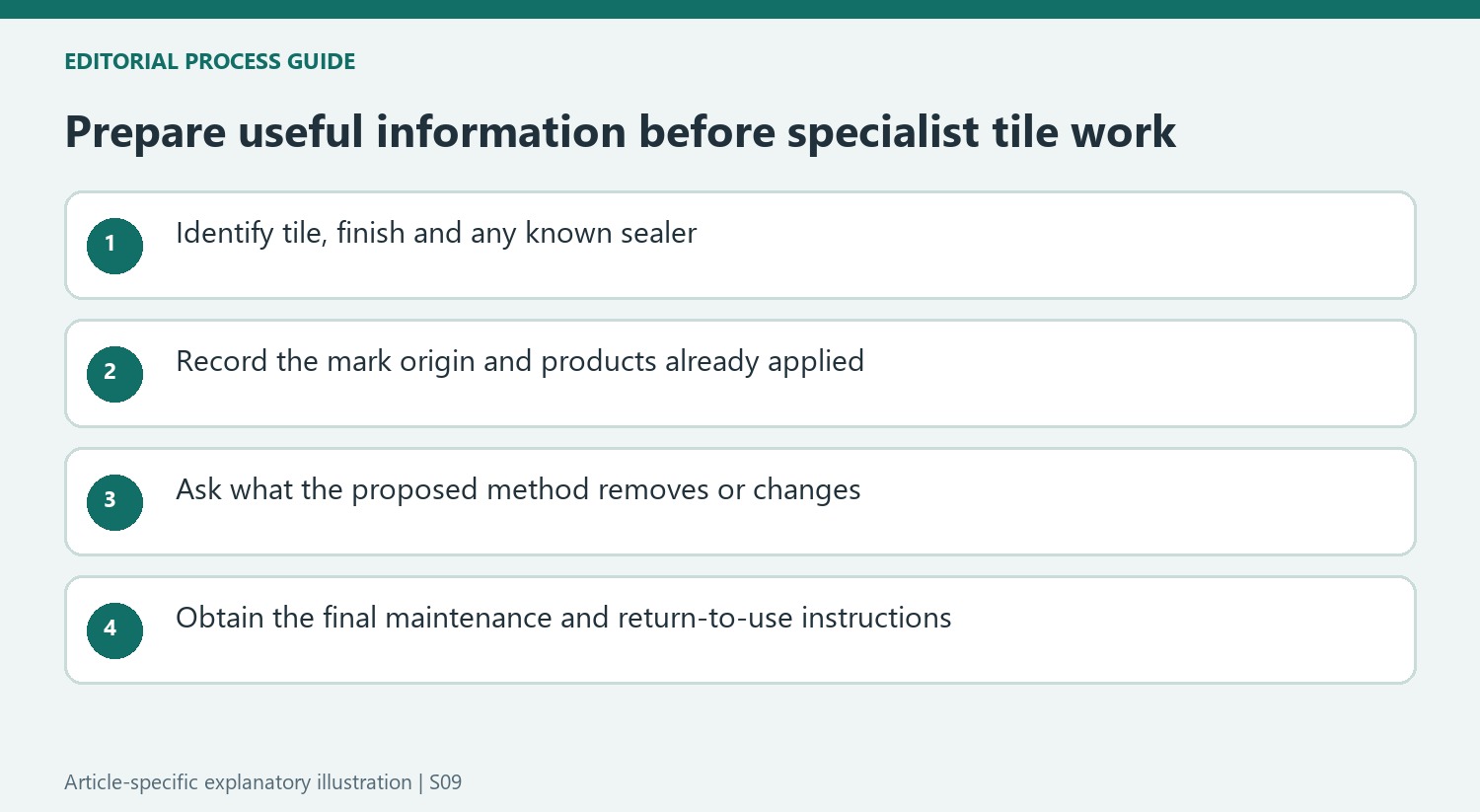
Describe the problem before booking a service
The Stone Store article suggests professional help when normal maintenance no longer removes persistent discoloration, grout contamination or installation haze. Tell the contractor what tile is installed, what products have been used and whether the mark followed a spill or a scratch. Those details help distinguish a cleaning task from damage that requires a different assessment. A heavily soiled surface and a worn finish are not automatically the same job.
Ask what the proposed method will change
The source makes broad claims about restoring scratched surfaces, but the appropriate treatment still depends on the material. Request an explanation of whether the work removes soil, changes a coating or abrades the tile itself. Glazed porcelain and natural stone need different judgments. A small assessment area and realistic expectations are more useful than treating polishing as a guaranteed solution for every damaged floor.
Compare the service with an ongoing care plan
The guide notes that professional cleaning can be costly and that ordinary light soil may remain manageable with the correct home routine. If a service is chosen, ask for compatible maintenance products and any curing or access restrictions afterward. Schedule future attention according to traffic and condition rather than assuming every installation requires the same interval. Daily spill control and grit removal still matter between specialist visits.
Describe the problem as evidence for the contractor
The Stone Store suggests professional help when normal compatible maintenance no longer handles ingrained staining, grout contamination or haze. Before booking, identify the tile and record what changed: a particular spill, a dragged object, a failed cleaning attempt or a broad gradual dullness. Include the products already used and any known sealer. Those details help distinguish retained dirt from damage or an installation residue needing a different treatment.
Photographs can support that account, but a contractor should still assess the actual surface and finish before promising restoration. A polished stone floor and glazed porcelain do not have the same room for abrasive correction. The source makes broad statements about grinding away damage; read those as a prompt to ask how the proposed method suits the specific material, not as a guarantee that all scratches can disappear.
Ask what the service will remove and what it will alter
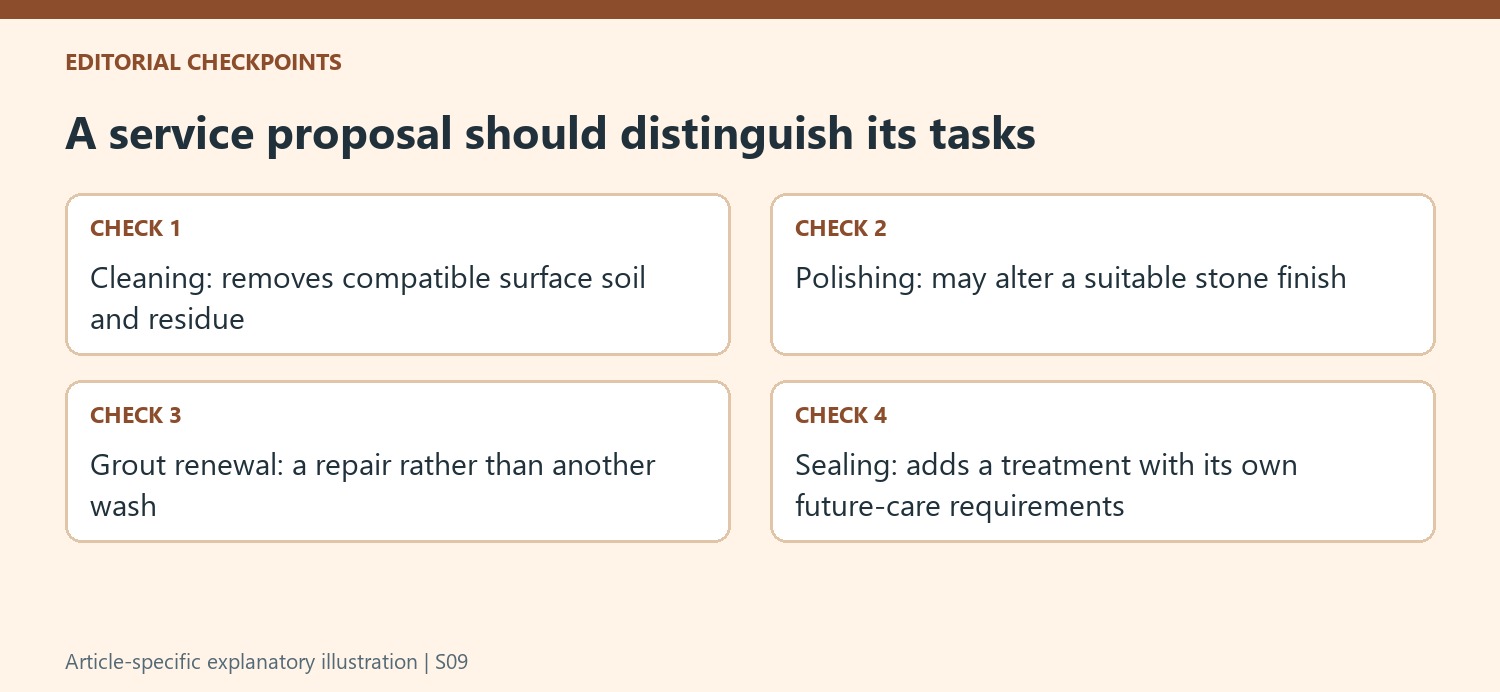
Request a clear explanation of whether the job cleans soil, strips an old coating, polishes stone or replaces damaged grout. Ask how adjacent materials and tile edges will be protected, and whether a small assessment area is appropriate. A dramatic temporary wet appearance is not the same as the agreed dry finish. Realistic expectations include knowing which defects may remain after ordinary cleaning has achieved all it can.
A chemical described as antibacterial is also not a universal assurance of compatibility or a promise that all organisms are eliminated under any use. The actual product, method and installation matter. Discuss the cleaning objective without assuming that stronger chemistry or more aggressive machinery automatically produces a better service. Professional work should make the choices understandable and specific enough that the owner can assess both the intended improvement and its limits.
Compare a one-off service with the maintenance it leaves behind
The guide acknowledges cost and the possibility that light ordinary soil can be handled with the right home routine. Consider the scope of the actual problem, available time and the value of specialist assessment rather than booking on a universal calendar. If a repair is proposed, understand why cleaning alone is insufficient and how the repaired appearance will blend with the surrounding floor.
After work, obtain suitable maintenance-product advice and any drying, curing or access restrictions. Retain the details of any new sealer or color treatment so later care does not start with an unknown surface. Continue prompt spill removal and grit collection between visits. A successful specialist clean should lead into a practical care plan for the actual tile, while any unresolved damage or moisture condition remains identified rather than hidden behind a general promise of renewed shine.
References
- When to Use a Professional Tile Cleaning Company. Stone Store; Will.
Deep staining, finish damage, and failed protection go beyond ordinary mopping.


Leave a Comment
Comments (0)