
Do Not Treat a Sealed Granite Counter as Stainproof
BHG recommends gentle cleaning, rinsing and drying, with prompt spill removal even when a sealer is present.
Look closely for hidden crumbs
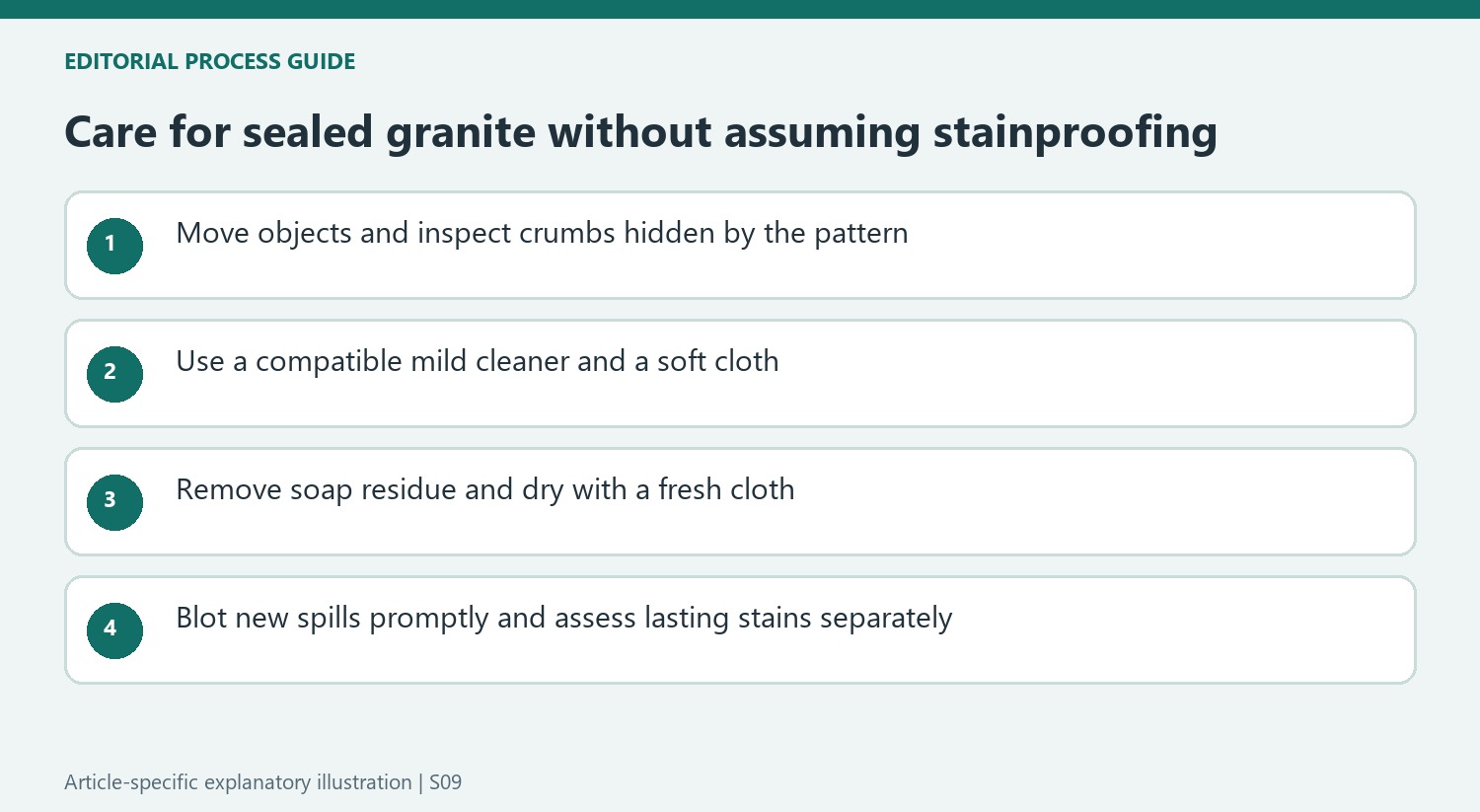
Better Homes and Gardens notes that granite's pattern can hide small debris. Clear that material, then clean with warm water, mild dish detergent and a soft cloth, or a suitable stone product. Rinse after a soapy wash and dry with a soft cloth to reduce spots and streaks. The article cautions against treating lemon or vinegar as automatically appropriate simply because they are familiar household cleaners.
Protect the surface between cleaning sessions
The guide emphasizes blotting spills promptly, using coasters and placing hot dishes on trivets. An impregnating sealer can increase resistance to staining but does not eliminate the need for care. For persistent marks, identify the stain and use an appropriate separate process rather than rubbing harder. A local stone professional can clarify product selection and sealing needs, particularly for someone caring for an unfamiliar countertop.
Look for small deposits and recurring exposure
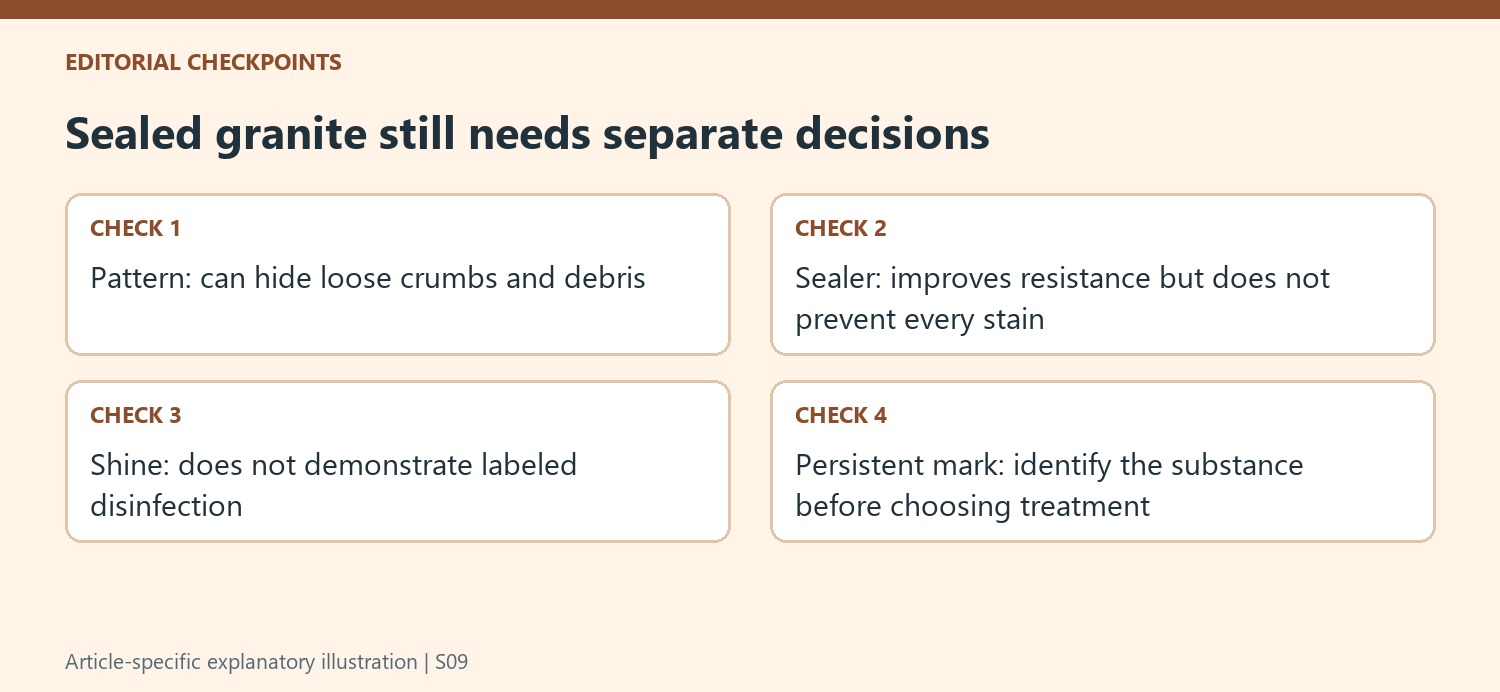
The BHG guide suggests inspecting the countertop at eye level, which can reveal crumbs concealed by the speckled pattern. It also recommends keeping potentially staining items such as oils and cosmetics from sitting directly on granite. These are distinct problems: a crumb needs removal, while a leaking bottle can create a persistent mark. A sealer suitable for a food preparation area must meet the intended use requirements. Ask the stone supplier about that choice and the appropriate renewal schedule. Avoid assuming that a product designed to improve shine is also an approved disinfectant or a substitute for cleaning after food preparation. Check labels carefully.
Inspect the pattern and the places objects normally cover
BHG points out that granite's speckles can conceal crumbs that would be obvious on a plain worktop. Clear portable objects and inspect at a low angle before beginning the damp clean. Collect that loose material with a suitable soft cloth rather than pushing it into the next area. A counter that looks visually busy can still carry debris even when it appears acceptably tidy from a standing glance.
Also examine places beneath cooking-oil bottles, cosmetic containers and creams. The source distinguishes immediate debris removal from prolonged exposure to substances that can stain. A small leak beneath a container can remain in contact with the stone much longer than an ordinary splash. Keep such products on an appropriate protective tray or elsewhere as the countertop supplier recommends, and inspect the concealed surface during regular cleaning.
Make the mild wash include residue removal
The guide's routine uses warm water, mild dish detergent and a soft cloth, or a compatible stone cleaner. Read the chosen product's directions and use only the amount needed. After a soapy wash, remove suds with clean water and dry using another soft cloth. That sequence reduces the chance of judging a detergent streak as a defect in the stone or responding to leftover soap by adding still more cleaner.
Do not substitute lemon or vinegar merely because the same bottle works well on another kitchen material. BHG notes that granite can contain acid-sensitive minerals and that harsh products may affect a sealer. Tool choice matters alongside chemistry: rough scouring creams or an abrasive pad can alter a surface while removing the visible dirt. Test an unfamiliar approved method discreetly before using it across a broad patterned area.
Keep stain resistance, shine and disinfection distinct
An impregnating sealer can improve resistance to absorbed staining without making the stone stainproof. Continue blotting fresh spills promptly and use appropriate coasters and heat protection. Confirm the sealer's suitability for the intended food-preparation area and its renewal requirements with the supplier. A surface that has been sealed still needs compatible routine cleaning, and a glossy-looking finish does not establish that every protective requirement has been met.
Likewise, a product or homemade mixture used to enhance shine is not automatically an effective disinfectant. Follow a compatible labeled product when disinfection is needed, including its specified use and contact conditions. For a persistent stain, identify the likely substance and seek the appropriate stone-care method instead of rubbing harder. Cleaning, stain treatment and protection renewal are different tasks, even when the immediate aim in each case is a better-looking countertop.
References
- How to Safely Clean Granite Countertops Without Scratching or Dulling the Surface. Better Homes & Gardens; Caitlin Sole.
BHG recommends gentle cleaning, rinsing and drying, with prompt spill removal even when a sealer is present.


Leave a Comment
Comments (0)