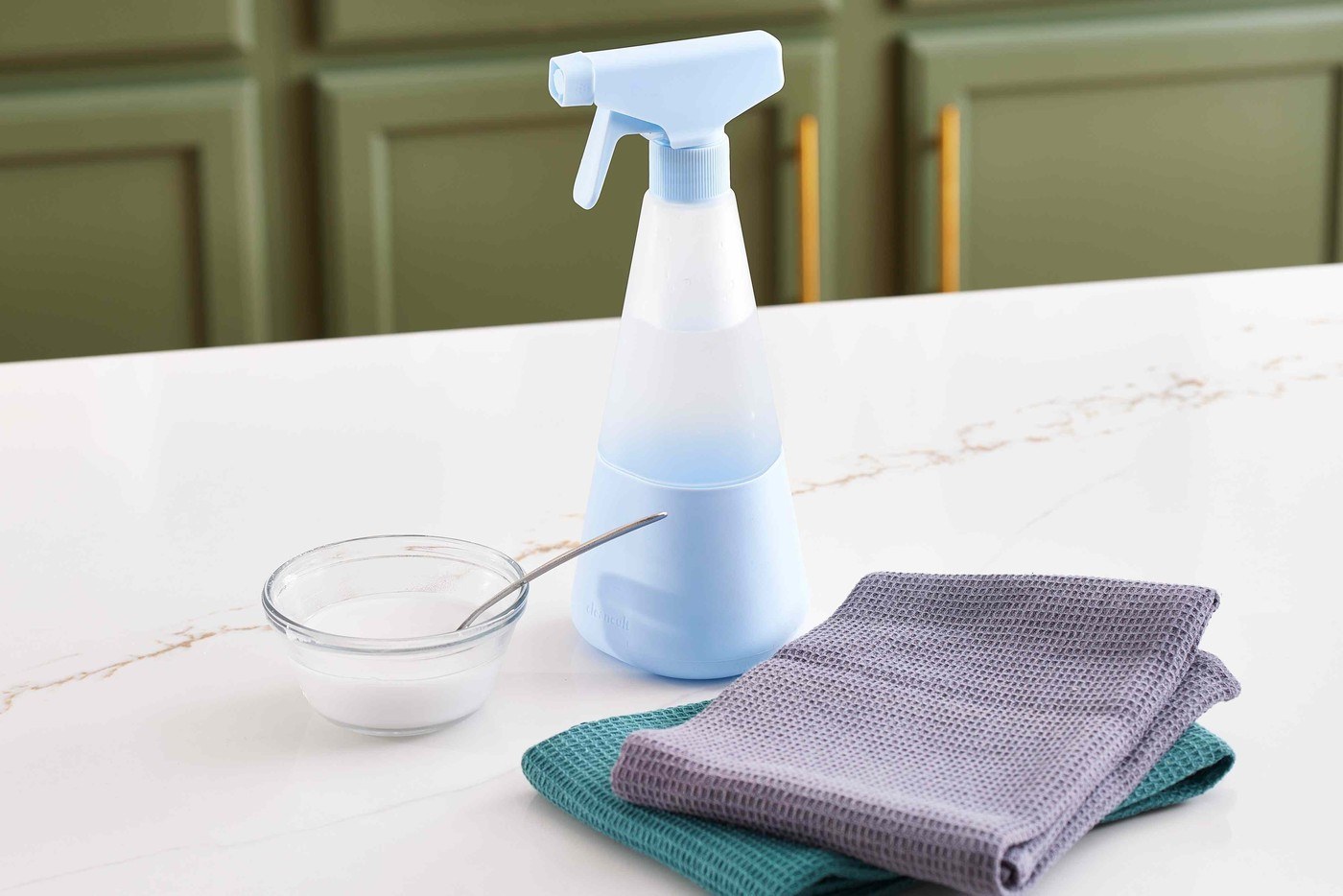
Protect Stone Counters With Soft Tools and Prompt Blotting
BHG's marble guide connects spill prevention and suitable cleaners with preserving the surface finish.
Prevent a stain from spreading
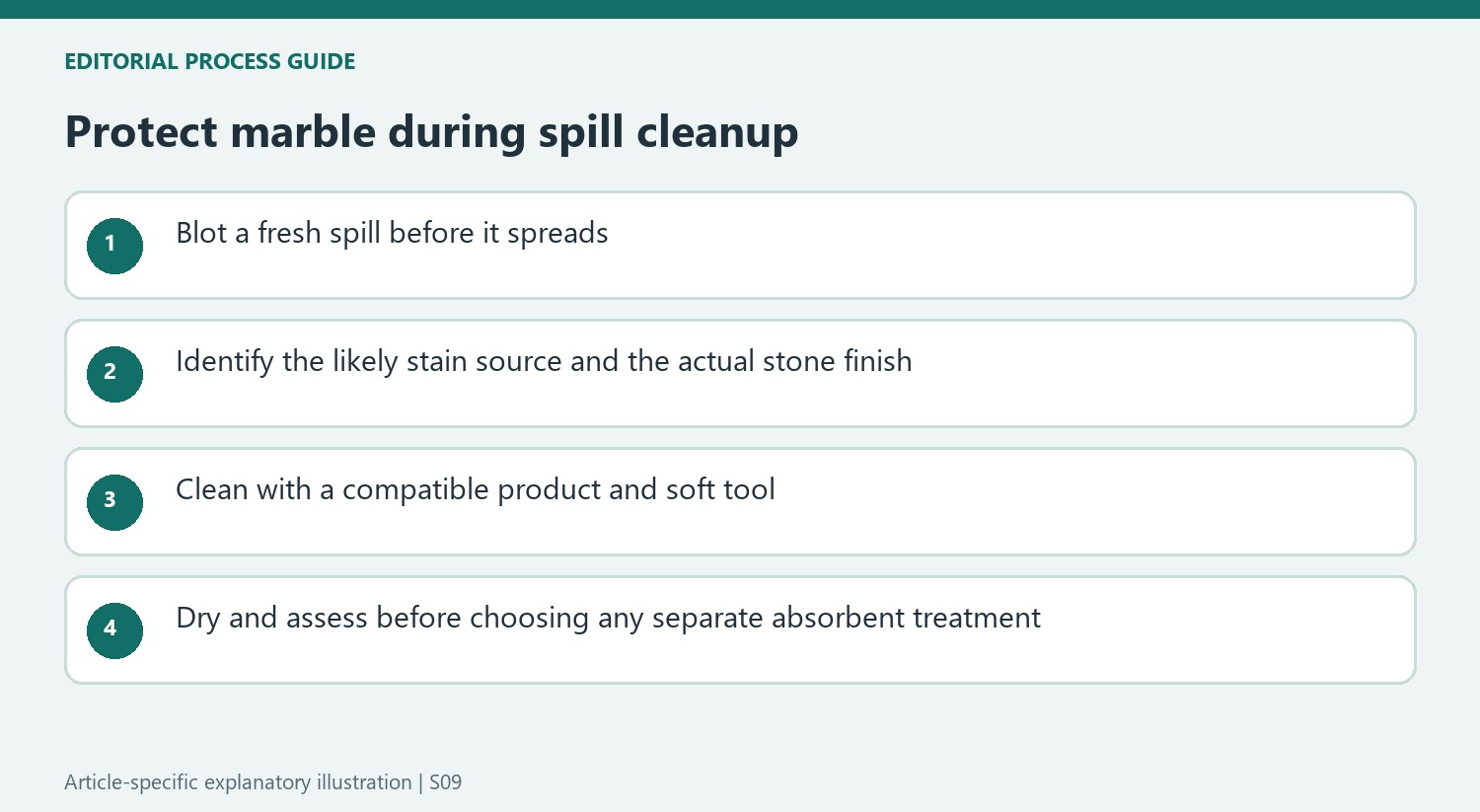
Better Homes and Gardens recommends blotting a spill promptly rather than wiping it over a wider area. Its prevention advice includes coasters under glasses and trivets under hot dishes. On floors, clean dust mops and well-maintained vacuum wheels or attachments reduce scratch-causing grit. Rough cloths, scouring products and acidic cleaners can damage the finish instead of improving it.
Keep ordinary cleaning distinct from stain treatment
For routine care, the article describes soft cloths or mops and identifies stone cleaner suitable for daily use as an option. Drying and gentle buffing help avoid streaks and water spots. A persistent mark may call for a separate absorbent poultice process rather than increasingly forceful scrubbing. In a shower, removing water with a squeegee helps limit soap buildup. Choose a method for the particular marble and mark rather than treating all stone surfaces identically.
Do not mistake a convenient sponge for a gentle one
BHG explicitly cautions against melamine cleaning sponges on marble because they may affect the sealer and dull the finish. A tool that removes marks successfully elsewhere can therefore be unsuitable for this softer stone. The same care applies to rough cloths and worn vacuum parts on marble flooring. Use clean, soft equipment and remove gritty particles before wiping. If a stain persists, identify its likely origin, such as cooking oil, cosmetics or coffee, and discuss a compatible absorbent treatment with the stone supplier. A stain-specific process should not become the routine whole-surface cleaning method after every ordinary spill. Avoid acidic rust removers on marble as well.
Control the spill before expanding the cleaning area
BHG recommends blotting a fresh spill rather than wiping it over more stone. Start by collecting the liquid with an appropriate absorbent material, then follow the compatible cleaning method for remaining soil. This keeps a small incident from becoming a broader exposure. A patterned marble counter can distract from the edge of a spill, so inspect the complete affected area before assuming the first visible spot was the only contact.
The source lists oils, cosmetics, coffee and fruit among possible origins of persistent stains. Knowing what was spilled helps select the later response; it is more useful than describing every mark simply as dirty marble. Keep a note if an important surface needs professional advice. Ordinary cleaning should remain gentle around the area while the stain-specific method is identified, rather than becoming increasingly forceful because the substance was not diagnosed.
Check the tool as carefully as the cleaner
Melamine foam is singled out by BHG as capable of affecting a marble sealer and dulling its finish. Its familiar household use does not make it equivalent to a soft cotton cloth. The same restriction applies to rough-woven fabric, scouring powders and inappropriate rust removers. A tool may remove the visible stain while also changing the appearance of the protective surface, so the immediate visual improvement is not the only measure of success.
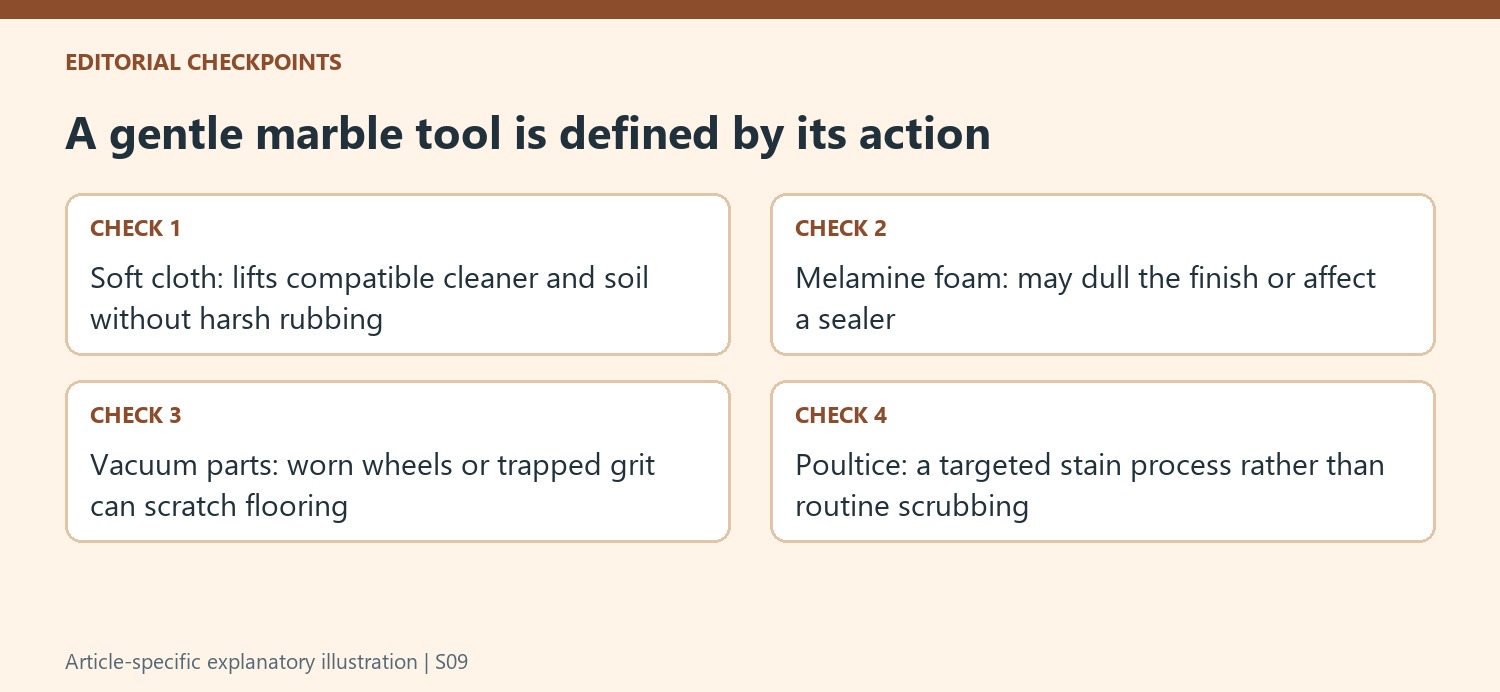
On marble floors, the source extends tool care to vacuum attachments and wheels. Inspect them for wear and trapped grit, and use a suitable clean dry dust mop to collect particles regularly. Entrance mats can reduce tracked-in dirt when they are appropriate for the installation. Cleaner chemistry cannot compensate for a damaged wheel that scratches the stone during every pass, making this a separate and necessary equipment check.
Finish routine care before considering a poultice
Use a stone-cleaning method suitable for the actual surface, a clean soft cloth or permitted mop, and the product's residue-removal directions. Dry and gently buff where appropriate to reduce streaks or water spots. In a shower, a squeegee pass helps limit retained water and later soap buildup. These routine actions aim to preserve the finish without changing it through abrasive correction.
The source discusses an absorbent poultice for persistent marks, which is a separate stain-treatment process rather than a required final step after every wipe. Confirm a suitable formulation, test requirements and removal method with the stone supplier. If a patch is actually etching or another surface alteration, an absorbent treatment may not address it. Keep diagnosis, ordinary washing and any corrective work distinct so the selected method solves the real problem while protecting nearby marble.
References
- How to Clean Marble to Preserve the Classic Look. Better Homes & Gardens; Ann Wilson.
BHG's marble guide connects spill prevention and suitable cleaners with preserving the surface finish.


Leave a Comment
Comments (0)