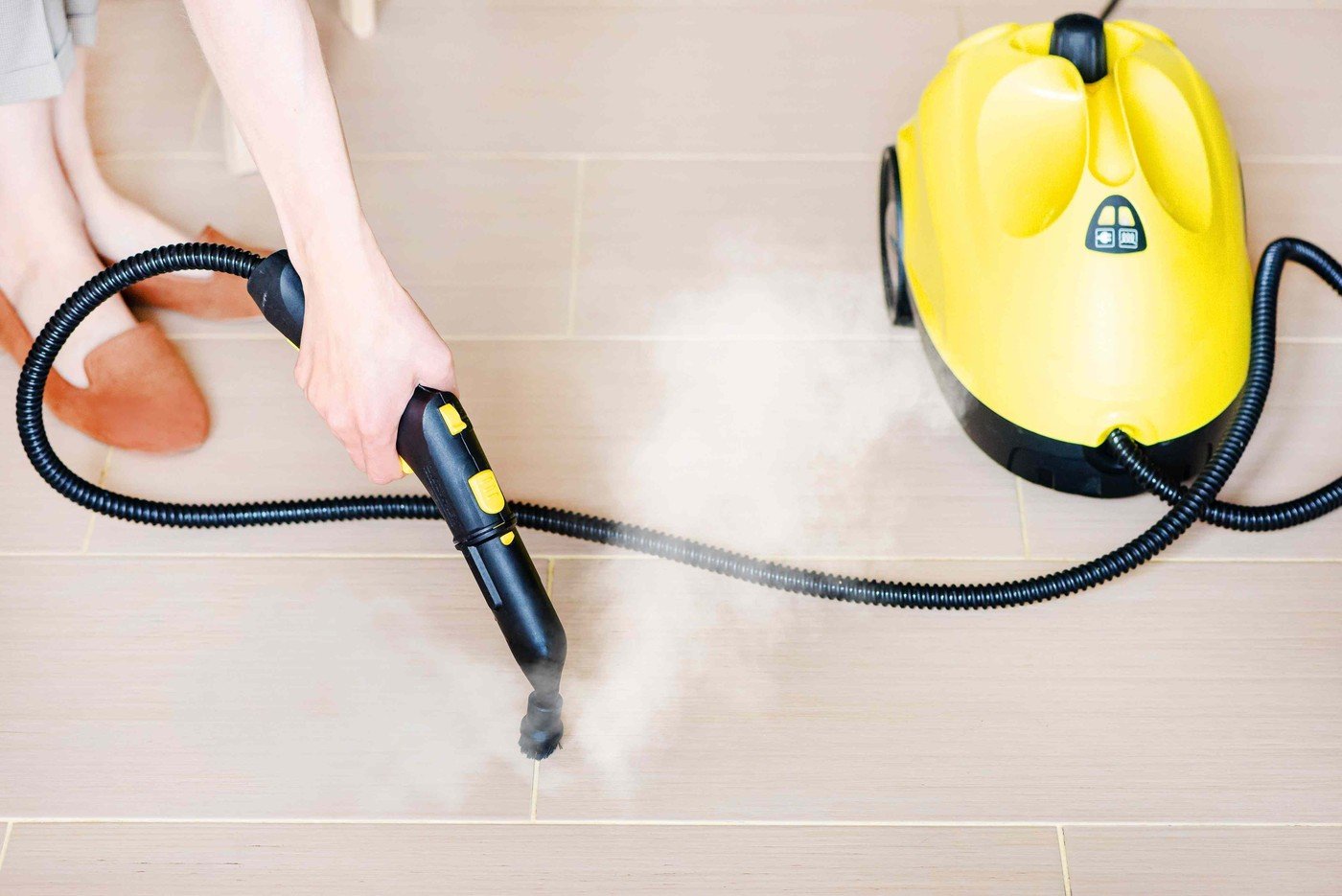
Use the Correct Brush and Remove Water When Steam-Cleaning Grout
The Spruce's steam guide emphasizes preparation, machine instructions and collecting loosened soil in small sections.
Prepare the area and the machine
The Spruce recommends removing ordinary dirt and soap residue before steam-cleaning grout, so loose material does not interfere with the brush. Fill and assemble the machine according to its instructions and select a brush suited to the grout width and surrounding tile. The guide starts with nylon bristles and warns that harder metal brushes can harm some surfaces. The machine's heat and settings are part of the method, not interchangeable across every appliance.
Remove loosened soil as work proceeds
Work in small areas and collect dirty water before it dries back into the lines. On walls, a top-to-bottom sequence keeps runoff moving toward areas still awaiting cleaning. The article notes the limited capacity of consumer machines and suggests professional help when results are inadequate. Inspect the installation and follow equipment and surface guidance before applying steam; cleaning does not repair damaged grout or guarantee that every stain disappears.
Understand the machine's limits and the finishing choices
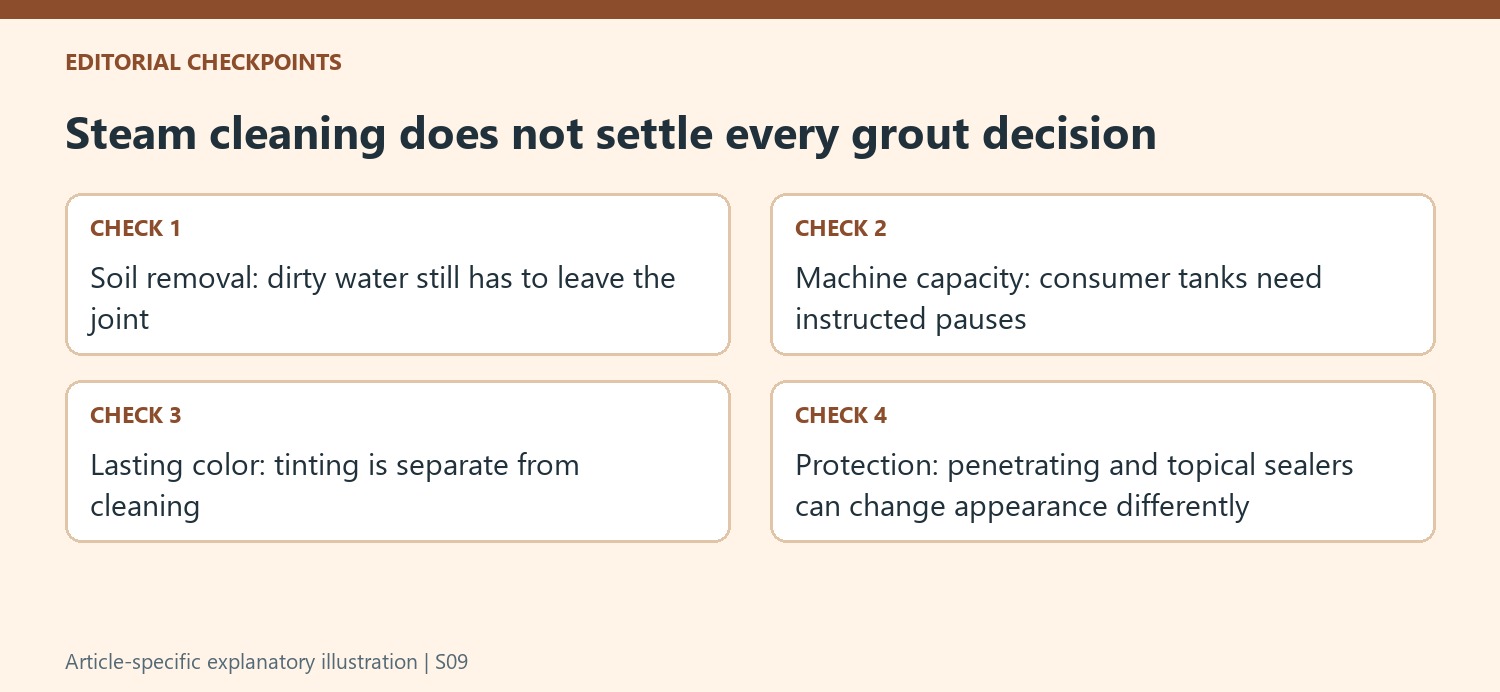
The Spruce notes that a small consumer steamer may need pauses for reheating and refilling, unlike larger professional equipment. Follow its operating instructions rather than forcing continuous output. If the tile and grout are compatible but the result is inadequate, professional cleaning is one option. The guide also separates cleaning from changing the grout's appearance through tinting or replacement. A compatible sealer can make later maintenance easier, but penetrating and topical products may affect appearance differently. Compare the installation's requirements and the desired color or sheen before choosing a finish; cleaning alone does not determine the correct sealer.
Confirm that steam is appropriate before preparing the machine
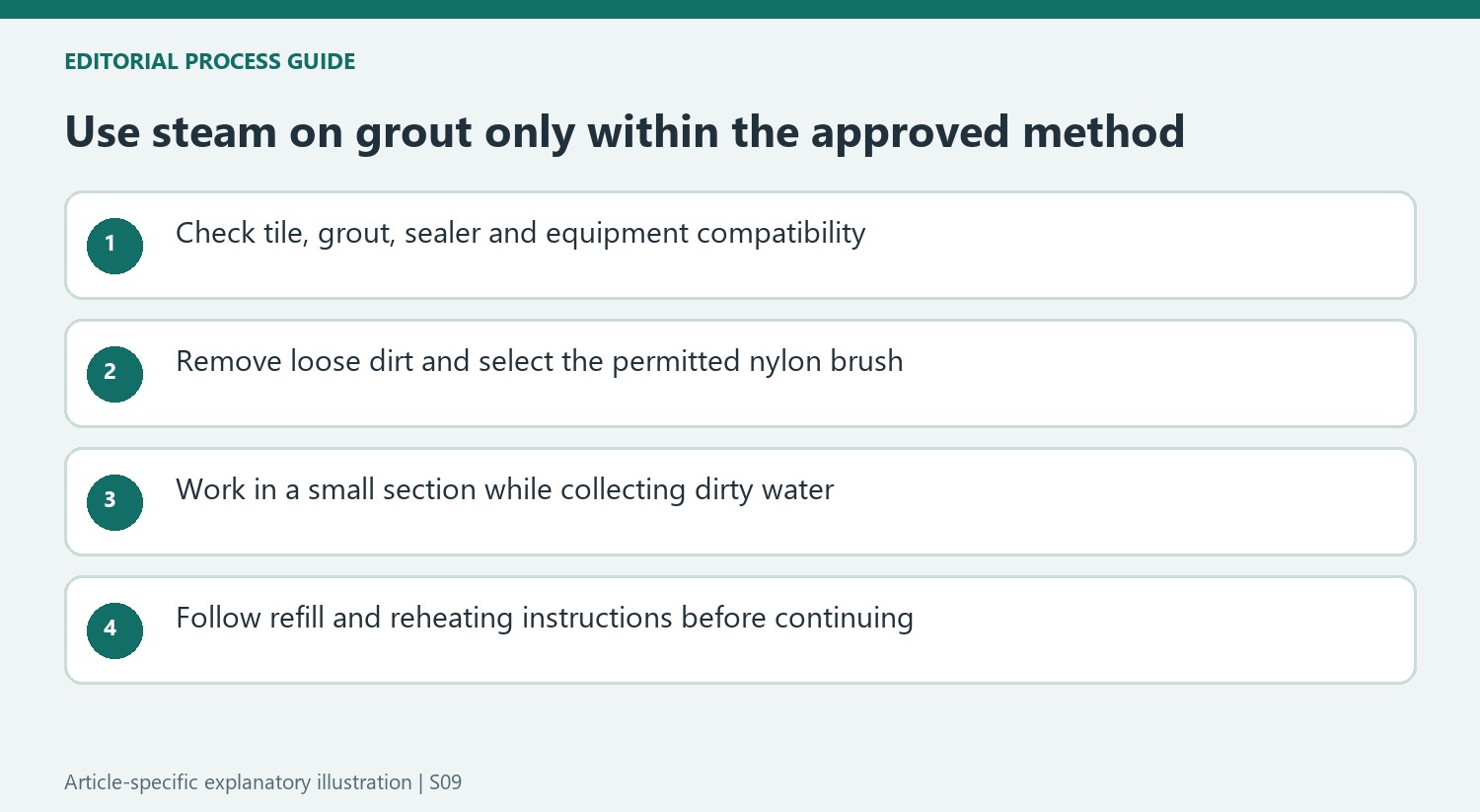
The Spruce presents steam as one option for grout cleaning, but the installation still needs a compatibility and condition check. Identify the tile, grout, sealer and any damaged areas before applying heat and moisture. A steam-cleaning guide cannot override the installed materials' care instructions. If those instructions prohibit the method or the grout is failing, choose another approved process rather than trying to compensate with a quicker pass.
Where steam is permitted, remove ordinary grit and soap residue first so the brush is not immediately clogged by loose material. Use the surface-approved preliminary cleaning and remove its residue as directed. Prepare the machine according to its own manual, including water, attachments and heating sequence. The source's general description does not establish an identical setting or operating procedure for every consumer appliance.
Match the brush and working area to controlled removal
The article starts with nylon bristles and warns that harder metal brushes can damage some tile. Choose the permitted brush for the grout width and surrounding surface instead of treating a more abrasive attachment as an automatic upgrade. Work in a small section that can be observed and finished. The objective is to loosen soil without wearing the grout or scratching a nearby tile edge.
Collect dirty water before it settles back into the joint and dries. The source stresses periodic rinsing or removal with a suitable mop, sponge or properly used wet-cleaning equipment. On walls, move from the top downward so runoff reaches areas still awaiting work. Steam by itself does not carry dirt out of the installation, making this collection stage just as important as the heated brush pass.
Respect consumer-machine limits and separate appearance changes
Small tanks and reheating pauses limit how continuously a consumer steamer can operate. Refill, depressurize and reheat only as the machine instructions require rather than forcing output or opening it prematurely. If a compatible installation remains unsatisfactory after appropriate cleaning, professional assessment is an option. Repeating passes indefinitely is not proof that every remaining discoloration is removable dirt.
The source distinguishes cleaning from tinting or replacing grout. A color treatment may conceal a lasting stain, while replacement is a different repair project, and neither should be described as another steam setting. A later sealer also needs a compatibility decision: penetrating and topical products can affect color or sheen differently. Confirm the grout system's requirements and drying condition before protection, keeping the final appearance choice separate from ordinary soil removal.
References
- How to Steam Clean Grout. The Spruce; Lee Wallender.
The Spruce's steam guide emphasizes preparation, machine instructions and collecting loosened soil in small sections.


Leave a Comment
Comments (0)