Protect Marble Floors with Material-Specific Care
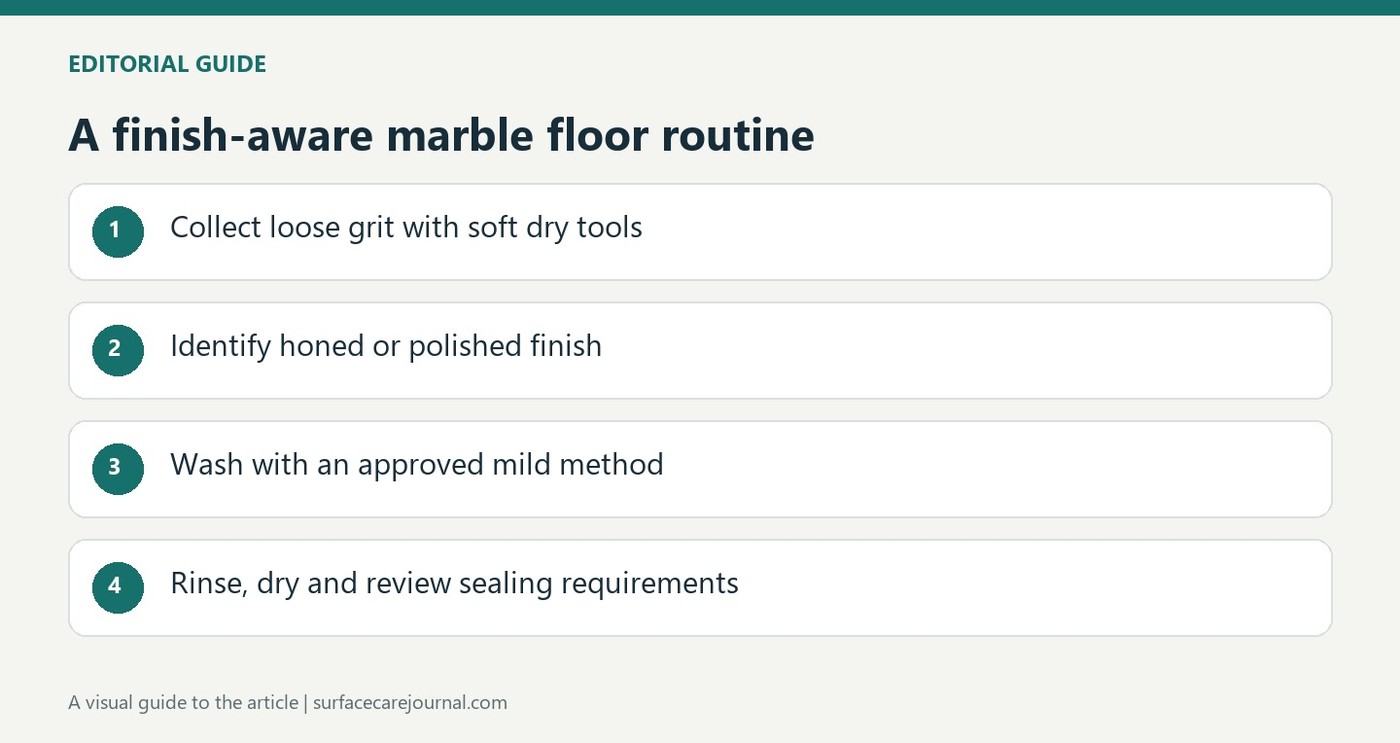
Natural marble requires more care than simply applying a general detergent and mopping it away. Its porous structure makes compatible cleaning and sealing important. Remove loose dust and crumbs before wet cleaning so abrasive particles are not dragged over the finish.
Confirm the correct cleaner and protective treatment for the marble type and finish. Maintenance frequency depends partly on traffic and exposure, so a busy kitchen may need different attention from a bedroom. Follow the sealer instructions rather than applying a universal schedule.
Use dry dusting to protect the finish
The retailer's guide recommends a dust mop before wet cleaning because vacuum equipment can scratch a marble surface. Choose clean, soft equipment and collect particles instead of pushing them beneath the next wet pass. A hallway carrying tracked-in dirt may need more frequent dry attention than a quieter room. Deal with a new spill separately and promptly rather than waiting until the whole floor is due for washing.
Choose for honed or polished marble deliberately
The source distinguishes specialist products intended for honed stone from those marketed for polished stone. Confirm which finish is installed before selecting a maintenance cleaner, and read the current product instructions. Avoid a general all-purpose cleaner unless it explicitly allows natural marble. Bleach, lemon and vinegar recipes are inappropriate shortcuts when the surface requires a stone-compatible method and gentle tools.
Rinse and dry instead of leaving residue
After a mild wash, the guide recommends removing remaining cleaner with a soft cloth dampened in clean water, then drying the tile. Do not leave puddles while waiting to inspect the finished appearance. Sealing is another, separate maintenance decision: the retailer discusses protection around installation and later use, but the actual stone, chosen sealer and traffic determine the correct procedure. Confirm those requirements rather than applying a blanket coat count.
Identify the finish before choosing a maintenance bottle
Stone Deals separates honed marble from polished marble in its product examples, so the intended appearance needs to be identified before a cleaner is selected. A low-sheen finish should not be treated as a failed polished floor. Check the installed stone and any existing protection with the supplier. The retailer's named products illustrate different maintenance roles, but their current directions and suitability for the actual floor still need to be confirmed.
Keep that information alongside the installation records if it is available. A later owner or cleaner should not have to infer the coating from a photograph or from how water looked during one wipe. Check an unfamiliar approved method in an inconspicuous area and inspect after cleaning and drying. A compatible sample is more informative than applying a new shine treatment across the room to see what happens.
Let dry collection reduce the burden on wet cleaning
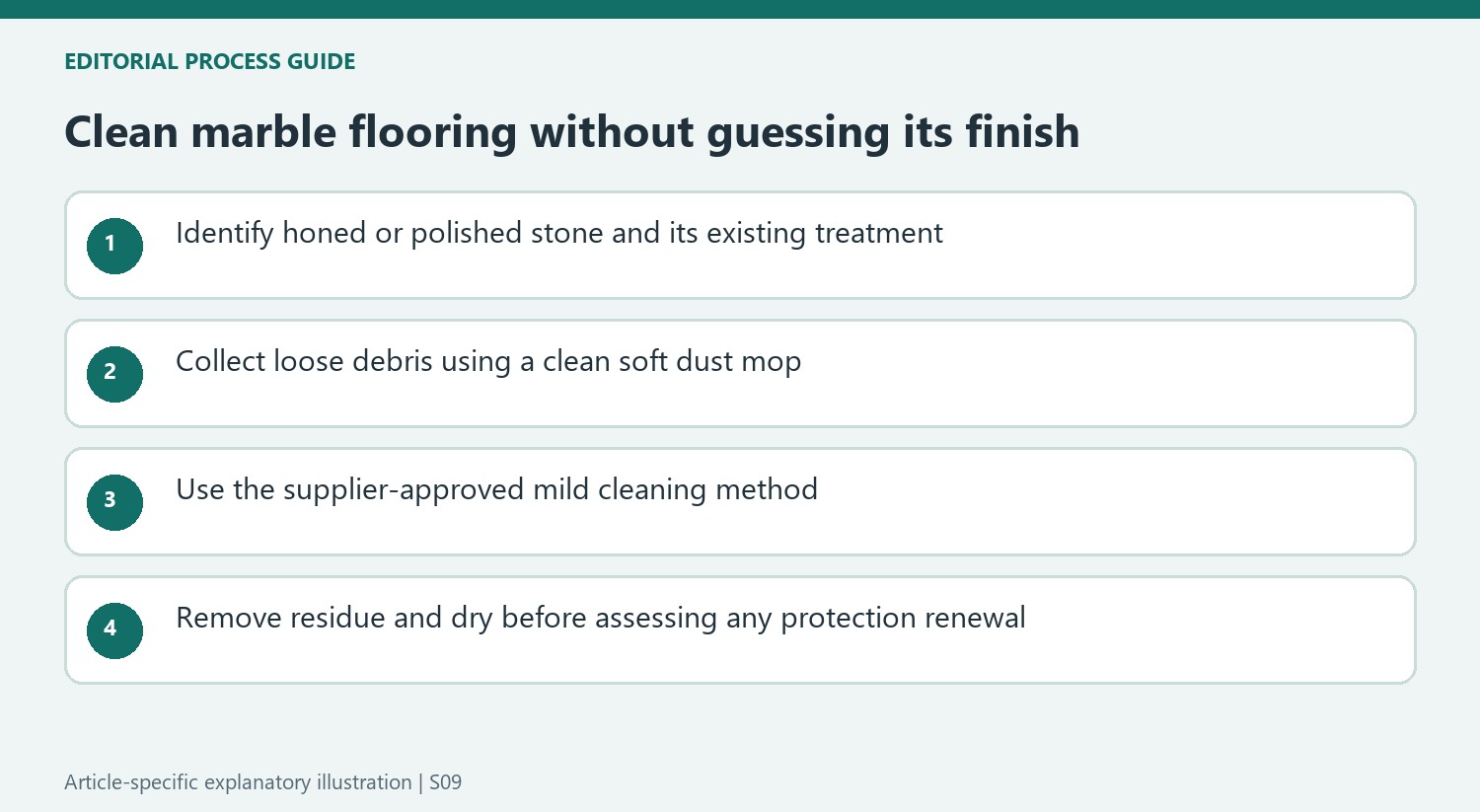
The retailer recommends a clean dust mop because unsuitable vacuum equipment can scratch the marble. Collect crumbs and grit before a damp pass, especially near entrances and busy kitchen routes. Check the mop head and change it when dirty. Pushing a loaded head repeatedly through the room can distribute fine abrasive particles instead of removing them, even when the tool itself is nominally soft.
A new spill deserves prompt local attention rather than waiting for a scheduled room-wide wash. Use the approved mild routine and remove remaining moisture. For ordinary wet cleaning, follow the cleaner's dilution and avoid bleach, vinegar or lemon-based substitutes that do not suit the stone. Familiar household use elsewhere is not relevant evidence that a bottle belongs on this marble and its protective treatment.
Make the rinse and protection decisions separately
After a mild wash, the source recommends a soft cloth dampened in clean water to remove residue, followed by drying. Keep the final cloth separate enough that it actually lifts detergent rather than spreading it over the next tile. Do not leave puddles while comparing the appearance from across the room. A wet reflection can conceal a film or a changed patch that becomes clearer once the surface is dry.
The retailer also discusses sealing around installation and later use, but blanket coat counts or annual intervals should not replace the chosen system's requirements. Traffic, stone finish and existing treatment affect the appropriate plan. Ask the supplier what protection is needed and how renewal should be assessed before adding another layer. Routine cleaning preserves the surface; sealing is a distinct maintenance operation with its own compatibility, preparation and drying conditions.
References
- How to Clean and Maintain Marble Floors. stonedeals.co.uk; SemiColonWeb; Stone Deals.
Cleaning choices matter because marble is a porous natural surface.


Leave a Comment
Comments (0)