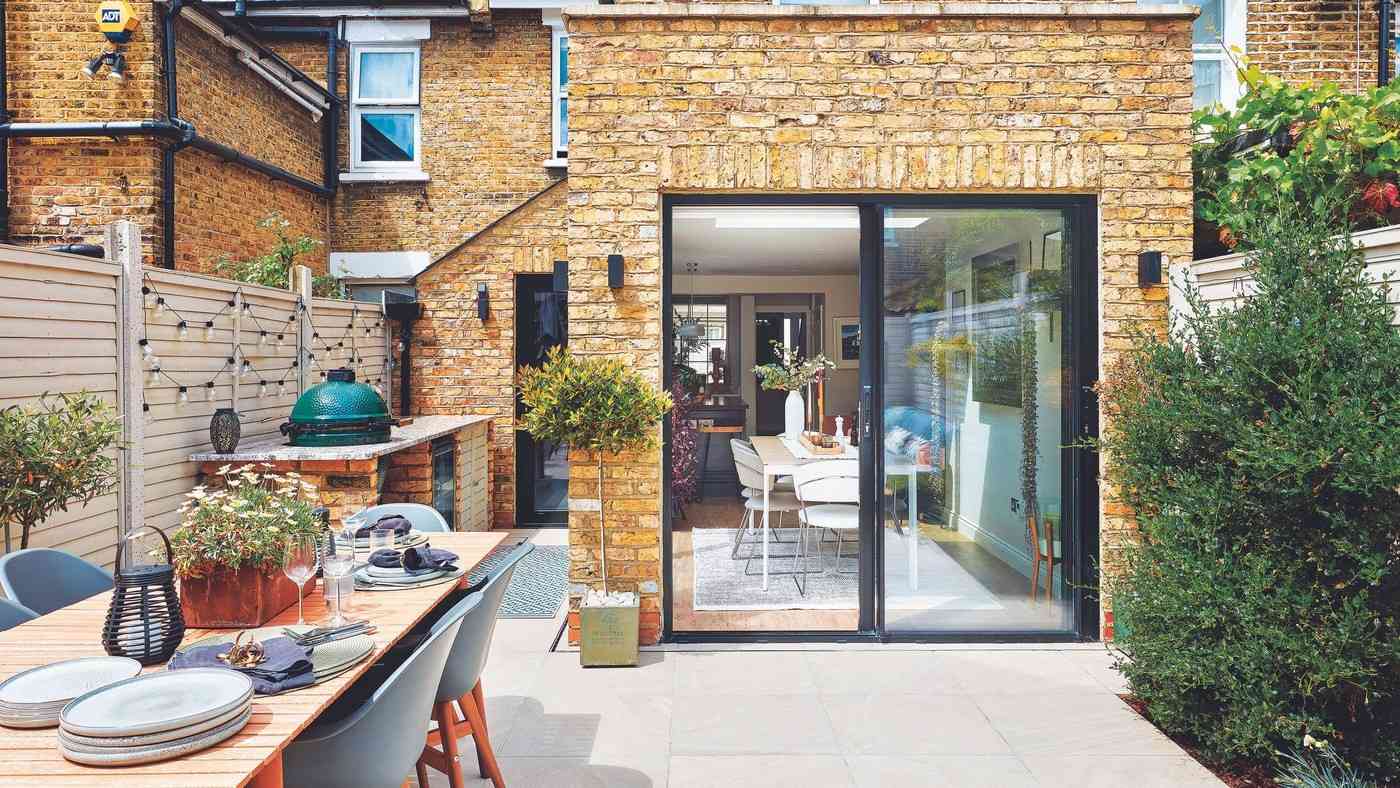
Start Porcelain-Patio Cleaning with Debris Removal
Ideal Home's porcelain-patio guide begins by sweeping away leaves, loose dirt and debris before washing. Its experts recommend warm water with a mild detergent or pH-neutral cleaner, using a soft-bristled brush or mop. Removing loose material first avoids simply dragging grit through the wet cleaning stage.
Check the tile, grout and cleaner instructions before treating stains or using a pressure washer. Even durable porcelain belongs to a larger installation with joints and adjoining surfaces that may have different limits. Use controlled rinsing and allow the area to dry. Strong chemicals or aggressive pressure are unnecessary starting points when a compatible mild method can address ordinary dirt.
Protect the joints as well as the porcelain
Ideal Home warns that excessive pressure can affect grout lines and chip tiles, even when the porcelain itself is durable. Its experts recommend adjustable equipment and a controlled setting rather than directing a concentrated jet at the installation. A garden hose is an alternative for rinsing. Confirm the manufacturer's requirements for the tile and jointing system before choosing equipment. The article also advises against steel wool and steel brushes: they may scratch the face or leave particles that later discolor. After rinsing away cleaner, let the patio dry or use a suitable lint free cloth where a spot-free finish is wanted.
Clean gently before considering machinery
The source starts with a broom or leaf blower to clear leaves and dirt. A bucket of warm water with a mild detergent and a soft brush can then address ordinary grime without beginning with strong chemicals.

Keep the final rinse controlled
Remove the dirty cleaning solution rather than letting it dry onto the patio. Take particular care around adjacent surfaces and joints, and use the installation instructions to decide whether any remaining stain needs a separate treatment.
Give sweeping access to the hidden areas first
Ideal Home starts by clearing leaves and loose dirt from the porcelain patio before applying a washing solution. Move accessible furniture and pots so sweeping reaches their footprints and the edges around them. Inspect any moss or weeds in the joints separately rather than assuming a wet scrub will resolve every growth problem. A broad clean is easier to assess when loose debris is not continually arriving from an overlooked corner.
A broom is suitable for modest areas, while the guide mentions a leaf blower for larger spaces. Choose equipment that collects or moves debris away without damaging neighboring surfaces. Before introducing liquid, check the patio's drainage and the cleaner's instructions for surrounding plants and materials. Outdoor porcelain is part of an installation, so the tiles' durability alone does not identify what the joints or adjoining edges will tolerate.
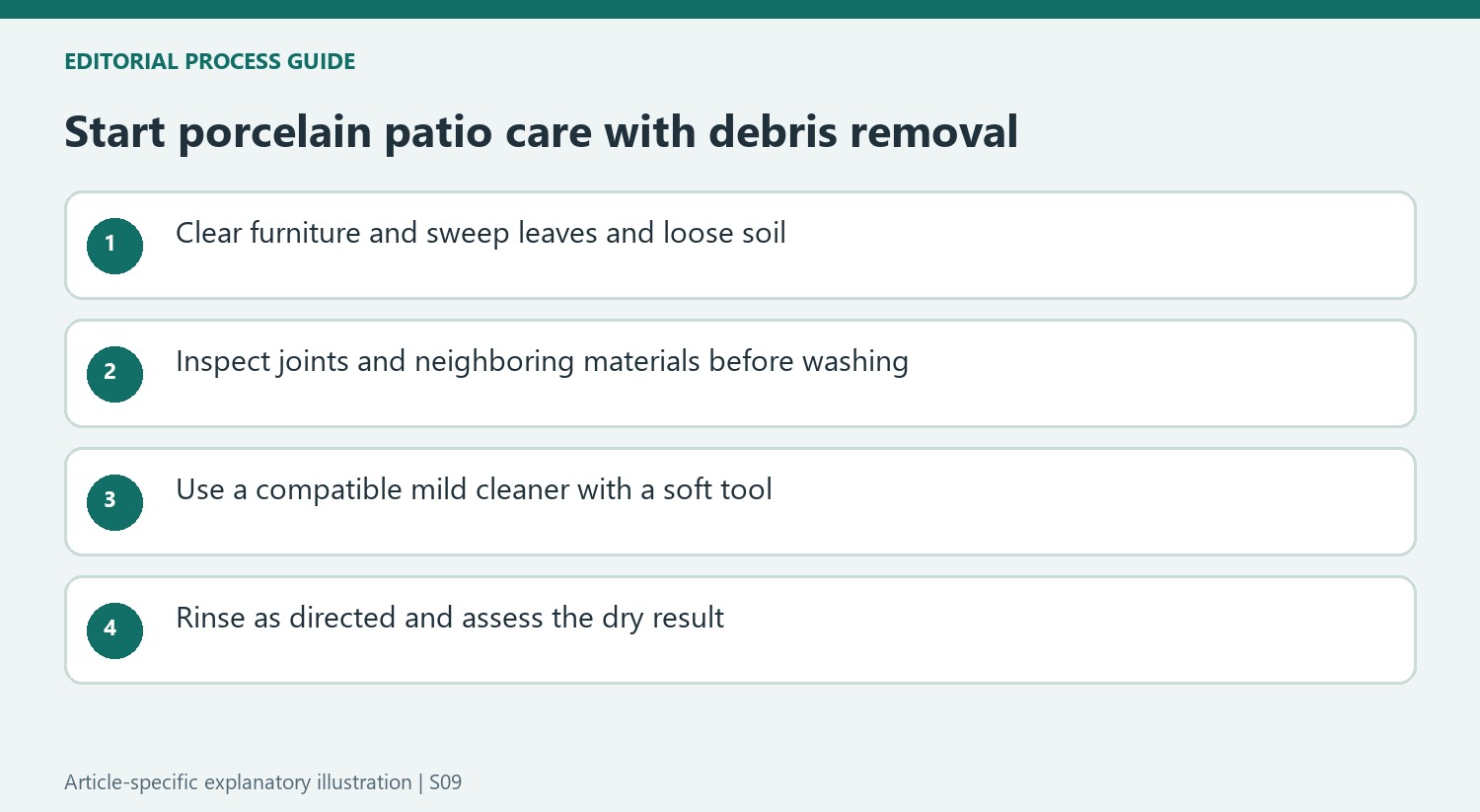
Use a compatible soft-tool wash as the starting point
The experts favor warm water with mild detergent or a pH-neutral cleaner for ordinary dirt, applied using a soft-bristled brush or appropriate mop. Read the label for dilution and residue removal instead of adding several household ingredients to make the solution seem stronger. A small inconspicuous test helps confirm the response of both the tile surface and the grout before treating the complete patio.
Avoid steel wool or a steel brush. The source warns that they can scratch and may leave particles in the grout that later discolor through oxidation. A stubborn local mark deserves diagnosis and a compatible targeted treatment rather than a metal-tool pass over every slab. The useful result is dirt removed while the original surface remains intact, not a brighter patch created by taking material away.
Treat pressure and rinsing as installation-specific choices
The guide discusses pressure washing with adjustable equipment, but also warns that excess force can harm joints or chip tiles. Follow the patio, grout and equipment instructions before considering it; a suggested distance in a general article is not universal approval. Where an ordinary garden hose provides the permitted rinse, there is no need to introduce concentrated force simply to make the final stage feel more thorough.
Remove cleaning residue completely as directed and allow suitable drying. A clean lint-free cloth can improve the finish where water marks matter, while weather and the product determine whether air drying is appropriate. Inspect the dry result before repeating treatment. If a patch remains, distinguish absorbed staining, a grout issue and surface residue instead of increasing pressure automatically across an otherwise clean outdoor area.
References
- How to clean porcelain patio tiles and restore your patio to its former glory. Ideal Home; Ellis Cochrane; Kezia Reynolds.
A pH-neutral cleaner and soft brush offer a controlled first approach to outdoor tile grime.


Leave a Comment
Comments (0)