Textured Tile Floors Need Attention beyond a Quick Mop
The tile-floor reference questions routines that simply spread dirty water across a textured surface. Flat tools can miss lower areas and joints, leaving residue behind despite an apparently wet-cleaned floor. Controlling the amount of water also matters around vulnerable materials.
Choose equipment and a cleaner suited to the tile and grout, changing dirty water or pads as needed. The lesson is not that every mop is forbidden, but that the method must actually lift soil from the surface being cleaned.
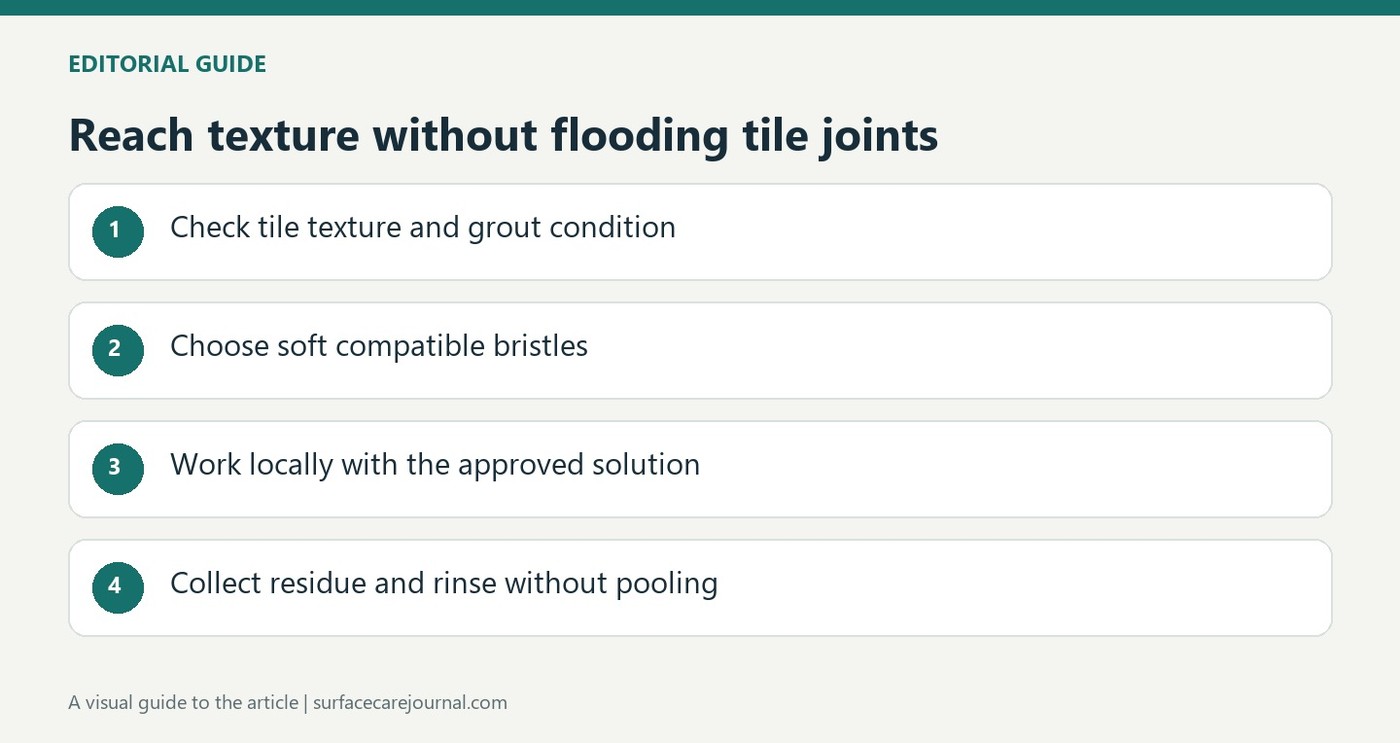
Choose a brush for the texture and grout
Ideal Home recommends a softer scrubbing brush for targeted cleaning in grooves that a flat pad may pass over. Its quoted expert warns that very hard bristles can scratch tile or disturb grout. Examine the actual finish and joint condition before choosing the tool. More pressure is not necessarily more effective, particularly where the problem is trapped soil in a lower area rather than material on the highest points.
Keep the solution compatible with the surface
The article distinguishes natural stone from other tiles and advises a gentler, suitable solution for stone. Avoid transferring its vinegar suggestions to a marble or other acid-sensitive floor. Apply only the amount of approved cleaner needed for the area, following its label. A controlled localized treatment can help remove a stubborn patch without repeatedly saturating the surrounding floor and vulnerable joints.

Collect what the brushing releases
Scrubbing is only the loosening stage. The source recommends wiping away remaining paste or dirty liquid with a clean cloth, followed by a controlled rinse without pooling water. Cloudiness after cleaning can reflect excess product or dirty wash water. Inspect a dry section before repeating the process, refresh tools as they become dirty and judge the method by whether it removes soil rather than simply making the floor wet.
Assess whether the tool reaches the lower texture
Ideal Home's criticism of a quick mop is most useful when read as a question about soil removal. A flat head may contact the high points of a textured surface while missing lower grooves and recessed grout. Inspect a dry cleaned patch rather than assuming a wet pass reached every part. The lesson is to choose an effective method for the actual geometry, not to ban every mop regardless of tile, head and technique.
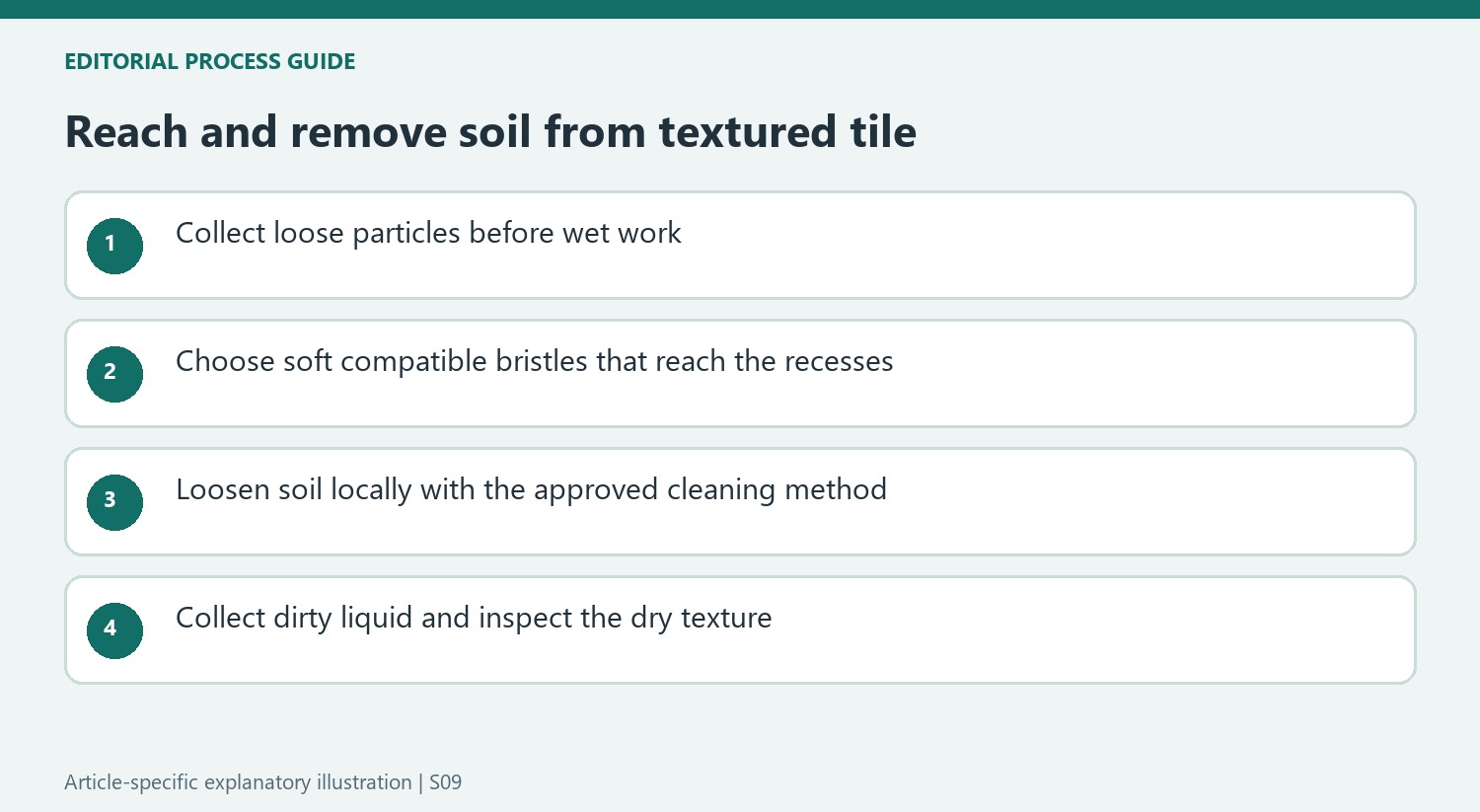
Remove loose debris before focusing on retained grime so a small brush is not working through particles that could have been collected first. Choose bristles that reach the texture without being too hard for the finish or joint. The source warns that very stiff tools can scratch tile or disturb grout. A narrow brush provides access, but its usefulness still depends on gentle control and compatibility.
Use material-approved liquid rather than a generic texture recipe
The article separates natural stone from other tile in its cleaner discussion. Do not carry its vinegar suggestions onto marble or another acid-sensitive installation simply because the floor is textured. Check tile, grout and sealer requirements before applying any product, and use the approved dilution or contact stage. Familiarity with a household ingredient does not identify how it affects the actual protective surface.
Work locally on a manageable section and keep the amount of liquid controlled. The objective is to loosen soil in the recesses, not to leave water collecting there while the rest of the room is scrubbed. If a paste is appropriate under the material's care guidance, use its suitable application and removal method. More abrasive powder or more pressure is not an automatic improvement when a texture holds a persistent patch.
Finish by taking released dirt off the floor
The source specifically follows brushing with removal using a clean cloth and a controlled rinse. That final collection stage determines whether loosened soil actually leaves the installation or simply settles back into the grooves. Refresh the cloth, pad and water as they become dirty. A method that makes the whole room uniformly wet may look thorough while failing this basic dirt-removal test.
Inspect the dry result before repeating the treatment. Cloudiness can come from excess product or contaminated wash water, while a lasting mark may require a different diagnosis. Steam is discussed as another option in the source, but the installed surface and grout instructions must establish its suitability before changing equipment. Keep ordinary texture cleaning separate from attempts to repair damaged joints or permanently alter a worn finish.
References
- Sorry, mops! This is what you should *actually* be using to clean tiled floors, according to the pros. Ideal Home; Lauren Bradbury.
Grooves and grout lines can retain soil when a cleaning pass reaches only the high points.


Leave a Comment
Comments (0)