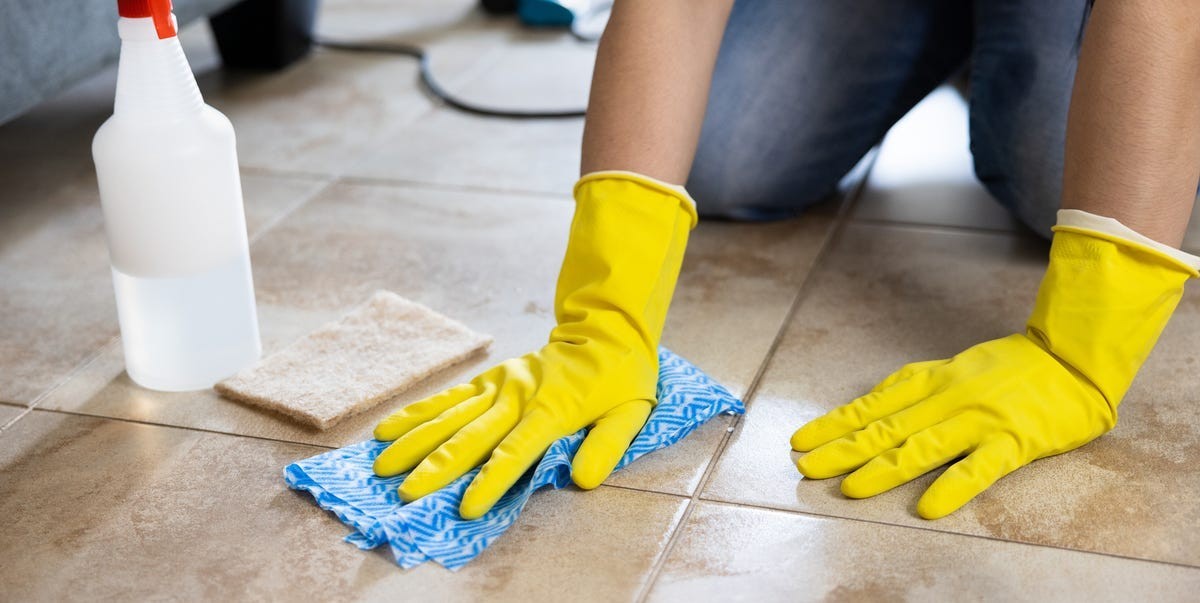
Use Less Detergent when Washing Compatible Tile Floors
Ceramic and porcelain tile floors should be swept or vacuumed with suitable soft tools before washing. The source recommends a mild detergent at the correct dilution rather than adding more for a supposedly stronger clean. Too much product makes residue harder to remove.
Use a microfiber tool and follow the floor and cleaner instructions for rinsing and drying. Bare-floor vacuum settings help avoid unnecessary brush-roll contact. Natural stone, vinyl, and other tile materials need their own compatibility checks rather than automatic transfer of the ceramic routine.
Control the pad and water together
Good Housekeeping recommends microfiber rather than a water-laden sponge because the moisture can be regulated more easily. Squeeze out excess liquid, and work a large room in smaller sections. A spray mop offers another way to dispense a measured amount where compatible. The aim is to loosen and collect dirt without covering the entire room in water or allowing dirty liquid to sit in the joints.
Make fresh water part of the finish
The article identifies insufficient rinsing as a likely reason for sticky floors after mopping. Change dirty water frequently and clean the pad before using it to remove leftover solution. For glazed tile, a clean dry microfiber cloth can help avoid water spots. Check the result after drying so any remaining haze is not mistaken for a need to add more detergent.
Let traffic determine the routine
The source connects cleaning frequency with household use and recommends collecting debris at the first signs of dirt. Entrance mats and removing outdoor shoes reduce what reaches the floor. Treat spills when they happen instead of leaving them until the next full wash. A marble, terracotta or vinyl surface still needs its own instructions, so a shared cleaning timetable does not imply that the same product suits every room.
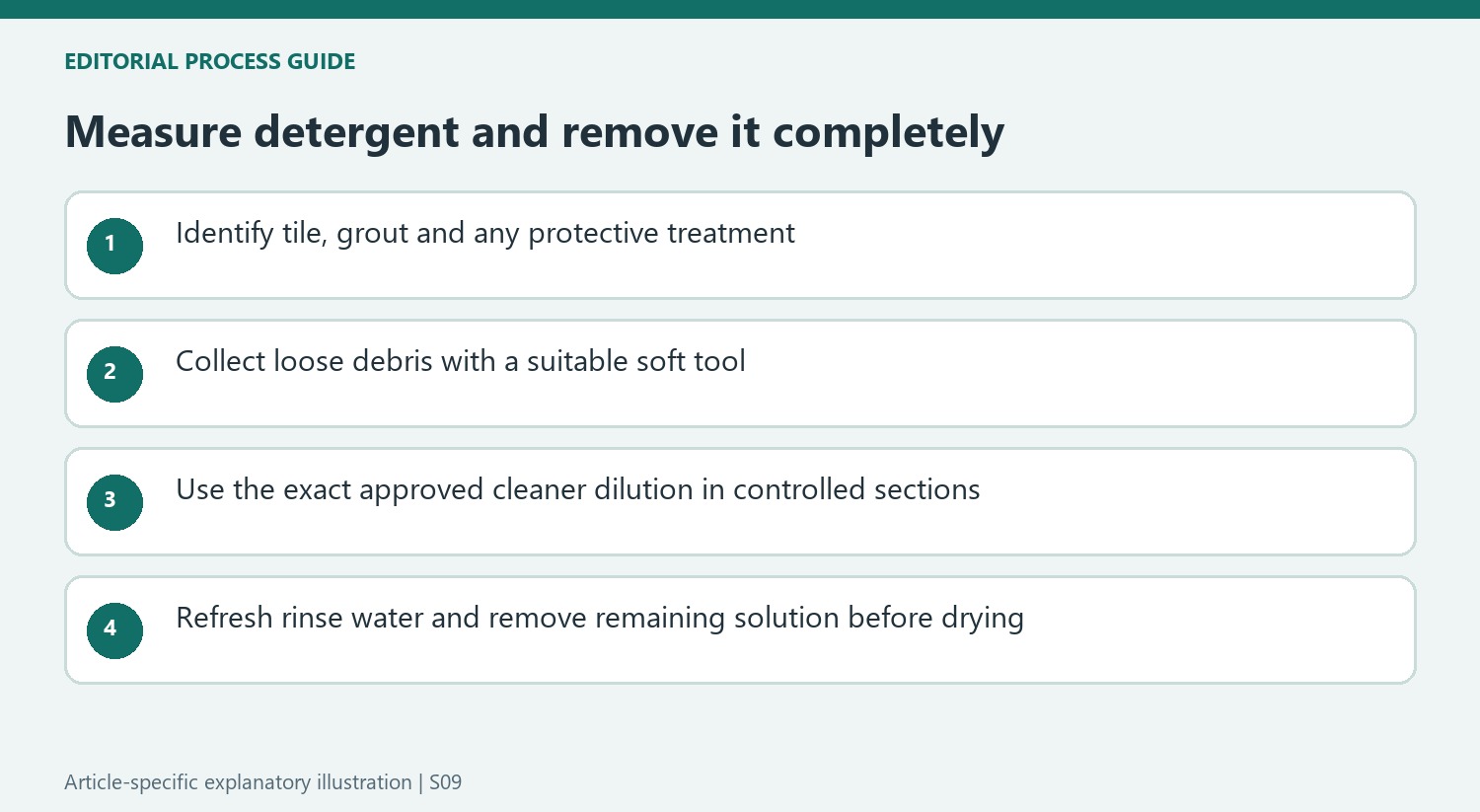
Choose the tile method before measuring detergent
Good Housekeeping's guide covers ceramic, porcelain, resilient tiles and natural stone, so begin by identifying which section applies to the actual floor. A dilution used for one named maintenance product is not a universal amount for every detergent. Read the current cleaner label and the flooring maker's care requirements together. Grout, sealer and decorative borders also need to tolerate the method before it is used across the room.
Collect loose dirt with a suitable soft-bristled broom or vacuum attachment first, using a small hand broom along confined edges where needed. Check whether a powered brush roll should be disabled for the surface. This preparation prevents a wet mop from carrying grit through the cleaning solution. The tool itself should be clean enough to collect particles without introducing a load left from another room.
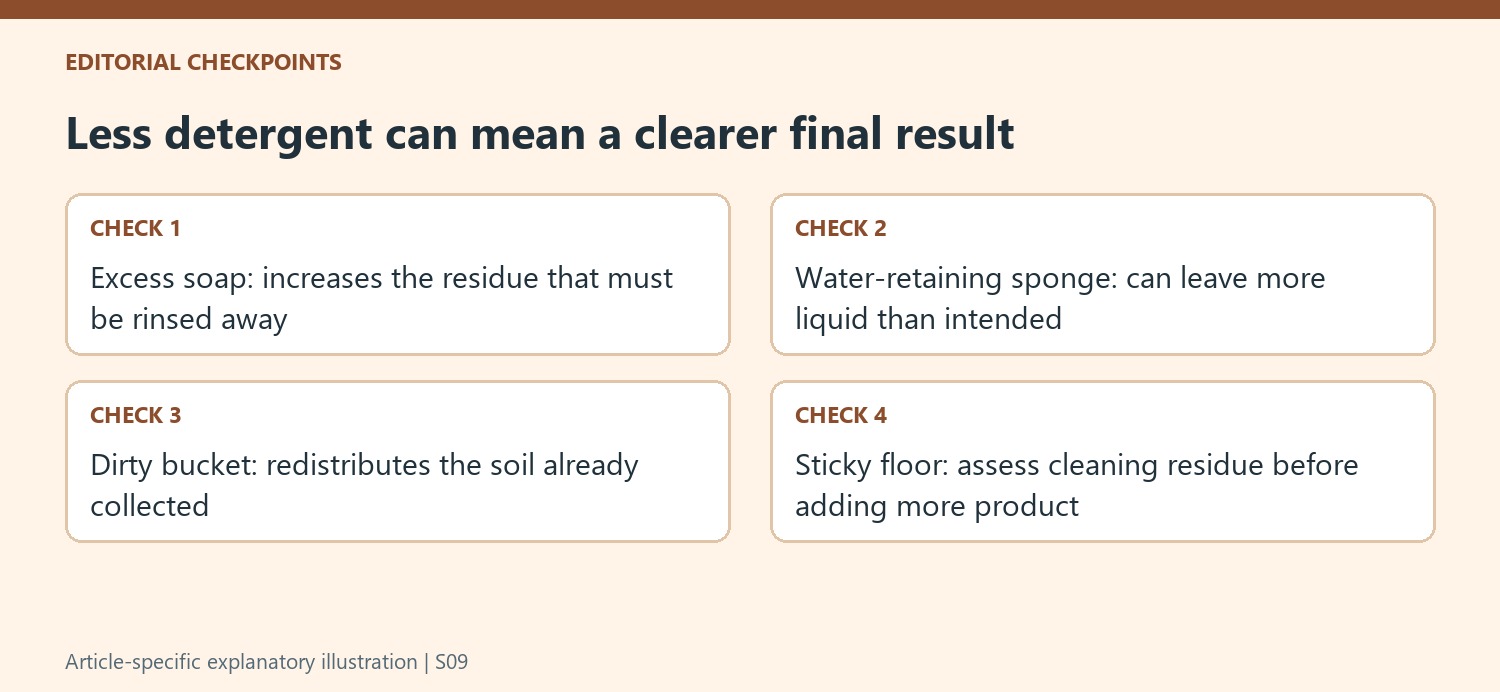
Use less product to make removal more effective
The source emphasizes that excessive detergent makes rinsing harder. That is a practical reason to measure rather than pour freely, especially when a floor already looks cloudy after washing. Use a microfiber cloth or mop that can be squeezed effectively, or an approved spray system with controlled dispensing. A water-retaining sponge can leave more liquid than intended even when the cleaner concentration was selected correctly.
Work in sections so the head can be cleaned and the dirty water refreshed as the job proceeds. Rinse thoroughly using the suitable method and remove leftover cleaning solution rather than allowing it to dry as a film. The source connects post-mop stickiness with inadequate residue removal. Adding more detergent to a sticky result can therefore repeat the cause instead of correcting it.
Match drying and later protection to the surface
The guide recommends a clean dry microfiber finish on glazed tiles where water spots matter, while other surfaces may have different drying requirements. Follow the installed material and cleaner rather than treating every tile as a sealed ceramic square. Natural stone needs appropriate neutral chemistry and gentle tools; resilient floors also have particular heat and moisture limitations. A steam option discussed for a compatible installation should not be transferred uncritically to the next room.
Respond to spills promptly and use suitable entrance mats to reduce tracked-in dirt between fuller cleans. Any wax or sealer renewal is a separate product-specific decision, not an automatic way to make a just-cleaned floor shine more. If a local mark remains after appropriate cleaning, identify it before selecting a spot treatment. Keeping the ordinary wash simple helps reveal when the actual issue is a stain, residue or a worn finish.
References
- The Simplest Way to Make Tile Floors Shine, According to Cleaning Pros. Good Housekeeping; Taryn Mohrman.
Excess solution can make rinsing harder and leave the surface dull.


Leave a Comment
Comments (0)