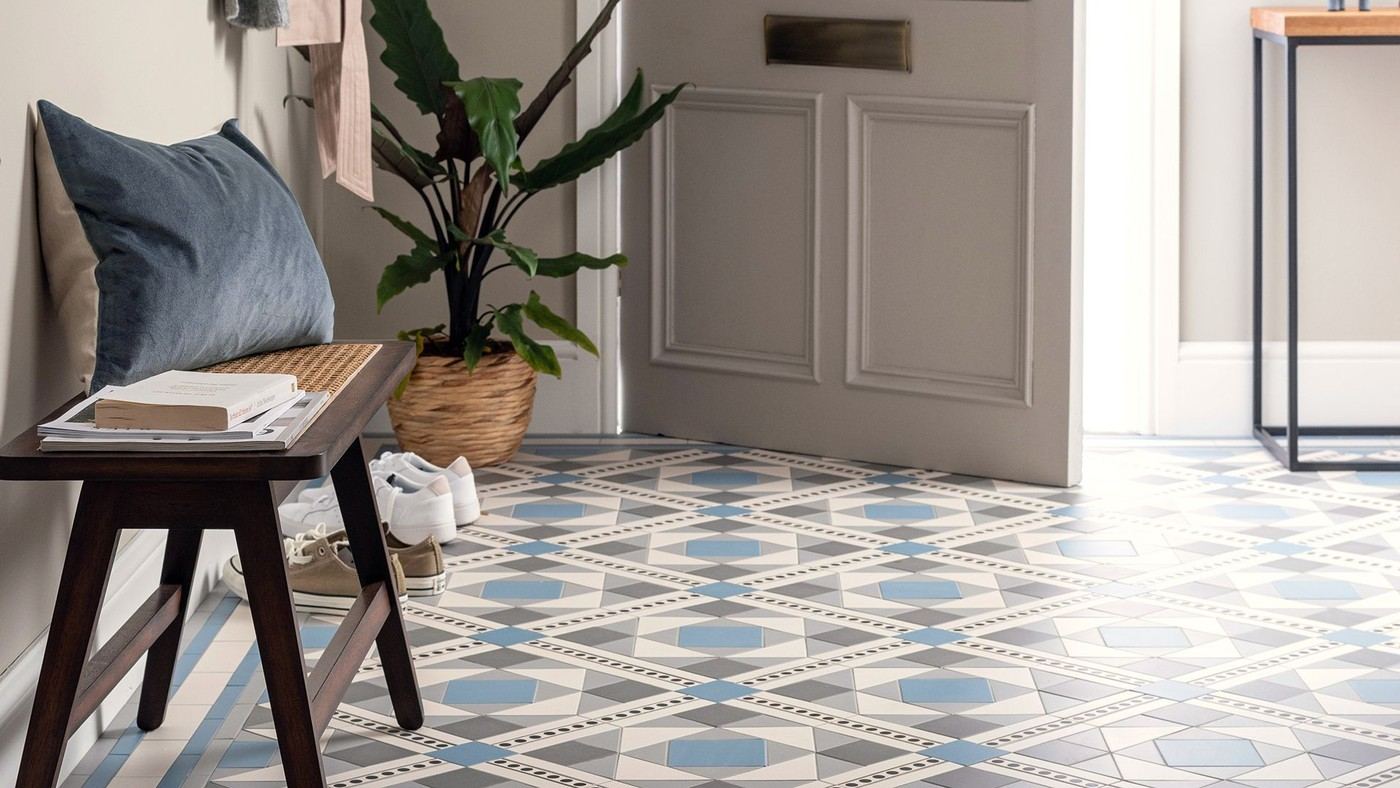
Preserve the Patina of Encaustic Tile Floors
The encaustic-tile reference explains that traditional floors can carry an attractive patina from decades of use. Routine cleaning helps preserve the pattern without treating every sign of age as a defect. The construction and surface of modern versions may differ from older fired-clay examples.
Check which type of tile is present before choosing a product or method. Cracked or loose tiles also need more than ordinary cleaning. The reference recommends skilled help for substantial repair work, allowing maintenance to protect the floor rather than disturb a fragile historical installation.
Distinguish an aged surface from a new imitation
Homes and Gardens describes traditional fired clay tiles with patterns built through colored material, alongside newer products whose decoration may be confined to the surface. This difference changes how aggressively a floor can be treated. Identify its construction and condition before trying to remove what appears to be wear. An established patina can be part of the floor's character, rather than a layer to scour away.
Do not wash salt deposits back into the floor
The guide warns against soaking encaustic tiles and explains that white efflorescence should be brushed or vacuumed away rather than washed back into the material. Moisture control matters particularly where a historic ground floor lacks a damp-proof membrane. Inspect for the source of persistent dampness and consult a restoration specialist before adding a coating that could trap moisture beneath the surface.
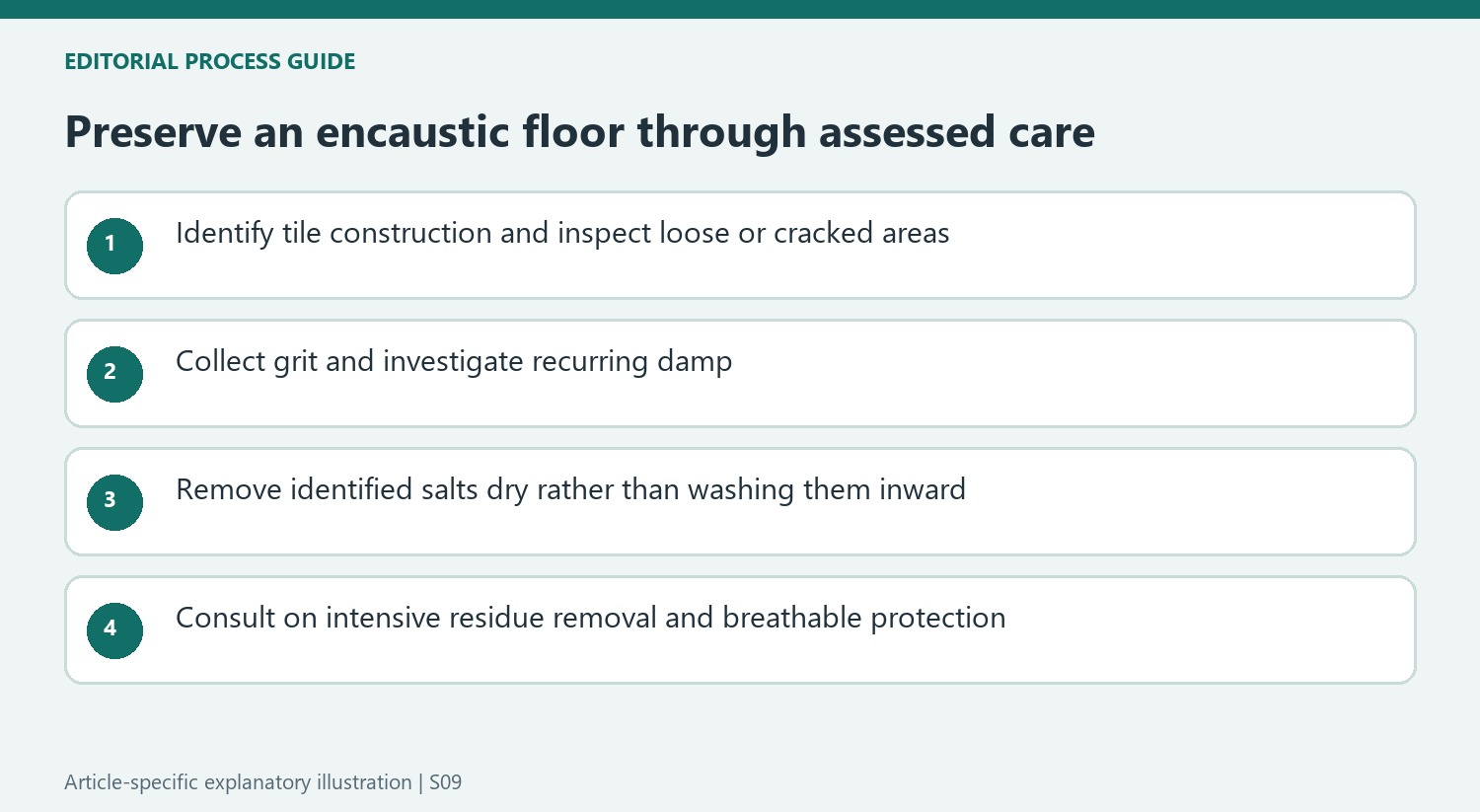
Reserve restoration chemicals for an assessed problem
The article discusses paint, adhesive, old wax and cement as different contaminants requiring different approaches. Those restoration examples are not an ordinary maintenance recipe. Use a specialist's assessment, small tests and the relevant product directions before attempting intensive removal. For daily protection, intercept grit at the doorway with suitable breathable mats, maintain gentle cleaning and arrange repairs for loose or damaged tiles without disturbing the surrounding installation.
Identify the tile construction before judging the wear
Homes & Gardens describes traditional encaustic floors alongside newer patterned products, emphasizing that construction can differ. Establish whether the floor is historic fired clay, another modern tile type or a surface-decorated imitation before selecting a treatment. A design that continues through the colored material presents a different wear situation from decoration confined to the top. Do not assume a vigorous scrub will preserve both equally simply because their patterns look related.
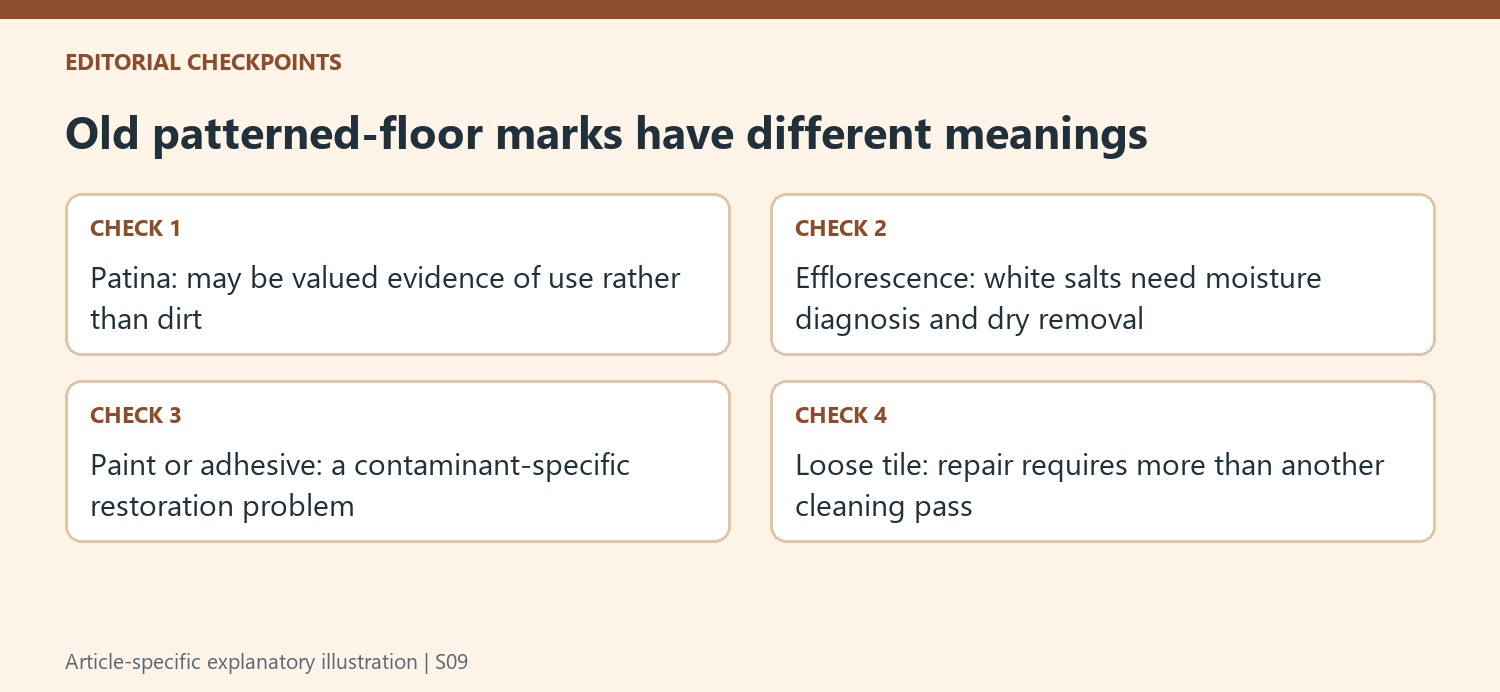
Roger Hunt's discussion also treats an established patina as part of an original floor's character. Inspect loose or cracked tiles separately from harmless signs of use. A conservation-minded clean should reveal and protect the pattern, not automatically erase every change accumulated over decades. Significant repair needs skilled assessment so lifting one damaged piece does not unnecessarily disturb the surrounding historic installation.
Manage moisture before adding a protective layer
The guide warns against soaking these floors and explains that white efflorescence is a salty deposit to remove dry rather than wash back into the material. Use suitable gentle brushing or vacuuming and investigate recurring moisture. The white appearance should not trigger a wet stain-removal recipe without that diagnosis. Reintroducing dissolved salts into the tile can undermine the apparent improvement from the first wash.
Historic ground floors may lack a damp-proof membrane, making breathability relevant to any covering or coating decision. The source cautions that some sealing approaches can trap moisture in such situations. Ask a restoration specialist about the floor construction before adding an impregnator or film to achieve a more uniform shine. A coating that suits a new installation is not automatically appropriate for an old lime-bedded floor.
Match intensive removal to the actual contaminant
The article treats paint splashes, adhesives, old wax and cement as different restoration problems, with examples of specialist removal. Those examples do not form a routine mixture or a sequence for the reader to apply across an unidentified floor. Obtain a suitable assessment, use small controlled tests and follow the exact product and protective-equipment directions. The desired outcome includes avoiding damage to color, surface texture and neighboring joints.
For ongoing care, collect grit regularly and use the restrained compatible method advised for the identified floor. Suitable breathable entrance mats help intercept debris without introducing an impermeable covering. Inspect missing or damaged pieces during the same routine and arrange appropriate repairs. These measures preserve the character that remains, while any decision about wax, sealer or major contaminant removal is made separately rather than as an automatic finishing flourish after cleaning.
References
- How to clean encaustic tiles – an expert guide. Homes and Gardens; Melanie Griffiths.
Regular care should respect both the material and the condition of an older patterned floor.


Leave a Comment
Comments (0)