Keep Polished Tile Floors Free of Water and Oil
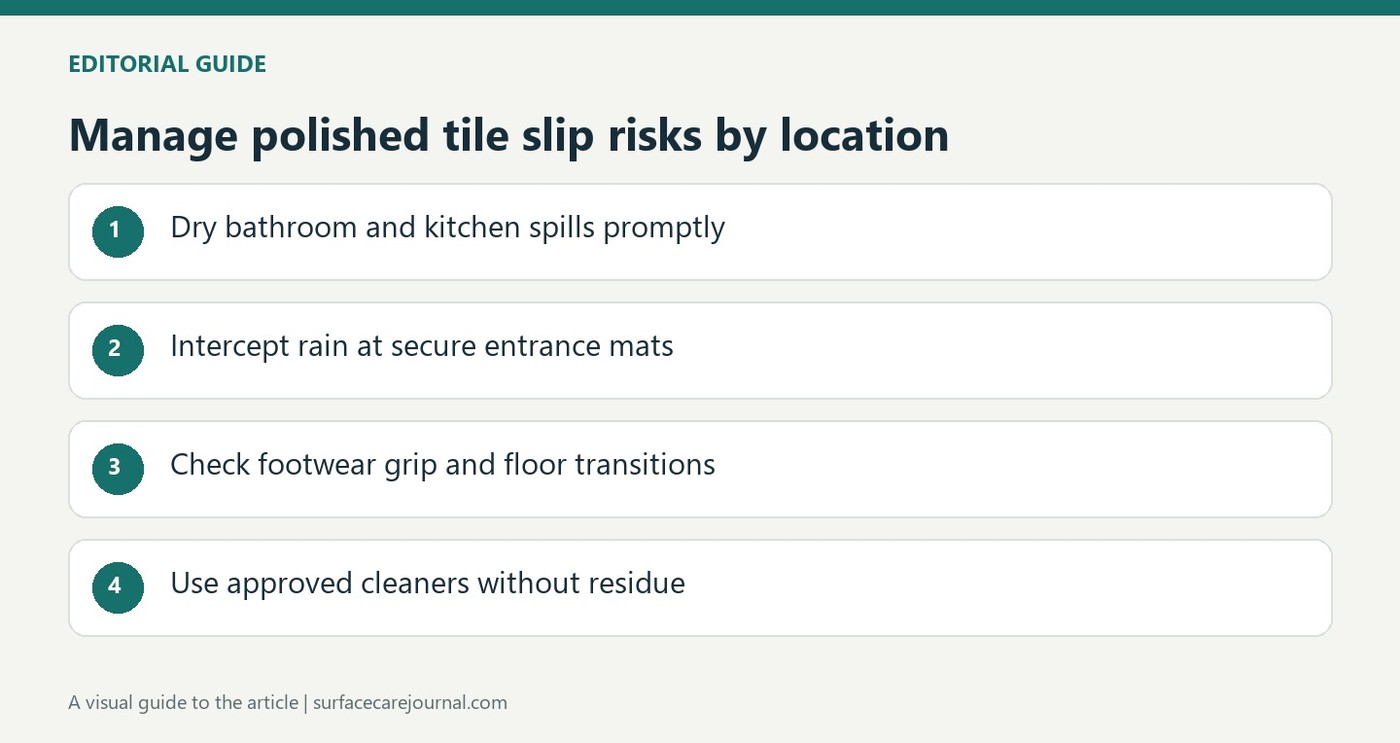
Polished tiles reflect light and can be easy to maintain, but water, cooking oil, and dust can create slippery patches. Clean kitchen spills promptly and prevent liquids from remaining on the surface. Bathroom floors need particular attention after bathing or showering.
Use suitable entrance mats to limit rainwater brought in on shoes and keep them securely positioned. When specifying a wet room, consider polished tiles on walls with flooring rated for the intended conditions. Appearance alone does not establish slip performance.
Match the precautions to the room
The retailer's guide highlights three recurring sources of contamination: bath water in bathrooms, cooking spills in kitchens and rain carried through entrances. Each needs prompt removal rather than a general assumption that polished porcelain is always dry. Mats near appropriate work areas can help, provided they remain secure and do not create another obstruction. Check them regularly instead of considering placement the end of the task.
Consider footwear and changes between floor surfaces
The source notes that smooth slippers or socks can reduce grip on polished floors. Footwear with suitable traction and extra care when moving from carpet to tile are practical considerations, particularly when a spill has just occurred. Encourage children to avoid running on the glossy surface. These habits support housekeeping, but they do not replace selecting a floor with documented suitability for its intended wet or dry use.
Choose products without leaving a slippery film
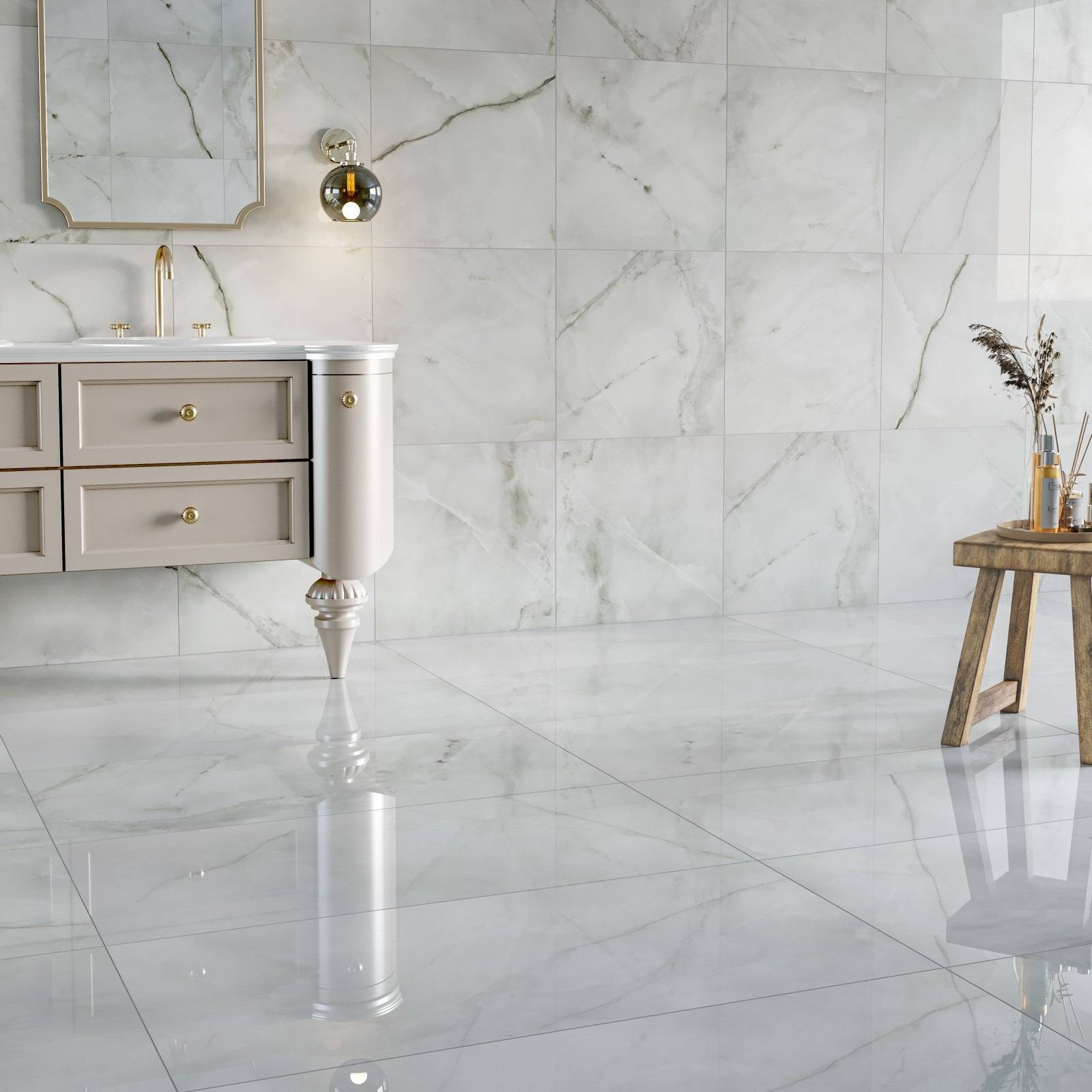
Regular removal of dust and grease helps keep the walking surface clear. Use the tile manufacturer's approved cleaner and remove residue as directed. The article mentions professional grip treatments, which should be assessed for the specific tile and application rather than applied automatically. A coating changes another aspect of the installation and needs its own compatibility and maintenance guidance; it does not make every polished tile suitable for a wet room.
Choose the polished surface for its documented use
Stone Deals presents polished tiles as attractive and practical while acknowledging that water, oil and dust can make a smooth surface slippery. Verify the particular product's intended setting and slip information rather than treating reflection as a performance rating. A polished bathroom wall and the floor immediately outside a shower receive different exposure. The source's suggestion of combining polished walls with a floor designed for wet conditions illustrates that distinction.
Do not assume a later anti-slip coating makes any unsuitable tile acceptable in any location. Ask the supplier how a proposed treatment affects appearance, maintenance and documented performance before choosing it. Existing polished floors can still be cared for with prompt spill removal and suitable protection, but household habits should not be used to replace the original suitability assessment where a new product is being specified.
Control the exposures particular to each room
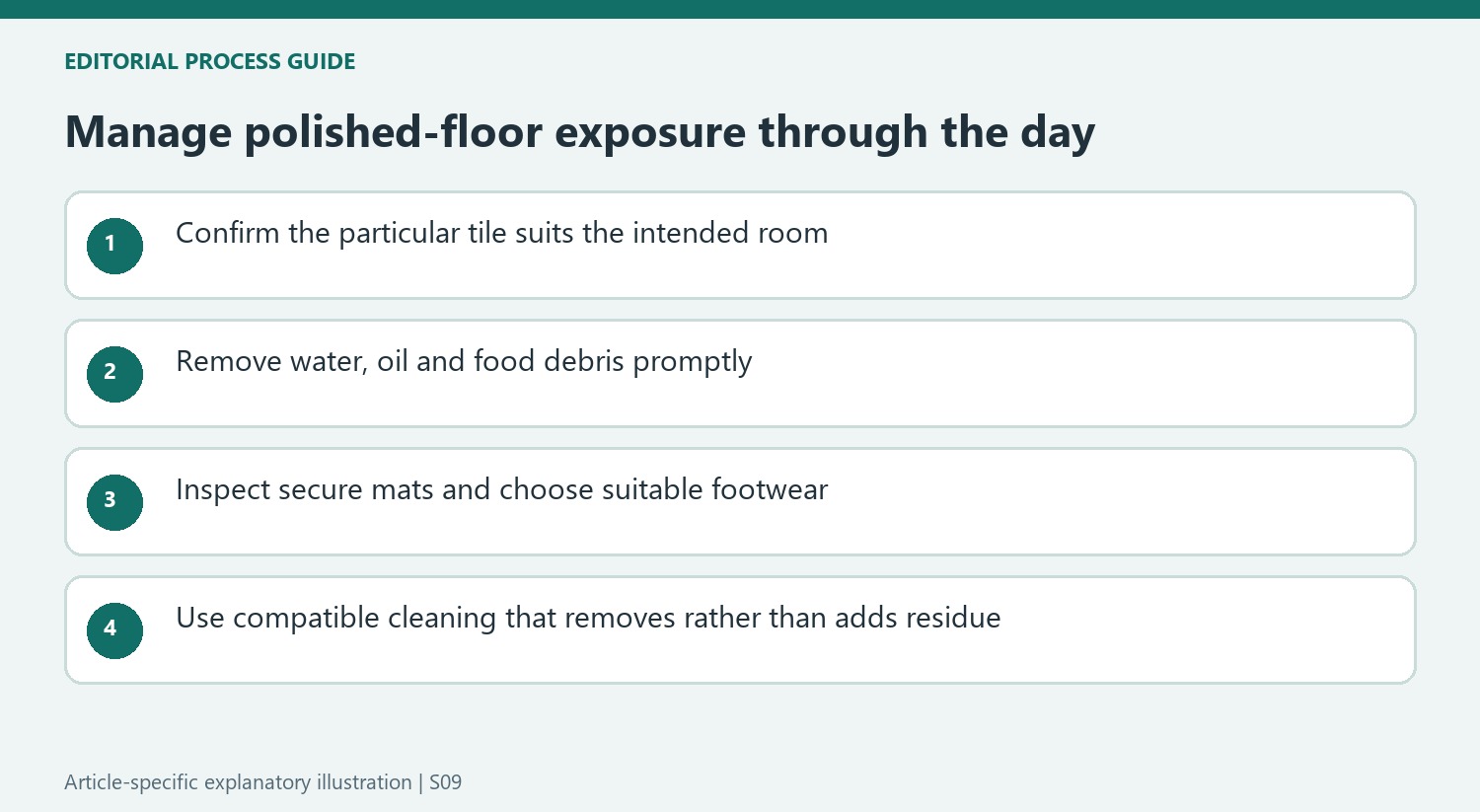
In a kitchen, remove water and cooking oil promptly rather than waiting for a scheduled wash. Use compatible cleaning products that do not leave a new slippery film and inspect places beside sinks and preparation areas. A suitable secure mat may help intercept repeated splashes, but it should not conceal retained moisture or curl into a separate trip hazard. Check it as part of the ordinary cleaning routine.
In a hallway, wet shoes can introduce water to an otherwise dry living space. The source recommends good entrance mats, wiping feet and drying wet patches during rainy periods. In bathrooms, ventilation and prompt water removal address repeated dampness near baths and showers. These are different exposure points, so a single room-wide weekly wipe is not the only useful form of maintenance for a polished floor.
Include footwear and mat condition in everyday use
The guide notes that socks and smooth-soled slippers can change how secure footing feels on a polished surface. Choose suitable footwear with grip and pay attention when moving between carpet and tile. Encourage careful movement rather than running across the reflective area, particularly while any damp patch is being addressed. Surface cleaning and how the room is used work together; neither should be judged only by the floor's showroom appearance.
Regularly inspect rugs and mats so they remain secure and suitable for the floor, then collect dust and debris with the approved tools. Follow with compatible restrained cleaning as needed and remove residue completely. If the surface becomes unexpectedly slippery or a treatment appears to leave a film, consult the supplier about the cause before applying another coating. The practical goal is a clean floor that remains appropriate for its real conditions of use.
References
- Polished Tiles: Stylish, Practical and Safe for Modern Homes. stonedeals.co.uk; SemiColonWeb; Stone Deals.
A glossy finish needs practical spill control in busy rooms.


Leave a Comment
Comments (0)