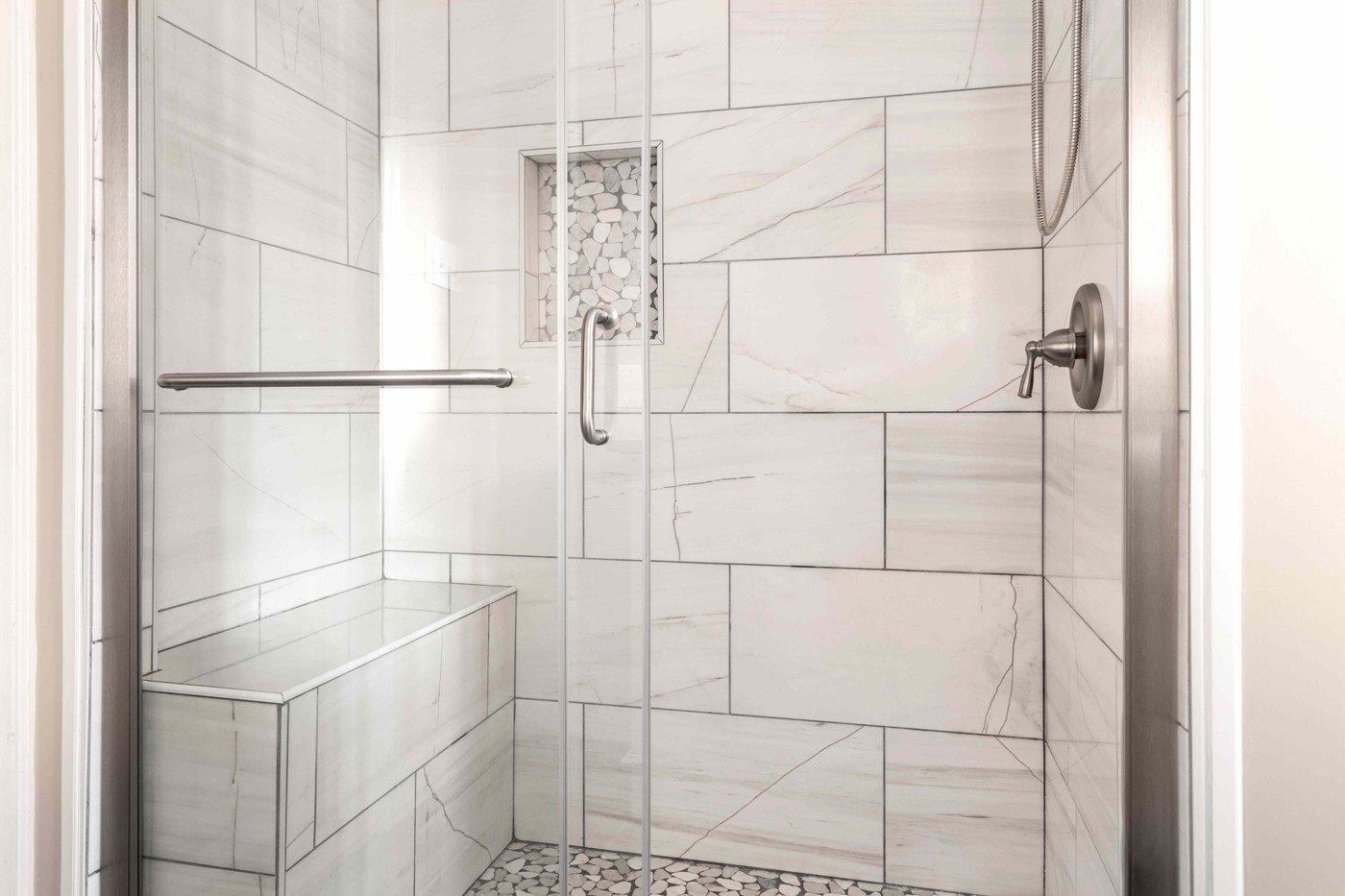
Do Not Borrow an Acidic Shower Cleaner for Marble
The Spruce recommends marble-compatible cleaning, daily water removal and restrained tools for a stone shower.
Remove moisture and product residue
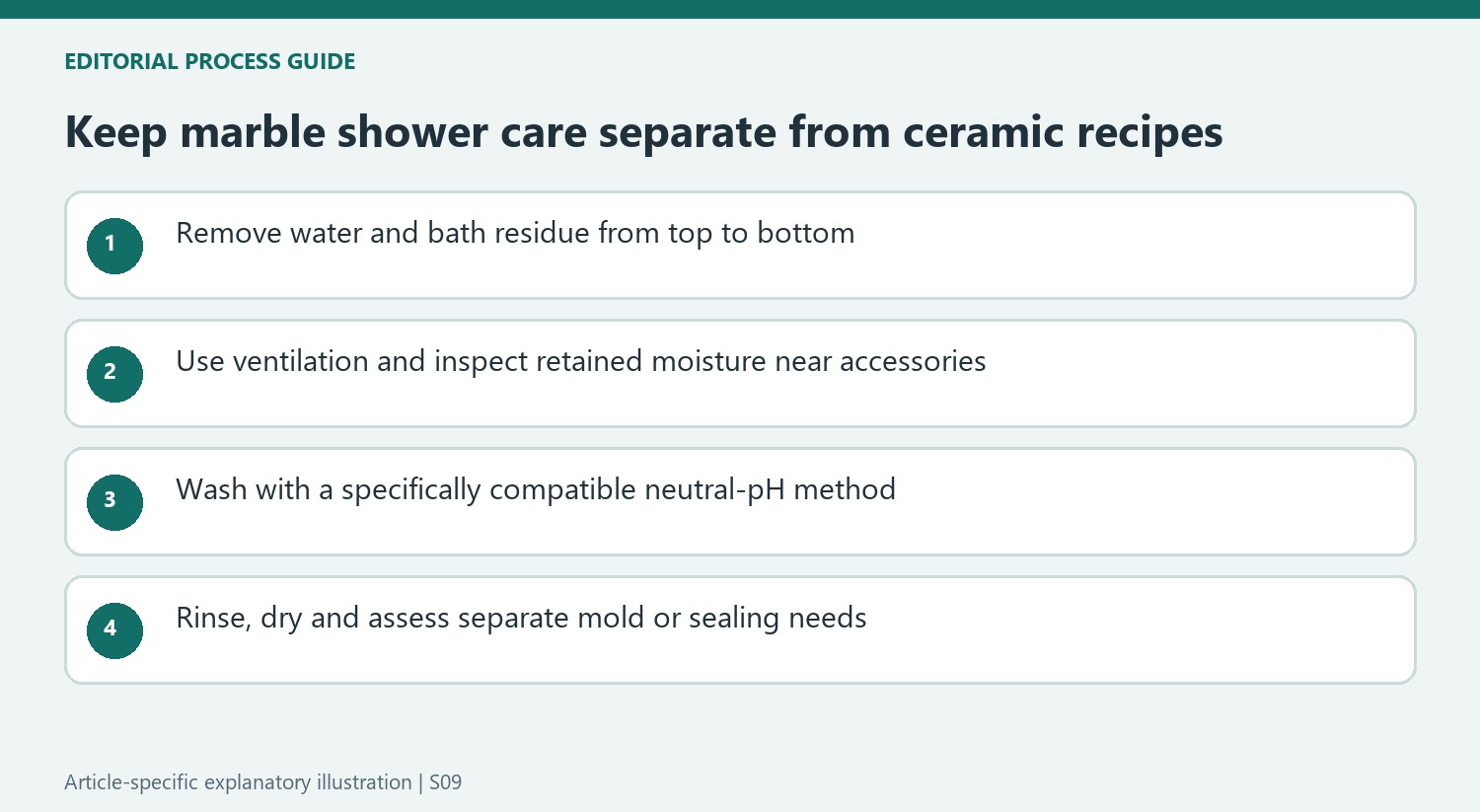
The Spruce explains that water left on marble shower walls also carries body soil and bath-product residue. A squeegee or soft microfiber cloth used from top to bottom after bathing reduces that accumulation. Using the bathroom fan helps remove moisture from the surrounding air. This daily attention can make later cleaning less demanding without turning it into aggressive scrubbing.
Choose the cleaner for the stone
For fuller cleaning, the guide recommends a neutral-pH solution or a commercial marble product used according to its label. Rinse the soap away, remove the water and finish with a dry soft cloth. Vinegar, lemon-based cleaners, chlorine bleach and stiff scrubbing tools are unsuitable choices in its guidance. If mold treatment or resealing is needed, select products specifically approved for marble rather than assuming that anything sold for a shower is compatible.
Check the bathroom products and difficult edges
The Spruce draws attention to ingredients in bath products as well as bottles sold for cleaning. Dyes and acidic additives can complicate marble care, so select products with the stone's requirements in mind. During the fuller wash, inspect around fixtures and drains where residue and staining may remain after broad wall areas look clean. Use a soft cloth and the compatible method there too. If mold is present, the source specifies a treatment labeled safe for marble. A darkened wet surface or changed water behavior can also prompt a discussion about sealing with the installer rather than stronger routine scrubbing. Check the cleaner label before each application.
Make the after-shower pass remove more than droplets
The Spruce notes that standing water carries body soil and bath-product residue, so daily drying addresses more than the appearance of beads on the wall. Work from top to bottom with a suitable squeegee or soft microfiber cloth and remove collected moisture. Include the ledges and areas around fixtures that broad strokes can miss. Keeping those contact points clearer can reduce the material left for the next fuller cleaning session.
Use the bathroom fan or other appropriate ventilation to reduce moisture in the surrounding air as well. A dry-looking broad panel does not establish that every corner has dried, particularly around bottles and accessories. Inspect where those items normally stand and return them to clean surfaces. If persistent damp or discoloration develops in one location, investigate that condition rather than assuming the daily cloth only needs a stronger cleaner.
Check both cleaning bottles and bath products for compatibility
The source recommends neutral-pH cleaning suitable for marble and warns against vinegar, acidic ingredients and chlorine bleach. A product labeled for showers may still be intended for ceramic or another surface, so read its actual material approval. Use a soft cloth and the permitted method near drains and fittings too, rather than switching to a stiff brush where access becomes more difficult.
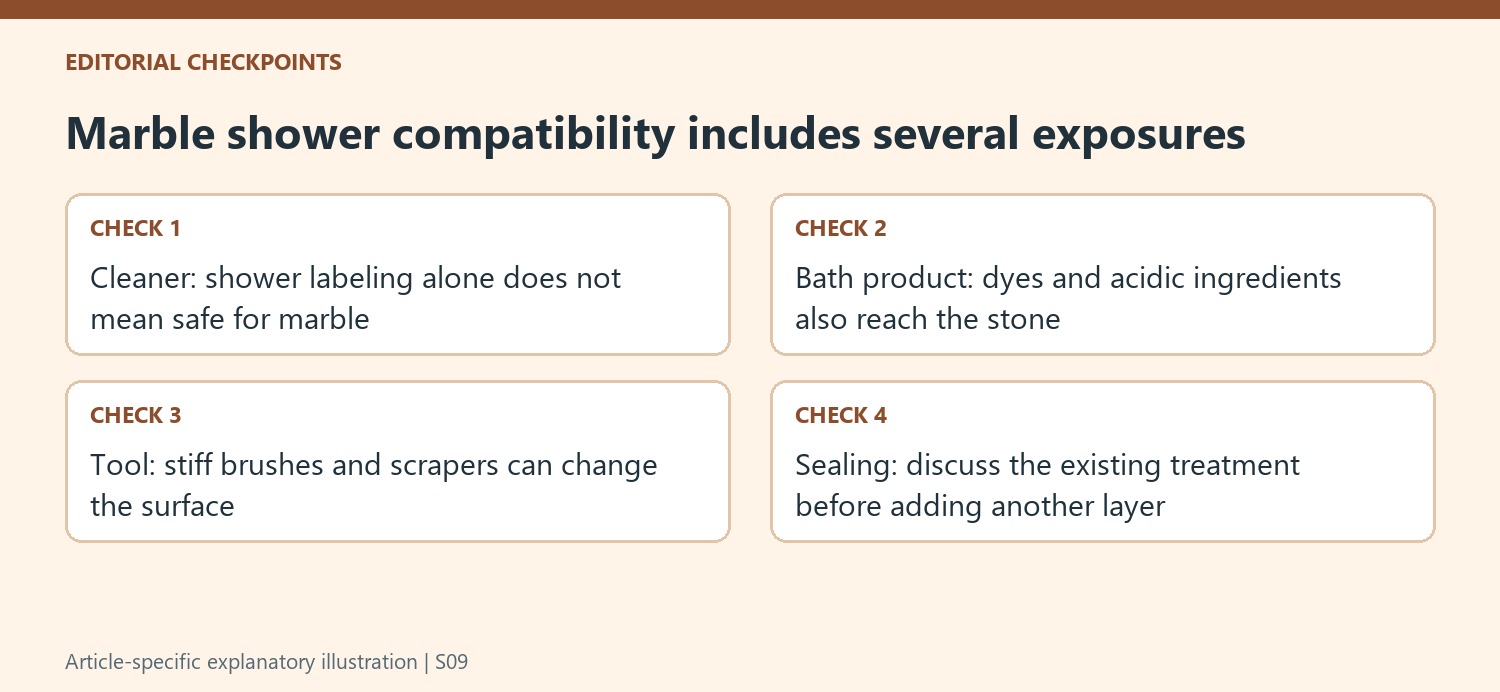
Bath products can also introduce dyes or acidic ingredients, which the guide flags as relevant to stone care. Review the products that repeatedly contact the marble instead of focusing only on the weekly cleaner. That does not mean every discolored patch has one simple ingredient cause, but it provides useful exposure information for the installer or stone specialist when choosing a response to a recurring mark.
Keep mold treatment and resealing beyond the ordinary wash
For the fuller cleaning stage, follow the selected marble cleaner's dilution and application requirements. Rinse soap away from higher to lower surfaces, remove water and finish with a fresh soft cloth where appropriate. That produces an assessable surface before any separate treatment. A product suitable for routine residue is not automatically a mold-removal method, and mold treatment must be explicitly approved for marble in the source's guidance.
Changed water behavior or darkening while wet can prompt a discussion about the existing protective treatment. Ask the installer what the particular marble and sealer require rather than applying an arbitrary new coat or increasing abrasion. Protection and stain correction are different tasks with their own compatibility limits. An orderly routine keeps ordinary cleaning gentle while making persistent deposits, finish changes or a possible sealing need easier to recognize.
References
- Keep Your Marble Shower Stall Sparkling Clean With These Tips. The Spruce; Mary Marlowe Leverette.
The Spruce recommends marble-compatible cleaning, daily water removal and restrained tools for a stone shower.


Leave a Comment
Comments (0)