Choose a Neutral Cleaner for Marble Countertops
The Spruce separates mild daily cleaning from occasional polishing and manufacturer-guided sealing.
Keep the everyday method gentle
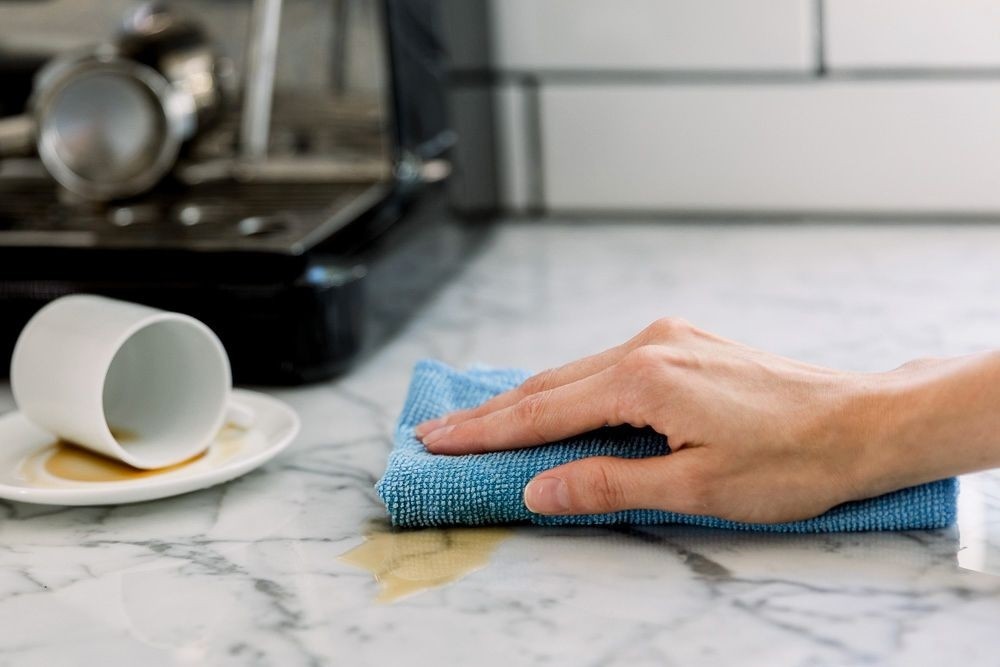
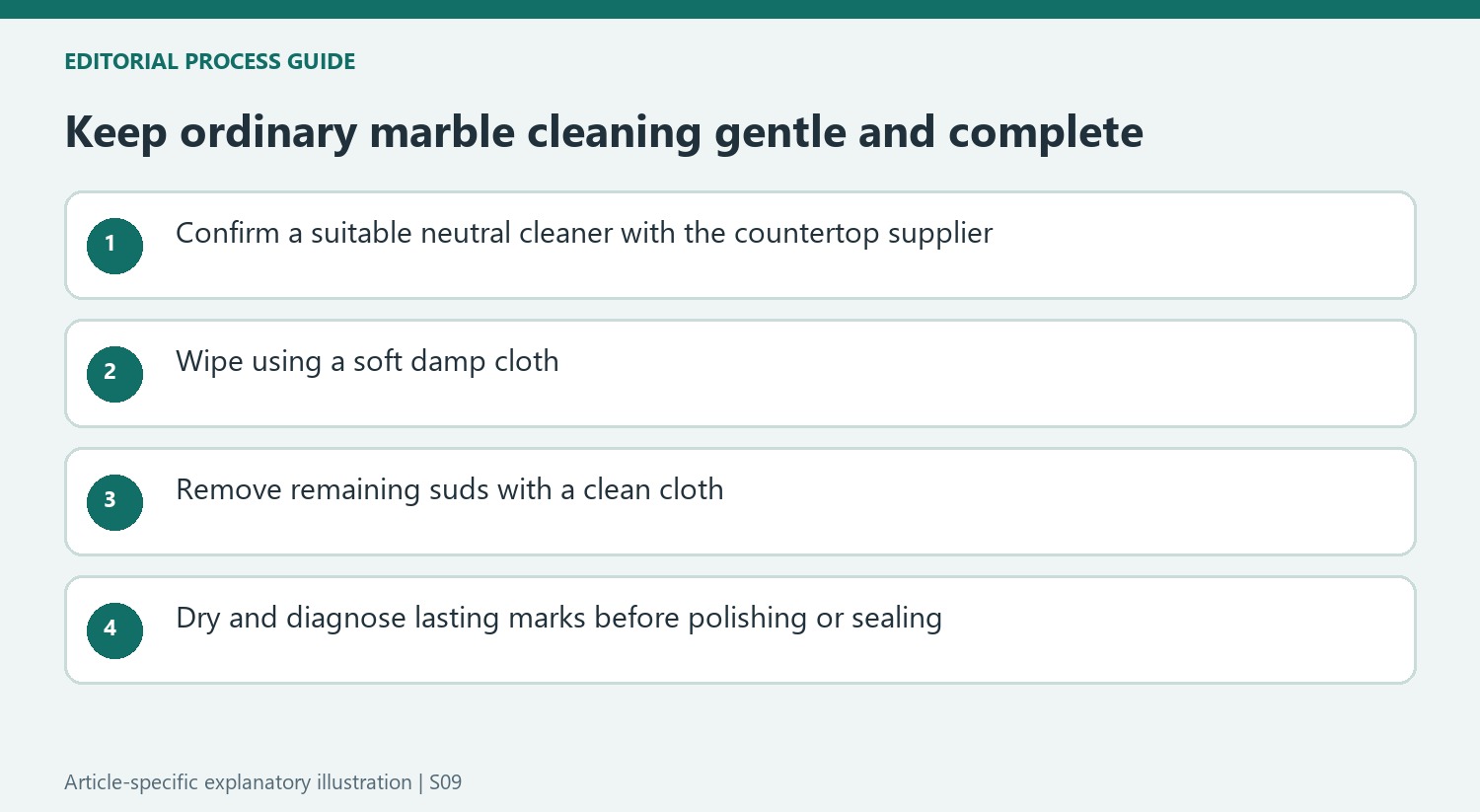
The Spruce describes a pH-neutral cleaner intended for stone or mild dish soap and water for ordinary marble-counter care. Use a soft, damp cloth rather than an abrasive pad. Wipe again with a clean damp cloth until the suds are gone, then dry with another soft cloth to reduce marks and streaks. Acidic foods and cleaners can etch marble, so prompt spill attention matters even when the surface appears durable.
Let the counter maker guide maintenance
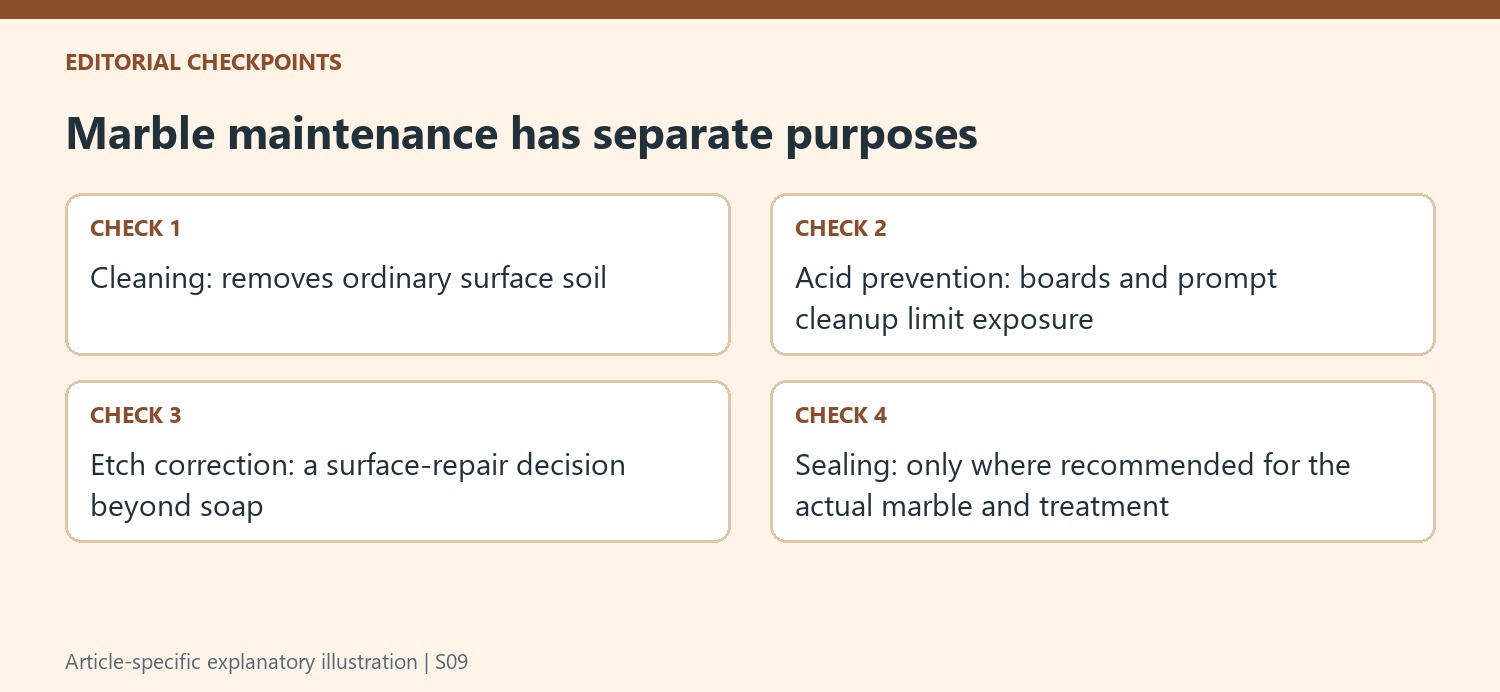
The article recommends checking with the countertop company about appropriate products and sealing. Some marble surfaces do not need a sealer, so a fixed universal schedule is inappropriate. Where sealing is required, follow the manufacturer's recommendations and monitor the surface's behavior. Protective cutting surfaces, coasters and trivets reduce everyday exposure. Polishing or dealing with etching is a separate maintenance task and should use a product approved for the actual countertop.
Make the care instructions visible to helpers
The Spruce specifically recommends explaining the routine to visitors who help clean the kitchen. A well meant wipe with an abrasive sponge or an acidic spray can still alter marble. Keep the approved cleaner and soft cloths accessible, and reserve a second clean cloth for removing suds and drying. Acid exposure can come from ordinary ingredients such as tomato, coffee, wine and citrus, as well as cleaning bottles. Place preparation boards or a suitable protective sheet where those ingredients are handled. These small arrangements make prompt, gentle cleanup easier without turning every spill into a polishing or sealing project.
Make neutral cleaning the routine rather than a repair method
The Spruce recommends a pH-neutral stone cleaner or suitable mild soap and water for ordinary marble care. Confirm the countertop company's recommendation for the actual marble and finish, then use a soft cloth with restrained moisture. A routine wipe should remove soil without mechanically changing the surface. Abrasive pads and strong household chemicals belong outside that starting method even when the stone appears substantial and hard.
Follow the initial wash with a clean damp cloth until suds are removed, then dry using a separate soft cloth. Exchange cloths as residue transfers so the final pass does not redistribute what was just lifted. This rinse-and-dry stage makes remaining marks easier to evaluate. A streak from detergent or water should be distinguished from true surface etching before a polishing product is considered.
Protect marble at the point of food and drink contact
The source lists tomato, citrus, coffee, wine and vinegar among exposures deserving prompt attention. Keep a suitable board or protective surface where acidic ingredients are prepared, rather than moving them directly across the bare stone. Use coasters beneath glasses and an appropriate trivet for cookware. Those barriers address contact before a cleaner is needed, which is particularly useful when several people are sharing the kitchen.
The guide specifically suggests explaining the care routine to visitors who want to help. Put the approved cloth and cleaner where they are easy to identify, and make the acid and abrasive restrictions clear. A helpful guest can otherwise reach for a familiar descaler or scouring sponge that works on another surface. Shared instructions help preserve the marble without requiring someone to supervise every ordinary cleanup.
Ask what the marble actually needs before adding protection
The article says some marble counters do not require a sealer, so neither the material name nor an online schedule is enough to justify a new application. Check with the manufacturer or retailer about the installed stone, existing treatment and appropriate monitoring. If sealing is recommended, use the specified product and preparation rather than layering an unrelated sealer over a finish whose history is unknown.
Polishing and correcting etching are also separate from cleaning. Obtain the stone supplier's advice on a suitable process before attempting to restore a dull patch, particularly when a local change could stand out against the surrounding finish. More soap will not rebuild material affected by acid, and an appearance product is not proof of renewed stain resistance. Keep the ordinary gentle routine consistent while any corrective work is assessed deliberately.
References
- How to Keep Your Marble Countertops Looking Brand-New. The Spruce; Sarah Aguirre.
The Spruce separates mild daily cleaning from occasional polishing and manufacturer-guided sealing.


Leave a Comment
Comments (0)