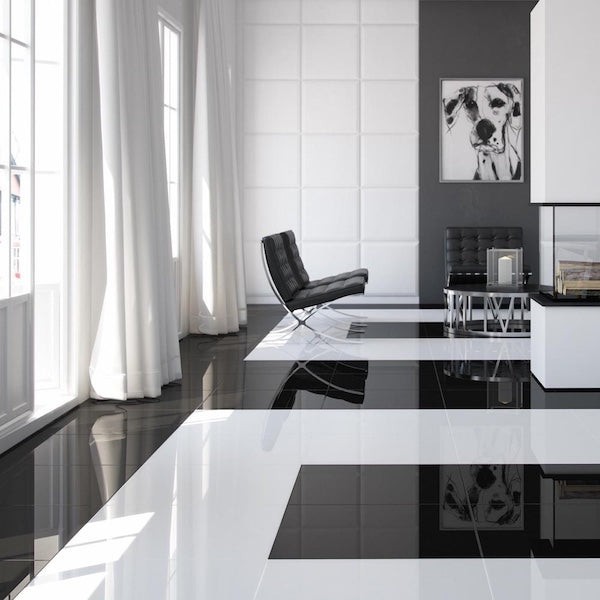
Check Whether Polished Porcelain Arrives Pre-Sealed
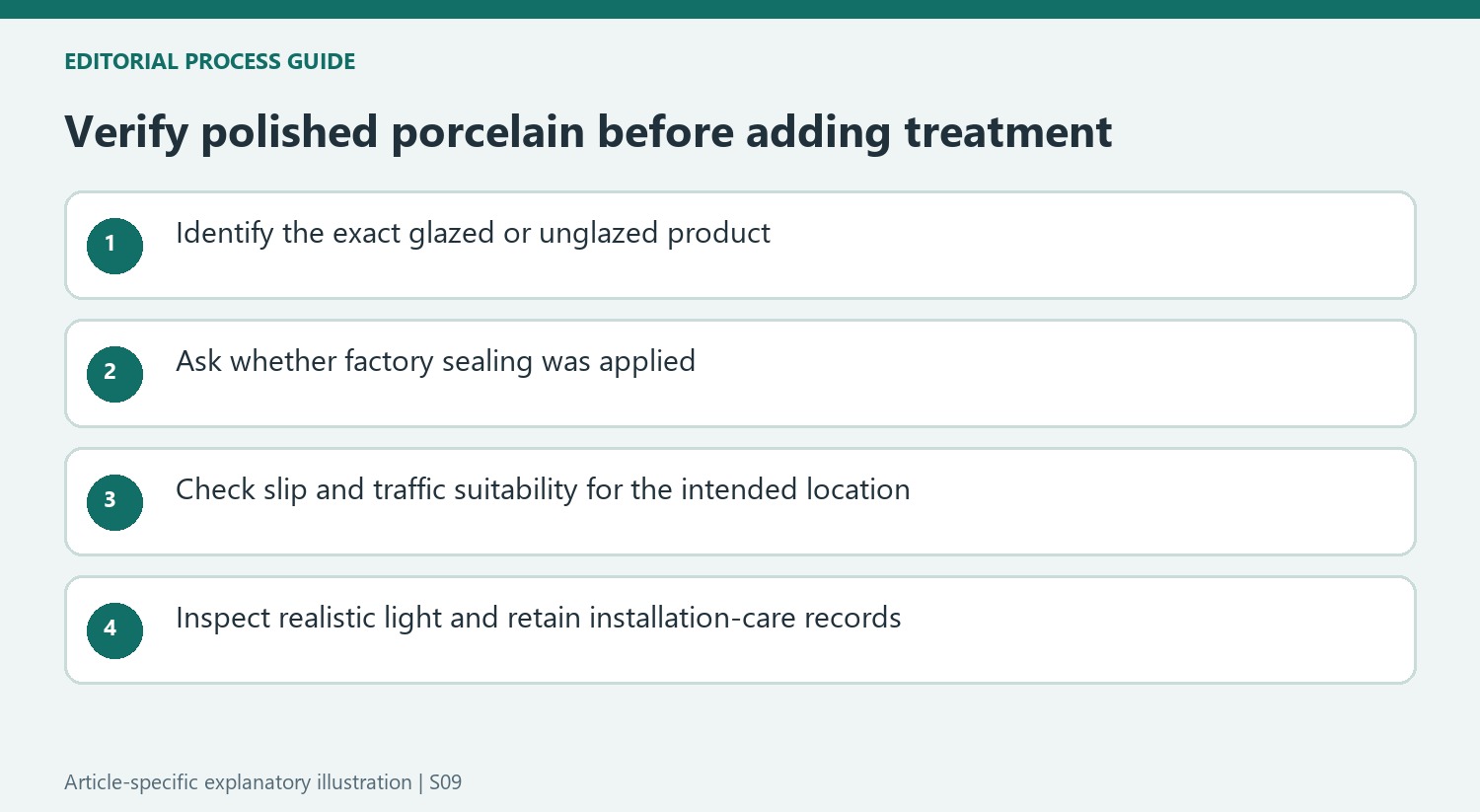
Polishing porcelain can expose tiny pores at the tile surface. Some manufacturers apply a factory sealer to reduce staining, but this should be verified rather than assumed from the glossy appearance. Ask the supplier what treatment the particular tile has received.
Glazed and unglazed polished tiles also differ in construction and performance. Obtain the relevant care instructions before choosing cleaners or adding another coating. Consider wet-area slip performance separately; a shiny surface does not establish suitability for a shower floor.
Understand what the shine does and does not reveal
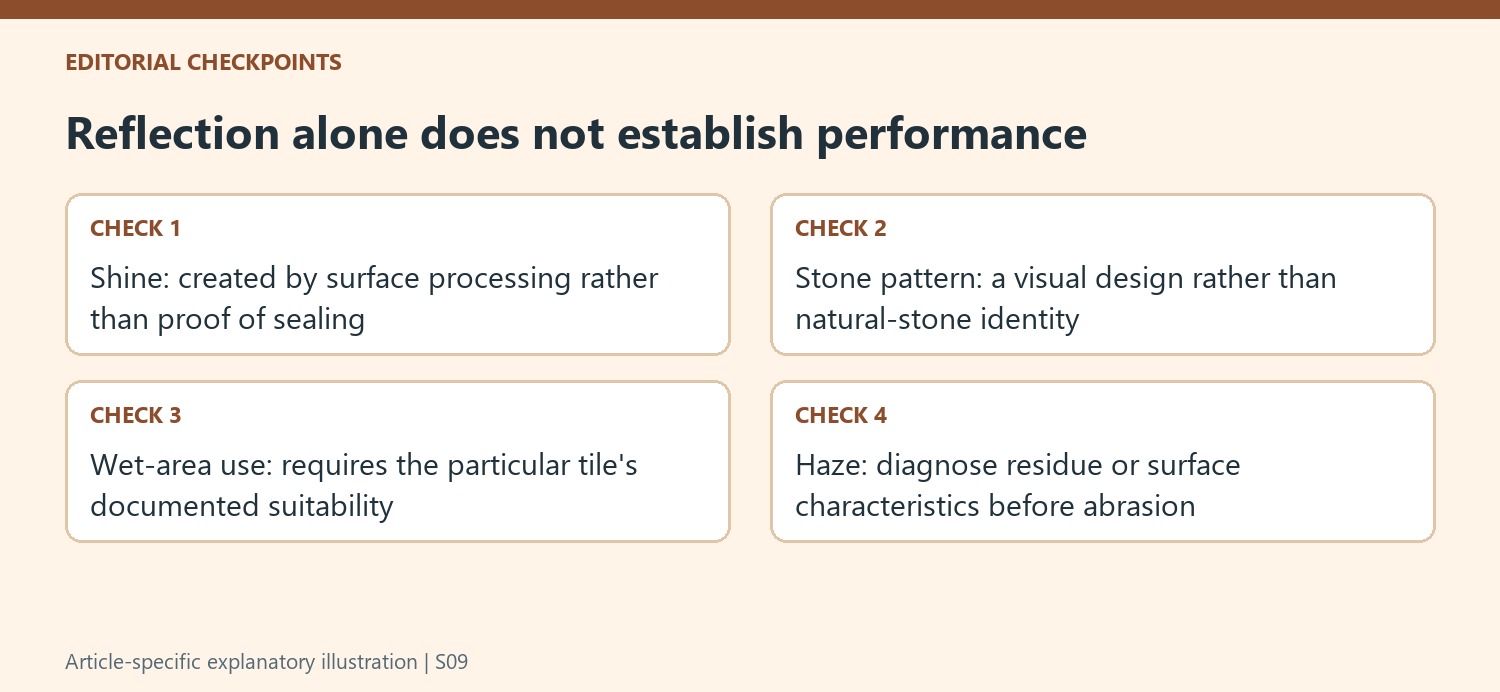
The buying guide explains that polishing involves grinding the surface to create its reflective finish. Glazed versions may use printed stone patterns, while unglazed options can have a plainer appearance. Neither the design nor the level of reflection proves how the tile was protected at the factory. Request the specific product information, including any sealer and recommended maintenance, before selecting treatments for the new floor.
Evaluate the setting before specifying polished tiles
The source distinguishes domestic rooms from busy commercial spaces and warns against polished surfaces in frequently wet areas. Suitability depends on the particular tile and its documented performance, so ask the retailer about traffic and slip requirements. A bathroom wall and a wet room floor are different applications. Do not assume an additional grip treatment makes an unsuitable product acceptable without checking the relevant guidance.
Plan installation and inspection alongside cleaning
Rectified edges allow narrow joints but also demand accurate preparation and installation. The guide recommends an experienced installer for these less forgiving tiles. It also describes optical hazing that can become noticeable under certain lighting. Inspect samples and finished surfaces in realistic light, and discuss any persistent haze with the supplier before trying abrasive polishing. The appropriate remedy depends on whether you are seeing residue, a surface characteristic or damage.
Ask what created the reflection and what protects it
Porcelain Superstore describes polishing as a grinding process that creates a reflective face. It also distinguishes glazed patterned versions from plainer unglazed examples. Neither the marble-like design nor the intensity of the reflection identifies the factory protection. Request the actual product specification, including whether it was pre-sealed and what future cleaning is approved, instead of inferring those answers from the showroom appearance.
The supplier says polishing can expose tiny pores, explaining why protection may matter for staining. Its statement about its own factory-sealed stock is not evidence about an unrelated range from another retailer. Confirm the model being purchased and retain the documentation for the installed batch. Adding another sealer without understanding the original treatment can be unnecessary or incompatible, even when the new bottle is sold for porcelain.
Choose the application using documented performance
The buying guide favors polished tiles for some indoor settings while cautioning against frequently wet applications. A reflective wall and a shower floor present very different footing requirements. Ask for the relevant slip and use information for the particular tile rather than relying on the broad polished label. Do not assume that a later grip treatment can compensate for selecting a product not approved for its intended location.
Traffic also matters. The source discusses different preferences for commercial use, but suitability depends on the actual tile and finish rather than a universal glazed-versus-unglazed rule. Tell the supplier how the area will be used before specifying the product. Sample appearance, cleaning requirements, slip performance and anticipated wear should be considered together, because a convincing stone pattern alone does not establish that a tile belongs in every room.
Inspect realistic light before trying a corrective polish
The guide describes optical haze that becomes visible under some lighting conditions. Examine a sample where strong side light or reflections resemble the eventual room, and raise any persistent concern with the supplier. A smoky appearance can require diagnosis of residue, a surface characteristic or damage. Abrasive polishing should not be the first reaction to an appearance that may be inherent to the product or linked to installation cleanup.
Rectified edges and narrow joints also increase the importance of accurate preparation and installation. The source recommends an experienced installer for these less forgiving tiles, making substrate quality part of the appearance plan rather than a detail to address after purchase. Obtain the final cleaning and handover instructions as well as the fitting requirements. A well-documented installation gives later maintenance a clear starting point, including which protective treatment and cleaning method are actually present.
References
- Polished Tiles - Buying Guide. Porcelain Superstore; Abbas Youssefi.
Manufacturing and surface treatment influence stain resistance and maintenance.


Leave a Comment
Comments (0)