
Clean Natural Marble Counters Before Acidic Spills Leave Marks
Real Simple emphasizes prompt attention, gentle soap and drying while distinguishing cleaning from damage repair.
Treat acid exposure promptly
Real Simple explains that marble is relatively soft and porous and that acidic foods can dull or etch its surface. Its ordinary countertop method combines mild dish soap with water, a microfiber wipe and a second clean cloth to remove the remaining moisture. Frequent quick attention is different from repeating deeper stain treatment. Avoid vinegar and other acidic cleaners even when they work well on another kitchen surface.
Decide whether a mark needs a different process
The article discusses stain and etching removal separately, rather than implying that ordinary cleaning reverses every kind of damage. When an absorbent treatment is used, removing its residue and drying the counter are still necessary. Prevention includes coasters under glasses, trivets beneath hot dishes and prompt cleanup of tomato sauce, citrus juice and similar spills. Protecting the stone between cleans can reduce the need for increasingly forceful intervention.
Identify what changed before attempting correction
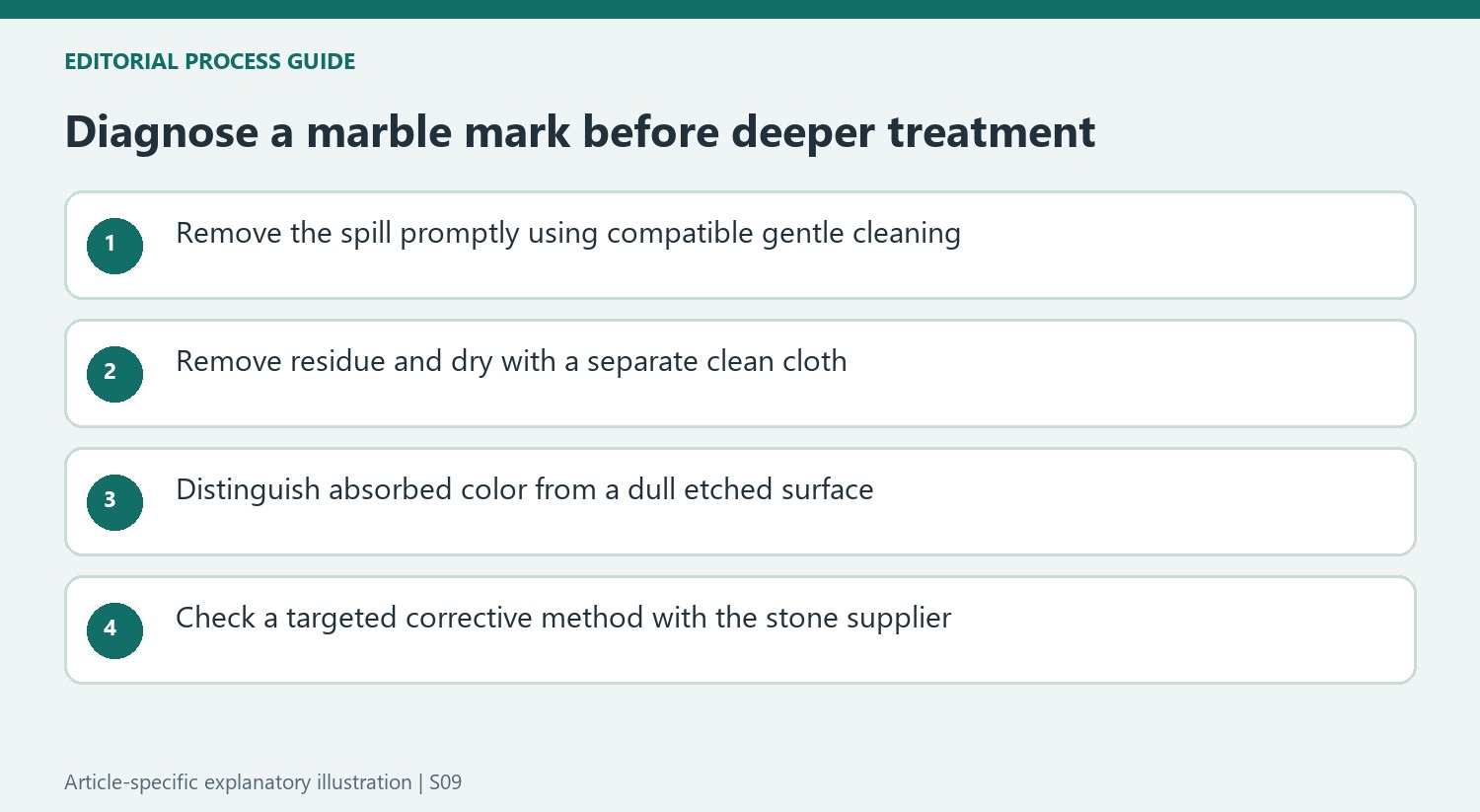
Real Simple describes two different outcomes: absorbed substances can leave color, while acid can change the marble's surface and make it look dull. The treatments discussed in the article serve different purposes, so repeating an absorbent paste is not a universal answer to lost shine. It also advises monitoring a stain treatment so the stone is not unintentionally lightened. Before attempting a corrective abrasive or chemical method, confirm suitability with the countertop supplier or a stone professional. Continue the gentle daily routine around the affected spot, and remove all treatment residue before assessing the final dry appearance in good light.
Ask whether the mark is color or a changed surface
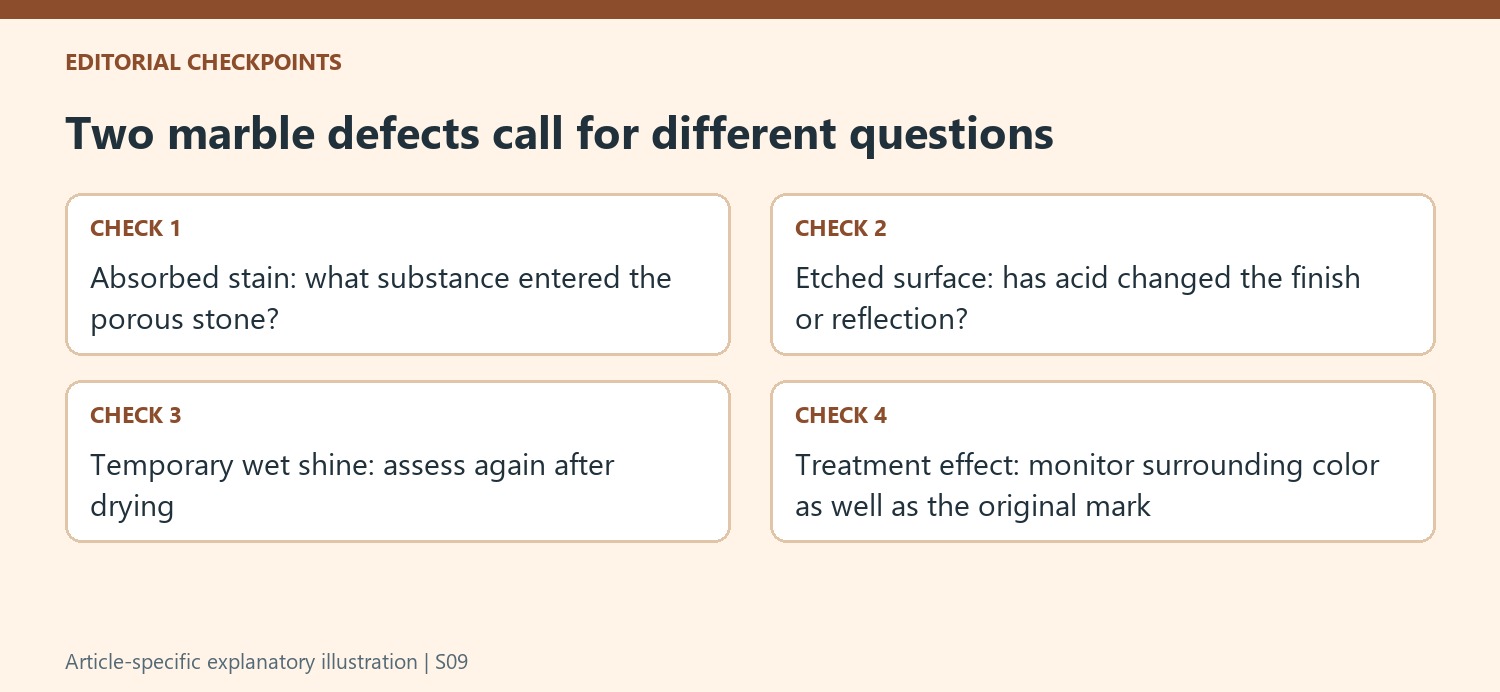
Real Simple describes marble as vulnerable both to absorbed staining and to acid-related etching. A colored patch and a dull reflection can therefore represent different problems, even when both follow a kitchen spill. Clean gently, remove residue and inspect under useful light before choosing a correction. A poultice intended to draw out an absorbed substance is not automatically the answer when the marble's surface texture has changed.
This distinction keeps the stain-removal examples from becoming a universal deep-cleaning routine. The source recommends deeper intervention only when needed and cautions about unintended lightening during some treatments. Confirm suitability with the countertop supplier before applying an absorbent paste, chemical or abrasive. A treatment that changes the surrounding stone can leave a larger visible repair than the original isolated mark.
Keep the everyday method short and consistent
For ordinary care, the article uses mild dish soap with water and a microfiber cloth, followed by drying with another clean cloth. Follow the stone's approved method for dilution and residue removal. Do not keep using the same dirty cloth face across a broad counter, and do not leave soap behind to dry as a film. Assess the result when it is clear and dry rather than during a temporarily shiny wet pass.
Prompt cleanup of acidic spills is central to that routine. A tomato-sauce splash or citrus juice should not wait until the rest of a meal is finished and a deeper cleaner is available. Remove the exposure using the compatible gentle process instead. Vinegar and other acidic cleaning substitutes can themselves produce the dullness the owner is trying to avoid, so their success on a different kitchen surface is irrelevant here.
Use protection without assuming the stone becomes invulnerable
Coasters under glasses and trivets beneath hot dishes reduce contact that otherwise becomes another maintenance task. Keep a suitable preparation board available near ingredients likely to stain or etch. Those habits are useful whether the kitchen has a newly installed counter or an older one carrying signs of wear. A beautiful pattern should not conceal the practical places where repeated spills or damp objects remain against the stone.
If a stain treatment is approved, observe its specified contact and removal requirements and inspect for changes beyond the target area. Remove all residue and dry before judging whether another application is justified. For persistent loss of sheen, ask about professional surface correction rather than repeatedly cycling through absorbent products. Daily cleaning can continue to be gentle while the distinct repair is considered, preserving unaffected areas instead of subjecting the whole counter to unnecessary intervention.
References
- How to Clean Marble (Video)-and Remove Stubborn Stains. Real Simple; Katie Holdefehr.
Real Simple emphasizes prompt attention, gentle soap and drying while distinguishing cleaning from damage repair.


Leave a Comment
Comments (0)