
Clear and Clean the Full Granite Counter Surface
Real Simple describes removing loose debris and using a mild solution while protecting the countertop sealant.
Give the surface a complete clean
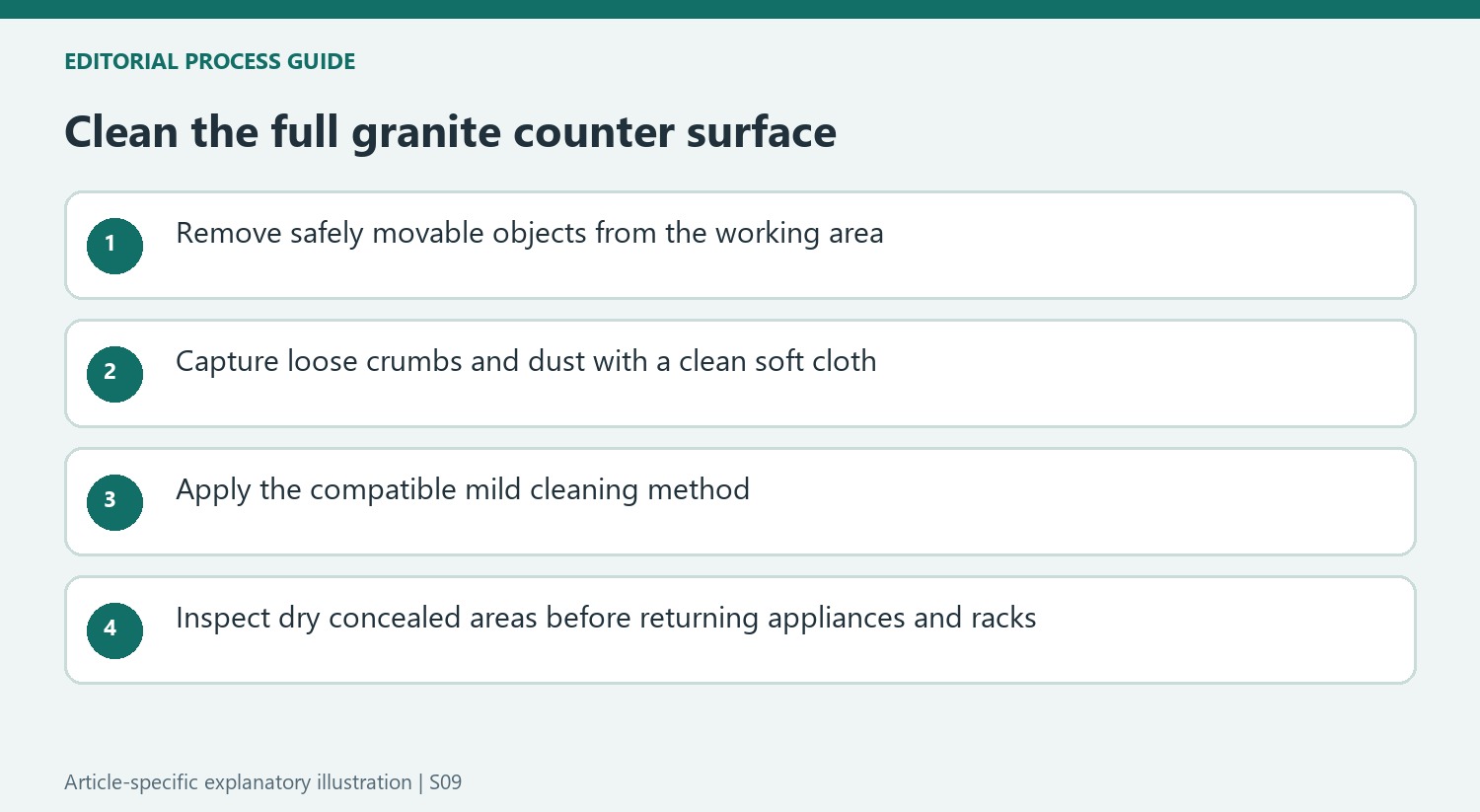
Real Simple advises moving appliances, dish racks and decorative items so the entire counter can be reached. Collect dust and loose crumbs with a damp microfiber cloth before applying a mild dishwashing-liquid solution. Otherwise, those particles are simply pushed around during the wipe. Kitchen counters need attention after food preparation, while spills should be removed when they happen rather than waiting for the next scheduled clean.
Care for the sealant as well as the stone
The guide cautions against harsh cleaners, scouring powders, ammonia, undiluted chlorine bleach and cleaning vinegar, which can harm the protective finish. It recommends cutting boards and trivets to reduce scratches and temperature stress. Monitoring whether a few drops of water bead or spread can help identify a possible sealing need. Check the actual countertop's care requirements before interpreting durability as permission to use any multi-surface wipe or cleaning product.
Use the right routine for the countertop's location
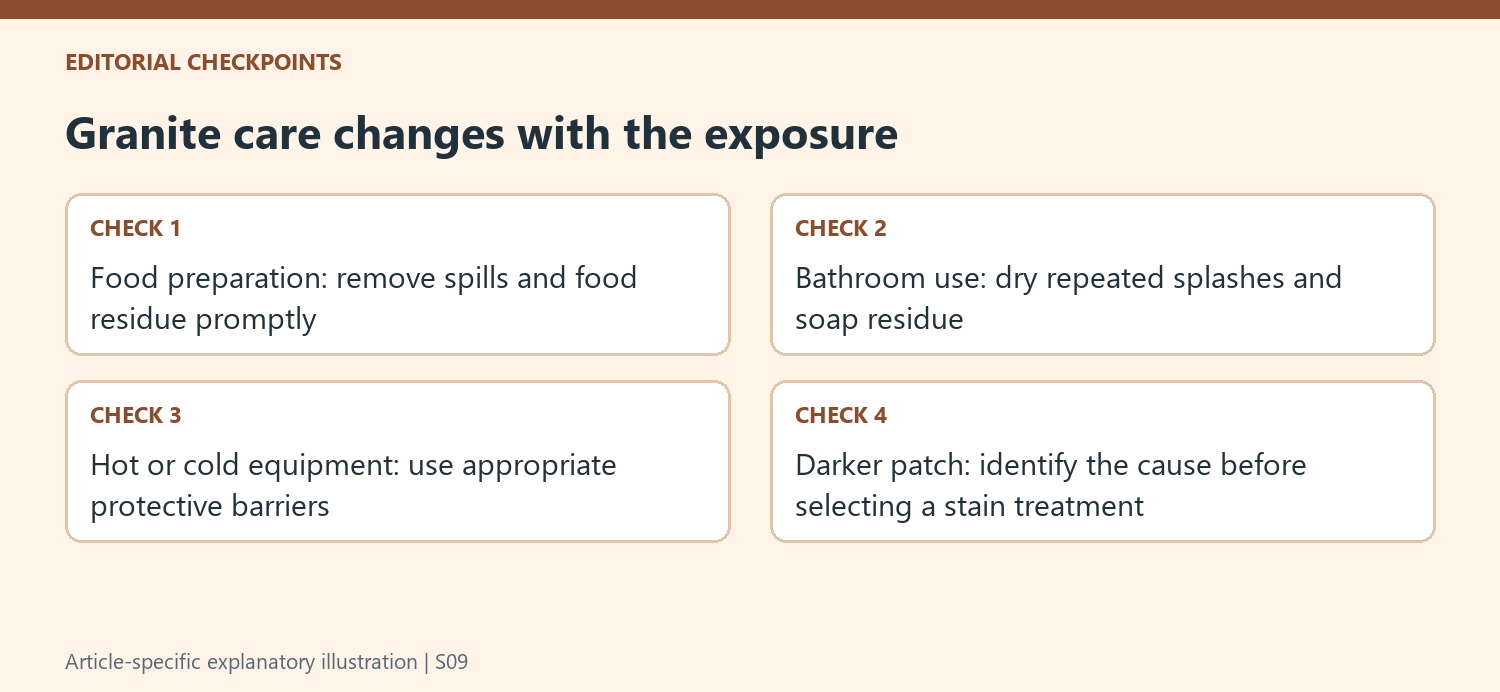
Real Simple distinguishes a kitchen counter used for food preparation from a bathroom surface exposed to repeated splashes. In a bathroom, drying the stone after use helps prevent spots and soap residue; in a kitchen, wiping after preparation removes food material before it builds up. Keep the mild cleaning bottle labeled and use a clean cloth rather than spreading collected soil across the next section. The article discusses separate stain treatments, but an ordinary wash does not establish whether a darker patch is grease, absorbed color or damage. Check that distinction with the stone supplier before trying an unfamiliar treatment.
Clear enough space to clean the whole usable counter
Real Simple's preparation step removes appliances, dish racks and decorative objects so cleaning can reach the full surface. Work safely around appliance connections and move only what can be handled appropriately. Inspect beneath the usual storage places before treating the broad open area. Those concealed patches can retain crumbs, moisture or grease even when the front edge receives a daily wipe.
Capture loose soil with a damp microfiber cloth before introducing the cleaning solution. Refold or replace the cloth as debris transfers so the next section does not receive the previous section's crumbs. This initial pass helps a later mild wash contact the surface instead of simply moving particles around. A complete clean also makes localized stains easier to distinguish from a generally dirty or streaked counter.
Use the actual cleaner instructions rather than a multi-surface promise
The source favors a diluted mild dishwashing-liquid routine, applied with a clean cloth. Use a formulation and method compatible with the particular stone and sealer, and label any prepared cleaning bottle so its contents are not confused with a stronger product. If suds or film remain, remove them as the appropriate care directions require. Keep tool cleanliness part of the method rather than compensating for a greasy cloth with additional detergent.
The article cautions that harsh products can dull or harm the protective finish. Do not interpret a multi-surface label alone as approval for the installed granite and its sealer. Verify compatibility on the exact current product rather than generalizing from a brand name. A convenient wipe can have a different formulation from another item sold under the same brand, while a stone-care recommendation may refer to a specific finish and use.
Match the follow-up to kitchen or bathroom exposure
Kitchen counters need attention after food preparation, with prompt spill removal rather than postponing it until a weekly session. Bathroom granite faces repeated splashes and soap, so a suitable towel or squeegee pass can limit water spots and residue. These routines address different recurring exposure even when both surfaces are granite. Keep cutting boards and appropriate trivets in the kitchen to reduce direct scratching and temperature stress.
The source discusses monitoring the sealer and addressing stains separately, but the stone supplier should guide interpretation and treatment. A darker patch does not identify whether the cause is absorbed oil, food color or another surface condition. Avoid assuming a temporary oily shine is equivalent to restored protection. Record a successful compatible product and consult the supplier about renewal, keeping the routine clean separate from any corrective stain or sealing project.
References
- How to Clean Granite Countertops for a Fresh and Shiny Surface. Real Simple; Mary Marlowe Leverette.
Real Simple describes removing loose debris and using a mild solution while protecting the countertop sealant.


Leave a Comment
Comments (0)