Keep a Slate Hearth Clean without Harsh Abrasives
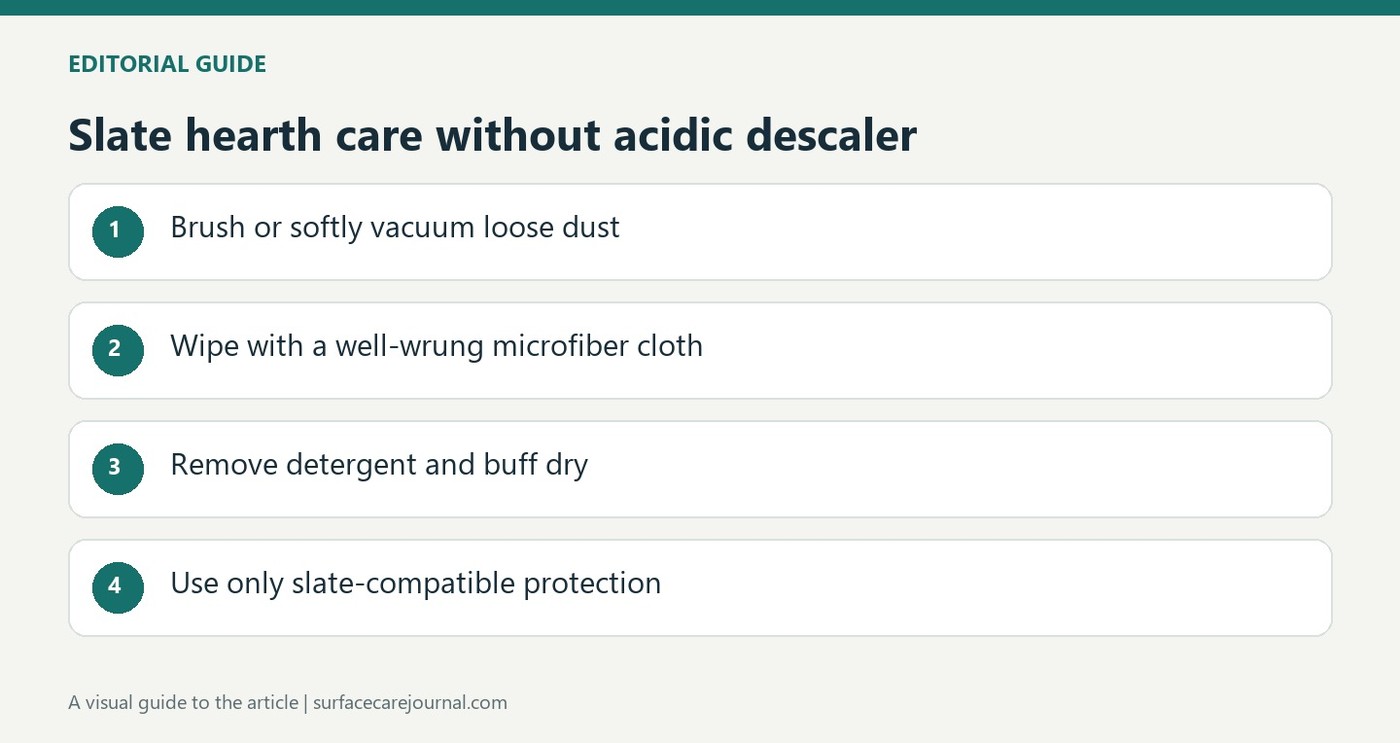
Brush or vacuum loose dust from a slate hearth before wiping it. Use a soft microfiber cloth dampened with a mild washing-up liquid solution or a cleaner labeled for natural stone. Wring the cloth well rather than flooding the surface.
Wipe again with clean water to remove detergent, then buff dry. Avoid steel wool, abrasive scrubbers, acidic limescale removers, and bleach. If additional protection is needed, choose a slate-compatible treatment after the hearth is properly clean.
Keep the wiping cloth clean as you work
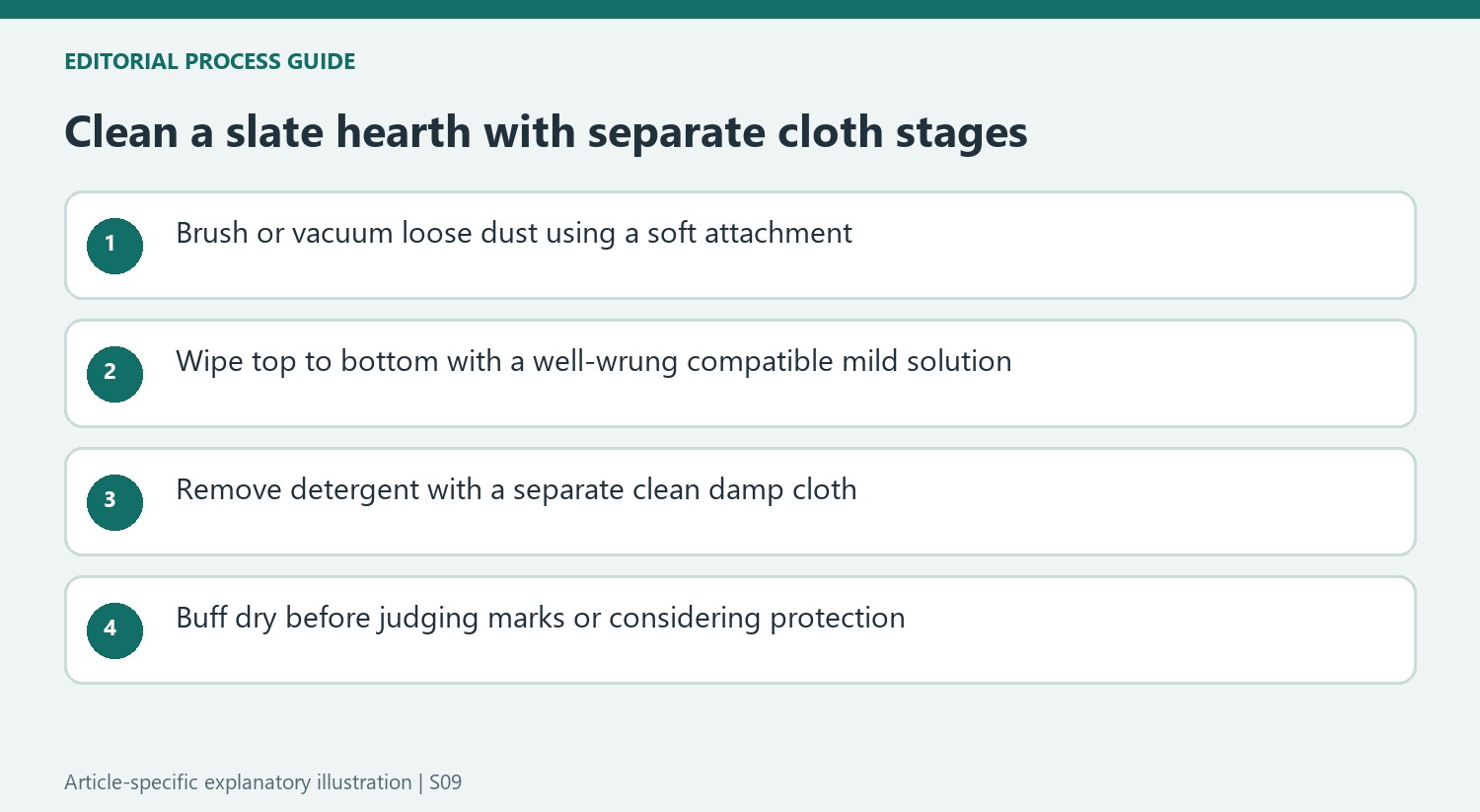
Housekeep's Henry Paterson, quoted by Homebuilding and Renovating, recommends refreshing and wringing the microfiber cloth regularly. A saturated or dirty cloth can move residue around instead of lifting it. Work from higher areas down, using the mild solution only after the dry debris has been removed. Then use a separate water-dampened cloth to collect detergent before the final dry buff.
Do not treat white marks with an acidic descaler
The article identifies water marks and limescale as possible causes of pale patches, while warning against conventional acidic limescale removers on slate. If ordinary washing does not remove the mark, use a specialist natural stone product confirmed suitable for the surface. Test discreetly and follow its instructions rather than borrowing a bathroom descaling method that could alter the hearth itself.
Choose protection intended for slate
Paterson advises a specialist slate oil or compatible slate sealer when protection or a sheen is wanted. The source specifically discourages improvised treatments such as olive oil, teak oil and WD-40. Apply any approved treatment only after cleaning and according to its preparation instructions. A naturally matte slate surface is not necessarily dirty, so decide what finish is appropriate before trying to make it glossy.
Begin with dry debris and the stone's intended appearance
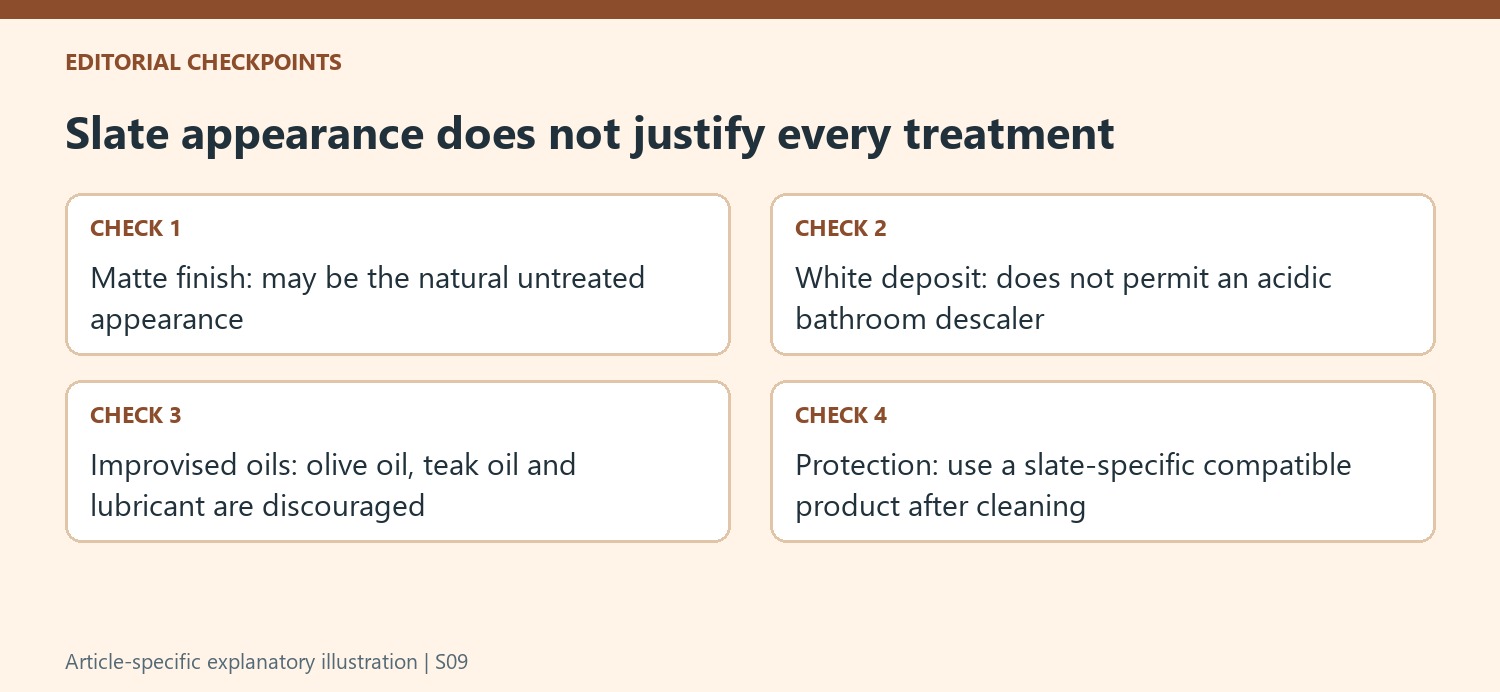
Homebuilding & Renovating recommends brushing or vacuuming loose dust with a soft attachment before introducing a damp cloth. Inspect the hearth after that pass instead of assuming that every pale patch is ordinary dirt. Untreated or unsealed slate can have a matte appearance, so the absence of gloss is not itself a cleaning failure. Decide whether the task is soil removal or an intentional change to the finish.
Use a clean soft microfiber cloth for the mild compatible wash described by the expert. Wring it so it is damp rather than dripping, then work from higher areas down. This gives control over where liquid and loosened residue travel. A harsh sponge or steel wool is not an appropriate shortcut, because its abrasive action can scratch the slate even if the immediate mark seems to disappear.
Keep the cloth-cleaning and rinse stages effective
Refresh and wring the wiping cloth regularly so the surface receives a clean tool instead of recycled dirt. Use a separate cloth dampened with plain water to collect detergent, followed by a dry cloth for the final buff. Those separate roles are useful on a dark surface where streaks can be especially visible. A soapy film should not be mistaken for a need to apply an oil or sealer over the top.
For pale water or limescale-like deposits that resist routine washing, the source warns against conventional acidic bathroom removers. Choose a natural-stone product explicitly suitable for the slate and test discreetly according to its directions. Familiar vinegar or lemon is still acidic, while bleach is also discouraged in the guide. A deposit's resemblance to bathroom limescale does not establish that the hearth tolerates the same cleaner.
Choose any protective sheen as a separate treatment
The expert recommends a specialist slate oil or compatible slate sealer when that protection or appearance is wanted. Establish what treatment is already present and follow the new product's preparation and drying requirements. Apply only after the hearth is properly cleaned, not as a way to conceal persistent streaks. A compatible sample test helps show how the proposed treatment changes the stone's color and reflection before the broad area is committed.
The source explicitly advises against improvised olive oil, teak oil or WD-40 treatments. Their household availability does not make them a slate-care system. If routine cleaning leaves an unexplained mark, seek suitable stone advice rather than stacking such products onto an unknown finish. A well-maintained hearth can remain naturally matte or carry an appropriate sheen; preserving the stone and using a deliberate compatible finish are the relevant goals.
References
- How to clean a slate hearth to get it looking shiny and new. Homebuilding; Steve Jenkins.
Soft cloths and a mild compatible cleaner protect the fireplace surround.


Leave a Comment
Comments (0)