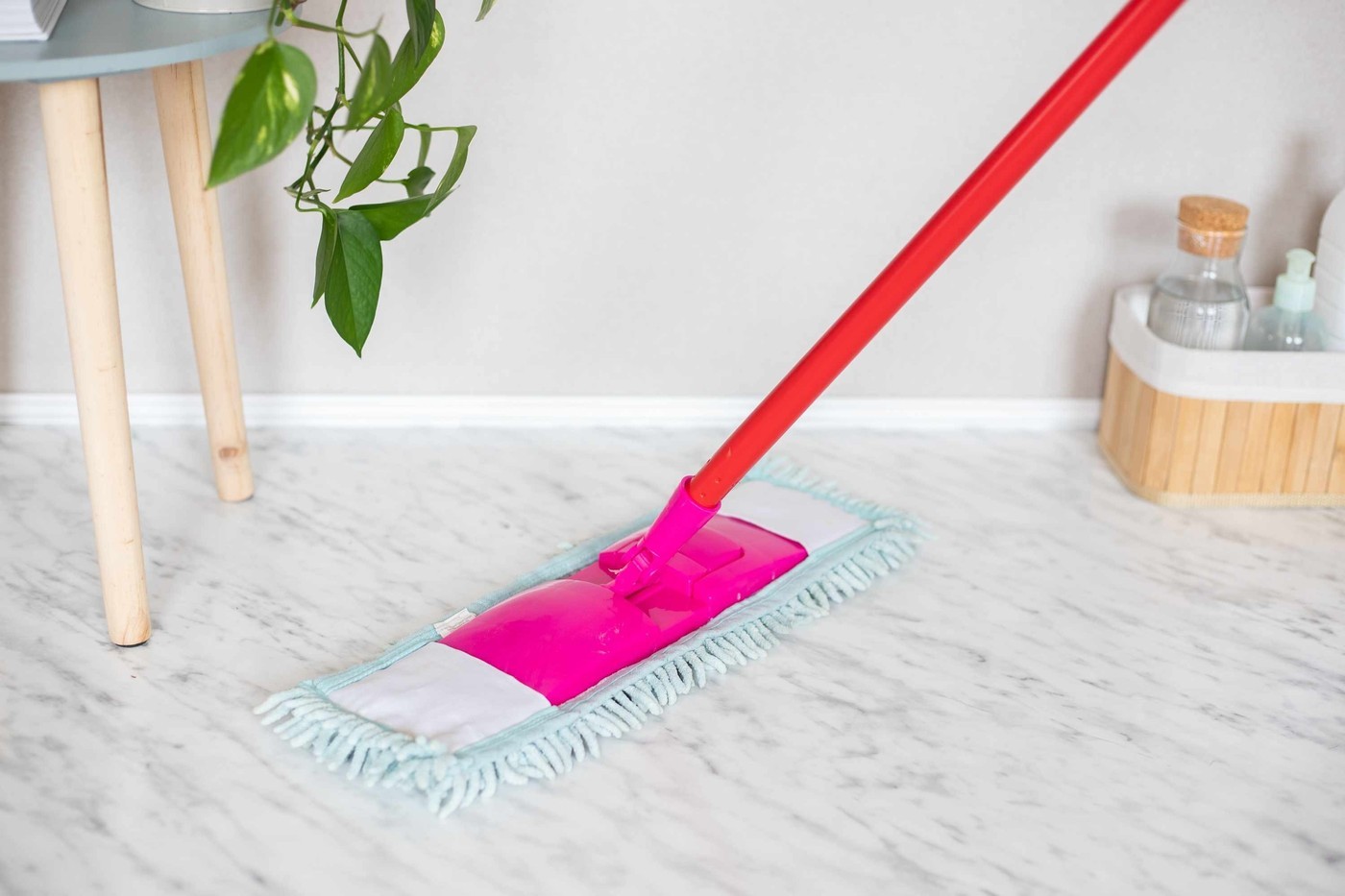
Protect Marble Floors Before Dirt Dulls Their Finish
The Spruce's floor routine uses soft dry dusting, neutral soap and careful drying while avoiding harsh tools.
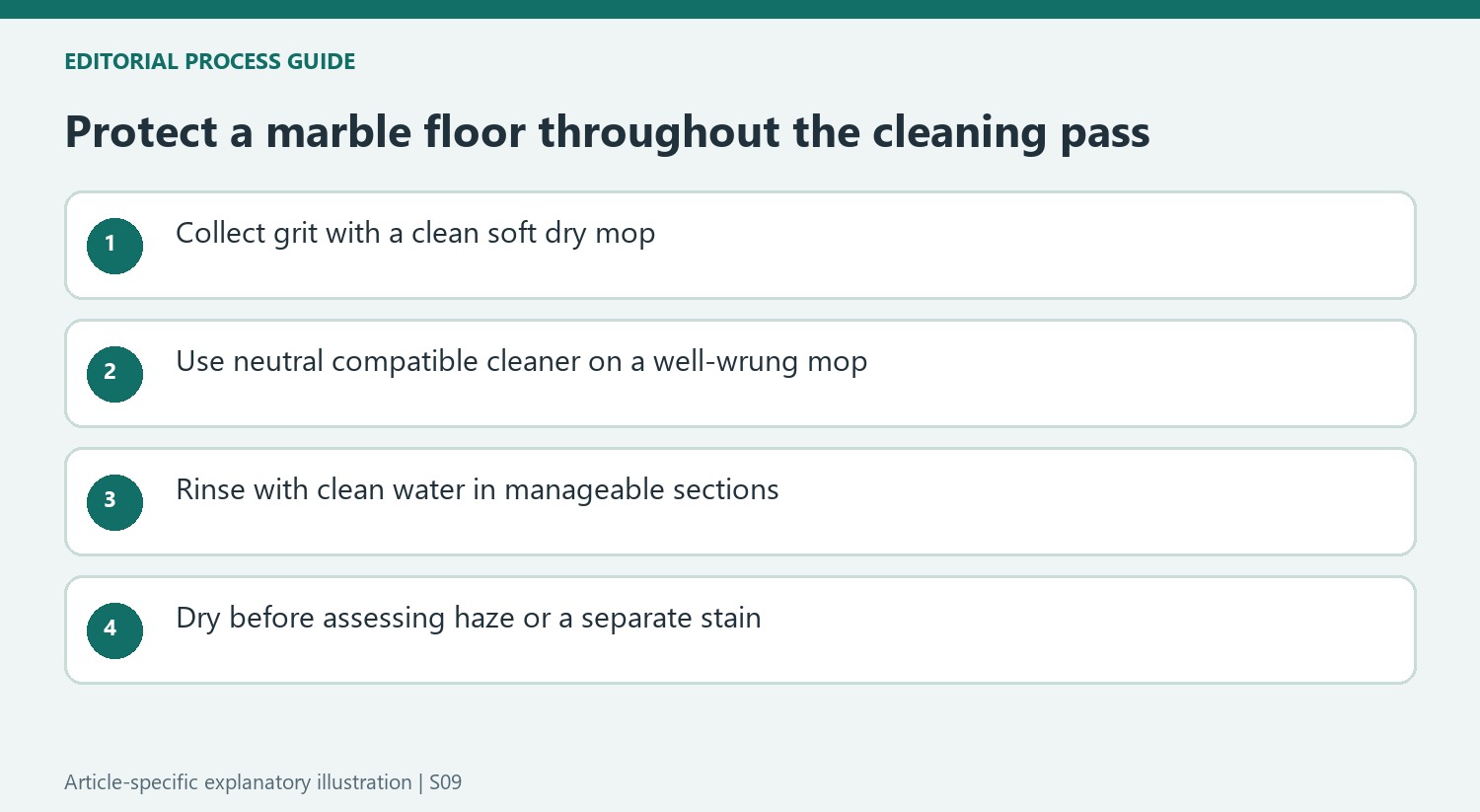
Collect the dust before washing
The Spruce explains that loose grit can create small scratches in marble and dull the surface. Its routine uses a dry dust mop rather than a stiff broom, and it cautions against a vacuum beater bar that could mark the stone. Remove spills and tracked-in dirt promptly. Even a sealed floor remains vulnerable to acidic liquids such as citrus juice or vinegar-based food spills.
Keep wet cleaning controlled
For fuller cleaning, the guide recommends mild neutral-pH soap in warm water with a soft cotton or microfiber mop. Wring it well, work in small areas and use clean water for rinsing instead of leaving the floor soaking. Finish with a soft dry cloth to remove remaining water. Entrance mats and pads under furniture help reduce later damage, while any sealer should be appropriate for marble and reapplied according to its own directions.
Do not add shine with the wrong coating
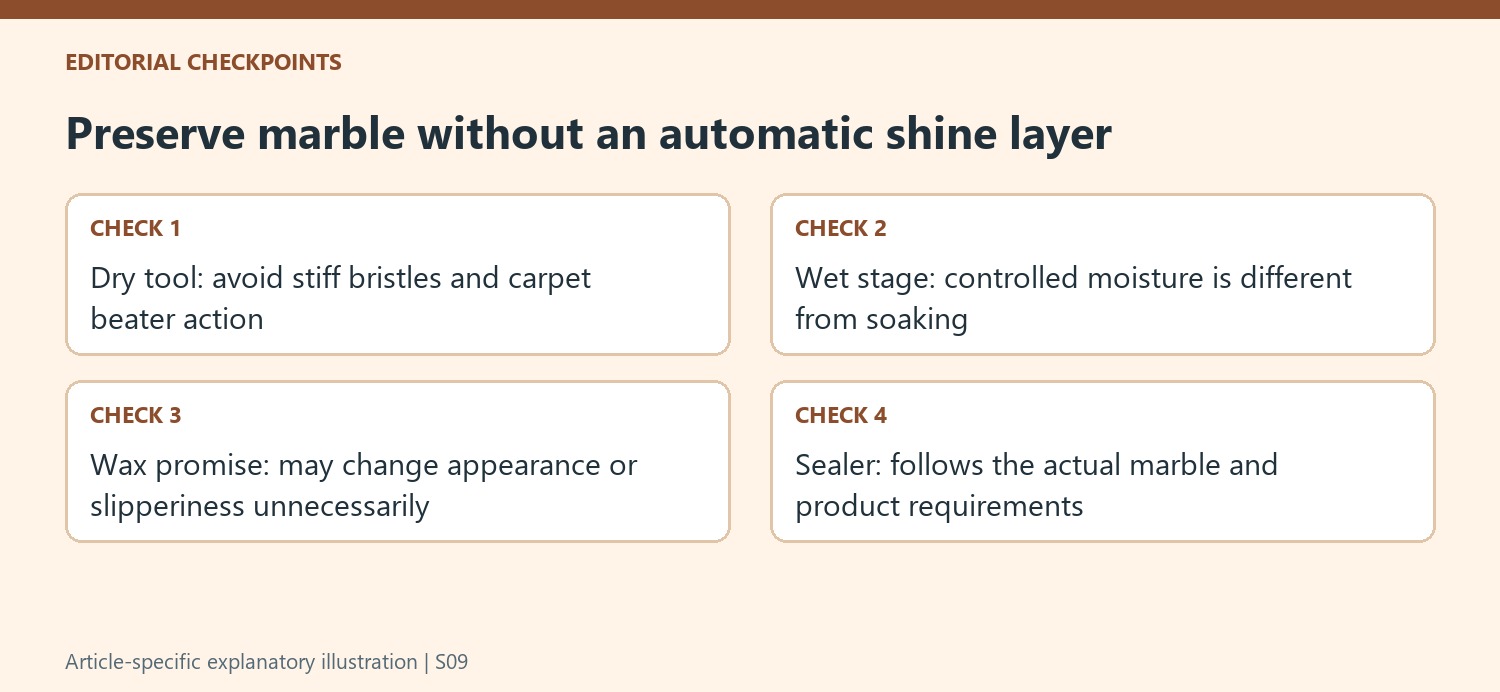
The Spruce warns that products promising to clean and wax at the same time may leave marble looking dull or overly slippery. Restoring a clean appearance begins with removing dirt and residue using the stone-compatible routine, not automatically applying another layer. Put non-slip mats at entrances to intercept grit and use pads under furniture legs; avoid dragging heavy pieces across the stone. The guide also separates specific stain work from regular mopping. Identify the mark before selecting an approved treatment, then remove its residue and dry the area. Check the result on a dry surface before deciding that more intervention is necessary.
Choose dry collection that does not add another abrasive action
The Spruce recommends a dry dust mop or suitable disposable dry cloths for loose particles on marble. It cautions against stiff brooms and a vacuum beater bar, whose useful action on carpet can scratch this surface. Check the head for trapped grit and exchange it as debris collects. A soft tool still needs cleaning if the aim is to take particles off the floor rather than carry them between rooms.
Entrance mats and furniture pads provide a separate layer of prevention when they are suitable for the installation. Keep mats secure and inspect beneath them for dirt, while avoiding dragging heavy furniture across the stone. Those measures limit contact wear between washes. They cannot make an acidic spill harmless, so promptly blot and clean new food or drink exposure using the approved marble method.
Plan small wet sections with a genuine rinse stage
For fuller cleaning, the source favors neutral-pH soap and a soft cotton or microfiber mop that has been wrung well. Use the product's appropriate dilution and keep a separate supply of clean rinse water. Work on an area small enough to clear and dry without leaving standing liquid behind. A broad soaking pass is not needed to demonstrate that the floor has been thoroughly addressed.
Rinse the tool frequently so captured soil leaves the working head. Remove remaining cleaner according to the chosen method, then use a clean soft cloth for drying. The article notes that some marble contains iron-bearing particles, providing another reason not to leave water sitting for a prolonged period. Inspect the result once dry rather than interpreting a temporary wet reflection as the floor's final appearance.
Keep shine products and stain treatment out of the automatic routine
The guide warns that combined clean-and-shine or wax products can leave marble dull or overly slippery. Do not assume a bottle promising a brighter finish is the same thing as a suitable neutral cleaner. If an area looks hazy, review dirt and detergent removal before adding another layer. The intended honed or polished finish should guide expectations rather than a universal goal of maximizing reflection.
Specific scuffs or absorbed stains need identification and an approved local response, separate from ordinary mopping. Remove treatment residue and dry before assessing whether more work is justified. Any sealer should be recommended for the actual marble floor and renewed under its own directions. Cleaning, cosmetic correction and protection are related decisions, but automatically performing all three every time can introduce unnecessary products and make the maintenance history harder to understand.
References
- How to Clean Marble Floors Correctly for a Great Shine. The Spruce; Mary Marlowe Leverette.
The Spruce's floor routine uses soft dry dusting, neutral soap and careful drying while avoiding harsh tools.


Leave a Comment
Comments (0)