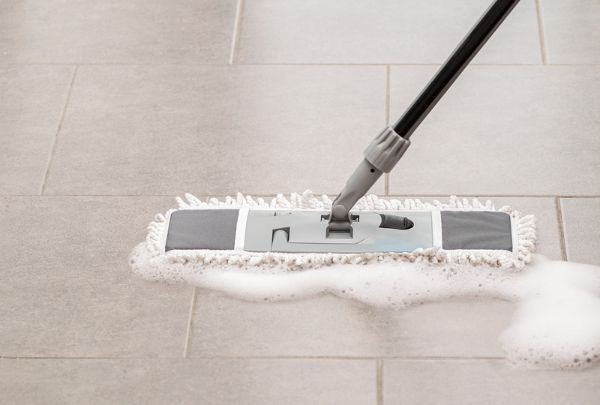
Sweep Porcelain Tiles before Washing Their Surfaces
Porcelain floors and walls still need maintenance even though they are relatively straightforward to clean. The source begins with sweeping or vacuuming loose particles before a mild wash. This prevents dust and grit being moved around in the cleaning liquid.
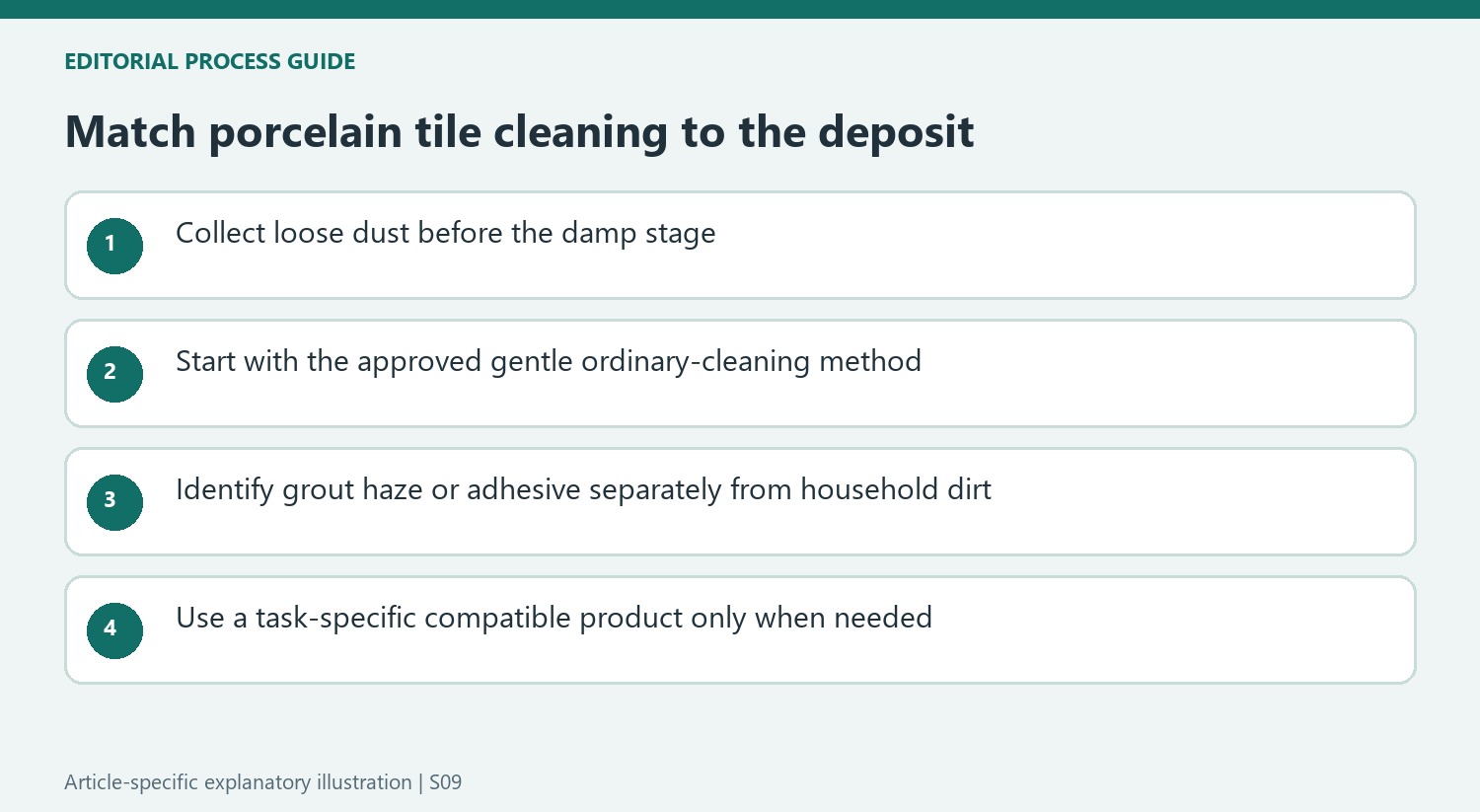
Use products and tools approved for the tile and grout, then remove residue as directed. Pay attention to polished or specially treated surfaces rather than assuming every porcelain tile has identical care requirements. Treat a persistent stain separately from the regular whole-floor routine.
Begin with the smallest effective treatment
The Stone Store describes warm soapy water and gentle wiping as the usual starting point for porcelain. Work with a cloth or appropriate mop after loose particles have been collected. Stubborn marks can be worked locally rather than applying stronger chemicals across the whole room. The supplier recommends a dedicated porcelain stain product when ordinary cleaning is insufficient, with compatibility checked for the installed finish.
Distinguish installation residue from everyday dirt
Dried grout or adhesive is a different task from kitchen splashes. The article recommends wiping fresh grout away promptly and using an appropriate specialist product for material that has already set. Its examples cover different jobs, including grease and adhesive residue, so the products should not be treated as interchangeable. Identify the deposit and follow the selected cleaner's label rather than repeatedly mopping a cemented film.
Preserve the surface between fuller cleans
The guide encourages routine dusting and prompt local attention to spills instead of waiting for the next scheduled wash. It also cautions against abrasive scrubbers and polishing machines that may be intended for different commercial surfaces. Strongly acidic or alkaline products can affect surface treatments. Check the supplier's instructions before adding a sealer, changing the cleaning method or trying to restore a shine that may actually be obscured by residue.
Distinguish ordinary dirt from what installation left behind
The Stone Store's guide begins with sweeping or vacuuming so loose dust is not carried around by the wet stage. For day-to-day cooking splashes and ordinary grime, its starting point is gentle warm soapy cleaning using a suitable cloth or mop. Inspect the remaining mark after that restrained pass. A cemented grout film or adhesive deposit is a different problem from soil that has accumulated during normal room use.
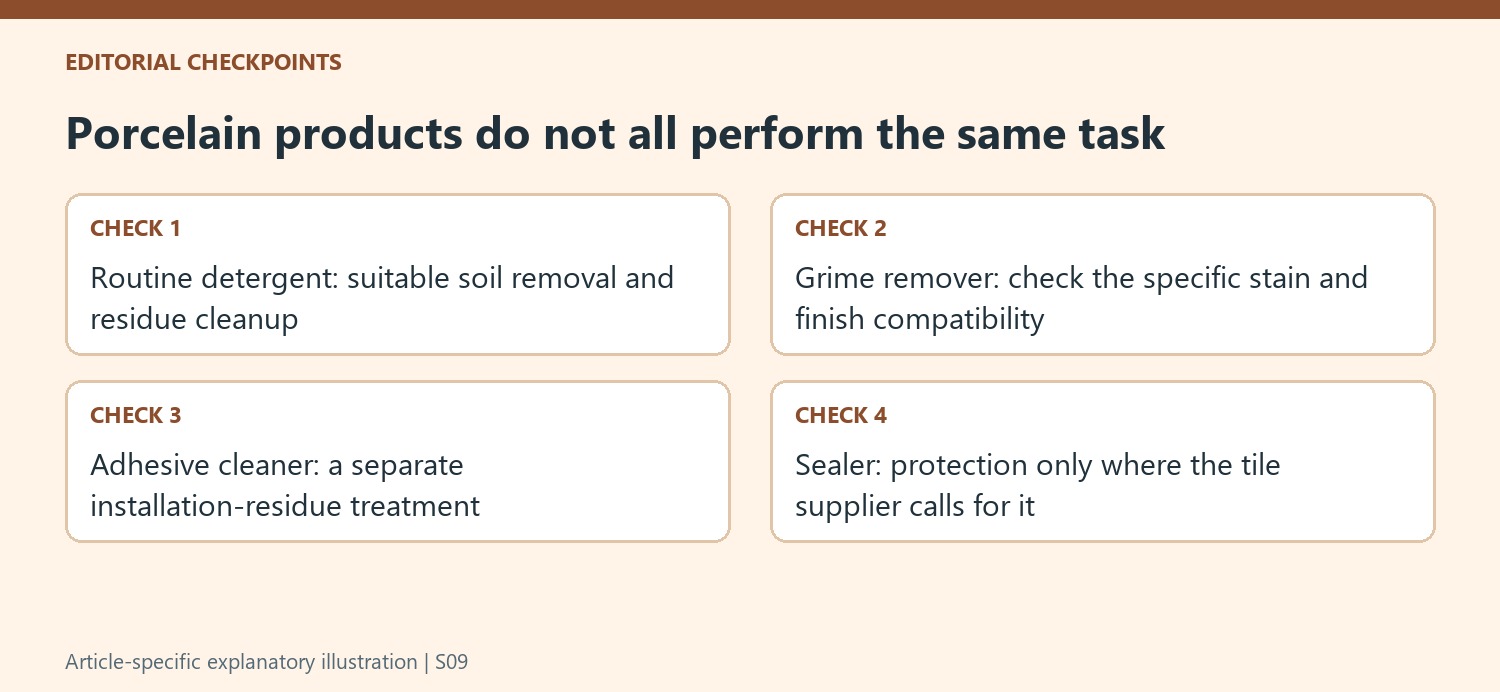
The supplier lists several dedicated products for different forms of residue. Use those examples to identify the job rather than assuming that an intensive adhesive remover, a grease cleaner and a protective sealer are interchangeable. Determine the material left on the tile, the tile's surface treatment and the grout condition before choosing a specialist product. The current label must explicitly suit the task and the installed finish.
Keep the ordinary wash gentle and complete
Use the approved cleaner at its specified dilution and a soft tool after the dry preparation. Work locally on an adhered spill instead of applying stronger chemistry across a clean room. The guide recommends particular attention to grout lines with a small brush where a broad mop cannot remove retained dirt. Avoid excessive force at the joint and lift the loosened material rather than simply working it farther into the recess.
Remove remaining soap with the appropriate fresh-water method and dry using a clean microfiber cloth where streaks are a concern. A dirty cloth can undo the final pass, so exchange it as residue transfers. Check the result after the surface is clear. A wet sheen is not proof that a stain has gone, and a dry haze should be investigated rather than automatically covered with a product promising extra shine.
Preserve the treatment rather than trying to polish through it
The source cautions against heavily acidic or alkaline products and abrasive scrubbers that may affect a protective surface treatment. It also advises against borrowing a polishing machine intended for another commercial installation. Verify any proposed method with the supplier, especially on polished or specially treated porcelain. The material's general durability does not mean every finish can be made glossier through mechanical abrasion.
Prompt attention to spills and routine dry collection can keep the task localized between fuller cleans. The guide suggests different cleaning intervals for rooms with different exposure, but actual use and supplier requirements should govern the schedule. Before adding a sealer, confirm whether the tile needs it and what is already present. Protection renewal is a separate product decision, not a required final step after every successful ordinary wash.
References
- How to Clean Porcelain Tiles. Stone Store; Will.
Loose grit is easier to collect dry than after it has been spread by a mop.


Leave a Comment
Comments (0)