
Match Bathroom Tile Cleaning to the Material
The bathroom-tile reference begins with the manufacturer's advice rather than a favorite cleaning spray. Soap and shampoo residue may appear on many materials, but the surface beneath it determines which products are appropriate. Natural stone and marble require particular attention to compatible treatments and sealing guidance.
Porcelain and ceramic often need less specialized care, though their finishes still matter. Test a new solution in a hidden area before applying it broadly. Regular maintenance keeps buildup manageable while reducing the temptation to use a stronger method that could damage an otherwise sound tile surface.
Clean walls before the bathroom floor
Ideal Home advises beginning high on the wall and working downward so drips do not re-soil finished areas. Wipe off dust with a dry cloth before adding moisture. Clean the floor afterward, reaching corners where debris gathers. Begin furthest from the doorway and move toward the exit so you can let the washed area dry without walking back across it.
Treat natural stone as its own material
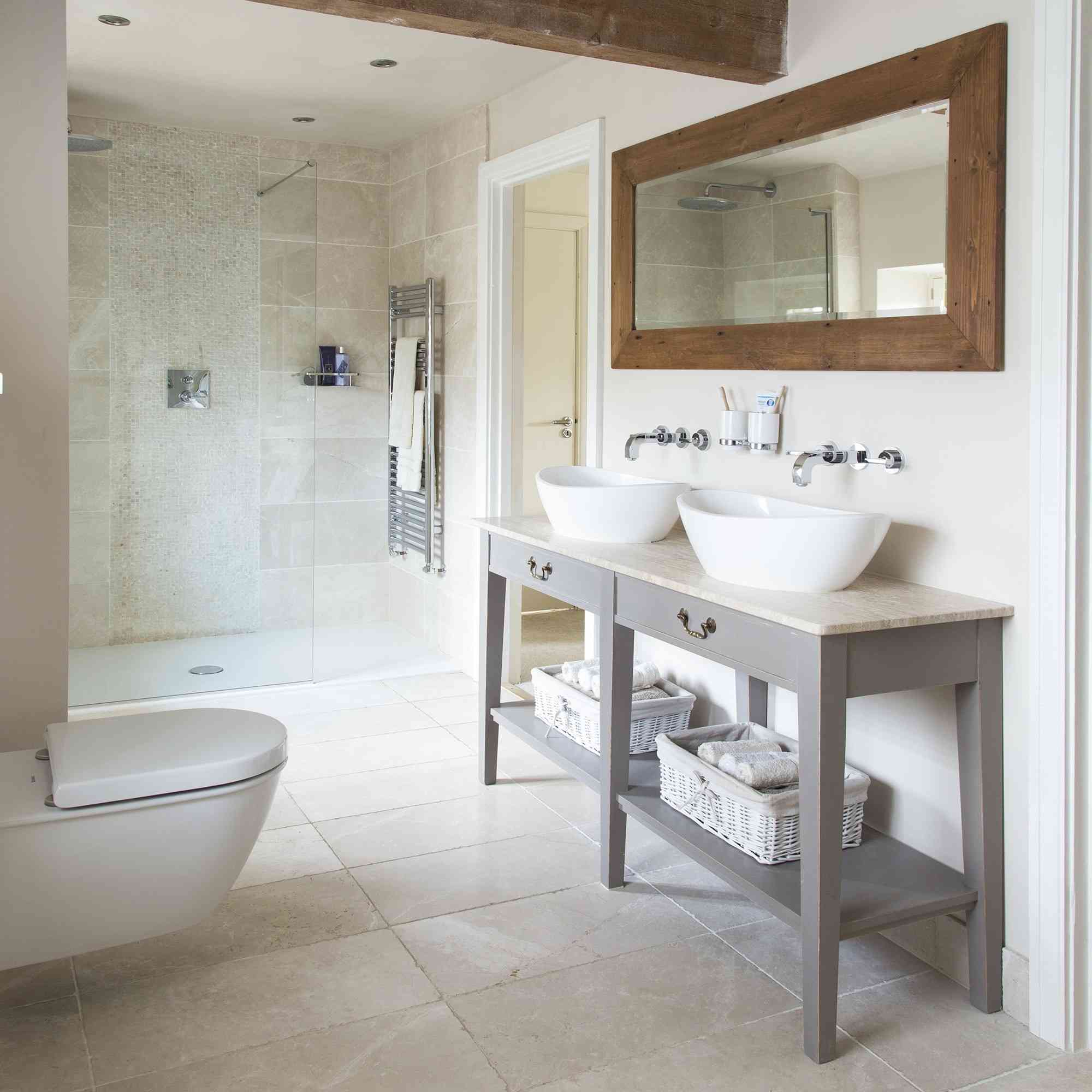
The source calls for checking the stone's sealing requirements and choosing a cleaner suited to the particular stone and finish. Its practical low-impact option is a pH neutral cleaner with a damp cloth, followed by drying. Do not transfer a ceramic tile's acidic limescale recipe to marble. A sealer does not establish that every bathroom spray or heat-based tool is compatible with the installation.
Prevent water marks with a brief final wipe
After cleaning around fittings, use a dry microfiber cloth to remove droplets rather than allowing visible marks to set. The same small task after showering helps limit soap and limescale buildup. Where deposits remain, choose a specialist product explicitly suitable for the tile, test it discreetly and follow its directions. The goal is controlled maintenance of the finish rather than increasingly harsh treatment whenever the bathroom looks dull.
Start with the supplier rather than a favorite spray
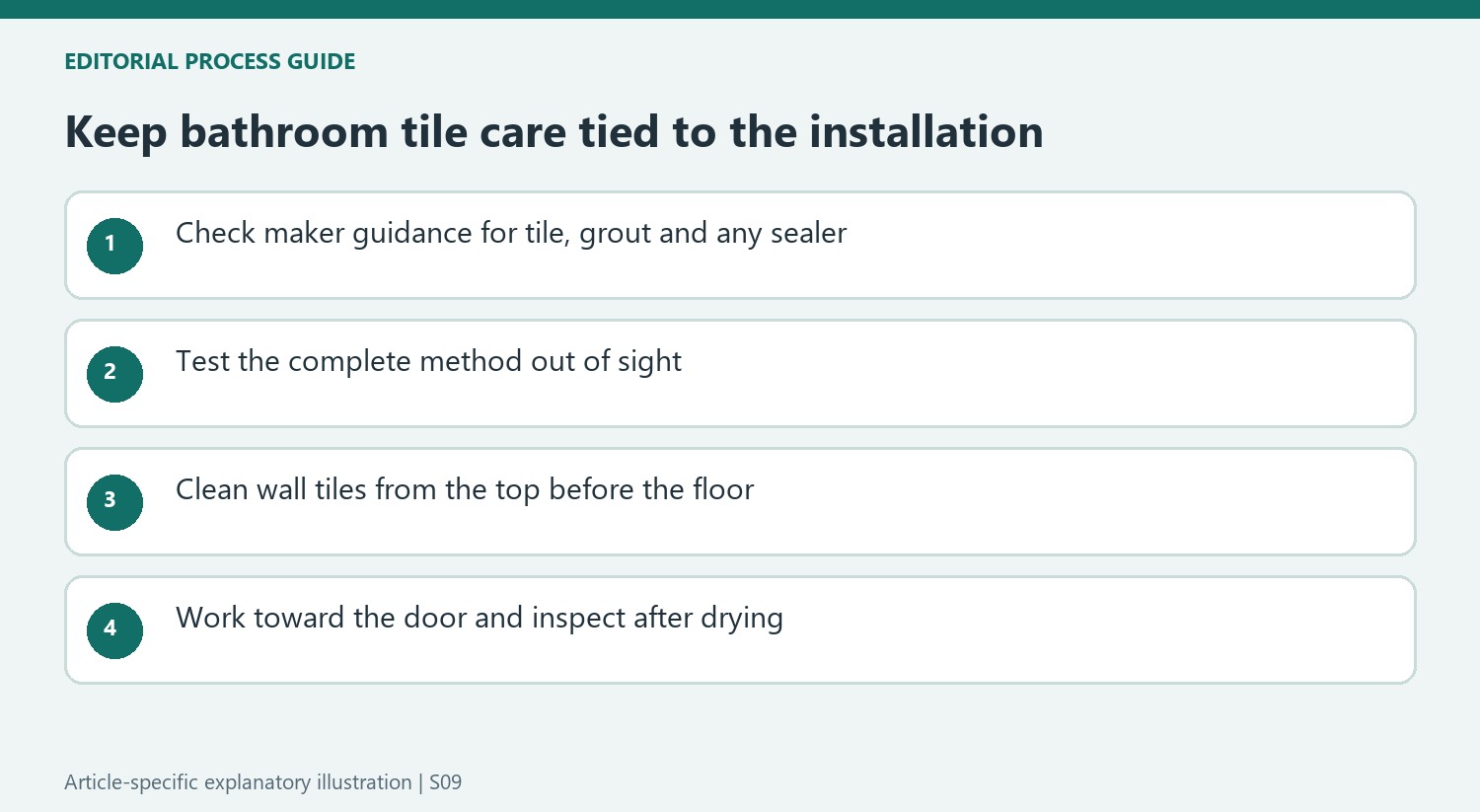
Ideal Home asks readers to check the specific tile maker's advice before applying a bathroom cleaner. That is especially useful where the room mixes ceramic with marble or another natural stone. Identify any sealer and fixture coating as well, because an acid or abrasive can reach more than the intended mark. A surface described as sealed has not thereby been approved for every limescale remover or heat-based cleaning tool.
Use an inconspicuous test of the actual planned method before treating a broad visible area. Remove the test residue and inspect the dry result, not just the appearance while damp. The source's low-impact stone routine uses a pH-neutral cleaner and a damp cloth, followed by drying. Keep that material-specific approach separate from any stronger ceramic example or household mixture discussed elsewhere in the article.
Organize walls, fittings and floor in a useful order
The guide recommends beginning high and working downward on the walls, then attending to the floor afterward. Clear loose dust before adding moisture so it is collected instead of smeared across tile faces. Work around fittings with a compatible soft tool and lift the loosened residue. This order keeps fresh drips and falling particles from repeatedly landing on a floor that has already received its final clean.
For the floor, collect material in corners and begin at the side furthest from the doorway. Move toward the exit using the permitted cleaner and moisture level, leaving the surface to reach the appropriate dry condition before normal use. Keep the mop head clean enough that the last section is not receiving the first section's dirt. More detergent cannot compensate for a tool that is simply redistributing contaminated water.
Use the dry inspection to distinguish deposits from damage
A microfiber drying pass after cleaning helps prevent visible water spots and makes remaining patches easier to assess. The same brief task after showering can limit later buildup of soap and mineral residue. It does not identify every mark, however: persistent dullness on stone can be a changed surface rather than a deposit waiting for a stronger acid. Investigate before escalating the cleaning process.
Where limescale remains, select a specialist product explicitly suitable for the installed tile, sealer and grout. Follow its instructions for testing, contact and residue removal. Review the stone supplier's sealing advice separately rather than adopting a universal renewal date. A clean bathroom should retain the intended finish, and regular restrained care is more useful than cycling through increasingly harsh sprays whenever the room loses some immediate wet shine.
References
- How to clean bathroom tiles – instructions for every type of tile. Ideal Home; Amy Hodge.
Porcelain, ceramic, marble, and other stone surfaces do not share one universal routine.


Leave a Comment
Comments (0)