Match Kitchen Tile Care to the Surface Finish
The kitchen-tile reference recommends checking the tile type and testing a hidden area before choosing a cleaning process. Glazed ceramic, natural stone, and other finishes do not tolerate identical products or abrasion. A method suitable for one backsplash may damage another.
Remove cleaning residue with the appropriate cloth or floor tool after treatment. Keep grout compatibility in mind as well as the tile face. Regular controlled maintenance is more useful than allowing buildup to prompt an unnecessarily aggressive scrub.
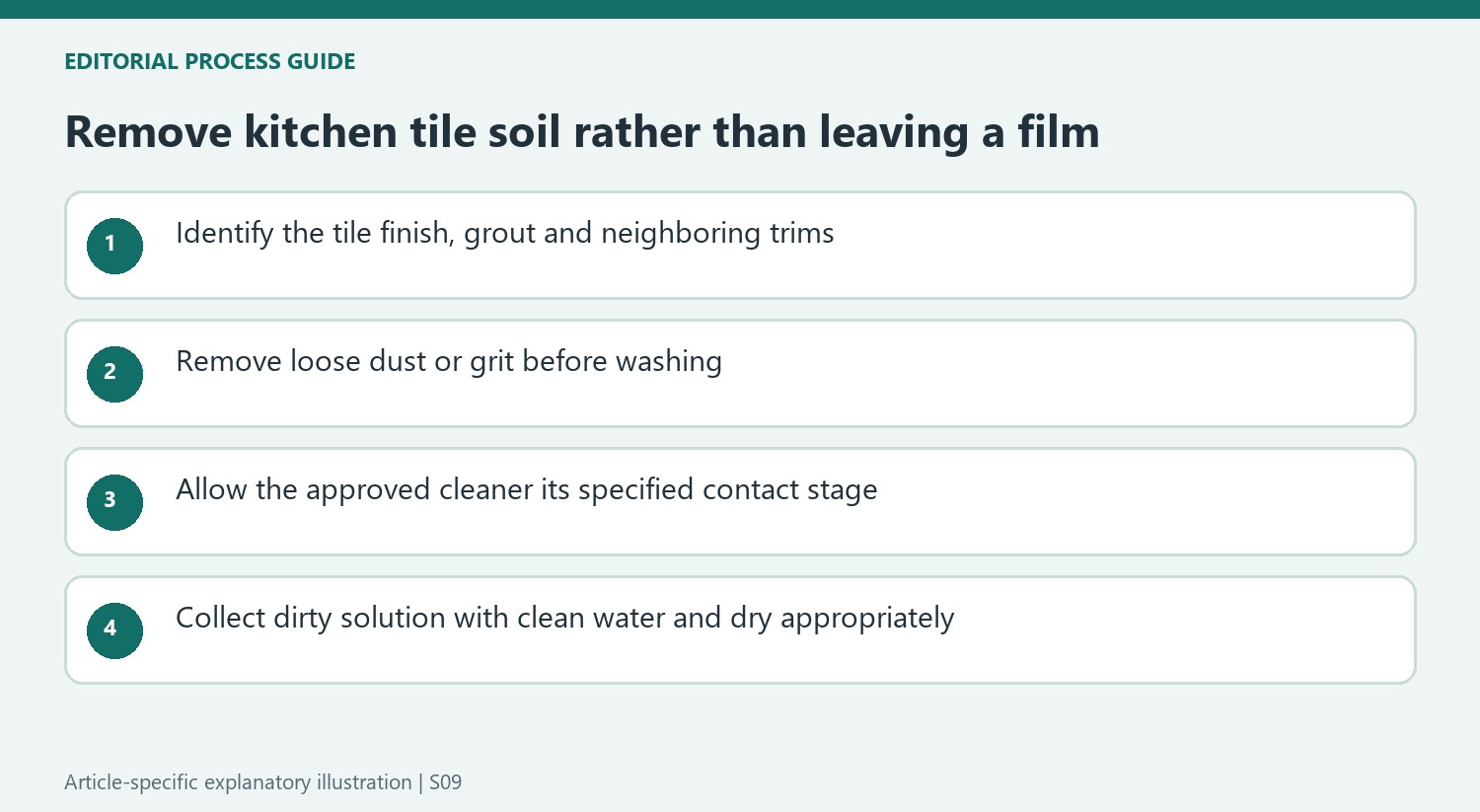
Remove loose material before working on grease
Homes and Gardens separates the preliminary dusting stage from washing. On a backsplash, a dry cloth removes particles before they become mixed into a damp film. On the floor, brushing or vacuuming collects grit before a suitable mop is used. Use clean cloths and a nonabrasive tool, particularly around delicate finishes, rather than treating a greasy mark as permission to use a metal pan scrubber.
Make the rinse part of the cleaning action
Craven Dunnill's David Talbot, quoted in the source, emphasizes removing the dirty solution with clean water. Detergent loosens soil, but leaving it to dry can leave deposits behind. Work according to the chosen product's contact directions, then collect the residue with the appropriate cloth or mop. Finish wall tiles with a soft dry cloth and dry floor tiles using a suitable method.
Avoid leaving a sticky attraction for new dirt
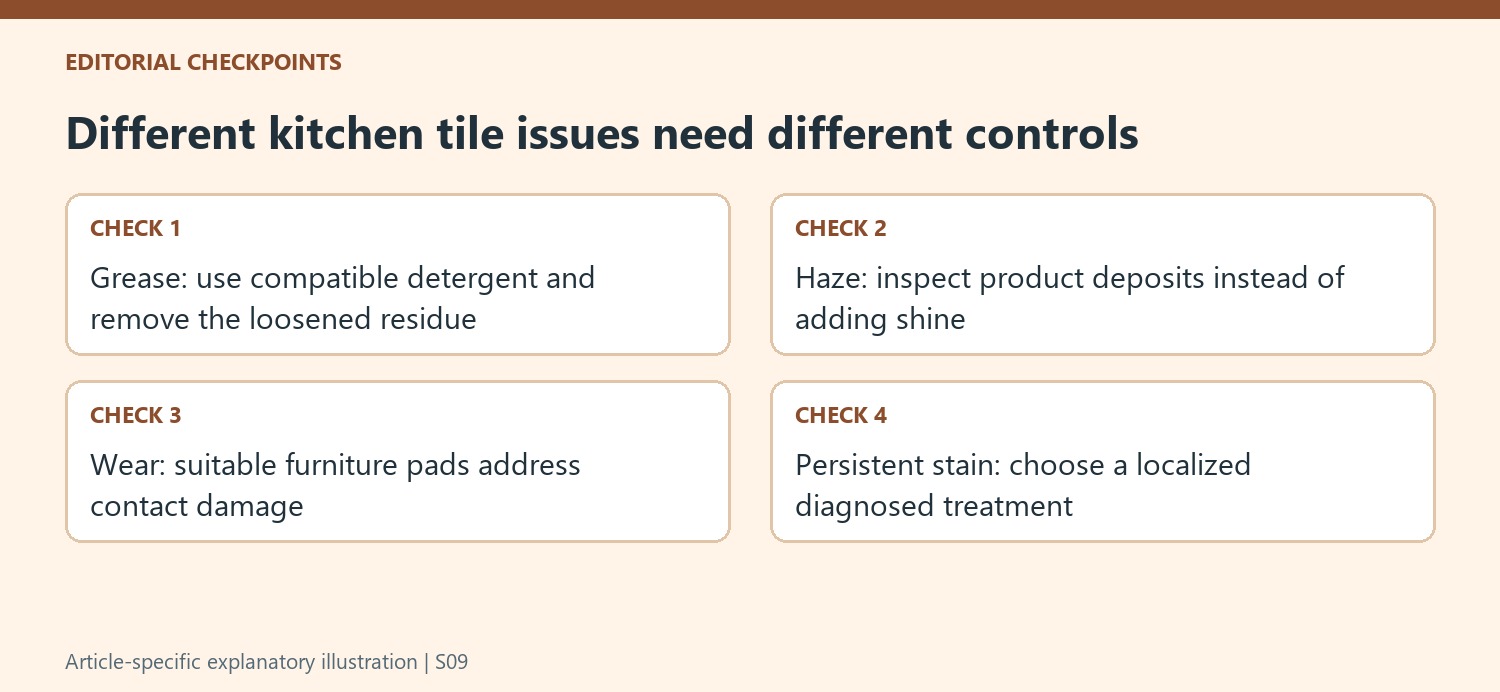
The article warns against floor products containing wax or other additives that create sticky deposits. Excessively acidic or alkaline products also need caution. Select a neutral or nearly neutral maintenance product where the tile instructions allow it, and check the grout as well. Furniture protection pads can reduce contact wear under heavy items. Keep regular maintenance distinct from any specialist treatment needed for a mark that survives ordinary cleaning.
Treat the finish as part of the material identification
The Homes & Gardens experts describe tile longevity as a consequence of an appropriate maintenance regime, rather than a result of using the strongest available cleaner. Identify the tile and its surface treatment before addressing a greasy backsplash or a dull floor. Glazed ceramic, natural stone and treated porcelain can share a room without sharing identical chemical or tool tolerance. Grout and decorative trims also belong in that compatibility check.
Trial the intended process in a hidden location, including the cleaner, contact time and tool. Inspect after residue removal and drying for any altered sheen or color. A patch test is not simply checking that a product cleans the dirt quickly. The expert specifically cautions against abrasive scourers, metal pan scrubbers and steam equipment on the ceramic surfaces discussed, so a difficult mark is not permission to substitute one of those tools.
Make soil removal a complete process
Start with a dry cloth on wall tiles or suitable brushing and vacuuming on the floor. This removes loose particles before detergent turns them into a dirty film. Use clean cloth faces and a suitable mop, refreshing them as soil transfers. The source's emphasis on clean rinse water makes sense because detergent can loosen dirt without taking it out of the room if the same loaded liquid is continually spread back.
Follow the chosen product for its contact stage rather than using a single waiting period from a general example. Then collect the dirty solution and remaining residue with the appropriate clean-water method. Finish wall tiles with a soft dry cloth and use a suitable drying approach on the floor. The job is not complete merely when the tile has been wetted with cleaner; the loosened material must actually be removed.
Avoid adding a new dirt-attracting layer
The source warns about floor products containing wax, sodium silicate or other additives that leave sticky deposits. Those residues can create a place for new grime to collect, making a surface appear to need increasingly frequent washing. Check the product's maintenance purpose and the tile maker's instructions before applying something sold primarily for shine. A compatible neutral or nearly neutral routine can be more appropriate than another appearance-changing layer.
Furniture protection pads address contact wear separately from grease and detergent residue. Inspect them beneath heavy items while accessible, making sure they remain suitable and free of trapped grit. If a mark survives ordinary compatible cleaning, identify it and obtain a targeted treatment instead of changing the entire room's routine. A specialist stain method should solve a specific problem while preserving the tile finish and the surrounding installation.
References
- Cleaning kitchen tiles – how to get your tiles gleaming, according to experts. Homes and Gardens; Ruth Doherty.
Backsplashes and floors can share a room while requiring different equipment and treatment.


Leave a Comment
Comments (0)