Keep Ceramic Shower Tile From Developing Heavy Soap Buildup
The Spruce combines regular residue removal with thorough rinsing, drying and ventilation.
Check what surrounds the grout
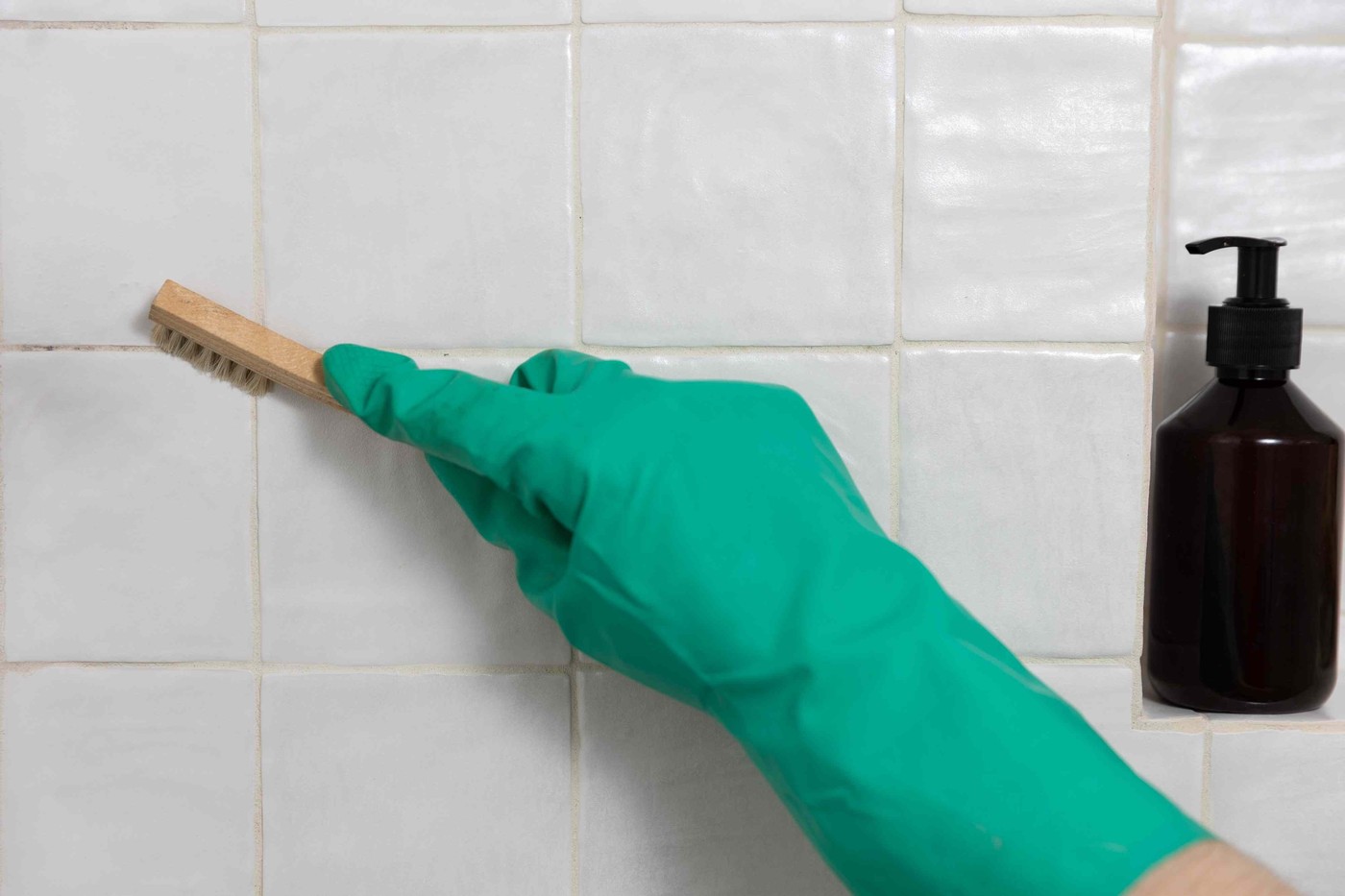
The Spruce's shower-tile guide distinguishes ordinary ceramic surfaces from more sensitive natural stone. A method that removes soap scum from one tile may be unsuitable for another. Work from the top of the shower and rinse cleaned areas rather than leaving loosened residue behind. A small brush can help around fixtures and edges, but the tile and grout still determine which tools are appropriate.
Make prevention part of the cleaning cycle
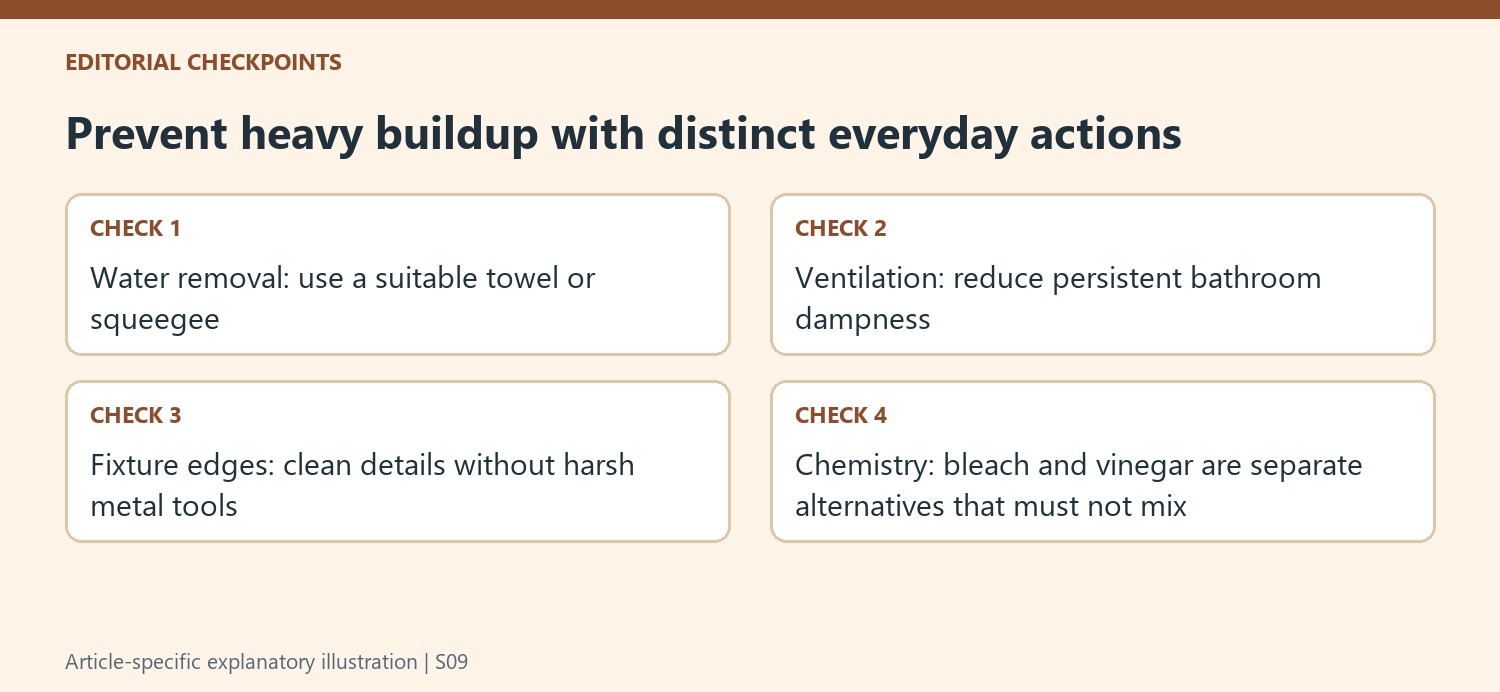
The article recommends regular cleaning before soap scum becomes a heavy layer, plus a squeegee or microfiber towel to remove water. Bathroom ventilation helps reduce the moisture that encourages mildew. It also warns not to mix bleach with vinegar-based cleaning solutions. A stronger chemical is not a substitute for an orderly sequence: choose one compatible process, follow its directions, rinse fully and dry the finished surface before the residue returns.
Choose the mild route before stronger treatments
The Spruce describes a dishwashing liquid solution as one option for lifting ordinary soap residue, using a soft cloth or nylon brush rather than a harsh metal tool. On natural stone, choose a suitable stone cleaner or other explicitly approved mild method; acidic recipes can pit the material. The source also lists stronger treatments, but they are not interchangeable with routine washing. Follow the chosen product's label, consider nearby fixtures and grout, and keep cleaners separate. A careful rinse and towel finish make the result easier to assess before deciding whether a persistent patch actually needs another treatment. Keep the bathroom fan running during cleaning and use a small brush carefully around fixture edges where residue collects.
Choose the routine around the actual shower materials
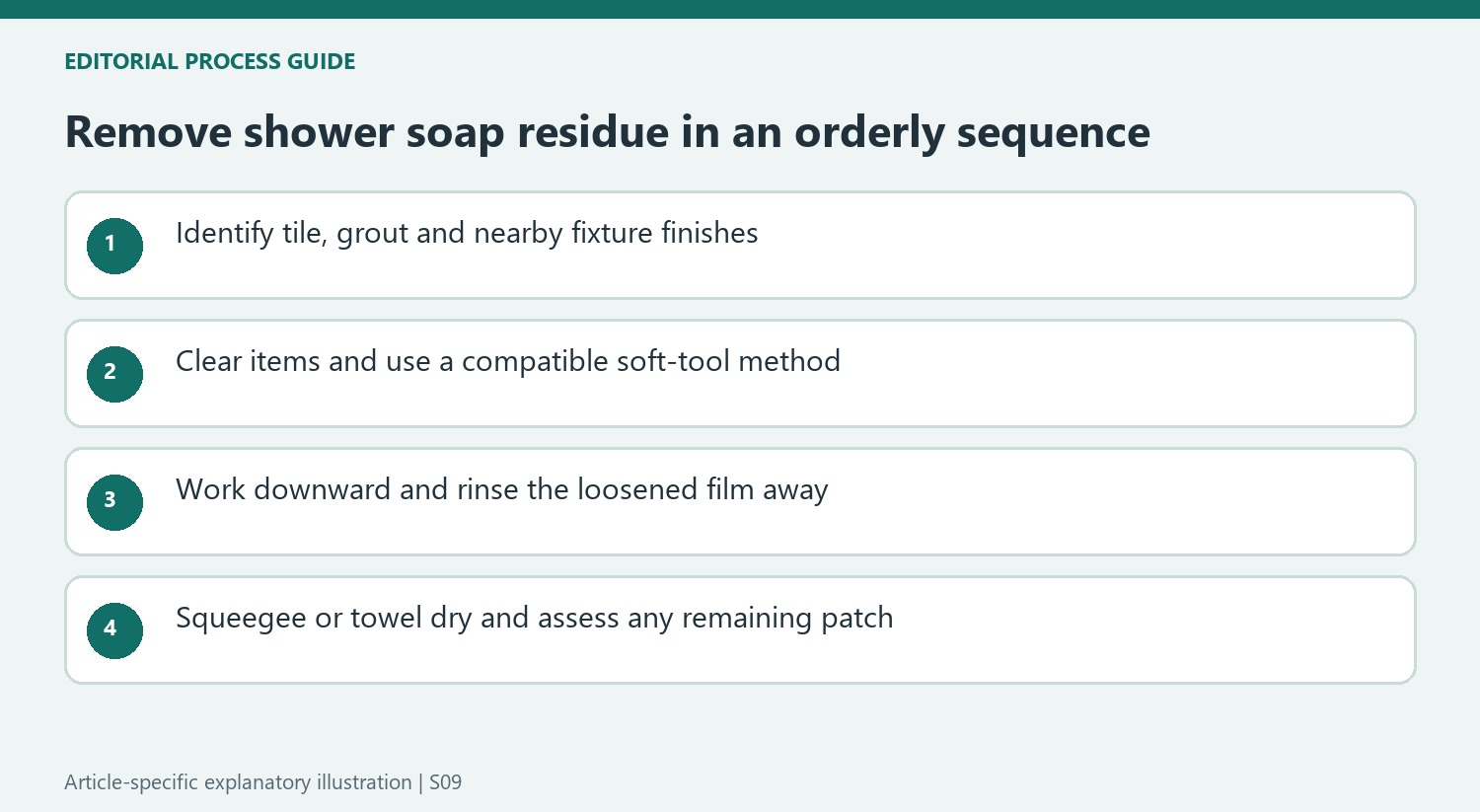
The Spruce includes ceramic tile and natural stone in its discussion, but those surfaces should not share an assumed acid-cleaning recipe. Identify the tile, grout and nearby fixture finishes before choosing a product. A stone border or shelf can change the compatibility question even if the main wall is ceramic. Use the installed materials' care directions to select a mild starting method and a soft cloth or permitted nylon brush.
Clear bottles and other items away so the solution reaches the surface rather than collecting around their bases. Inspect fixture edges and the lower portion of the wall, where soap residue may be heavier. The guide suggests a small toothbrush for detailed areas; use it gently and remove what it loosens. Reaching a narrow corner is useful only if the tool does not scratch the neighboring coating or leave cleaner trapped there.
Use a deliberate top-to-bottom rinse and drying stage
Working from higher sections toward lower ones helps keep loosened residue moving off the cleaned surface. Follow the selected cleaner's application and contact directions, then rinse it away instead of allowing a detergent film to dry into another dull layer. More product is not always a remedy for resistant soap scum. Assess whether the tool is dirty and whether the product actually suits the material before increasing either quantity or pressure.
Finish with a squeegee or microfiber towel where appropriate and inspect the result after remaining water is removed. That makes it easier to distinguish residue from a change in the tile or grout itself. A stronger treatment should follow a specific diagnosis, not a general wish for more shine. The source's bleach and vinegar options remain separate; its explicit mixing warning should not be lost when organizing the cleaning stages.
Make the shorter after-shower routine support the deeper clean
The guide recommends regular cleaning before soap scum becomes a thick layer, with moisture removal between fuller sessions. Keep a suitable squeegee or towel accessible and use bathroom ventilation to reduce persistent dampness. These actions address the conditions that favor recurring residue and mildew without requiring a new chemical application every time the shower is used. An inconsistent ventilation routine cannot be fully compensated for by occasional hard scrubbing.
The source also suggests considering the bath products that contribute to the film. A change in product may reduce some residue, but it does not remove the need to rinse and dry or establish that all remaining marks have the same cause. If a patch returns rapidly, inspect water retention, grout condition and accessory placement. Persistent deterioration deserves assessment beyond repeating a routine cleaner over the same area.
References
- How to Clean Shower Tile the Easy Way and Cut Through Soap Scum. The Spruce; Mary Marlowe Leverette.
The Spruce combines regular residue removal with thorough rinsing, drying and ventilation.


Leave a Comment
Comments (0)