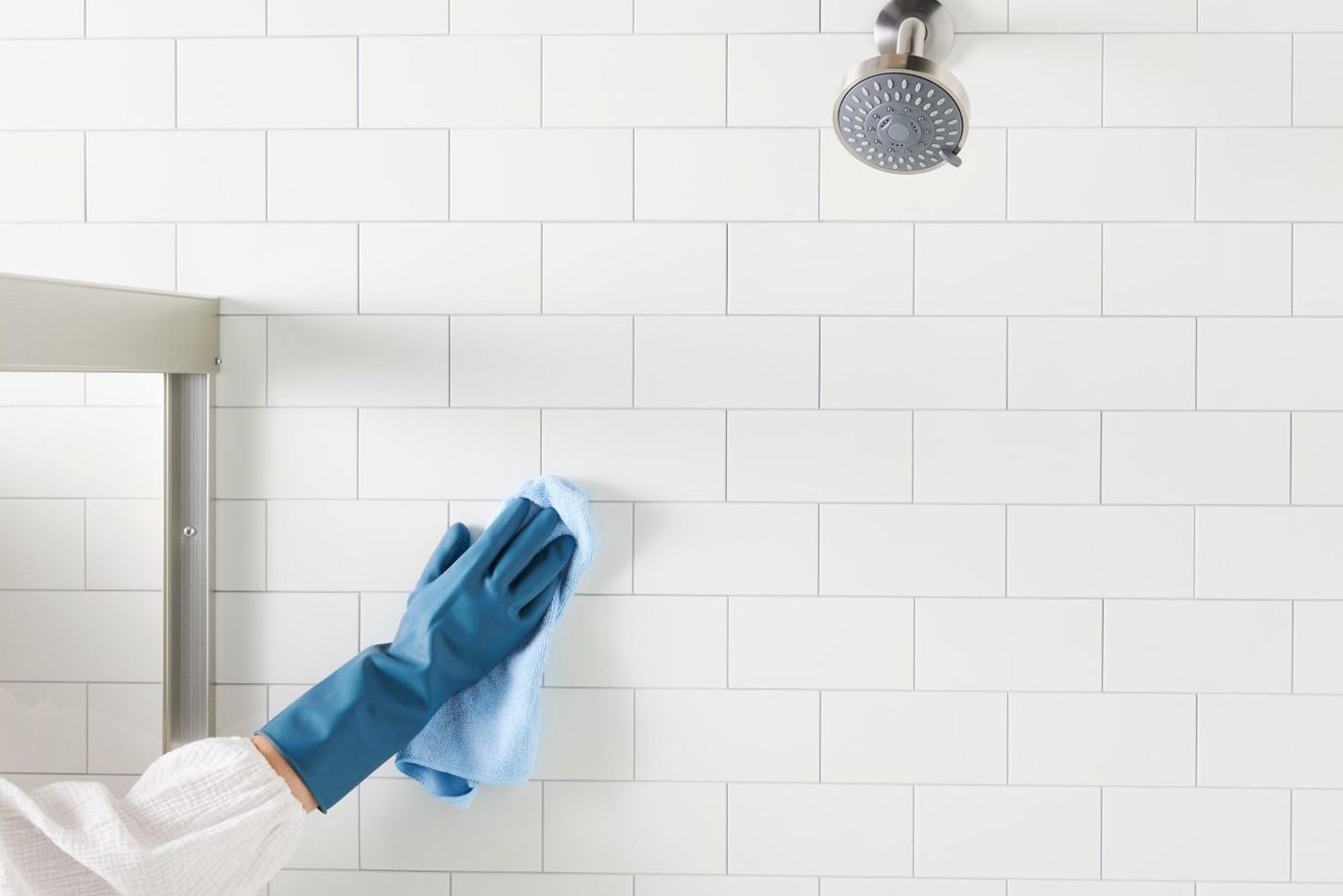
Clean Ceramic Shower Tile With Its Grout and Fixtures in Mind
Real Simple recommends identifying the material, clearing the shower and controlling moisture between fuller cleans.
Match the method to the material
Real Simple explains that soap ingredients and minerals can leave a film on shower tile, while damp conditions support mildew around grout. Its most important first step is identifying the tile. Ceramic and porcelain tolerate different treatments from natural stone, which can be damaged by acidic liquids. Avoid abrasive tools that could scratch the surface rather than assuming a bathroom product is suitable for every shower wall.
Make the routine easier to repeat
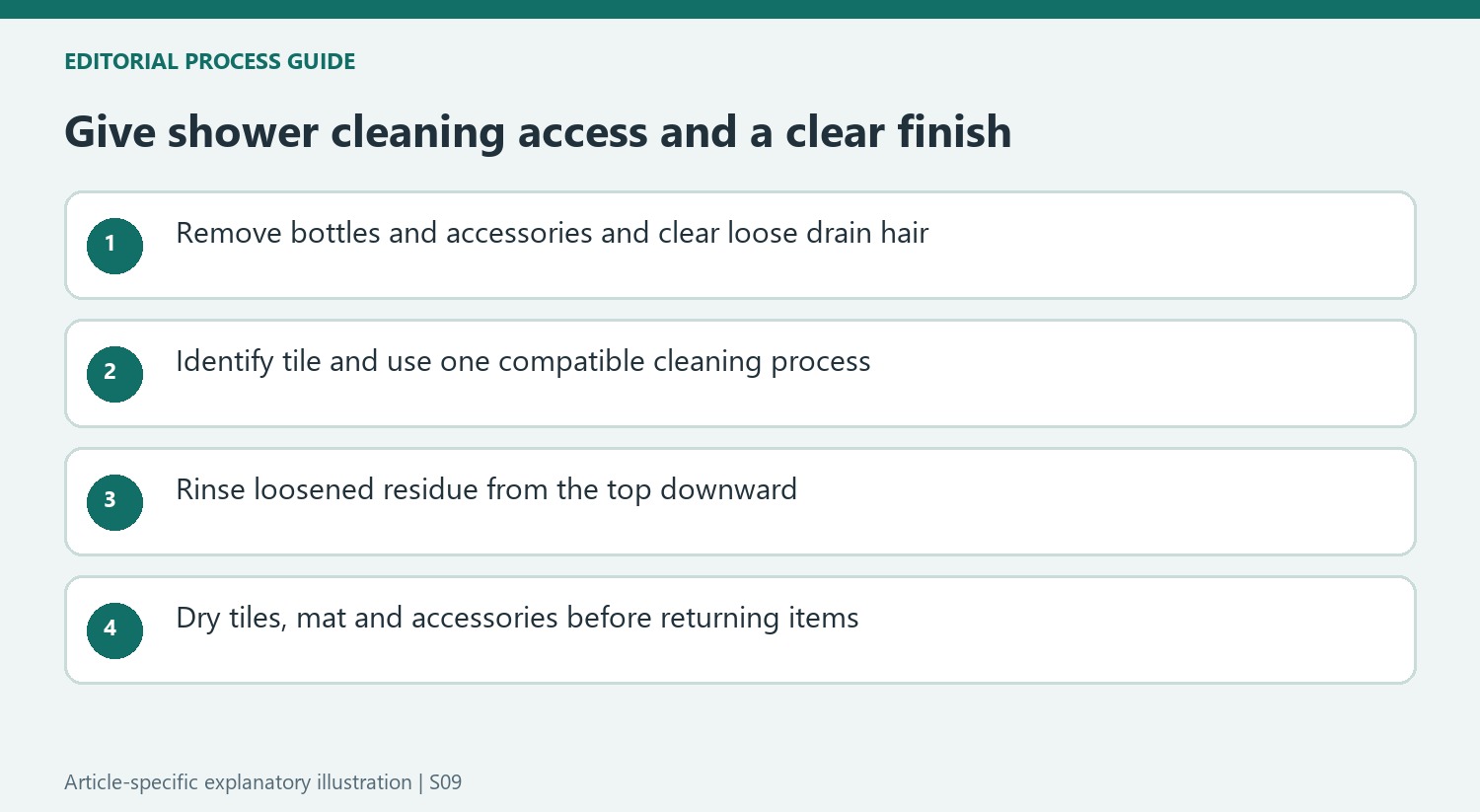
Clear bottles and other items before cleaning, remove loose hair and provide ventilation. A brief squeegee or towel pass after showering reduces water and residue, helping prevent thicker accumulation. The article recommends regular fuller cleaning and attending to an infrequently used guest shower too. When a stronger product is required, use the appropriate label directions and never mix chlorine bleach with other cleaners. Rinsing and drying remain separate final steps.
Include the items that keep the shower damp
Real Simple extends the job beyond the broad tile faces. Hair can slow the drain, bottles can leave sticky material underneath, and caddies can hold moisture and residue. Clear these obstructions before washing the walls. If a rubber floor mat is used, hang it to dry after each shower and clean it regularly. Return wiped bottles only after their shelf is clean. Widespread discoloration or loose tiles deserve professional investigation: the source notes that water may be reaching the structure behind the tiled surface, where repeated surface scrubbing will not resolve the problem. Addressing a slow drain also keeps cleaning water from sitting on the shower floor after the final rinse.
Empty the shower so cleaning can reach retained residue
Real Simple begins by removing bottles, soaps and other accessories, which exposes the ledges and corners where sticky material often remains. Wipe the items themselves before returning them later, and clear loose hair from the drain so rinse water can leave effectively. A shower that has been cleaned around every bottle can still retain the damp residue supporting rapid buildup beneath those objects.
Provide the ventilation required by the cleaning product and identify the tile before choosing it. Natural stone needs a different decision from ceramic, and grout plus nearby fittings must tolerate the selected method too. Avoid rough wire tools and abrasive substitutes just because the soap film has become thick. The source's broad collection of possible ingredients is not a recommendation to use them together or on every material.
Give soap film and grout discoloration different attention
The article explains soap scum as residue associated with bath-product ingredients and minerals in water. Cleaning should loosen and remove that material rather than simply bleach its appearance. Use a compatible soft tool, follow the product's contact directions and rinse from the top so loosened soil leaves the treated area. Keep any separate grout treatment within its own instructions rather than layering it over residue from another cleaner.
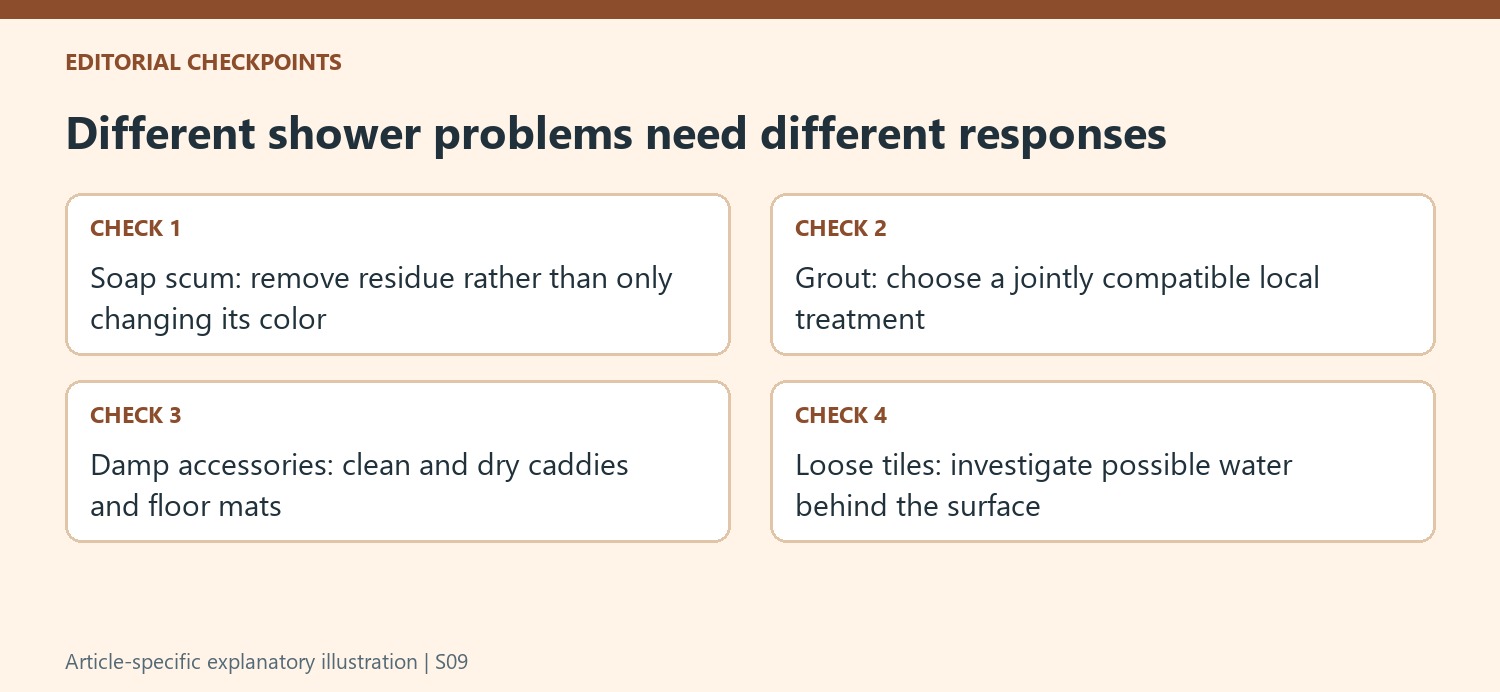
The source explicitly cautions against mixing chlorine bleach with other products, including vinegar. That warning is particularly relevant when moving between soap-film and stain treatments during one session. Choose one compatible process, follow its removal instructions and assess the result before considering anything else. Stronger chemistry is not a substitute for identifying whether a patch is soap residue, superficial discoloration or a sign of ongoing moisture trouble.
Reduce retained moisture after the fuller clean
A brief squeegee or towel pass after showering removes water and helps limit the residue left to accumulate. The guide also extends maintenance to caddies and rubber floor mats: dry a mat after use and clean accessories instead of leaving them as permanently damp reservoirs. Return bottles only to clean shelves, and keep the drain clear enough that rinse water does not pool across the floor.
The source recommends attention even for an infrequently used guest shower, with cleaning after visits and a suitable periodic check. Widespread discoloration or loose tiles requires a different response because water may be reaching the structure behind them. Seek professional investigation rather than repeatedly scrubbing the visible face. An orderly routine should leave the shower clean and drier while making any persistent defect easier to recognize.
References
- Does Your Shower Need a Cleaning Overhaul? Here's How to Clean Your Shower Tile So It Sparkles. Real Simple; Mary Marlowe Leverette.
Real Simple recommends identifying the material, clearing the shower and controlling moisture between fuller cleans.


Leave a Comment
Comments (0)