Choose a Mop That Collects Dirt From Ceramic Floors
BHG recommends a soft chamois-style mop and mild detergent while warning against pushing dirty water into grout.
Avoid redistributing grit and soap
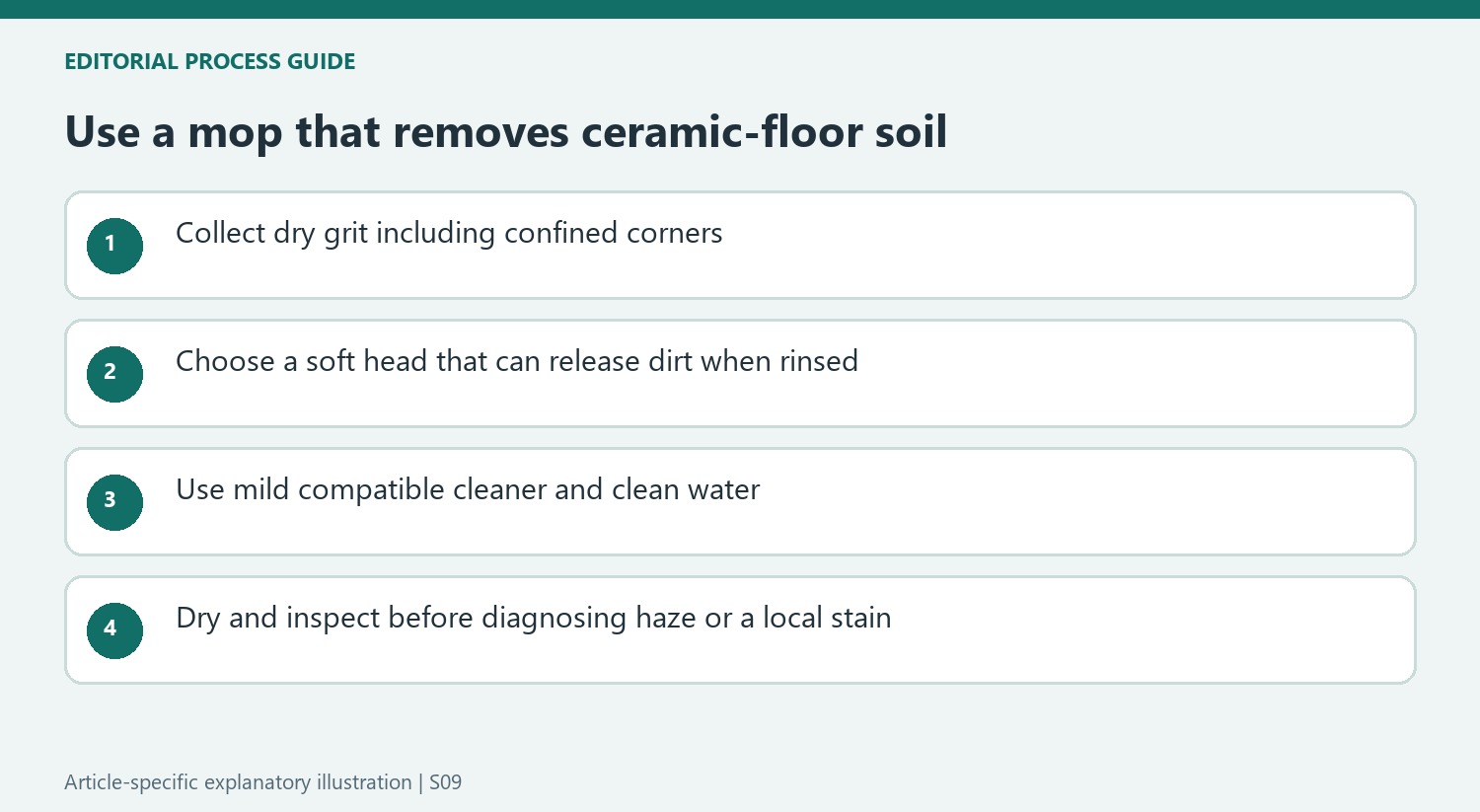
Better Homes and Gardens recommends sweeping or vacuuming first, then using a soft chamois-style mop with a mild detergent and clean water for ceramic and porcelain floors. A sponge mop can push dirty water into grout instead of collecting it effectively. Spot stains early, and consider leftover detergent if a clean floor still looks hazy. Drying promptly with a clean lint-free cloth helps prevent water spots.
Keep material-specific precautions in the plan
Stone needs a different decision: marble and slate should not receive acidic cleaners, while granite calls for a gentle neutral-pH product. Grout is porous and can require targeted cleaning and suitable sealing. The guide also notes disagreement about steam and warns that damaged or older grout can deteriorate further. Identify the floor, grout condition and manufacturer's requirements before choosing a more intensive cleaning method.
Build a schedule around what the room collects
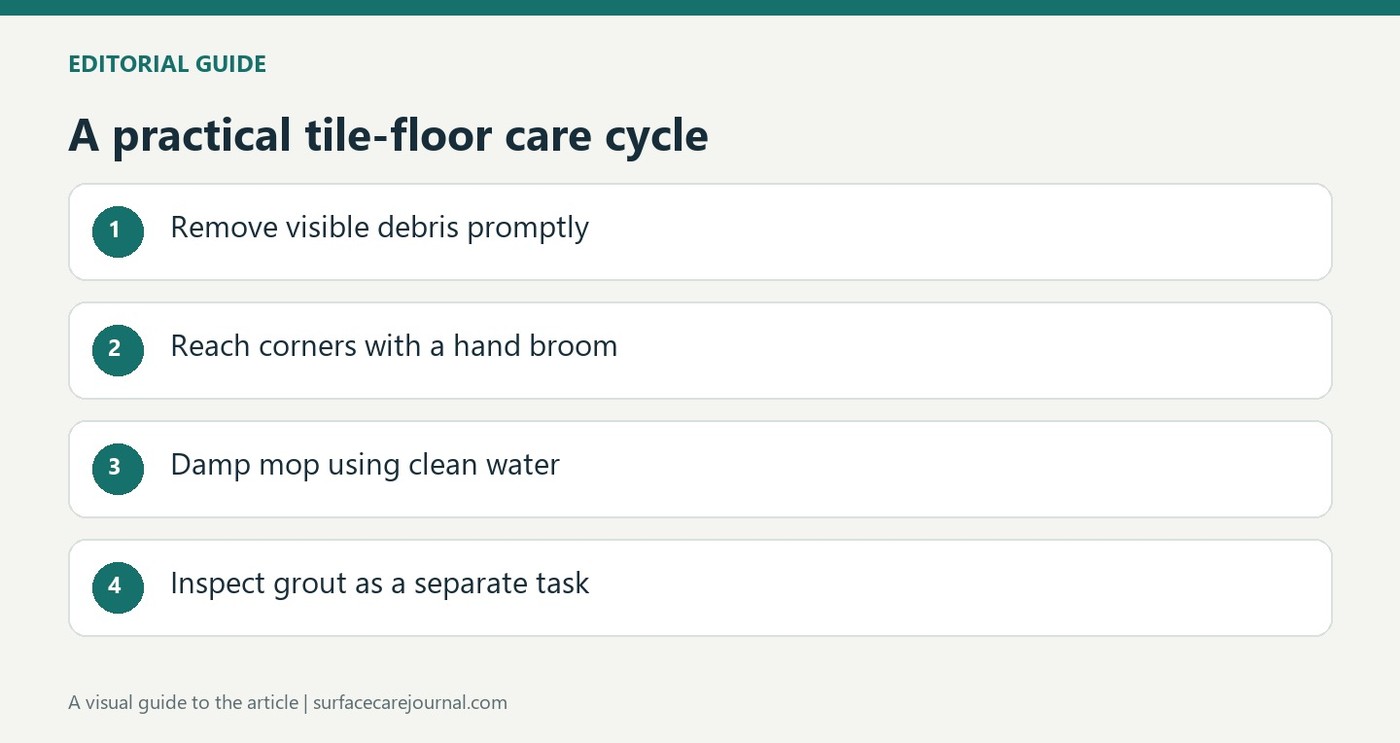
Better Homes and Gardens separates frequent dry cleaning from less frequent mopping. It suggests sweeping or vacuuming whenever debris is noticeable, using a hand broom where a vacuum attachment cannot reach. Bathroom floors may need a different wet cleaning rhythm from kitchen floors, and grout can be inspected separately between washes. Those intervals are starting points rather than a reason to leave a spill or visible grit in place. Cleaning a small mark promptly and refreshing dirty mop water help prevent a routine wash from spreading the very soil it is intended to remove. Check the floor after it dries so leftover film is distinguished from a stain that needs targeted attention.
Choose the head for soil collection rather than appearance
BHG's ceramic and porcelain advice focuses on a soft chamois-style mop with mild detergent and clean water. Its concern about sponge mops is that dirty liquid can be pushed into grout. Assess whether the chosen head actually removes soil and can be rinsed effectively, rather than judging the tool only by how glossy the floor looks during a wet pass. A fresh pad and controlled product amount matter together.
Begin with sweeping or appropriate vacuuming, including corners that the broad mop head cannot reach well. Sand and grit remain an abrasion concern even on a durable surface. Keep a small hand broom available for confined areas if that improves collection. Starting with a cleaner surface means the damp stage can address adhered grime without turning loose particles into a slurry across the tile and grout.
Treat a hazy result as information about the process
The source identifies leftover soap as one possible cause of a dull film after washing. Before adding a second dose of detergent, review dilution, rinse-water cleanliness and the tool's condition. Use only a residue-removal approach compatible with the floor, grout and sealer. The article's ceramic suggestions do not establish permission to use acid on an adjacent stone border or a material that has not been identified.
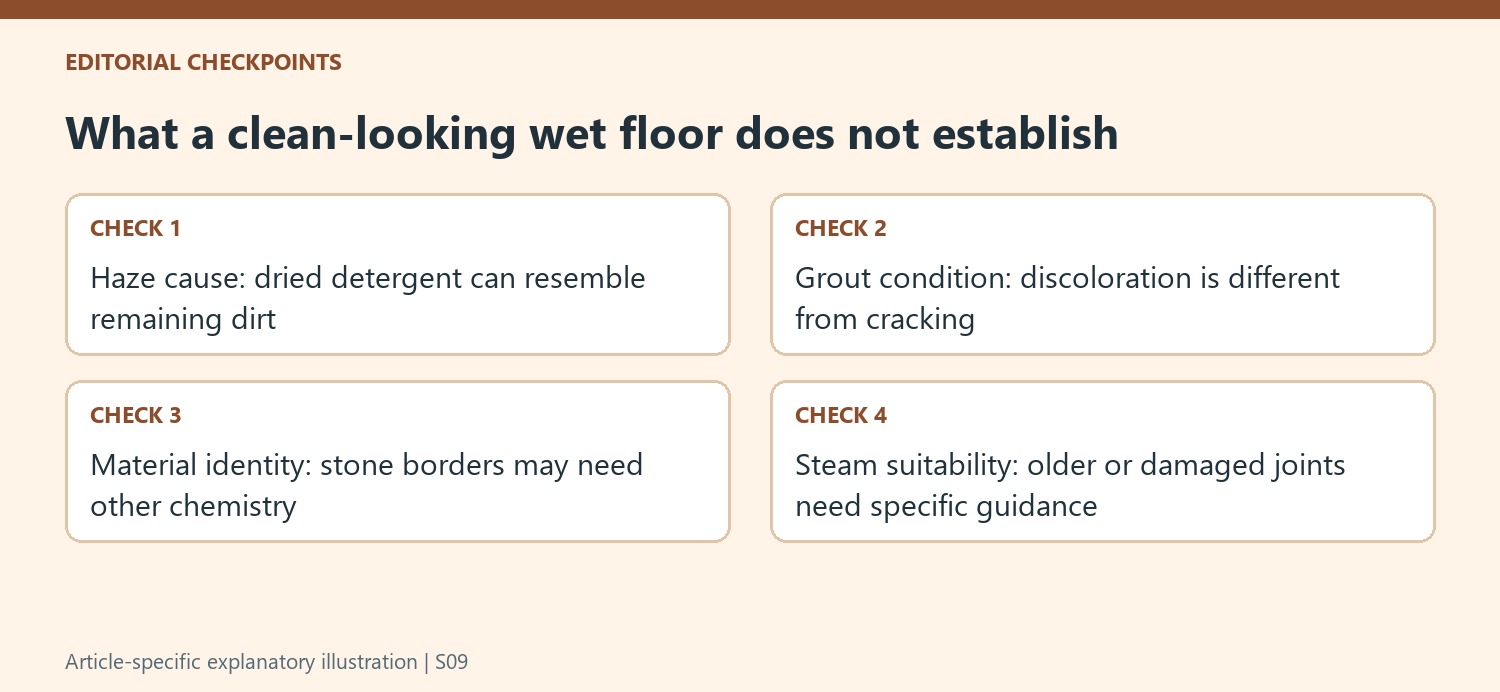
Dry promptly with a clean lint-free cloth where water spots would obscure the result. A floor that looks temporarily shiny when wet may reveal residue once dry, making that final inspection useful. Spot stains early and identify their likely cause instead of repeatedly washing the whole room. A food spill, a mineral deposit and an altered finish are different conditions even when all first appear as a pale or dark patch.
Include grout condition in any stronger-method decision
BHG discusses separate grout brushing and protection, but the material and existing condition should determine the product. A nylon tool is different from a metal brush that can damage the joint. Check current instructions for any cleaner or sealer rather than assuming that a suggested waiting period fits newly installed and long-established grout alike. A cracked or missing section needs repair assessment rather than cosmetic whitening alone.
The guide also notes disagreement over steam, especially when grout is older, damaged or repeatedly exposed. That uncertainty is a reason to consult the installed system's care requirements before changing equipment. Stone and resilient tiles bring further limitations, so keep their methods separate from ceramic cleaning. A simple routine that removes grit and detergent effectively can remain useful without turning every maintenance session into an aggressive grout-restoration project.
References
- How to Clean Tile Floors, No Matter What Type (and Grout, Too!). Better Homes & Gardens; Caitlin Sole.
BHG recommends a soft chamois-style mop and mild detergent while warning against pushing dirty water into grout.


Leave a Comment
Comments (0)