Use Controlled Damp Mopping for Ceramic Tile
A material-aware tile guide separates routine debris removal from wet cleaning and targeted grout care.
Separate sweeping from washing
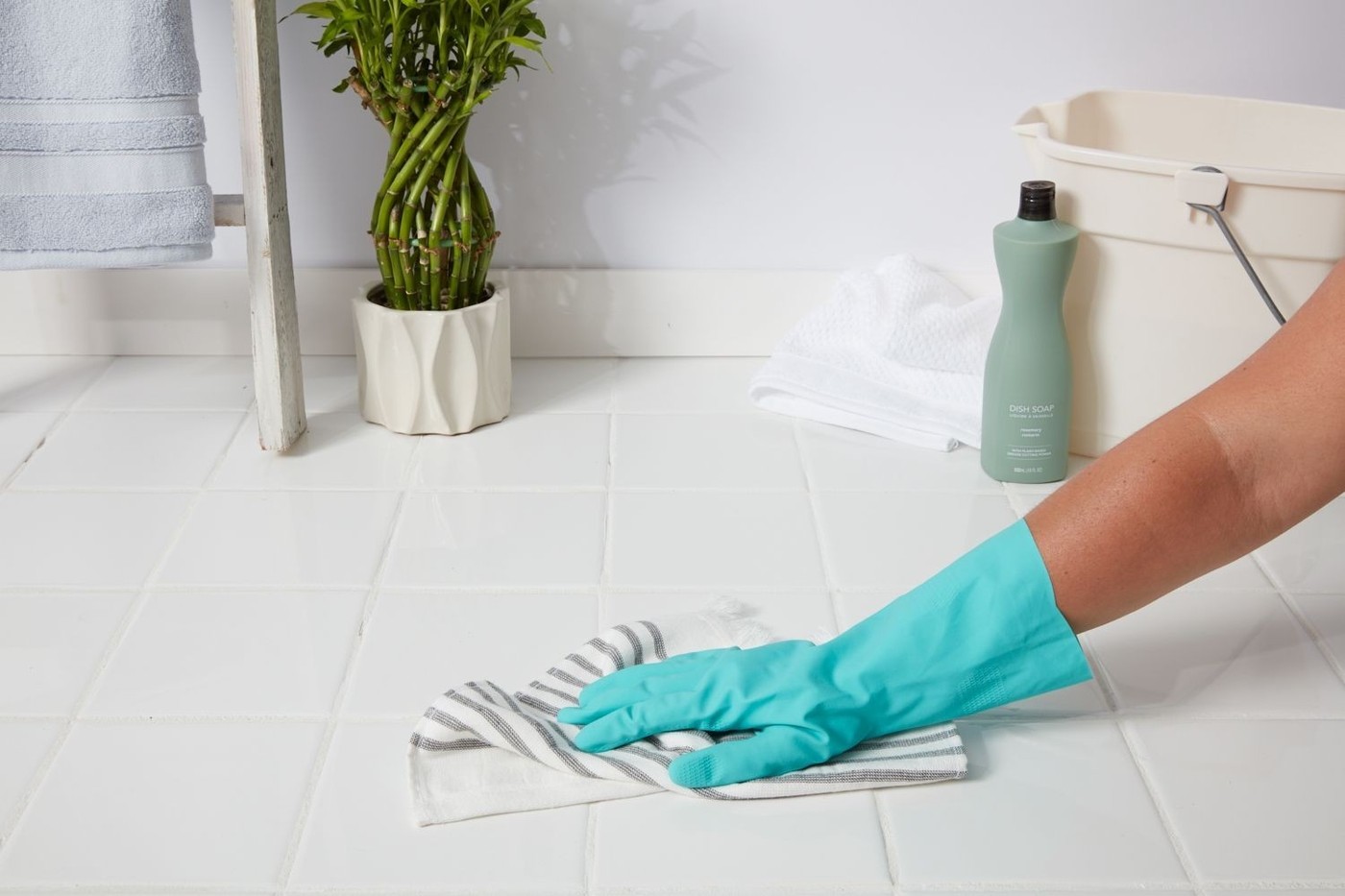
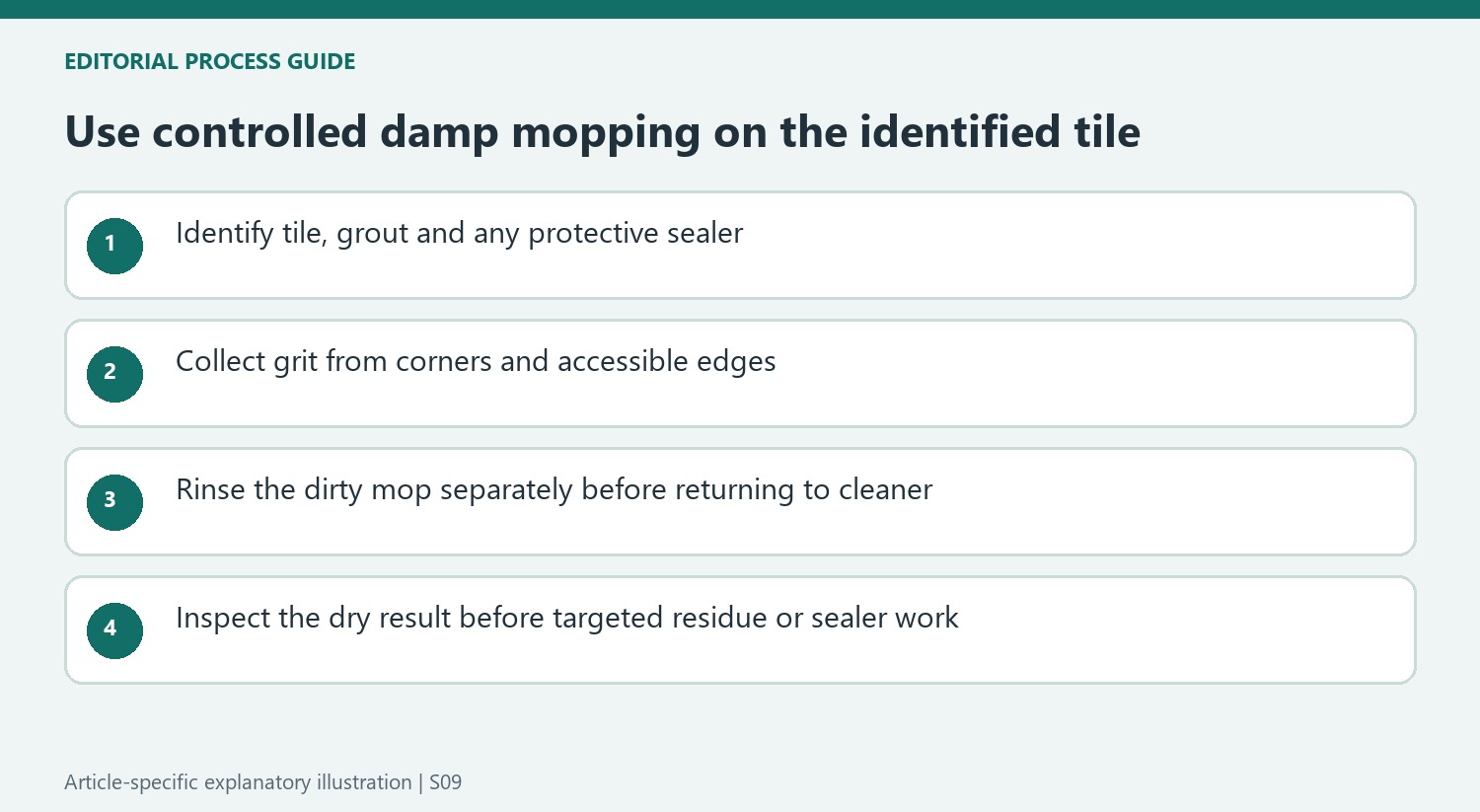
The Spruce's tile guide recommends regular sweeping or vacuuming to remove grit, including the corners where it collects. For ceramic and porcelain, use a damp microfiber or chamois mop and work systematically across the room. A second bucket of clean water helps rinse soil out of the mop before it returns to the detergent solution. Drying with a clean cloth can prevent water spots where those are a problem.
Do not extend one recipe to every floor
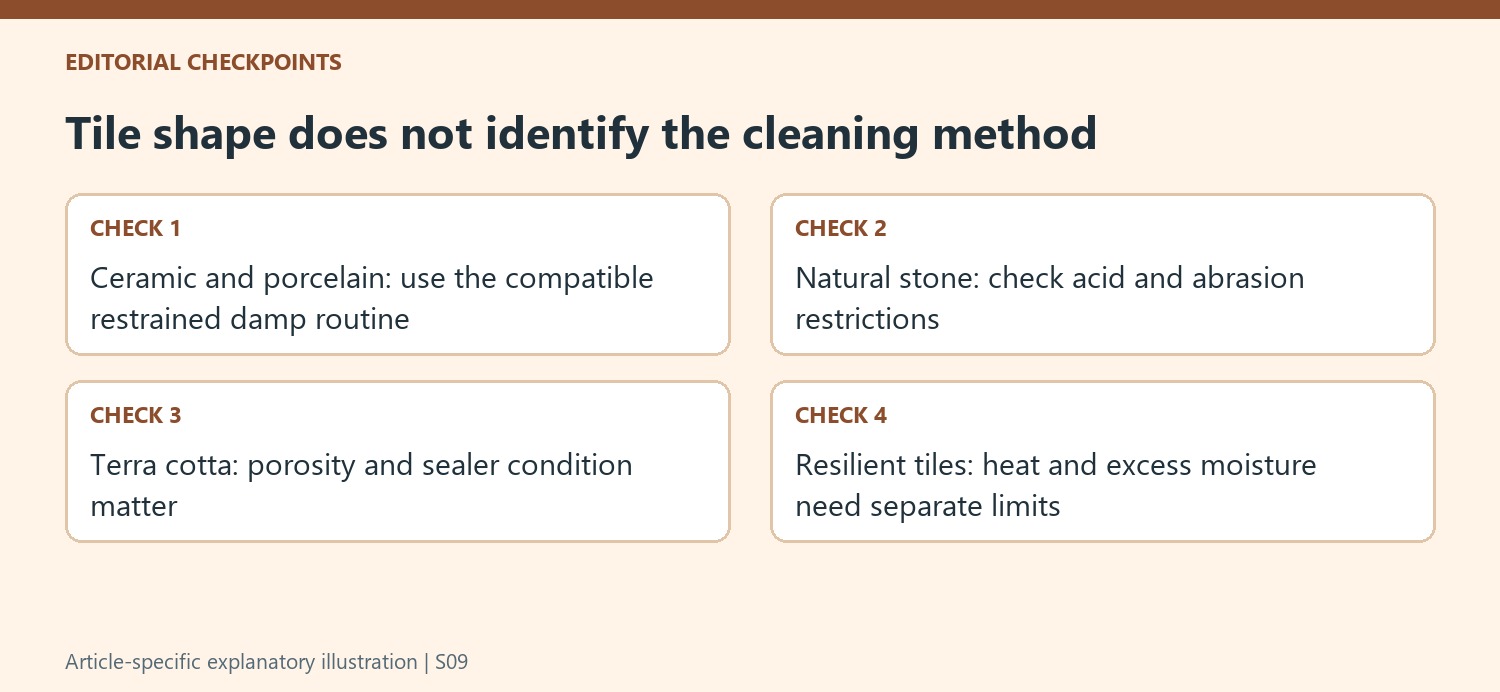
The guide gives natural stone additional restrictions: marble and slate do not tolerate acidic cleaners, while granite needs a mild, neutral-pH choice. It also cautions that vinyl and linoleum are unsuitable for extreme steam and moisture. Grout can need separate attention, and the article warns that repeated steam may damage it over time. Identify the actual flooring and grout before borrowing a technique from a different tiled room.
Recognize porous tiles before borrowing a recipe
The article distinguishes glazed ceramic from terra cotta, which is fired at a lower temperature and lacks the same glazed surface. This makes sealing and gentle tools particularly important. Quarry tile and concrete pavers also have their own cleaning and protection requirements. A floor that resembles another clay or stone surface may therefore need a different product. Check installation records or the supplier's instructions if its identity is uncertain. Use a soft brush where scratching is a concern, and assess whether the existing sealer needs renewal only after the floor has been cleaned and fully dried. Check the product instructions before choosing an additional coating.
Identify the floor before applying a room-wide method
The Spruce's guide covers ceramic, porcelain, natural stone and resilient tiles, which makes material identification the first decision. Similar shapes or colors do not mean their cleaning limits match. Check installation information or the supplier's guidance where the surface is uncertain. Grout and any sealer are part of that assessment too, particularly when a product will travel across the entire tiled area rather than touch only one face.
The ceramic and porcelain routine starts with a dry pass into corners and other collection points. Use a suitable vacuum attachment or soft broom to lift grit before damp mopping. This clears the debris a wet pad would otherwise carry into grout lines. A clean-looking open center is not sufficient evidence that the room is ready if sand remains along the skirting or under a movable chair.
Make clean water and a clean mop part of the technique
The guide recommends squeezing excess water from a microfiber or chamois mop and moving through a systematic pattern. Keep a separate clean-water bucket available for releasing captured dirt before the mop returns to the detergent solution. Refresh that water and the tool as needed. A mop that is merely re-wetted without being cleaned can distribute soil more evenly while giving the appearance of a thorough wash.
Dry with a clean cloth when the floor is prone to water spots, and assess the result after the surface is clear. If haze remains, check for excess product and use the compatible removal method specified for the actual tile and grout. Do not automatically copy an acidic residue recipe onto a floor whose material has not been identified. A short additional diagnosis can prevent a cleaning adjustment from becoming surface damage.
Separate porous materials and protective coatings
The article distinguishes unglazed terra cotta from more water-resistant ceramic and porcelain, and gives quarry tiles and concrete pavers their own care considerations. Porosity changes how soil and moisture interact with the surface, while a sealer adds another product-specific requirement. Use gentle tools where scratching is a concern and check any stain-removal treatment against the exact material instead of borrowing it from another section of the guide.
Natural stone also needs its own compatible cleaner, while vinyl and linoleum should not inherit a steam method from a harder-looking tiled room. Sealing or waxing is a separate maintenance decision that depends on the installed surface and current product instructions. Clean and fully dry before assessing that need. A general article's renewal interval should not replace the supplier's directions for the coating that is actually present.
References
- How to Clean Tile Floors. The Spruce; Sarah Aguirre.
A material-aware tile guide separates routine debris removal from wet cleaning and targeted grout care.


Leave a Comment
Comments (0)