Begin Ceramic-Tile Cleaning by Removing Loose Grit
The Spruce recommends gentle detergent, frequent mop rinsing and drying rather than leaving dirt and excess soap on the floor.
Begin with the loose material
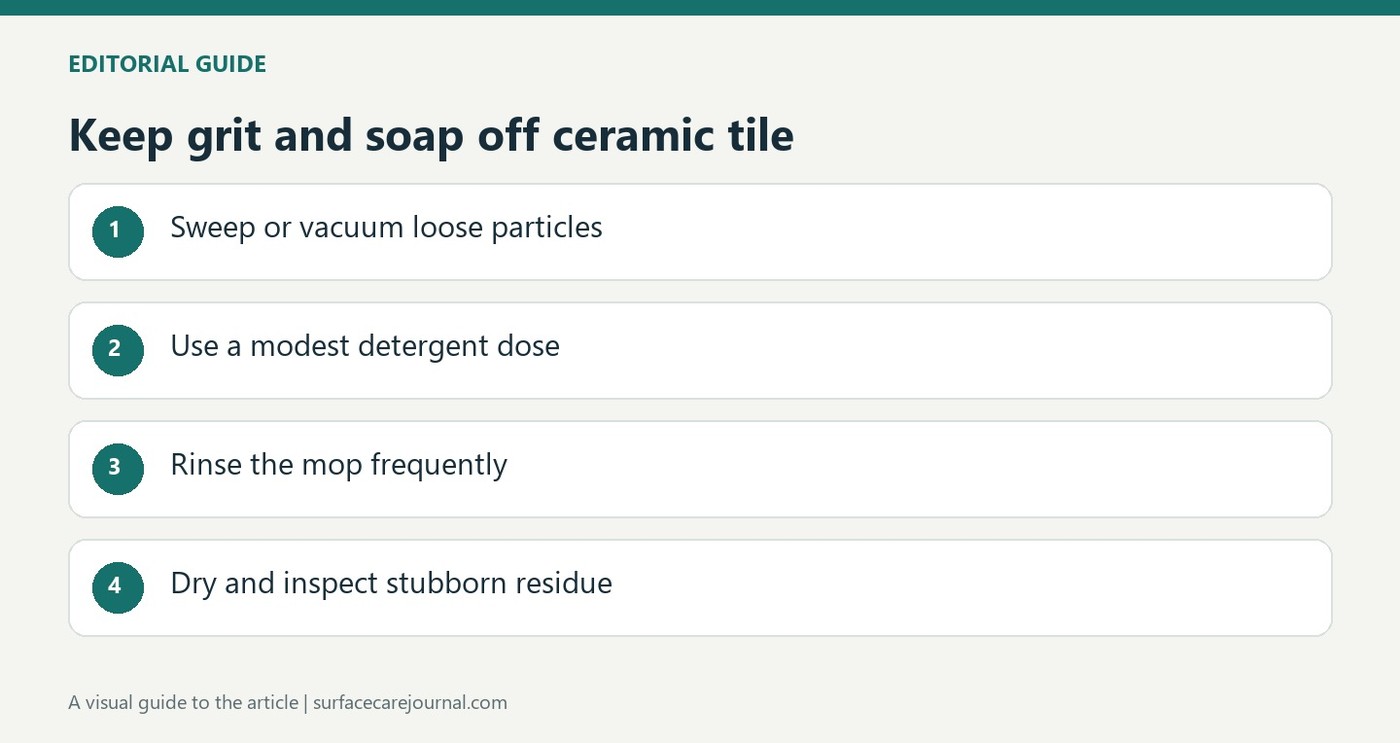
The Spruce recommends sweeping or vacuuming a few times a week and whenever crumbs, dust or dirt are visible. Ceramic is durable, but gritty debris can still contribute to scratches and dullness. Once loose particles are removed, a mild detergent mixed with warm water provides the ordinary cleaning stage. Too much soap can leave a film, so increasing the detergent is not automatically a better clean.
Rinse the tool and finish the surface
The guide describes a chamois-style mop rinsed frequently in clean water before returning to the cleaning solution. This keeps a dirt-laden head from redistributing material over the floor. A clean cloth or towel then removes the remaining moisture and helps prevent spots. Treat grout and stubborn residue as particular tasks instead of scrubbing the entire floor harder. Begin with the usual gentle method and check compatibility before trying any stronger stain treatment.
Target residue without escalating the whole wash
The Spruce suggests a plastic putty knife for residue that has dried onto ceramic tile. Work gently, checking that the edge does not mark the finish, rather than substituting a metal scraper or scouring the entire floor. Grout requires a separate small brush and a compatible treatment. Because the source includes conflicting suggestions about stronger chemicals, the dependable starting point remains mild soap and water, followed by the floor manufacturer's guidance for the particular stain. Keep products separate and remove their residue thoroughly. A persistent dull patch may need a different diagnosis from loose dirt or excess detergent.
Set up the floor and the rinse water before mopping
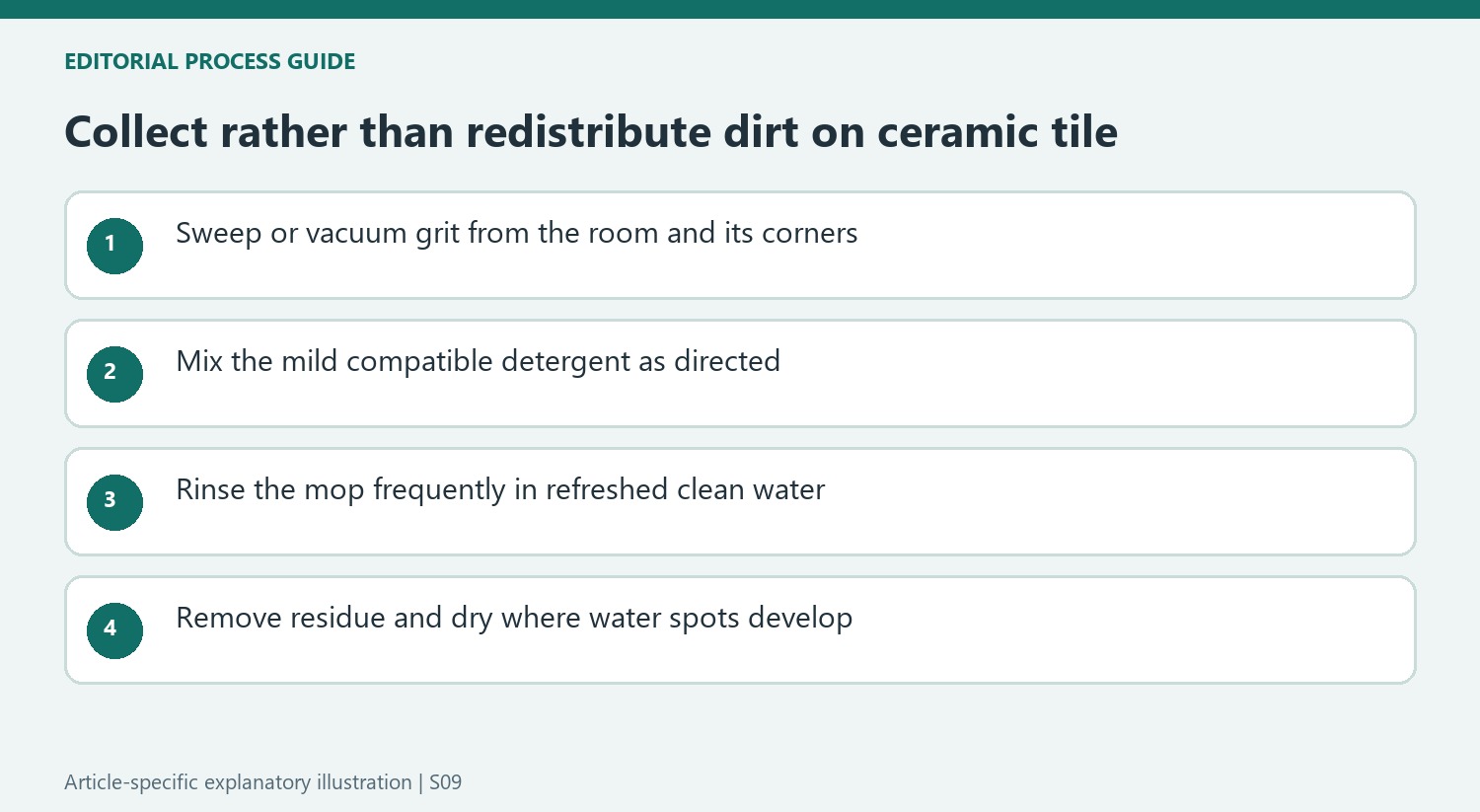
The Spruce begins with loose-particle removal because durable ceramic can still become dull when grit is repeatedly carried across it. Clear accessible corners and the area beneath small movable items with a suitable broom or vacuum. Inspect the tool before use so a hard trapped particle does not become part of the next stroke. This is a collection stage, not an attempt to polish the tile through force.
Prepare the mild detergent according to the chosen product's directions and keep clean rinse water available. The source's chamois-style mop needs frequent attention as it takes up soil. Once rinse water becomes visibly dirty, refresh it rather than treating the original bucket as clean for the entire room. The objective is to remove dirt from the floor, which requires giving that dirt somewhere to leave the mop.
Investigate haze without automatically adding more soap
The article warns that too much detergent can create a film. A floor that looks cloudy after drying may therefore have a residue problem rather than an unmet need for a stronger wash. Check the dilution, pad condition and the cleaner's removal instructions before repeating the application. Use a compatible nonabrasive method for residue, keeping grout and nearby materials in the compatibility decision.
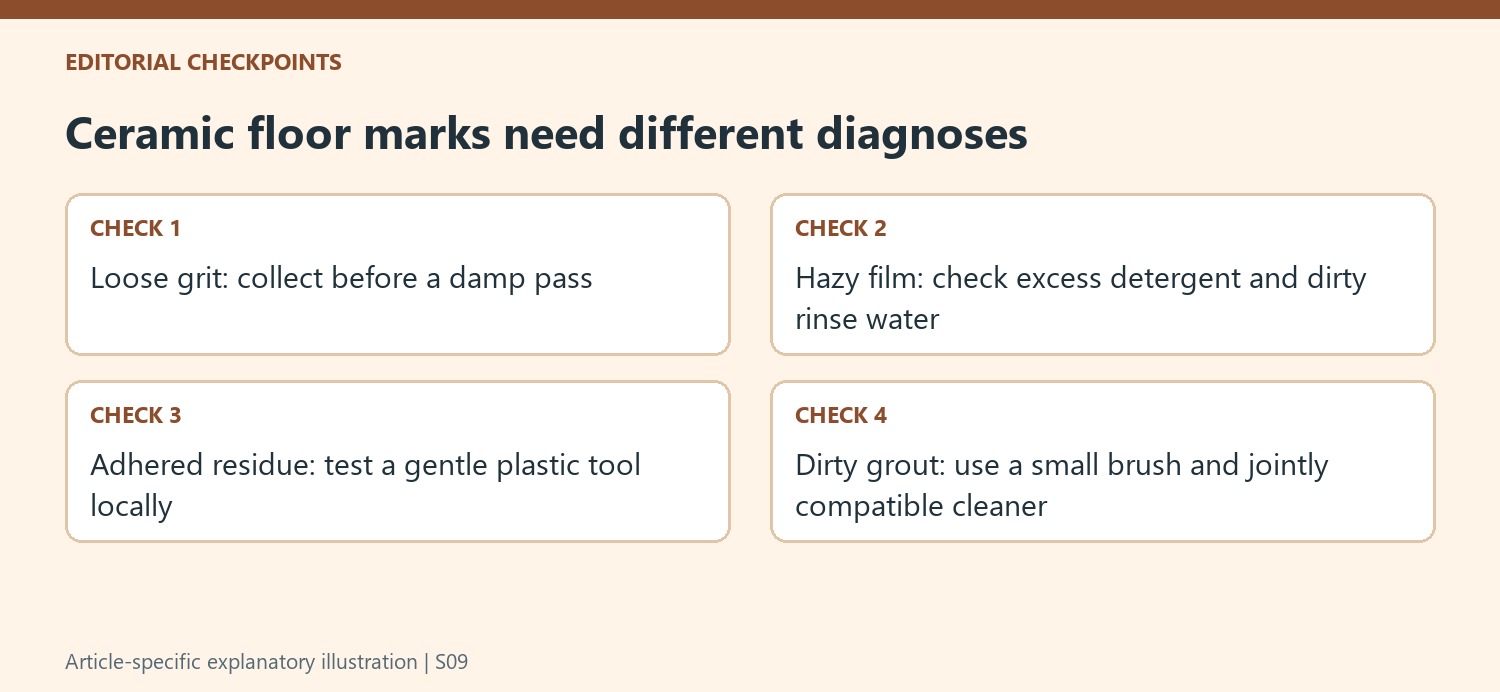
For dried-on material, the source mentions a plastic putty knife used gently. Test that edge before relying on it, and keep it flat enough to avoid marking the finish. A metal scraper or hard scouring pad is not an equivalent substitute. Localized residue deserves a localized response; there is no need to subject the complete floor to the pressure required at one small adhered patch.
Keep grout care and stain diagnosis specific
Grout lines can hold dirt even when the broad tile faces look clear. Use an appropriate small brush and a cleaner compatible with both the grout and neighboring tiles. The source presents several stronger chemical ideas with inconsistent broad cautions, so the dependable baseline is the mild method and the installed material's care guidance. Do not combine alternative products or transfer a stain treatment across an unidentified floor.
Finish by removing remaining cleaner as directed and drying with a clean cloth or towel where water spots are a concern. Inspect the dry result before deciding that another treatment is necessary. A persistent dull area can be residue, wear or a different material condition, and those causes do not all respond to added detergent. Regular collection of loose grit can then reduce the amount of abrasive dirt present between fuller cleaning sessions.
References
- Ceramic Tile Is Incredibly Easy to Clean—Here's How. The Spruce; Heather Bien.
The Spruce recommends gentle detergent, frequent mop rinsing and drying rather than leaving dirt and excess soap on the floor.


Leave a Comment
Comments (0)