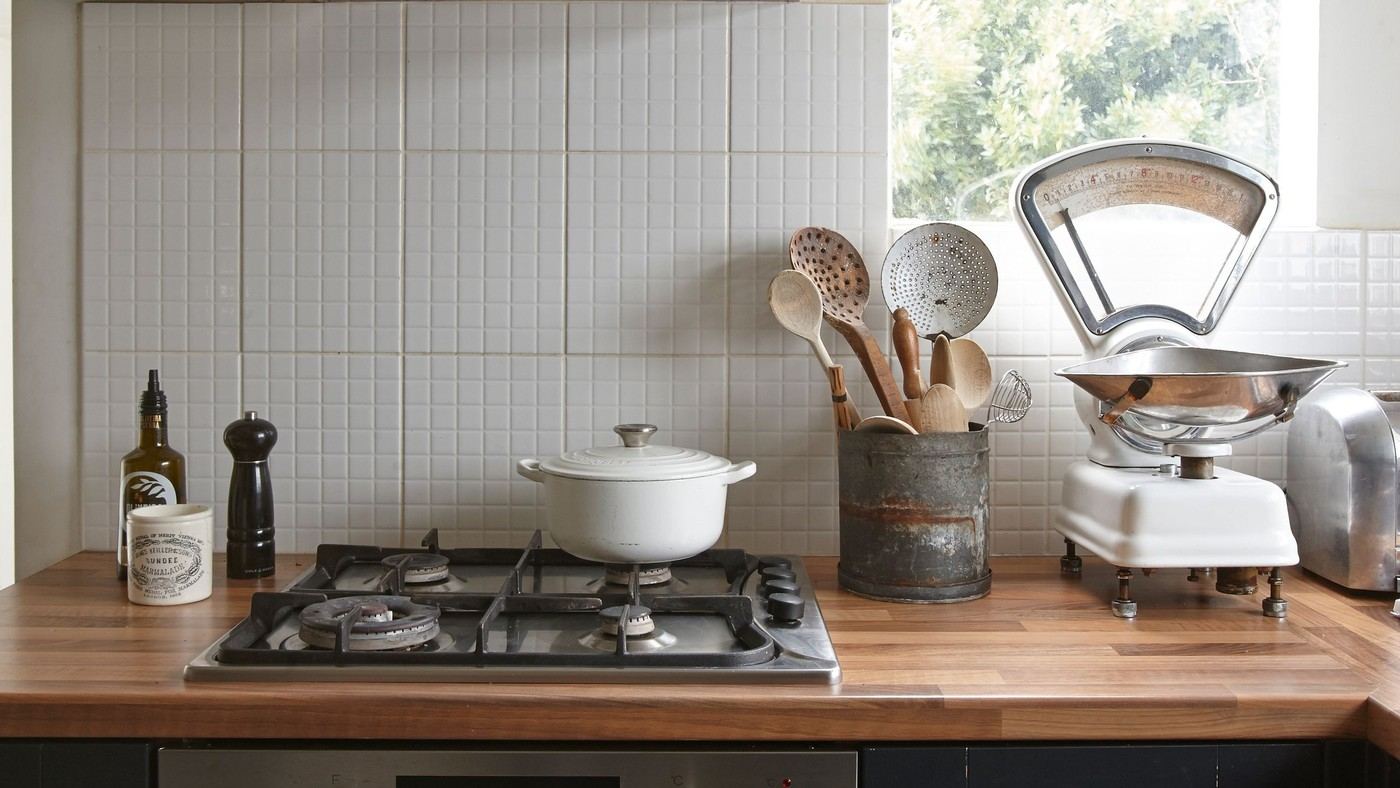
Wooden Worktops Need a Plan for Water and Surface Care
Ideal Home's guide to wooden kitchen worktops describes their visual warmth and the possibility of sanding and refinishing some marks. Those advantages depend on the wood, construction and finish. The article also highlights vulnerability to water damage when the surface is not maintained and sealed appropriately.
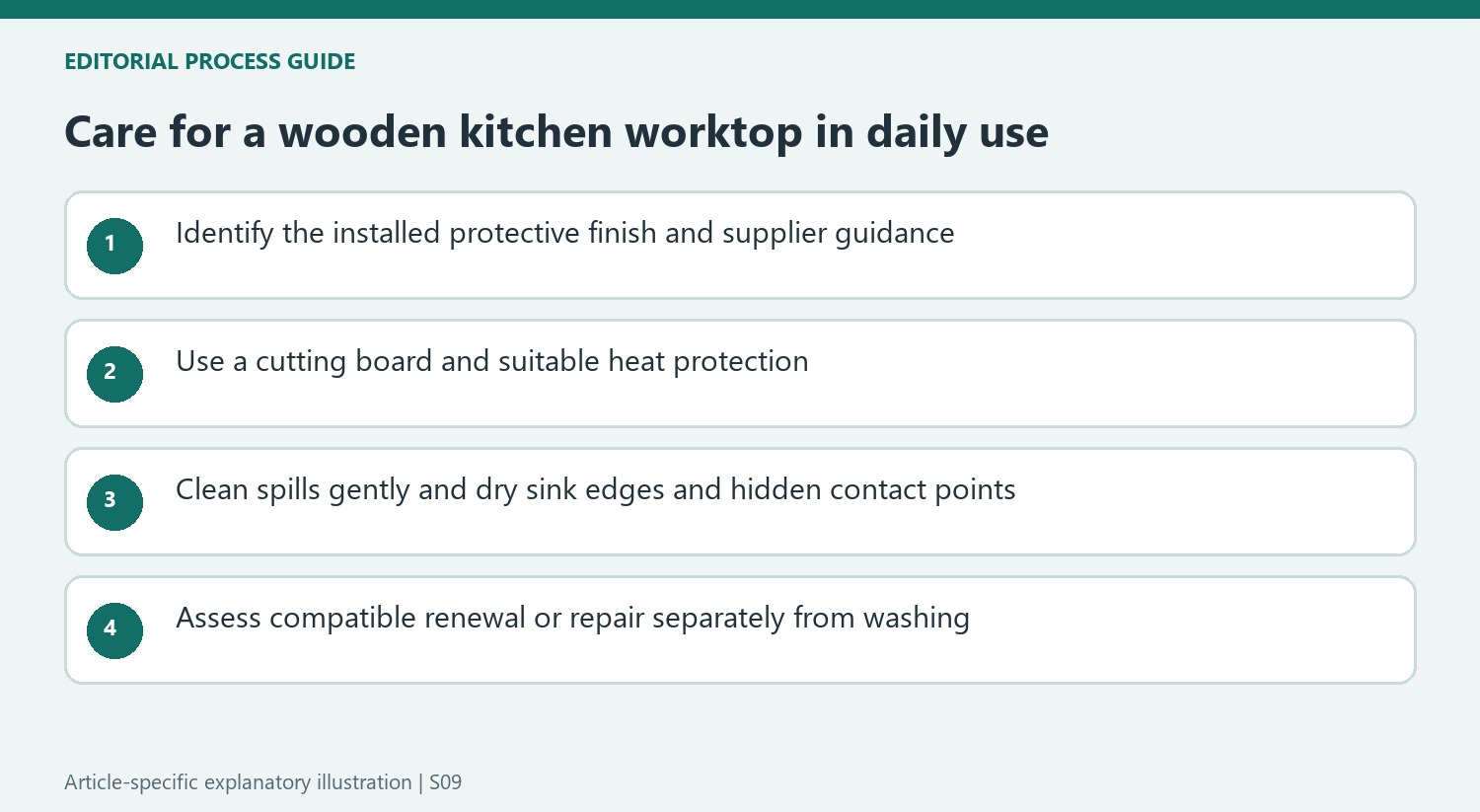
Before choosing or caring for a wood worktop, check the manufacturer's cleaning and maintenance requirements. Avoid leaving standing water and protect the surface from scorching objects rather than assuming natural wood is impervious to heat. A repairable material still needs compatible everyday treatment, particularly around sinks and areas where repeated wetting could affect the wood or its protective finish.
Separate everyday protection from later repair
The Ideal Home feature describes natural wood as a surface that may be refreshed by sanding and refinishing, depending on its construction and finish. That possibility does not remove the need for protection. Place hot cookware on trivets and prepare food on a cutting board. Spills from strongly colored foods deserve prompt attention rather than being left until the worktop is next cleaned.
Use a gentle kitchen cleaning routine
The experts favor mild detergent and a soft lint free cloth for ordinary cleaning. Avoid abrasive pads and strong chemicals that may alter the protective finish. Pay particular attention around the sink, where water collects repeatedly and the sealed surface needs to remain sound. Remove standing liquid promptly and dry the area, including edges that can stay damp beneath items stored beside the basin.
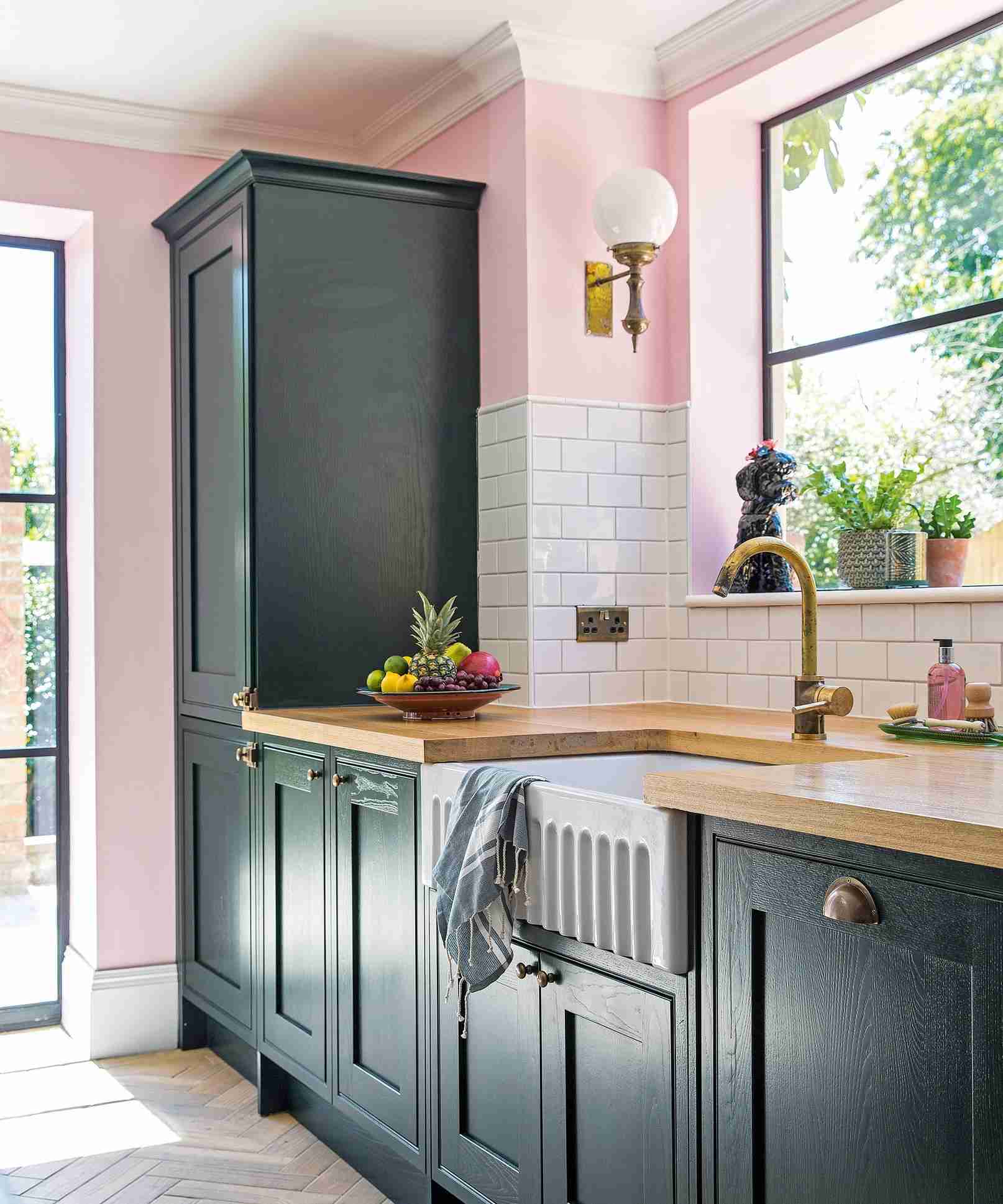
Match maintenance to the chosen finish
Oak, walnut and ash offer different tones, but appearance alone does not determine the maintenance method. Find out how the worktop was sealed and what its supplier recommends for renewal. Where oiling is appropriate, choose a product suitable for the intended kitchen use and follow its application directions. Do not apply a general oiling schedule to a surface with a different coating or assume every repair method fits every wood construction.
Plan for the places where water repeatedly collects
The Ideal Home design feature describes wood's visual warmth alongside a practical vulnerability to water when protection is not maintained. Examine the sink area, tap base and edges beneath objects kept beside the basin. A worktop can appear dry in the middle while a container hides repeated wetting at the edge. Remove standing liquid promptly and include those concealed contact points in the normal wipe-and-dry routine.
Identify how the worktop was sealed rather than inferring care from its color or species. Oak, walnut and ash offer different appearances, but a chosen oil or other finish determines much of the maintenance procedure. Keep the supplier's directions for cleaning and renewal where they can be checked. A timber name alone does not establish that every available wood oil is intended for that kitchen surface.
Use separate barriers for cutting and heat
The source recommends a cutting board instead of using the worktop itself as the preparation surface. That barrier also helps keep strongly pigmented food from resting directly on the wood. Clean spills when they occur rather than leaving them to be addressed with a stronger cleaner later. Treat the cutting board according to its own care requirements, since protecting the worktop does not remove the need for hygienic food-preparation practices.
Likewise, use a suitable trivet for hot cookware instead of testing the surface's heat tolerance. The feature describes wood as resistant only within limits and cautions against scorching contact. A finish that survives an ordinary warm plate is not proof that a pan straight from a burner belongs there. Practical protection is easier to make consistent when the board and trivet are already stored near the places where they are needed.
Keep repairability separate from routine washing
A soft lint-free cloth and mild compatible detergent provide the everyday starting point described by the experts. Avoid abrasive pads and strong chemicals that can change the protective surface while removing dirt. Use restrained moisture and dry promptly, particularly around the sink and exposed edges. A glossy appearance while wet should not be mistaken for evidence that the existing protective finish remains sound.
The source notes that some scratches or marks can be sanded and refinished, but that depends on construction and the actual coating. Obtain the worktop supplier's repair method before removing material or treating an isolated stain with an unrelated product. Where oil renewal is appropriate, use a formulation suitable for its intended kitchen use and follow the specified application and return-to-use conditions. Repairability provides an option after assessment, rather than permission to neglect water protection between cleanings.
References
Natural wood brings repair potential and warmth, alongside maintenance demands that differ from laminate or stone.


Leave a Comment
Comments (0)