
Identify Natural Wicker before Choosing Its Care Routine
The wicker reference explains that wicker is a weave rather than a single substance. Natural versions may use rattan, willow, reed, or bamboo, while other furniture uses synthetic fibers. Those differences matter when selecting cleaning and maintenance methods for a vintage or outdoor piece.
Dusting and vacuuming help stop debris collecting within the weave. Natural materials also need protection from conditions that leave them brittle or damaged. Begin by identifying the fibers and consulting the furniture's care guidance instead of applying one routine to both natural wicker and plastic-look alternatives.
Lift particles from the tight weave first
The experts recommend a vacuum brush attachment for difficult crevices, followed by a clean soft furniture brush where needed. A toothbrush can reach smaller gaps, while tweezers may remove trapped hair. This dry preparation helps distinguish surface dirt from broken or displaced strands. Keep tools gentle enough not to catch or pull an already fragile natural cane.
Distinguish hydration from saturating every piece
The feature discusses rehydrating some natural fibers as part of a restoration process. That is not a general instruction to hose down all wicker, especially synthetic, painted or damaged examples. Check the actual material and coating before adding moisture or oil. The article specifically notes that synthetic wicker does not gain the same benefit from oil-based hydration intended for natural fibers.

Assess broken strands before refinishing
A displaced weave or snapped cane is a structural concern that cleaning alone cannot fix. The source describes localized reweaving and gluing as possible repairs but notes that badly dried or damaged natural wicker may not be recoverable. Seek suitable repair advice for a valuable or heavily worn piece. Complete drying and compatible protection follow an appropriate repair, rather than using paint to hide loose or unstable fibers.
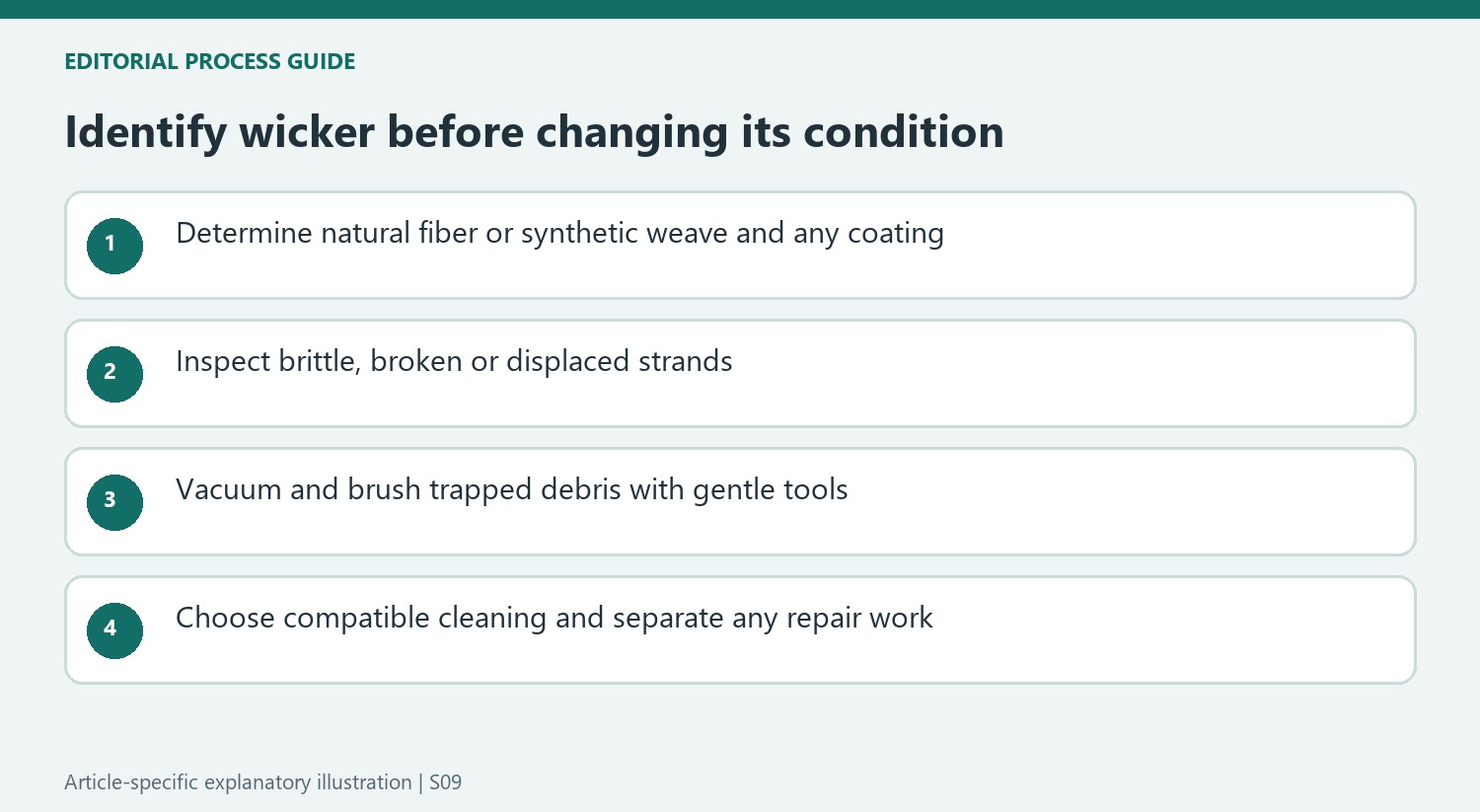
Identify the weave and its protective surface together
The word wicker describes how strands are arranged rather than a single material. Homes & Gardens lists natural fibers such as willow, rattan, bamboo and reed alongside synthetic alternatives. Look for maker information and examine the existing paint or coating before deciding on maintenance. A synthetic chair made to resemble natural cane does not acquire the same response to water or oil simply because the woven pattern is similar.
This is particularly useful for a vintage find whose prior care is unknown. Start with dry inspection and particle removal, noting broken strands, displaced sections and brittle areas before a wet method changes their feel. Cleaning may reveal a repair need, but it does not establish that the weave can carry normal use safely. A sagging or unstable seat deserves structural assessment rather than a cosmetic coat to make the strands look more uniform.
Lift trapped material without pulling at weak canes
A vacuum with a suitable brush attachment can reach into recesses, followed by a clean soft furniture brush where needed. The source also mentions a toothbrush for small spaces and tweezers for trapped hair. Use those tools with restraint, removing particles instead of levering the weave apart. A narrow gap that holds debris may also contain a fragile strand, so visibility and a gentle tool matter more than speed.
Once loose material is removed, choose any cleaner for both the fiber and its finish. Read dilution and handling directions and trial an unfamiliar product out of sight. The source contains several different cleaning and restoration examples, but a painted natural piece, an unfinished cane chair and plastic weave should not receive a single improvised combination. Complete compatible residue removal and drying before deciding whether another maintenance stage is necessary.
Treat hydration and repair as material-specific work
The article describes restoring flexibility to some natural fibers, but that should not be read as a general instruction to saturate every wicker object. The coating, existing damage and maker's guidance still determine whether water or oil is appropriate. The source explicitly separates synthetic wicker, which does not benefit from the same oil-based hydration approach. An oil-rich appearance is not proof that a brittle natural strand has recovered enough strength for use.
Localized reweaving, alignment and adhesive repairs are also different from cleaning. Check whether broken canes are isolated cosmetic defects or part of a load-bearing section, and seek appropriate repair help for a valuable or extensively damaged piece. Any later exterior paint or protective finish needs sound material beneath it and its own preparation. Hiding loose fibers under a fresh color cannot supply the structural repair that the initial inspection identified.
References
- Is your natural wicker furniture dehydrated? Experts share the key to reviving these pieces. Homes and Gardens; Camille Dubuis-Welch.
The weave describes a construction method, so its underlying material still matters.


Leave a Comment
Comments (0)