Pressure Washing Can Damage Wooden Garden Furniture
The furniture-cleaning reference cautions against using a powerful pressure washer on wooden and rattan pieces. Aggressive spraying can damage wood fibers and affect the structure, even when online videos show an immediate visual improvement. Joints and delicate woven areas are particularly poor targets for a concentrated jet.
A gentler wash with an appropriate soap solution or suitable furniture cleaner usually offers a more controlled approach. Identify the material and check its care instructions first. Cleaning should leave the furniture in better condition rather than trade long-term durability for the speed of the result.
Check condition as well as the material name
The source's plastic example distinguishes thin, cracked or aging furniture from a stronger intact piece. Its metal discussion also warns that pressure can remove more paint from an already chipped coating and expose the metal. These are condition checks, not simply a list of materials assumed to be indestructible. Inspect weak joints, splits and coating damage before choosing any cleaning tool.
Keep pressure away from vulnerable structure
For wooden furniture, the expert explains that aggressive spraying can disrupt the fibers, while joints are particularly poor targets for a concentrated stream. The guide also cautions about stone surfaces losing their protective outer face. A clean-looking strip after a jet pass can therefore conceal material removal. Use the care method approved for the actual furniture instead of judging success only by the immediate contrast.

Treat gentle alternatives as material-specific
The article suggests hand cleaning with suitable soap or a furniture cleaner for many ordinary situations, but a product recommended for stone is not automatically right for wood or woven fibers. Outdoor heaters and wooden parasols have separate structural and electrical considerations too. Identify those parts and read their instructions before cleaning. A regular low-pressure hose and soft tool can offer more control without assuming that every piece should be soaked.
Judge the method by what it preserves
Ideal Home's furniture experts caution that a pressure washer can remove more than the visible dirt. On timber, the concern is damage to the fibers and structure; on a weathered coating, a forceful pass can strip additional material away. A striking light stripe in a cleaning video therefore needs a different question from whether it looks satisfying: what happened to the surface that is meant to remain after cleaning?
Inspect the furniture before choosing equipment. Weak joints, existing splits, brittle weave and chipped paint all affect how a piece can respond. The source's cautions about thin or aging plastic and damaged metal reinforce the same point even when the main task concerns wood. A material name is not a complete condition assessment, and a method tolerated by a newer piece does not automatically suit its older counterpart.
Keep the concentrated jet away from timber structure
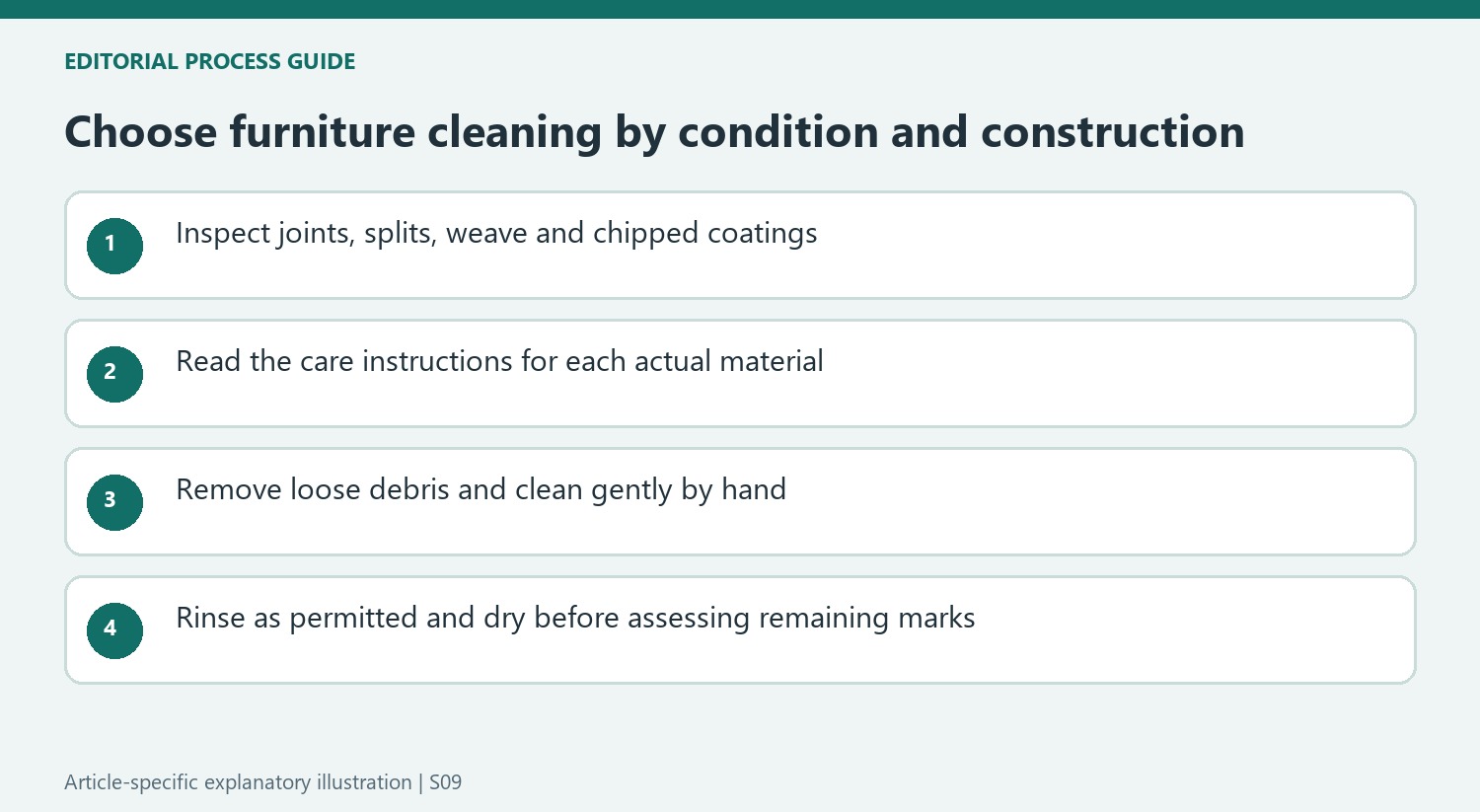
The article's wooden-furniture expert specifically rejects aggressive jet washing and highlights joints as vulnerable locations. Do not convert a qualified discussion of reduced power into general approval to pressure-wash every teak table. Use the furniture maker's recommended cleaning method instead, beginning with loose-debris removal and a compatible gentle hand clean. A low-pressure hose, where permitted, serves a different rinsing role from a concentrated cleaning jet.
Mixed-material furniture needs the same separation. A stone-cleaning product named in the source is not automatically suitable for a nearby wooden arm, and an abrasive used on corrosion is not the next tool for woven fibers. Put suitable cleaning liquid on the intended tool or area as directed and protect adjacent components. The whole assembly should not receive the harshest method tolerated by its strongest-looking part.
Include accessories in the material check
The source extends its caution to outdoor heaters and wooden parasols. Heaters have their own cleaning requirements, while a wooden parasol pole may use laminated sections whose bonded structure should not be attacked by a jet. Read the exact accessory instructions rather than extending a patio-surface cleaning routine upward onto every nearby object. Remove portable items from the work area if that helps keep the furniture method controlled.
After a gentle compatible clean, remove residue and allow the piece to dry appropriately before judging whether a lasting mark remains. Discoloration, damaged protection and structural deterioration are separate possibilities. If normal care does not resolve the issue, investigate repair rather than increasing pressure until a clean-looking surface appears. The useful outcome is furniture that remains sound for use, with its coating and joints preserved through the cleaning process.
References
- 5 types of garden furniture you should never clean with a pressure washer, according to experts. Ideal Home; Lauren Bradbury.
A rapid visible clean may come at the expense of the timber's surface and structure.


Leave a Comment
Comments (0)