
Put Garden Furniture Away Clean and Dry
The winter furniture reference recommends dry storage as a strong defense against prolonged rain and freezing conditions. Wooden pieces can split when weather exposure is neglected. Cleaning and thoroughly drying furniture before it goes into a shed, garage, or other suitable space reduces the chance of trapping moisture.
Leave some room around stored pieces for air circulation and stack them without scratching surfaces. Cushion care needs separate attention even when the fabric is described as water resistant. Choose protection around the material and climate rather than assuming every outdoor set can be left exposed all winter.
Keep furniture away from standing ground moisture
The guide recommends a stable paved or gravel location rather than leaving susceptible pieces on wet grass. Where appropriate, raising them clear of the ground improves drainage. Check for puddles even when a cover is fitted, since trapped water below the legs remains a separate problem. The chosen outdoor position should also be sheltered from strong winds and support the furniture securely.
Choose a cover that fits and ventilates
The source favors durable, breathable, water-resistant covers and recommends checking them during winter for collected snow, debris or ice. A cheaper tarp can provide protection but still needs secure attachment and ventilation beneath it. Covering a wet set tightly does not create dry storage. Follow the furniture and cover instructions, allowing the air circulation needed to avoid persistent dampness.

Store fabric components on their own terms
Water-resistant cushions are not necessarily suitable for prolonged wet or freezing conditions. The article recommends cleaning removable covers according to their labels, spot-cleaning where appropriate and packing only once everything is dry. Natural wicker, softwood and wrought iron also have different winter vulnerabilities from synthetic weave or some hardwoods. Identify the construction and local climate before deciding which pieces can remain outside under protection.
Choose the storage method before winter conditions arrive
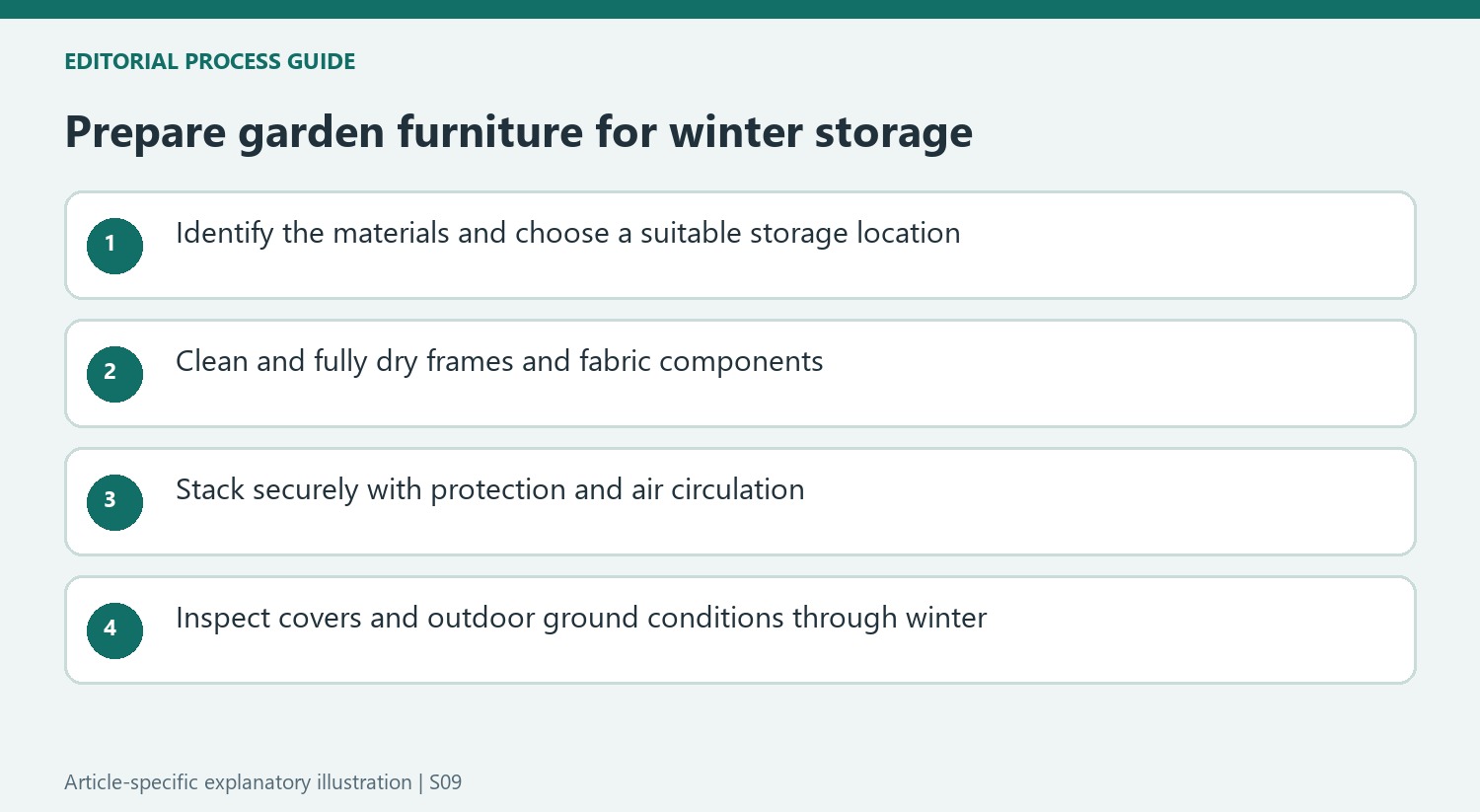
The Homes & Gardens guide favors a dry garage, shed or similar suitable space where one is available. Check the available footprint and the route into it before dismantling or stacking furniture. Clean and fully dry the pieces first, then leave room for air to circulate. Packing a damp set tightly into a nominally dry building can retain the moisture the move was meant to avoid.
Stack only in a way permitted by the furniture's construction, protecting finishes from contact and keeping the stack stable. The source warns against haphazard piles that scratch or dent the pieces. Identify natural wicker, softwood, metal and synthetic components rather than assuming the most durable part defines the entire set. Cushions and removable pads need their own clean, dry storage even if the frame is designed for longer outdoor exposure.
Evaluate the ground and the cover as two different barriers
If indoor storage is unavailable, inspect the proposed outdoor location after rain. Furniture standing in a puddle remains exposed from below even under a fitted cover. The guide recommends stable paving or gravel rather than wet grass, with suitable elevation where appropriate to improve drainage. Any support must remain secure and compatible with the piece rather than creating a precarious stack of small blocks under a heavily loaded frame.
Choose the sheltered position with wind as well as rainfall in mind. A fitted cover or securely attached tarp still needs the ventilation required by its instructions. The source favors breathable, durable, water-resistant covers and warns against trapping damp underneath. Covering and drying are therefore separate operations: a tightly wrapped wet table has not become dry furniture simply because rain can no longer fall directly onto its top.
Make winter protection something that is checked
The guide recommends looking at covers during winter and clearing collected snow, ice or debris. Inspect the attachment and the ground conditions at the same time rather than waiting for the first spring gathering. A cover can shift, water can collect and an initially sheltered location can become wetter as the weather changes. Keep any inspection within the handling and load instructions for both the furniture and its protective cover.
For fabric components, follow the care label on removable covers and use an appropriate spot-cleaning method where washing is not permitted. Pack only after all layers have dried, not merely when the exterior feels less damp. Water resistance describes performance under particular exposure; it is not a guarantee that a cushion can remain wet or frozen indefinitely. The complete winter plan should match the actual materials and local conditions rather than rely on one outdoor label.
References
- How to protect garden furniture in winter – and ensure its longevity. Homes and Gardens; Sarah Wilson.
Winter protection begins with suitable storage and air circulation around the pieces.


Leave a Comment
Comments (0)