
Keep Steam Away from Engineered Wood Flooring
Ideal Home cautions against using a steam mop on engineered wood floors. Although engineered boards are designed for stability, their layered construction does not make them immune to steam. The experts quoted describe possible discoloration, warping and damage to the surface finish when heat and moisture reach the planks.
Use the floor manufacturer's approved cleaning method instead, removing loose dirt before any permitted lightly damp cleaning. Do not extend a steam cleaner's suitability for a tile surface to an adjacent wood floor. A tool that works well elsewhere in the home can still be unsuitable for this material, particularly when repeated wet-season cleaning increases how often the boards are exposed.
Layered construction still needs a compatible method
Knot and Grain co-founder Natalie Mudd, quoted by Ideal Home, links the risk to changes in moisture and temperature. Stability under ordinary room conditions does not establish compatibility with a steam machine. Identify the floor and follow its own care instructions before switching equipment. Treat adjoining floor materials separately, even when the same cleaner could travel easily across the doorway.
Keep the alternative cleaning sequence simple
The source recommends first collecting dry debris with a broom or vacuum suited to hard flooring. Follow with the permitted damp cleaning method, keeping the mop from becoming saturated. Water left on the surface can reach gaps and affect the boards. Try an unfamiliar approved product on a concealed area or spare plank first, and avoid acidic or abrasive cleaners that may harm the finish.
Prevent seasonal wear before it accumulates
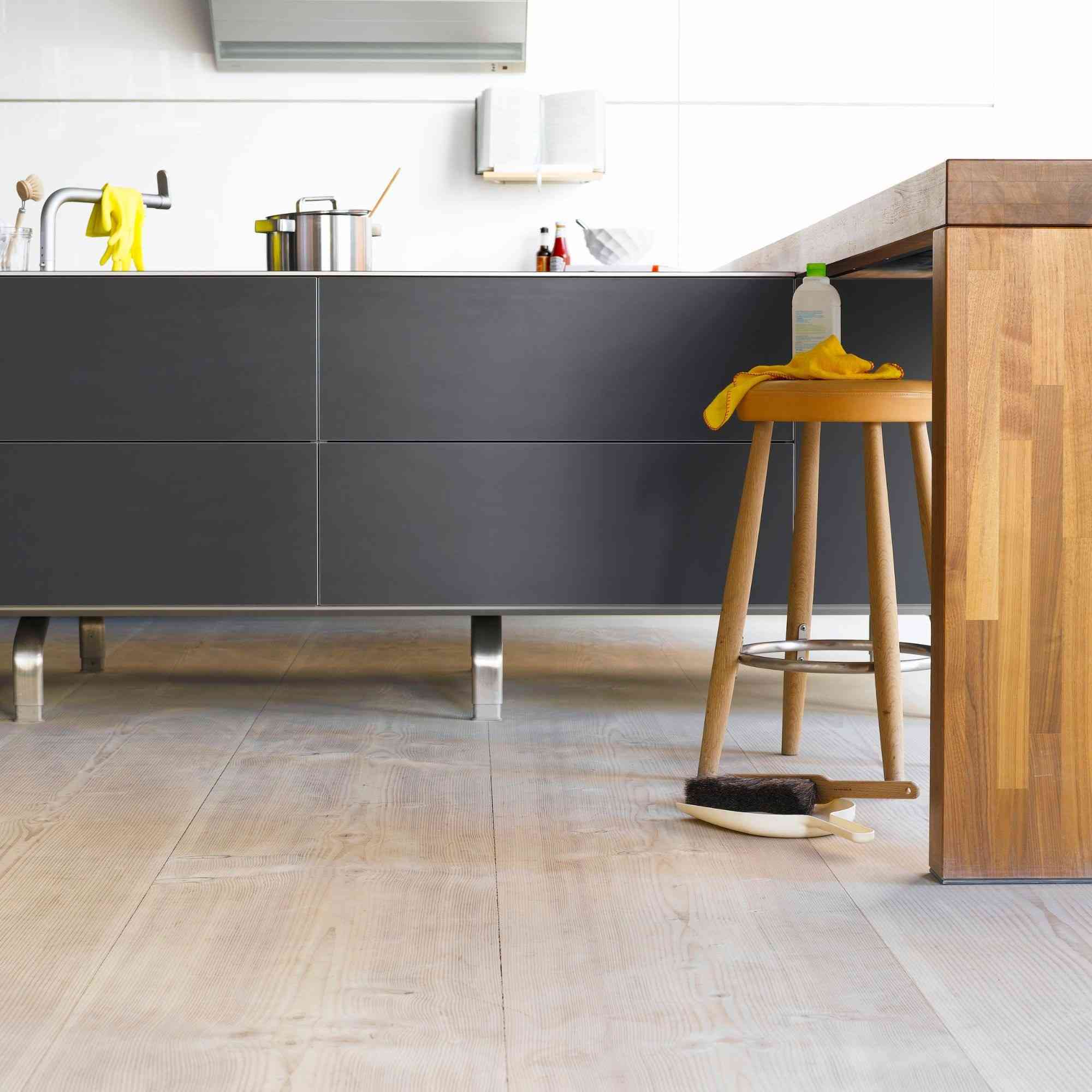
Wet weather increases the need to remove muddy marks, but repeated heavy washing is not the only response. The article also recommends felt pads under furniture, particularly items moved around when guests arrive. Maintenance oil is appropriate only where the floor's finish calls for it. Check the supplier's schedule rather than adopting a general oiling interval for every engineered board in the home.
Keep the wood boundary visible when using a steam machine elsewhere
The Ideal Home writer uses steam on other household surfaces but draws a clear exception for engineered wood. That is useful in a room with adjoining materials: convenience should not carry the same head from a suitable tile area onto the wooden boards. Confirm the care instructions for each surface and change the method at the boundary. The fact that both feel hard underfoot does not make their response to heat and vapor equivalent.
Natalie Mudd's explanation links the risk to moisture and temperature changes affecting the layered boards and their finish. Ordinary dimensional stability is not proof of tolerance for steam cleaning. Do not try to resolve that difference with a quicker pass or a promise that the head feels nearly dry. The installed floor's instructions and warranty are more relevant than a steam tool's general list of household uses.
Make the non-steam routine specific enough to repeat
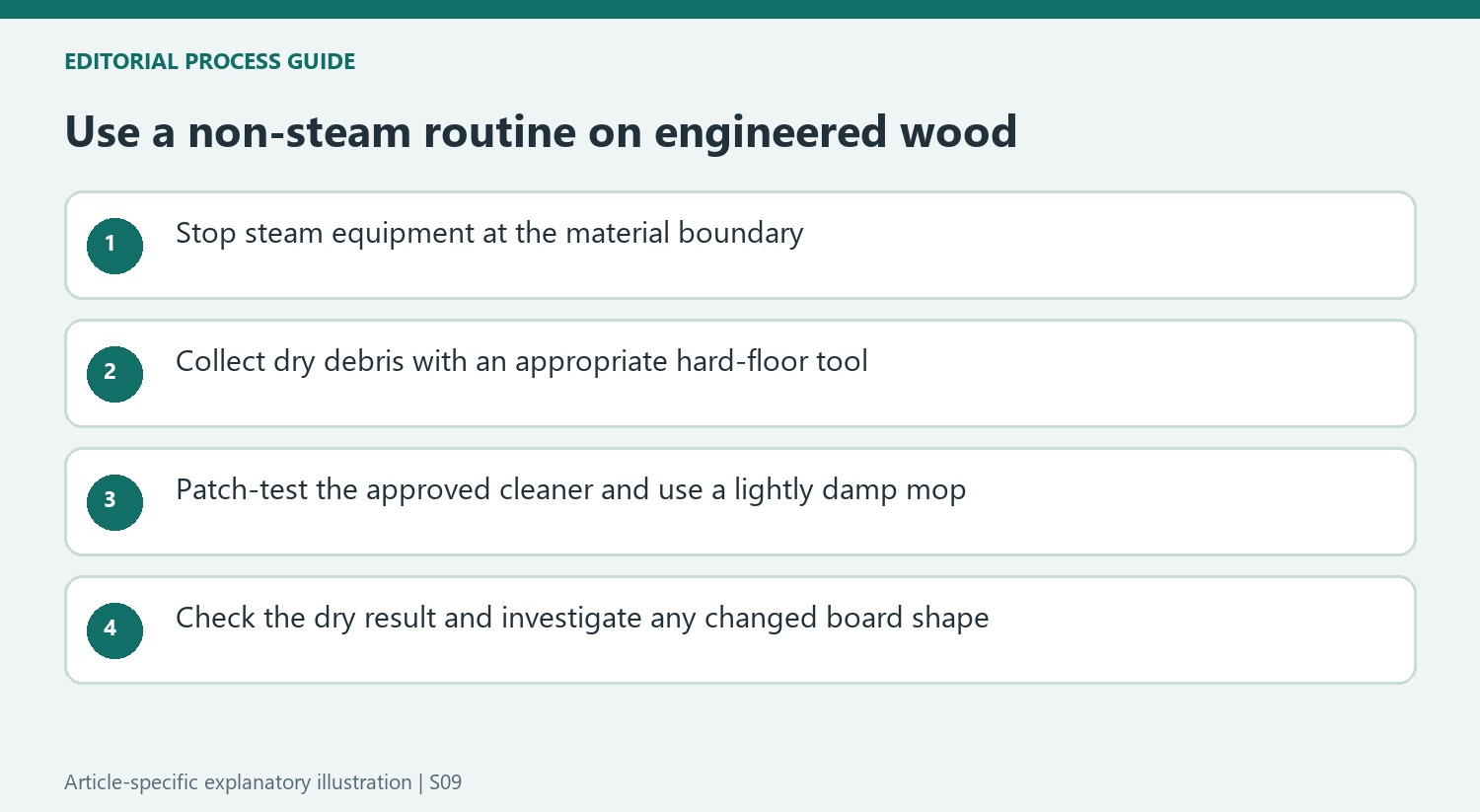
Begin by collecting dry debris with a broom or vacuum attachment suitable for the floor. Inspect the head for grit and choose the hard-floor setting before moving through the room. The source then allows a restrained damp-cleaning stage, with a mop that is not saturated. A single clean pad can become dirty quickly in a busy entrance, so keep its condition part of the assessment rather than repeatedly adding liquid.
Select a cleaner approved for the actual coating and trial an unfamiliar permitted product in a concealed area or on a spare plank. Check after the area dries for residue or a changed sheen. Avoid harsh, abrasive or acidic alternatives simply because a muddy patch appears resistant. The aim is to remove soil while retaining the protective finish, not to make the boards look uniformly wet before calling the job complete.
Reduce the seasonal pressure to wash more aggressively
The source frames the question around autumn and winter, when muddy footprints and pawprints increase attention to the floor. Deal with fresh spills and loose dirt promptly instead of waiting until they require a broad intensive session. Use the maker's suitable preventive measures around entrances and inspect furniture pads before chairs are rearranged for guests. Extra traffic is a reason to manage exposure, not to replace an approved method with steam.
Its oil-maintenance discussion also needs the existing finish to be identified first. An interval suggested in a general article does not require every engineered board to receive the same oil or polish. Obtain the flooring supplier's approved product and renewal guidance for that particular surface. If the finish is damaged or a board changes shape, seek assessment rather than assuming a seasonal coat of appearance product will restore the construction underneath.
References
- I love my steam cleaner, but this is the one place I’d never use it – especially during the autumn and winter months. Ideal Home; Lauren Bradbury.
Layered wood can be damaged by the combination of moisture and high temperature.


Leave a Comment
Comments (0)