
Do Not Confuse Masking a Water Ring With Removing It
BHG explains why a darker-looking surface can hide a pale mark without repairing the underlying problem.
Start with the appearance of the mark
Better Homes and Gardens explains that white rings commonly involve moisture trapped in the finish, while darker staining may extend into the wood. Its household approaches are directed mainly at the lighter marks. That distinction helps avoid expecting an ordinary wipe to reverse deep damage. The guide discusses several methods, but their suitability still depends on the actual finish and the condition of the piece.
Do not mistake a darker patch for a repair
The article notes that petroleum lubricant can make a light stain less visible by darkening it without truly removing the underlying mark. Some dark stains can require refinishing rather than another cleaning product. A cautious decision therefore considers the whole tabletop and its finish, not simply whether a photograph looks more even immediately afterward. Use coasters to prevent repeated condensation rings and assess valuable furniture before attempting a treatment that changes its color.
Choose one method after checking the finish
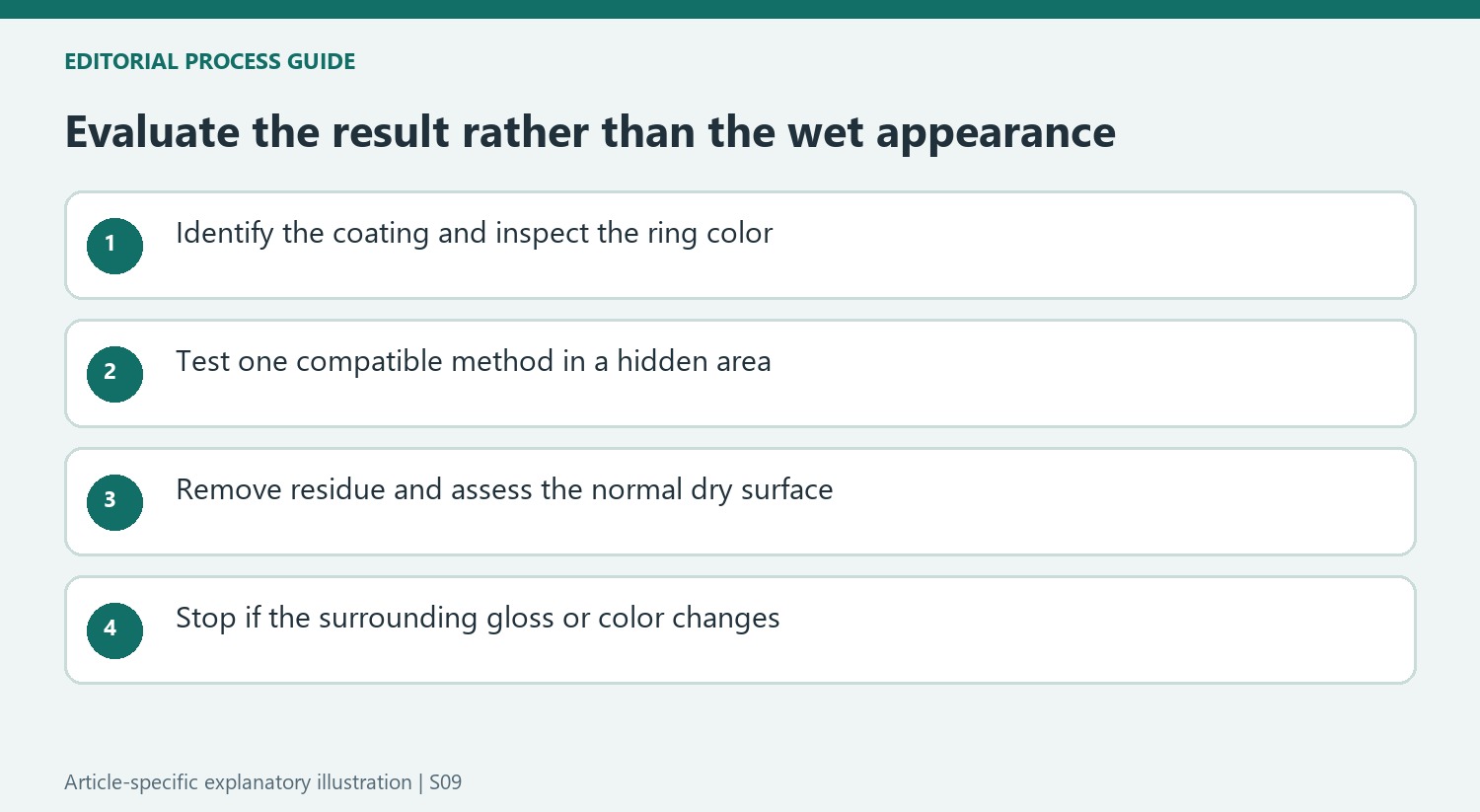
The article's options include oil-based products, heat and mild abrasive pastes, which act differently on a surface. Their household familiarity does not make them suitable for every coating. Test the selected approach out of sight and check for changes in gloss or color before treating a visible ring. Heat can also affect a finish, so an example procedure should not be copied onto an unidentified piece. The source's distinction between masking and removal is especially useful here: compare the area after residues are removed and the surface is dry, rather than judging success while an oily film temporarily makes the wood look darker. Stop if the attempted treatment changes the surrounding finish.
Decide what would count as a successful result
BHG's discussion of a petroleum lubricant makes an important distinction: a lighter mark can become less conspicuous because the surrounding appearance changes, without the water-related problem actually being removed. Before treating a ring, decide whether the goal is removal, a temporary cosmetic change or a planned finish repair. Those outcomes require different judgments, and a darker photograph taken immediately afterward cannot establish which has occurred.
Observe the surface after excess material is removed and the area has returned to its normal dry condition. Compare the ring with nearby wood under ordinary light, looking for changed gloss or a newly darkened patch as well as the original pale outline. If the treatment has altered intact surrounding finish, stop. Expanding the affected area to make the first patch less obvious can turn a small mark into a much larger problem.
Do not treat a household list as one combined process
The source describes oil-based approaches, heat and abrasive pastes. They are not interchangeable versions of a neutral wipe: each can affect a coating differently. Identify the finish and use an inconspicuous test before considering one option. A familiar item from the kitchen or bathroom still has ingredients or a mechanical action, so its everyday availability is not evidence of compatibility with old varnish or an unknown furniture coating.
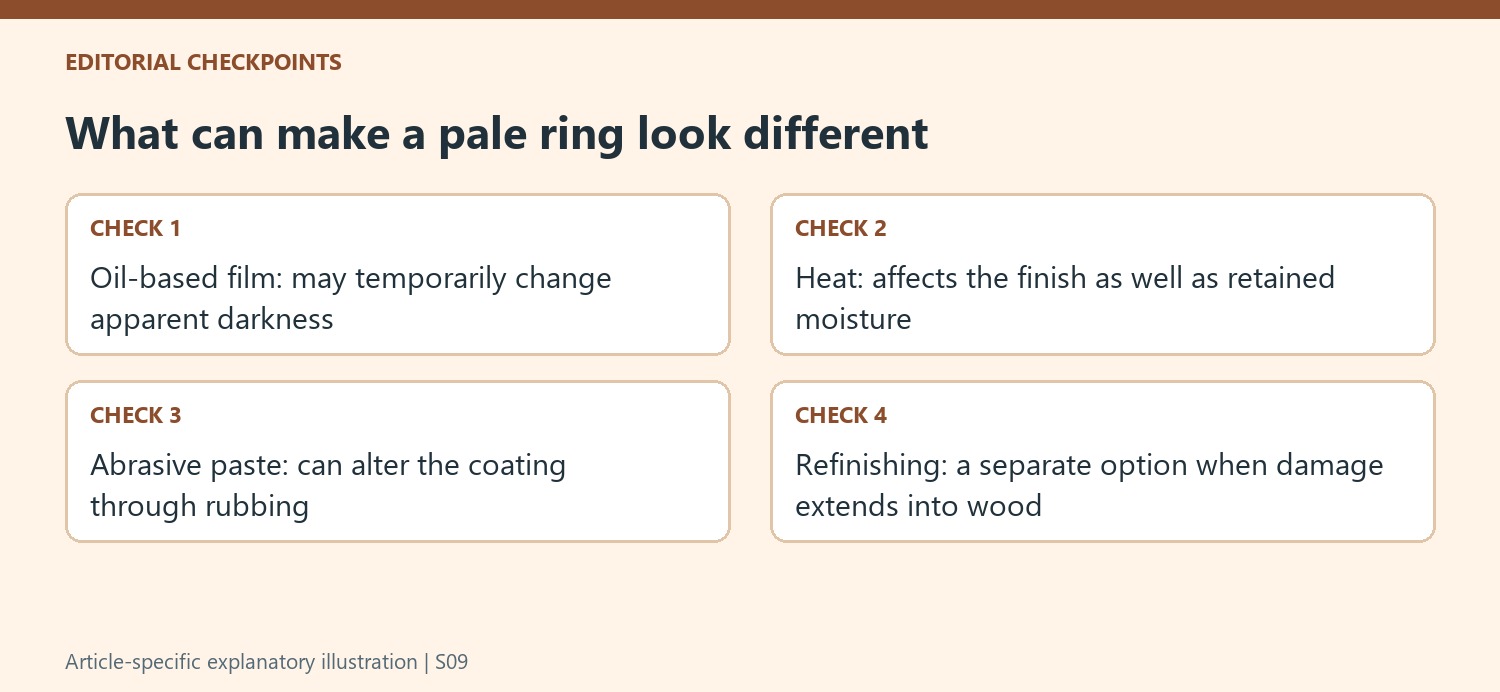
Heat needs particular care because the object being warmed includes the finish, not just the moisture within a white ring. Likewise, rubbing a paste can change gloss through abrasion. If the piece's care instructions do not support a method, do not infer approval from an online before-and-after image. The least complicated next step may be advice about the actual coating rather than trying every alternative in the article.
Move dark staining into a separate repair decision
The guide notes that darker rings may indicate moisture reaching the wood and can require refinishing. That changes the scope from a quick surface treatment to work that may alter color and remove protection. Assess the material, especially veneer, and establish whether a localized repair can blend with the rest of the piece. A stronger cleaning ingredient does not automatically offer a less disruptive substitute for that diagnosis.
Prevention is also part of avoiding another cycle of cosmetic repair. Keep a suitable coaster where cold glasses are placed, wipe condensation and spills promptly and check any vase or plant container for leakage. Those actions address repeated exposure directly. If a mark returns in the same location, inspect what is being placed there before adding another appearance-changing product to a surface whose maintenance history is becoming increasingly complicated.
References
- How to Remove Water Stains from Wood with Supplies You Have on Hand. Better Homes & Gardens; Caitlin Sole.
BHG explains why a darker-looking surface can hide a pale mark without repairing the underlying problem.


Leave a Comment
Comments (0)