
Care for Engineered Hardwood as a Real Wood Surface
Engineered hardwood combines a genuine wood surface with a layered base. The source explains that this construction can improve dimensional stability compared with solid timber. It still requires regular sweeping or suitable vacuuming to keep grit from wearing the finish.
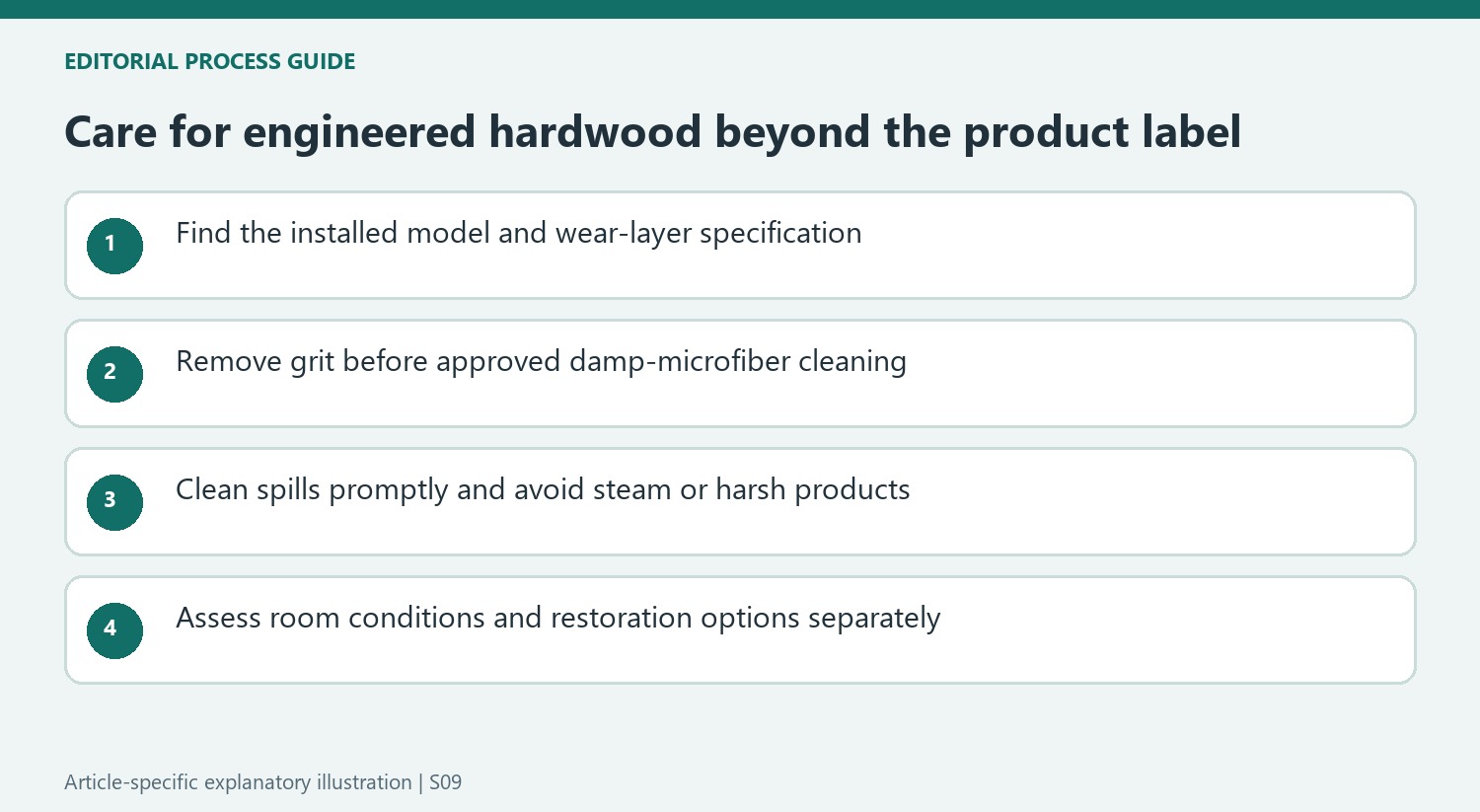
Use a manufacturer-approved hardwood cleaner with controlled moisture and avoid steam or harsh products. Refinishing possibilities depend on the wear layer rather than the engineered label alone. Check the particular floor specification before sanding, recoating, or assuming resistance to spills is unlimited.
Check the wear layer before restoration
Bruce Flooring Experts explain that engineered boards vary in how much real wood sits above the base. A thin veneer may leave no allowance for sanding, while a thicker top layer may permit limited refinishing. Find the specification for the installed product before booking restoration. A professional assessment is more useful than assuming that every engineered floor can tolerate the same sanding process.
Reduce damage between cleaning sessions
The source recommends trimming pets' nails, using rugs in busy routes and putting protective pads beneath furniture. These measures address scratches and dents before washing becomes necessary. Sweep away grit rather than dragging it around with a damp mop. When a spill occurs, remove it promptly; the layered construction improves stability but does not make standing water harmless to the wood.
Manage the room as well as the floor
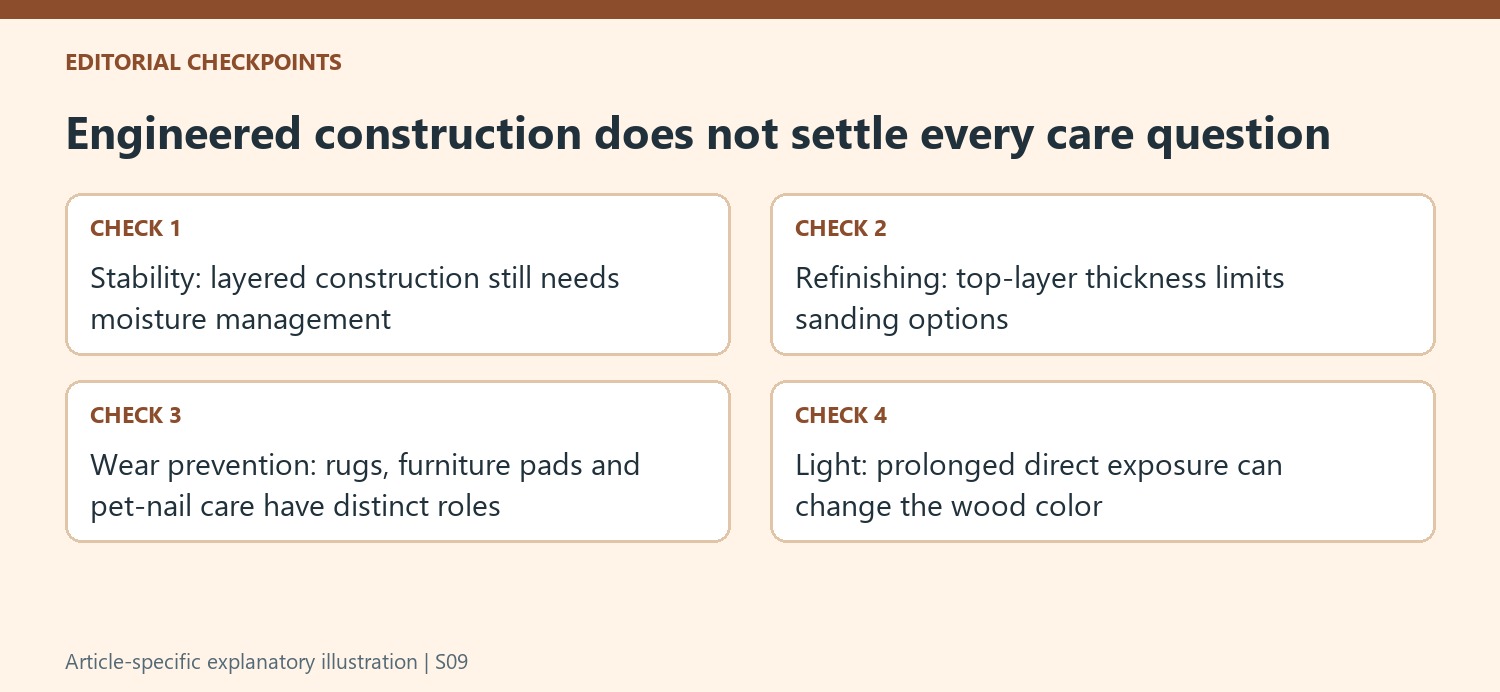
Indoor conditions matter alongside the cleaning product. Excess moisture can encourage cupping, while very dry conditions cause wood to contract. Bruce also notes that direct sunlight can alter wood color over time. Blinds or curtains help limit intense exposure. Use the floor manufacturer's humidity and maintenance guidance rather than treating an occasional deep clean as the complete care plan.
Read the installed floor specification before planning restoration
Bruce explains engineered hardwood as a genuine wood surface over a layered base. That construction can improve dimensional stability, but it does not identify the thickness of the visible wood available for future sanding. Find the model or installation documentation before requesting a restoration service. Two floors described simply as engineered can have different wear-layer allowances, even when their color and board dimensions appear similar.
The FAQ says a thicker top layer may permit limited refinishing while a thin veneer may not. Treat that as a reason for product-specific assessment rather than a promise of a certain number of future sandings. Previous restoration also matters because material may already have been removed. A flooring professional can evaluate the actual condition and suitable options without turning a general product description into an unsafe sanding assumption.
Keep the regular routine focused on debris and restrained moisture
The manufacturer recommends sweeping or appropriate vacuuming to remove grit before damp cleaning. Check the head and floor setting so the tool collects debris without introducing a harsh brush action. For adhered dirt, use the approved hardwood cleaner with a damp microfiber mop rather than soaking the surface. Engineered construction provides no reason to leave a spill sitting while the rest of the room is cleaned.
Remove liquid promptly and keep steam and harsh chemicals out of the routine described by the source. A machine's ability to clean another hard surface does not establish its compatibility with the wood finish. If a patch stays dull after the approved method, investigate residue or wear instead of adding a shine product without guidance. Cleaning and renewing a protective layer remain separate jobs.
Manage wear and room conditions between washes
Bruce includes rugs in busy routes, protective pads beneath furniture and trimmed pet nails among preventive measures. Those steps address contact and abrasion directly rather than demanding more frequent wet cleaning afterward. Check that rugs and pads are suitable for the flooring and that they have not trapped grit beneath them. A protective object that stays in place still needs inspection during normal care.
The source also describes wood's response to moisture and sunlight. Excess moisture can contribute to cupping, dry conditions encourage contraction, and sustained direct light can change color. Follow the installed floor maker's humidity and exposure guidance instead of relying on a universal room setting from an unrelated product. Curtains or blinds can help manage intense light, while changes in board shape call for investigating conditions rather than applying another cleaning solution.
References
- 10 Wood Flooring FAQs for Hardwood Floor Care. 10 Wood Flooring Faqs For Hardwood Floor Care.
A layered construction improves stability without removing the need for careful maintenance.


Leave a Comment
Comments (0)