Read the Color of a Wood Water Ring Before Treating It
The Spruce distinguishes pale marks in a finish from dark staining that can call for restoration.
Look at the stain before treating it
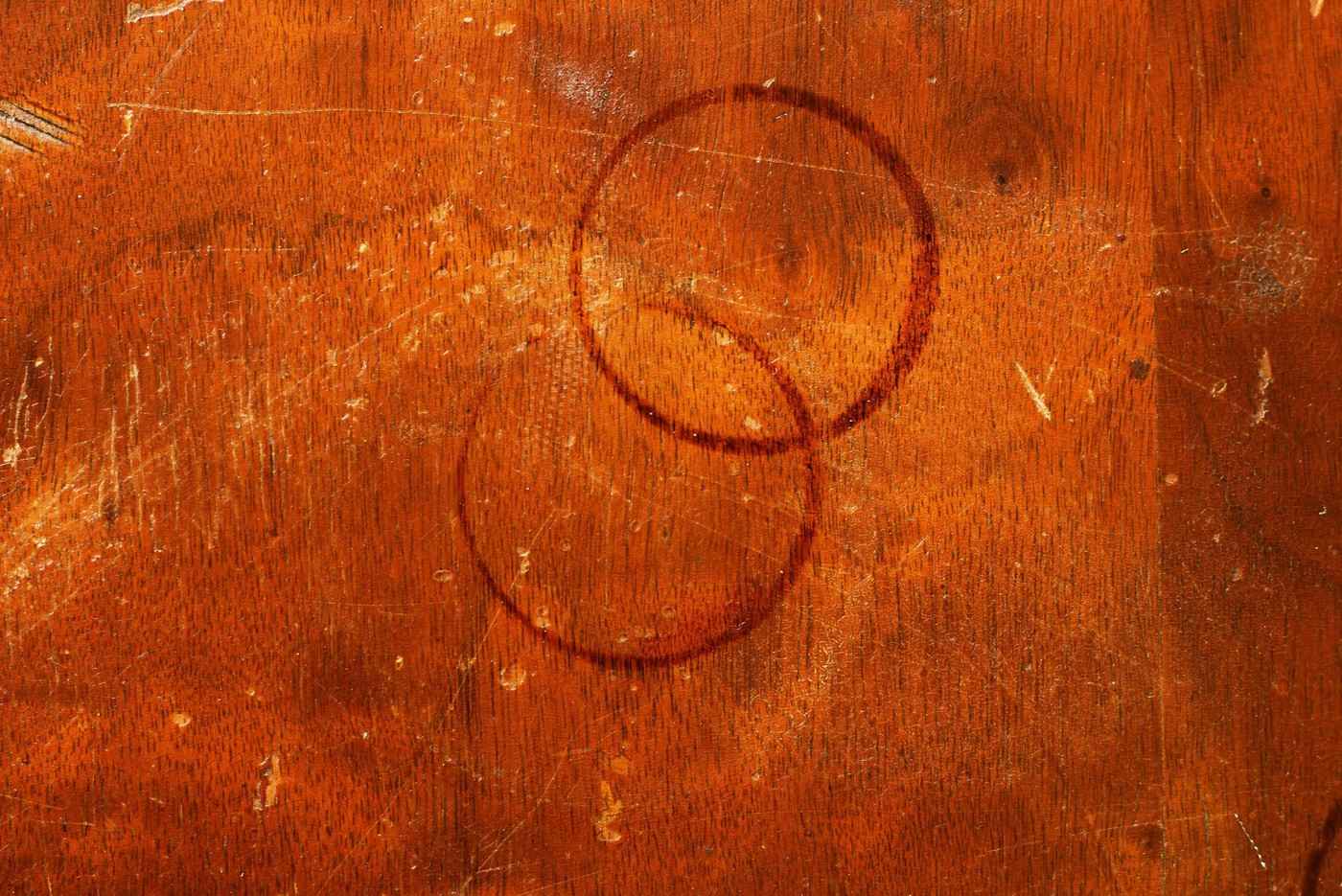
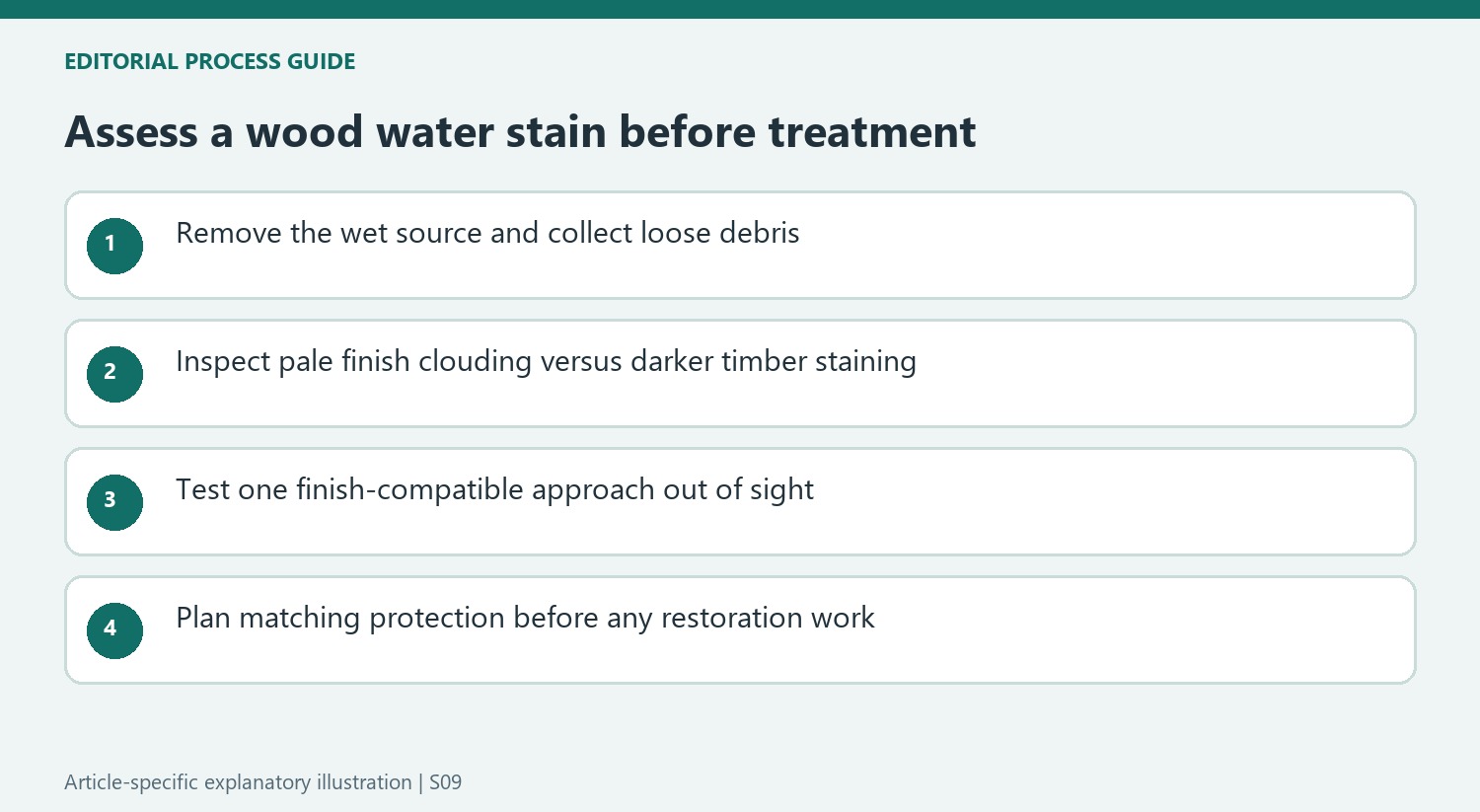
A pale ring often reflects moisture within the surface finish, while a dark mark can mean that water has reached the wood itself. The Spruce recommends clearing dust and loose debris before attempting removal. Its gentler approach to a white mark uses mineral oil on a soft cloth, following the grain, then allowing time before buffing excess away. That is a different task from repairing a deeply darkened area.
Recognize the point where cleaning becomes repair
The guide's dark-stain process includes removing finish, treating the exposed area and applying a matching protective coating again. Those are restoration steps that can change the appearance of the furniture. They are not interchangeable with a quick tabletop wipe. The article explicitly warns against mixing its different bleaching agents. For an important piece or an uncertain finish, assess the likely repair work before choosing an aggressive treatment.
Keep mineral oil and mineral spirits distinct
The source uses mineral oil in its initial white-ring treatment and discusses mineral spirits only as a separate solvent step. Similar names do not make those liquids interchangeable. Check the finish and product-handling requirements before considering a solvent, and keep the test area small and hidden. The article's darker-stain procedure involves sanding and replacing a matching finish, so it changes the surface rather than simply cleaning it. If the stain remains after a compatible gentle approach, assess whether the piece can be restored without a visible patch. Deep color changes, thin veneer or an important antique are reasons to involve someone experienced in the particular finish.
Use appearance as a clue rather than a complete diagnosis
The Spruce's white-versus-dark distinction helps set expectations before a method is chosen. Pale clouding often belongs to the finish layer, whereas a dark area can involve the timber underneath. Inspect the mark after loose dust and crumbs are removed, and consider whether the surface is intact or already worn. Color gives an initial direction, but it does not identify the exact coating or prove that every pale ring responds to one household remedy.
Also address the source of the water. A leaking planter, wet footwear or plumbing problem can continue to affect the same area after an attractive-looking repair. Remove the wet object and investigate ongoing exposure before deciding that the visible ring is the whole task. On furniture, inspect beneath decorative objects; on a floor, persistent moisture deserves assessment beyond a surface cleaning session.
Keep the first treatment distinct from solvent work
The article's gentle white-mark example uses mineral oil on a soft cloth, following the grain and allowing time before the excess is buffed away. Check finish compatibility in an inconspicuous location first and assess the dried, cleaned appearance rather than the temporary darkening from an oily film. More product is not necessarily more effective, particularly where an existing coating is thin or worn unevenly.
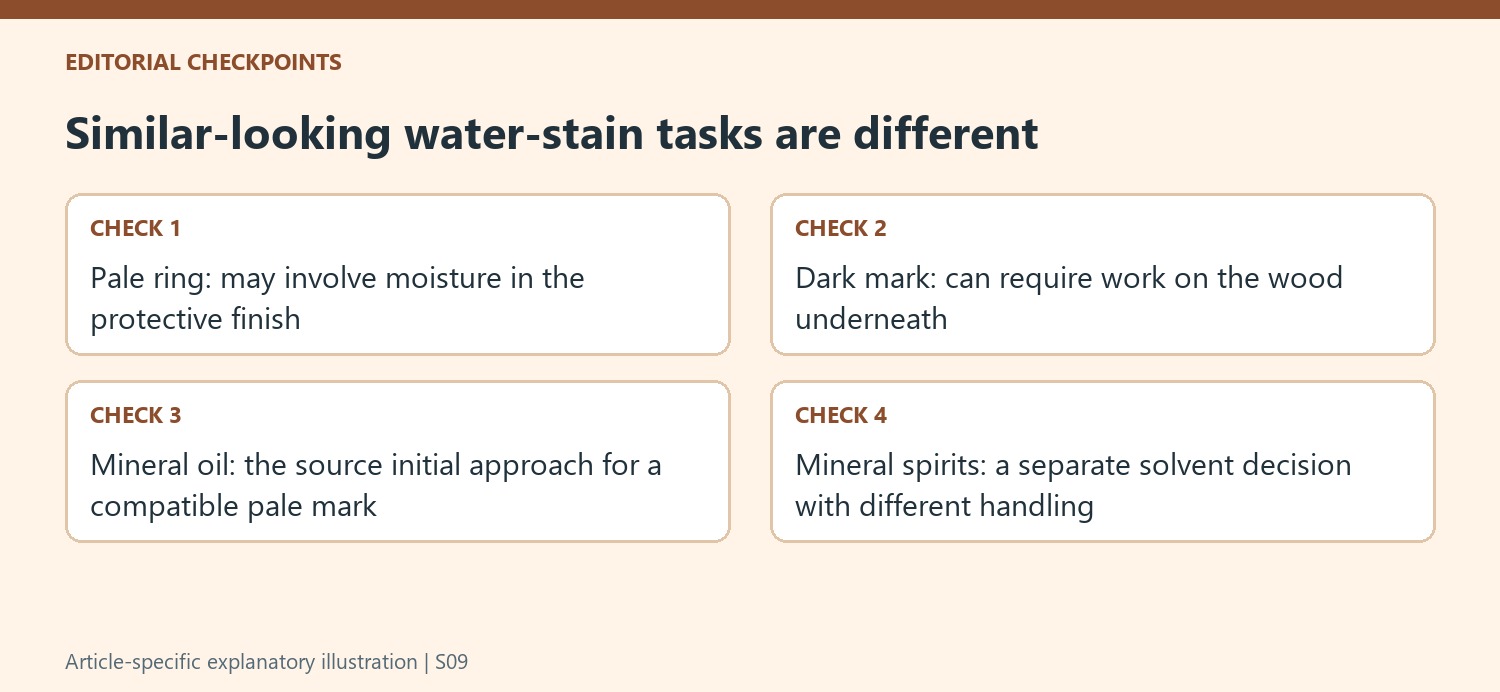
Mineral spirits appear later as a solvent option, not as another name for mineral oil. That difference changes compatibility, handling and the possible effect on the coating. Read the actual product instructions and obtain suitable finish guidance before considering it. A solvent that affects the protective layer can produce a different repair problem even if it makes the original mark less obvious for a moment.
Plan restoration as a complete appearance repair
For dark staining, the source moves into removing finish, treating exposed wood and replacing protection. Before doing any of that, identify the substrate and the likely extent of the work. A thin veneer can offer little room for sanding, and a local repair may not blend into a broad aged tabletop. Know how the protective finish will be restored before removing it from the stained patch.
The bleaching options in the article are alternatives with separate handling requirements, not a list to combine or improvise through. Its explicit warning against mixing agents belongs to that distinction. For deep staining or important furniture, a restoration specialist can assess whether a compatible local repair is realistic or whether a broader intervention is needed. A successfully lightened patch is only one stage; color consistency and a sound protective surface remain part of the finished result.
References
- How to Remove Water Stains From Wood Furniture and Floors. The Spruce; Mary Marlowe Leverette.
The Spruce distinguishes pale marks in a finish from dark staining that can call for restoration.


Leave a Comment
Comments (0)