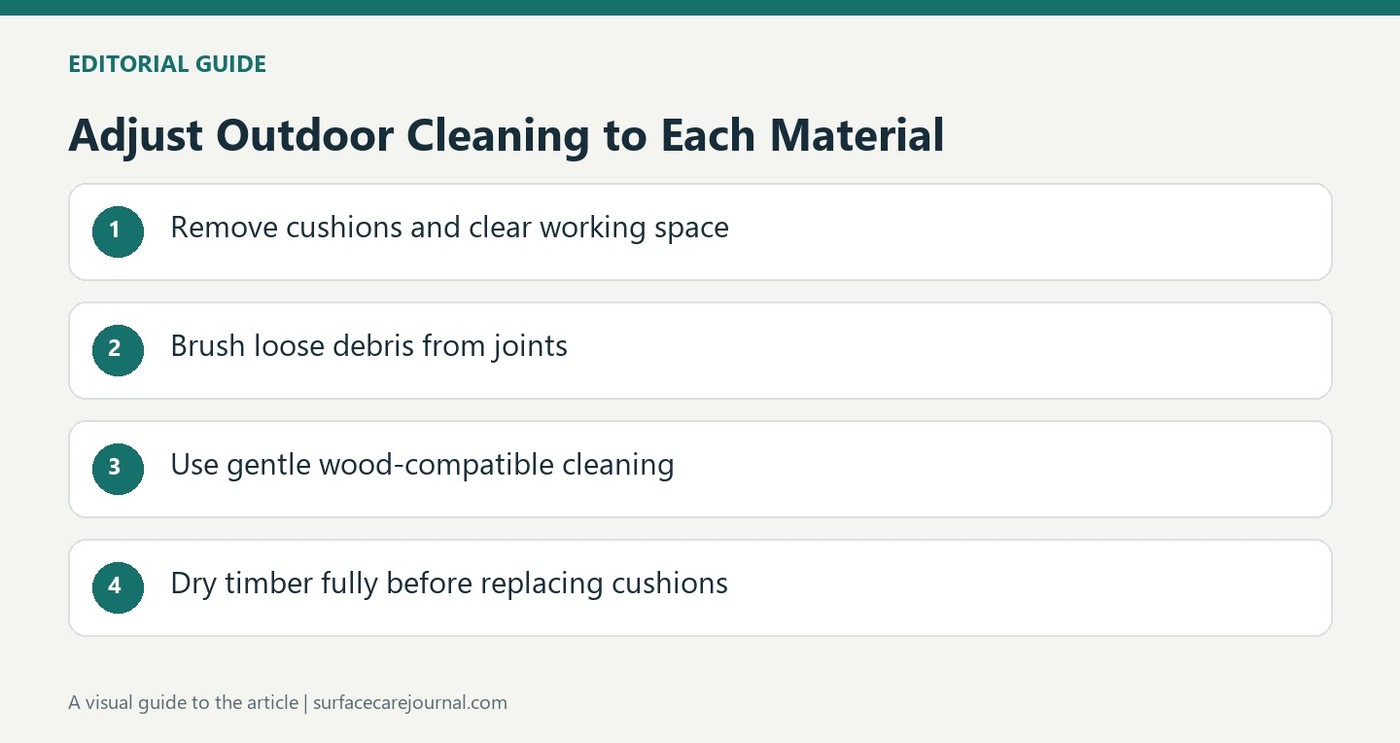
Remove Loose Dirt Before Washing Outdoor Wood Furniture
Homes & Gardens recommends clearing space around outdoor furniture and removing cushions before cleaning. Brush or wipe loose leaves, dirt and dust from corners and joints first. For wood, a soft microfiber cloth helps avoid unnecessary scratching, while the cleaner must remain compatible with the furniture's finish.
The article favors mild soap and controlled cleaning rather than harsh chemicals that strip protection. A general patio-furniture routine should still be adjusted for natural wood instead of copied from plastic or metal furniture. Follow the maker's rinsing and drying guidance, and allow the item to dry thoroughly before returning cushions or covering it for storage.
Separate metal treatment from timber care
The source includes rust removal for metal furniture and smaller metal fittings, but the abrasive tools discussed there are not a general method for wooden faces. Keep a wire brush or steel wool away from coated timber unless the maker specifically calls for a repair process. Mixed-material furniture needs each component identified before cleaning, rather than one tool being carried across the whole piece.
Avoid boiling water and aggressive scrubbing
The article cautions that very hot water can discolor wooden furniture and recommends following the grain when gentle scrubbing is needed. A mild compatible solution and soft cloth provide a controlled starting point. Use stronger pressure only when the material's instructions support it. Removing a protective coating by abrasion is a different task from lifting ordinary outdoor dirt.
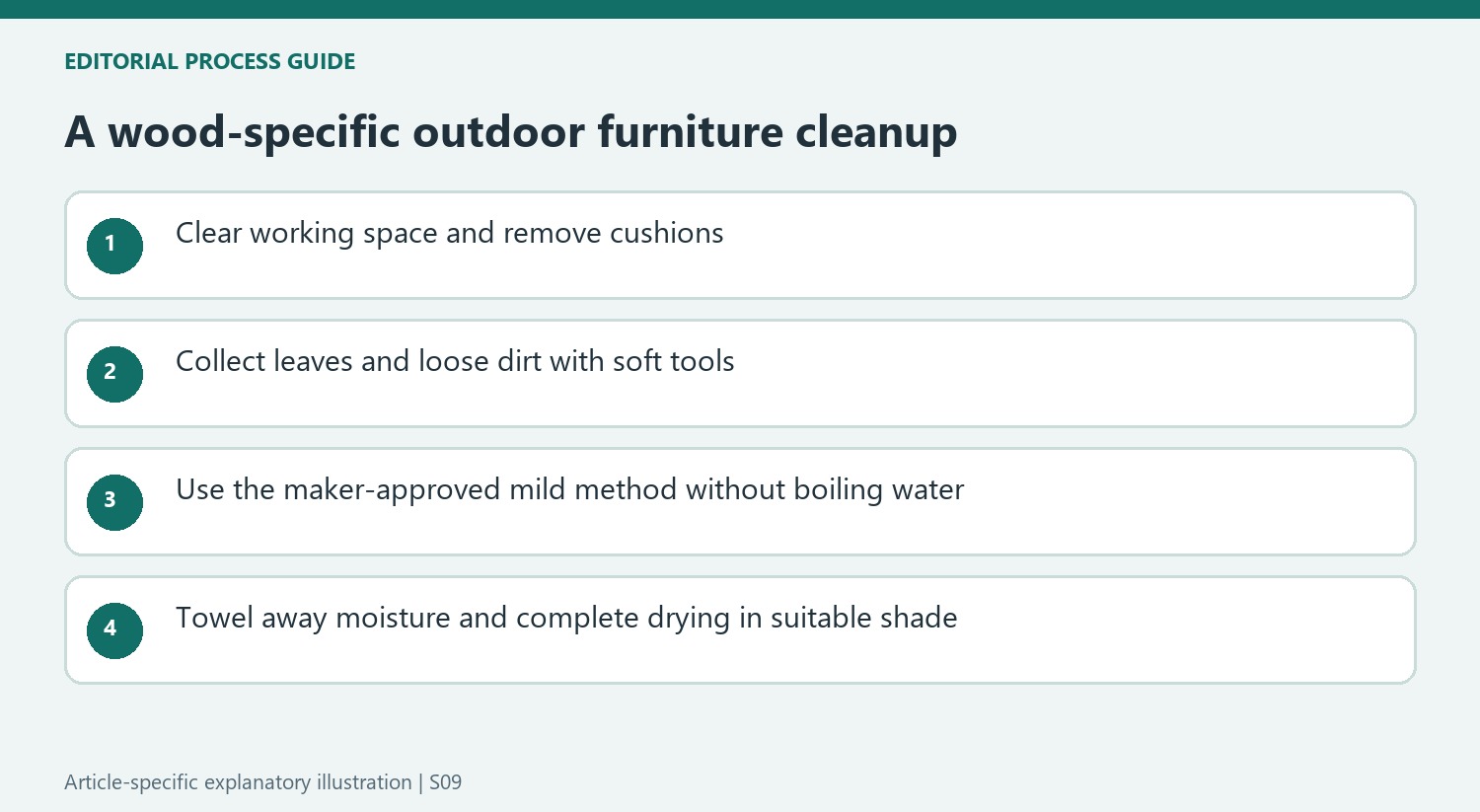
Choose the drying location for the material
After residue removal, the guide recommends a towel and complete drying. For wood, one expert specifically favors a shaded place because intense direct sun can encourage cracking or warping. That differs from the metal-drying suggestion elsewhere in the article. Keep the cushions off until the relevant surfaces are dry, and use the furniture maker's advice where it differs from a general patio routine.
Prepare enough room to clean the actual timber
Clearing the space around an outdoor set is more than a convenience for the person doing the work. It makes it easier to reach the backs, supports and joints where leaves and cobwebs collect. Remove cushions and portable accessories, then use a soft cloth or suitable gentle brush on loose debris. Do this before preparing a washing solution so wet dirt is not immediately driven into recesses that could have been cleared dry.
The Homes & Gardens guide includes plastic, metal and wood, but its timber qualifications are essential. A wire brush used on a rusty bracket is not the next tool for the adjacent wooden slat. Identify each material and protect neighboring surfaces when a separate treatment is required. If the frame combines timber, coated metal and fabric, the complete set does not acquire one universal cleaning method merely because it shares a design.
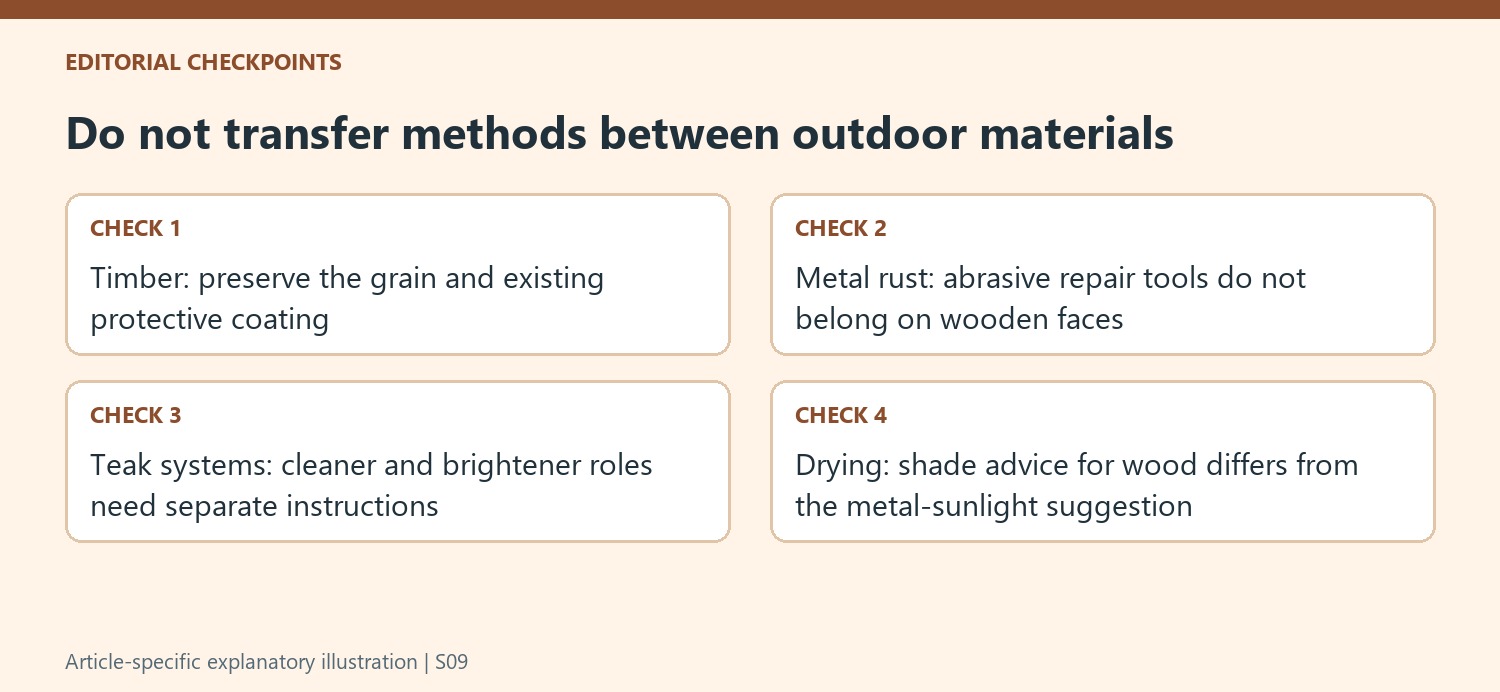
Keep warm-water cleaning separate from heat or force
The source specifically cautions against boiling water on wood because discoloration can result. Choose the mild, finish-compatible method permitted by the furniture maker and use a soft cloth or sponge without saturating the piece. If gentle brushing is appropriate, follow the grain and avoid turning a soil-removal task into an abrasive removal of the existing coating. A faded appearance is not proof that the furniture needs to be scrubbed harder.
The guide also mentions specialized systems for woods such as teak. Treat those as distinct products with their own cleaner, brightener and protection directions, not ingredients to add to a general bucket. Check whether the furniture's current finish and intended appearance suit such a system before applying it. Lifting ordinary grime and deliberately changing weathered color are different goals, even when both are described casually as restoring outdoor furniture.
Use the wood-specific drying advice at the end
After compatible residue removal, take up remaining surface moisture with a clean towel or lint-free cloth. Inspect slat gaps and joints rather than relying only on the tabletop's appearance. The expert's wood guidance favors shaded air drying, whereas a separate passage suggests sunshine for metal. Keeping those recommendations attached to the correct material prevents a useful shortcut for one component from becoming inappropriate treatment for another.
Leave cushions off and delay a storage cover until the relevant surfaces are fully dry. Check current maker instructions if the material has particular rinsing or drying needs. For the next routine, removing fresh leaves and dirt promptly can reduce the severity of the eventual clean. The useful seasonal outcome is furniture that is clean, dry and ready for its intended protection, rather than furniture that merely appears fresh while wet beneath a cover.
References
- How to clean outdoor furniture – a simple guide for sprucing up sets this spring. Homes and Gardens; Chiana Dickson; Holly Crossley.
A gentle sequence protects finishes better than beginning with strong chemicals or forceful scrubbing.


Leave a Comment
Comments (0)