A Familiar Water-Ring Remedy Still Needs a Finish Test
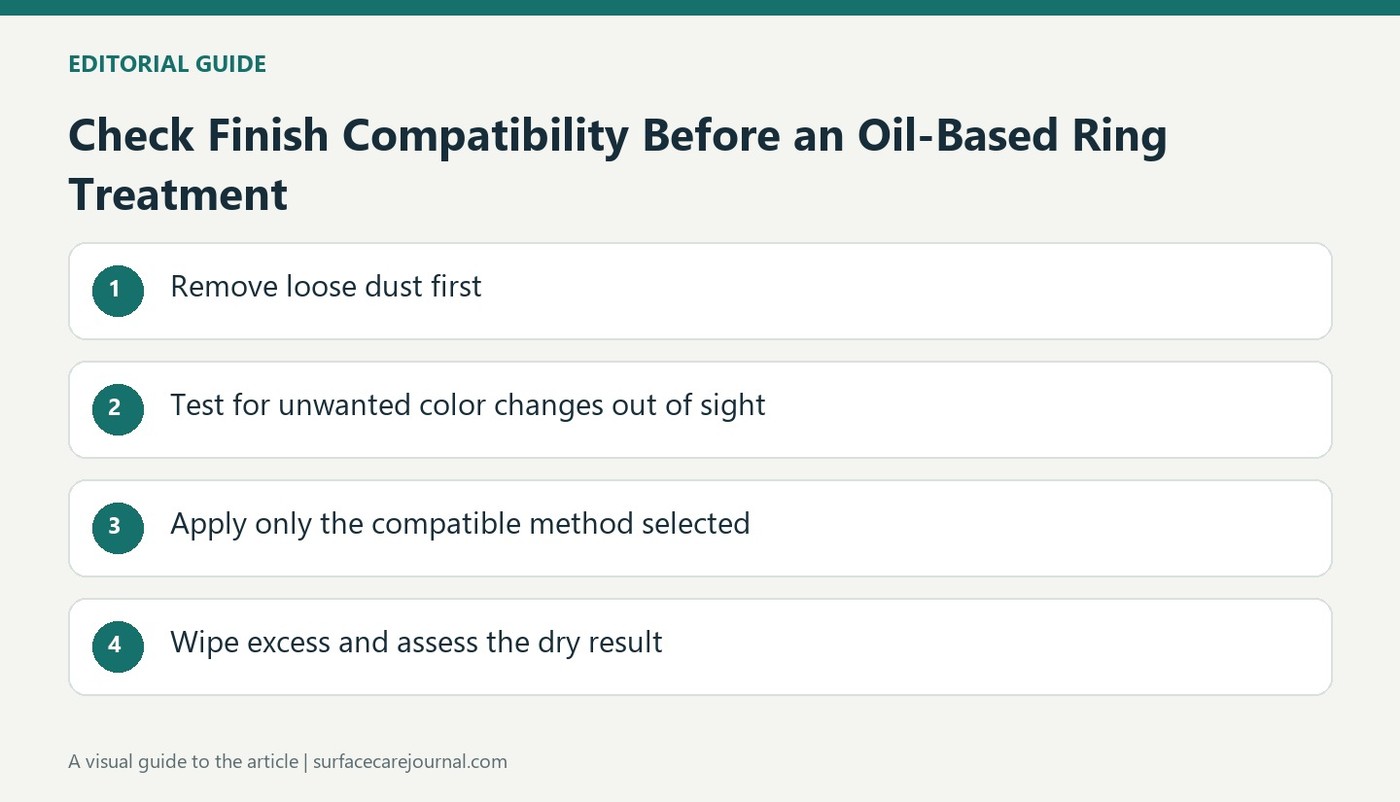
The Spruce warns that oil-based treatments can darken dry wood or a worn coating.
Keep the method limited to the problem described
The Spruce discusses white rings left by moisture trapped near a wooden table's finish. Its petroleum-jelly method starts by removing dust, applying a thin layer and allowing several hours before wiping away the excess and buffing. The article does not present this as a cure for every dark stain. More deeply penetrated marks can require substantial restoration instead of the same surface treatment.
Check for unwanted color changes
A particularly useful caution is that oily products can darken dry wood or areas with a worn coating. Testing out of sight therefore matters even when the proposed ingredient seems familiar. The guide also recommends prevention through coasters, prompt spill cleanup and protective mats under serving dishes, plus leak-proof saucers for plants and vases. Assess the finish and follow its care requirements before treating a visible area of valuable furniture.
Inspect the surface after removing the excess
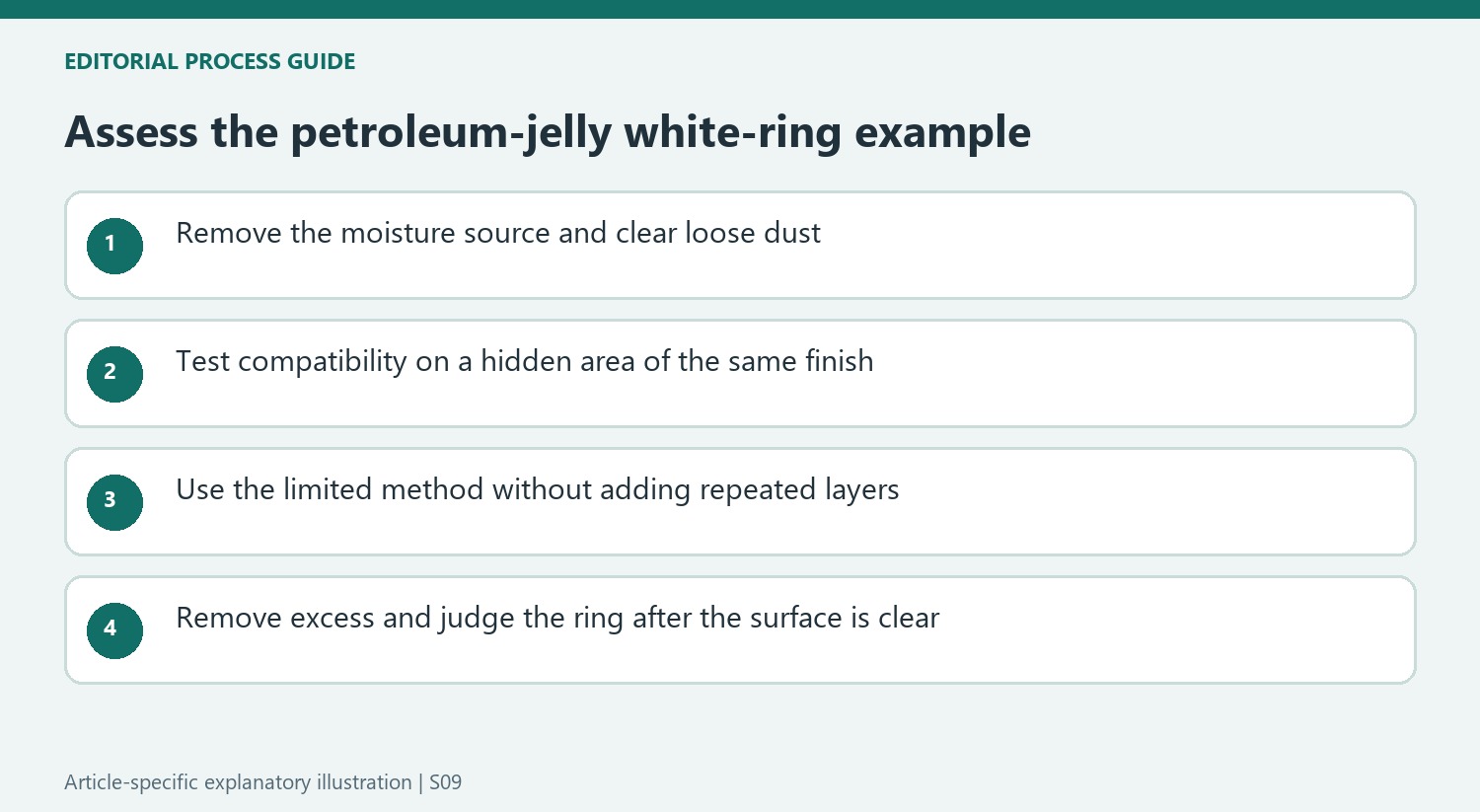
The source allows at least four hours for its petroleum-jelly example, preferably overnight, before the excess is wiped away and the surface buffed. That waiting period is part of the described method, rather than a recommendation to keep adding more product when a ring does not change immediately. First confirm that the finish tolerates the treatment in an unseen area. Look for color darkening or an oily patch as well as changes to the white ring. A worn coating can respond differently from an intact one. If the mark is dark or the surface begins changing unevenly, stop and assess restoration options instead of treating every water stain with the same oil-based approach.
Keep petroleum jelly within the limited case described
The Spruce's method concerns a white ring associated with moisture near the surface finish. It is not an explanation for every dark mark on furniture, nor a universal conditioning routine for any wooden object. First remove the wet glass, vase or other source and wipe loose dust away. Inspect whether the coating is intact, worn or unknown before assuming that the visible ring is the only relevant condition.
A hidden-area test matters because the article itself warns that oil-based materials can darken dry wood or a worn finish. Use the proposed treatment in a limited place and evaluate the appearance after excess is removed. Do not take a temporarily richer color as proof that the furniture needed oil. If the trial makes a patch darker or changes the surrounding sheen, that is useful evidence to stop rather than expand the application.
Allow the selected method time without repeatedly adding material
In the source's petroleum-jelly example, a thin layer remains for several hours before being wiped away and the surface buffed. The waiting period is part of that specific approach, so an unchanged appearance after a few minutes is not a reason to keep increasing the amount. Protect the treated spot from ordinary use during the assessment and avoid adding another remedy before the first result can be judged.
The article lists several other oily household products, but shared oil content does not make their ingredients identical or establish suitability for every coating. Treat the list as alternative ideas to assess, not as a progression that must be completed. A compatible furniture-care method should leave the surface assessable after residue removal. When uncertainty remains about the finish, professional advice can be more useful than another layer from a different household container.
Prevent the next ring at its actual source
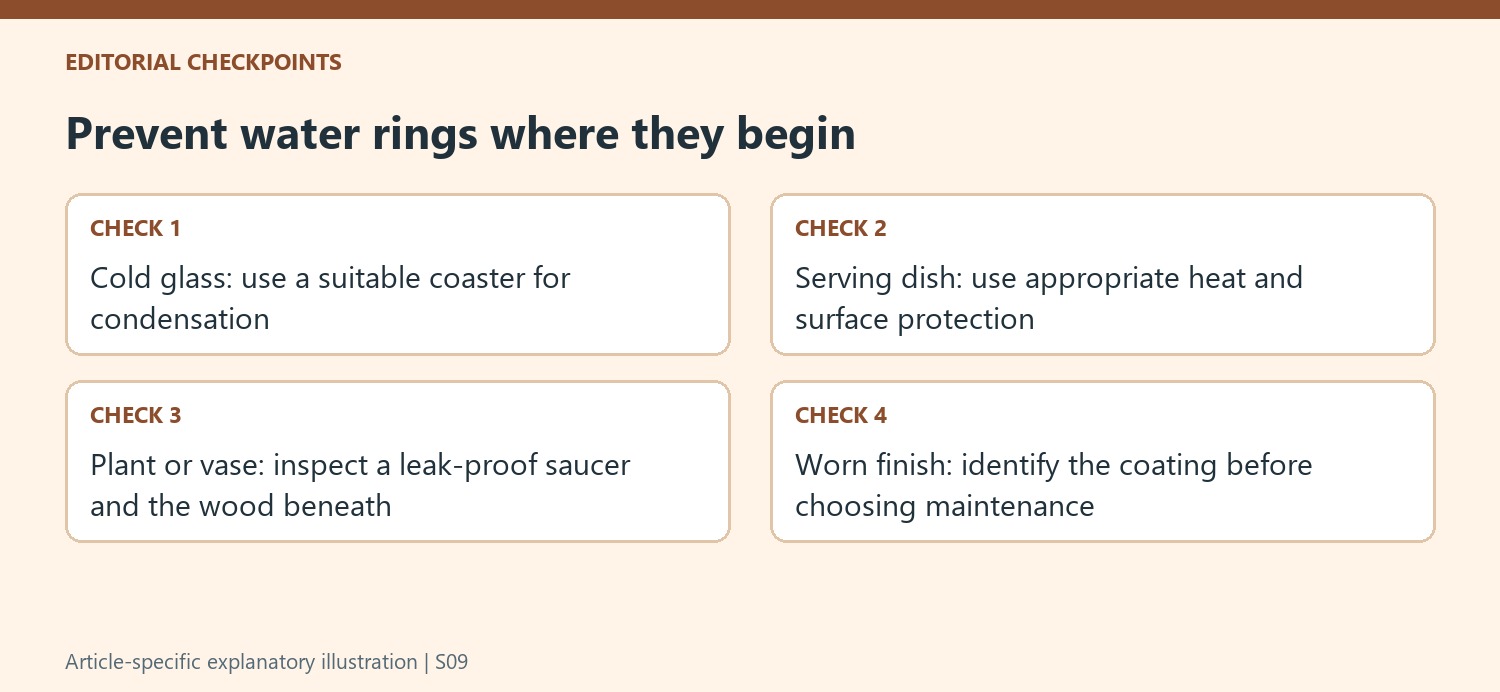
The prevention advice goes beyond drinking glasses. Use an appropriate barrier beneath hot serving dishes and a leak-proof saucer under a plant or flower vase. Check those locations during routine dusting, because a container may conceal a damp patch even when the tabletop looks tidy. Prompt spill cleanup limits continued exposure, while a coaster works only when it is actually used and remains suitable for the moisture it collects.
The source also mentions protective finish maintenance, but the existing coating must determine what is appropriate. Do not add polyurethane over an unidentified waxed or oiled surface simply because a general prevention list includes sealant. If a dark mark or broader deterioration has developed, assess the repair separately from the petroleum-jelly example. Prevention, a limited white-ring treatment and a new protective coating are three different decisions that should not be collapsed into one routine.
References
- The Unexpected Way to Get Rid of Water Marks from Your Wood Table Without Harsh Cleaners. The Spruce; Mary Marlowe Leverette.
The Spruce warns that oil-based treatments can darken dry wood or a worn coating.


Leave a Comment
Comments (0)