
Separate Wood-Floor Cleaning from Short-Term Shine Products
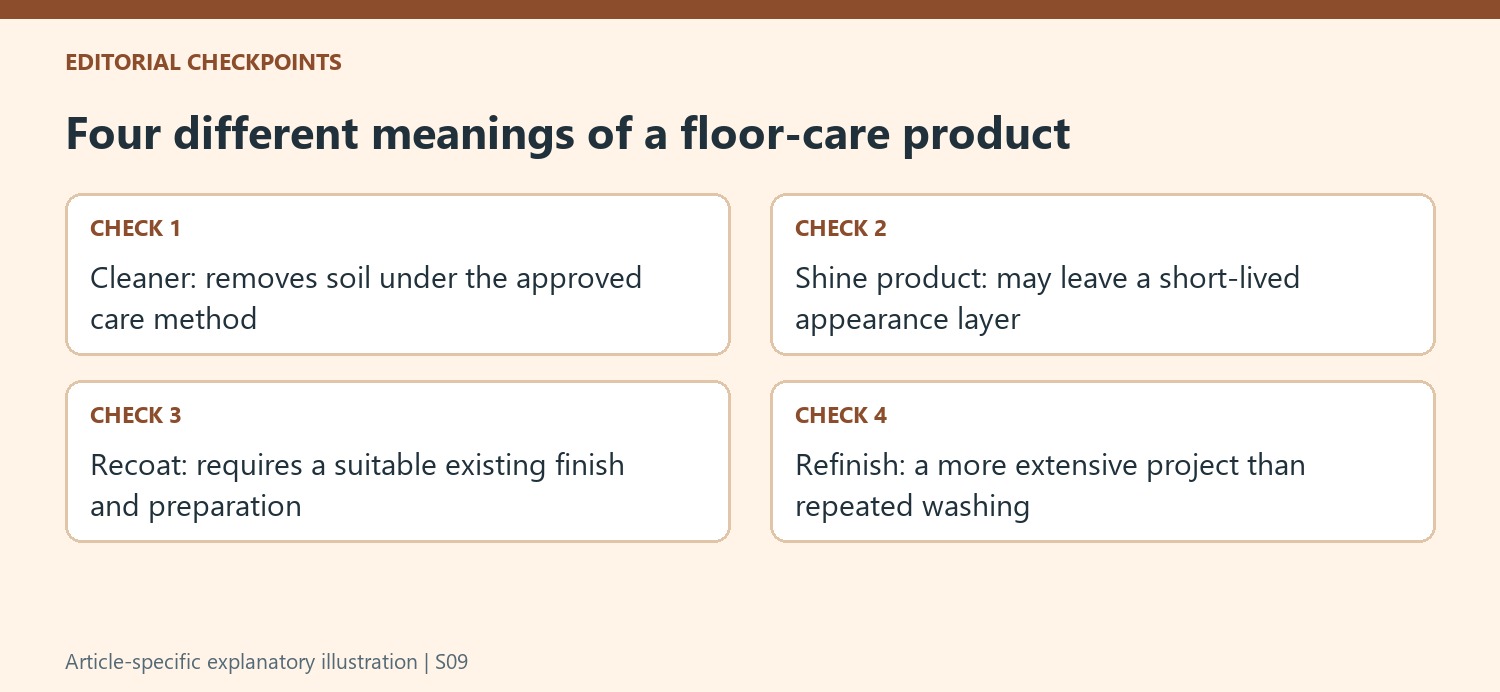
The source cautions against assuming products promising to rejuvenate or shine a wooden floor are ordinary cleaners. Some add a surface layer that changes appearance temporarily without providing the wear characteristics of the original finish. Check the actual purpose before use.
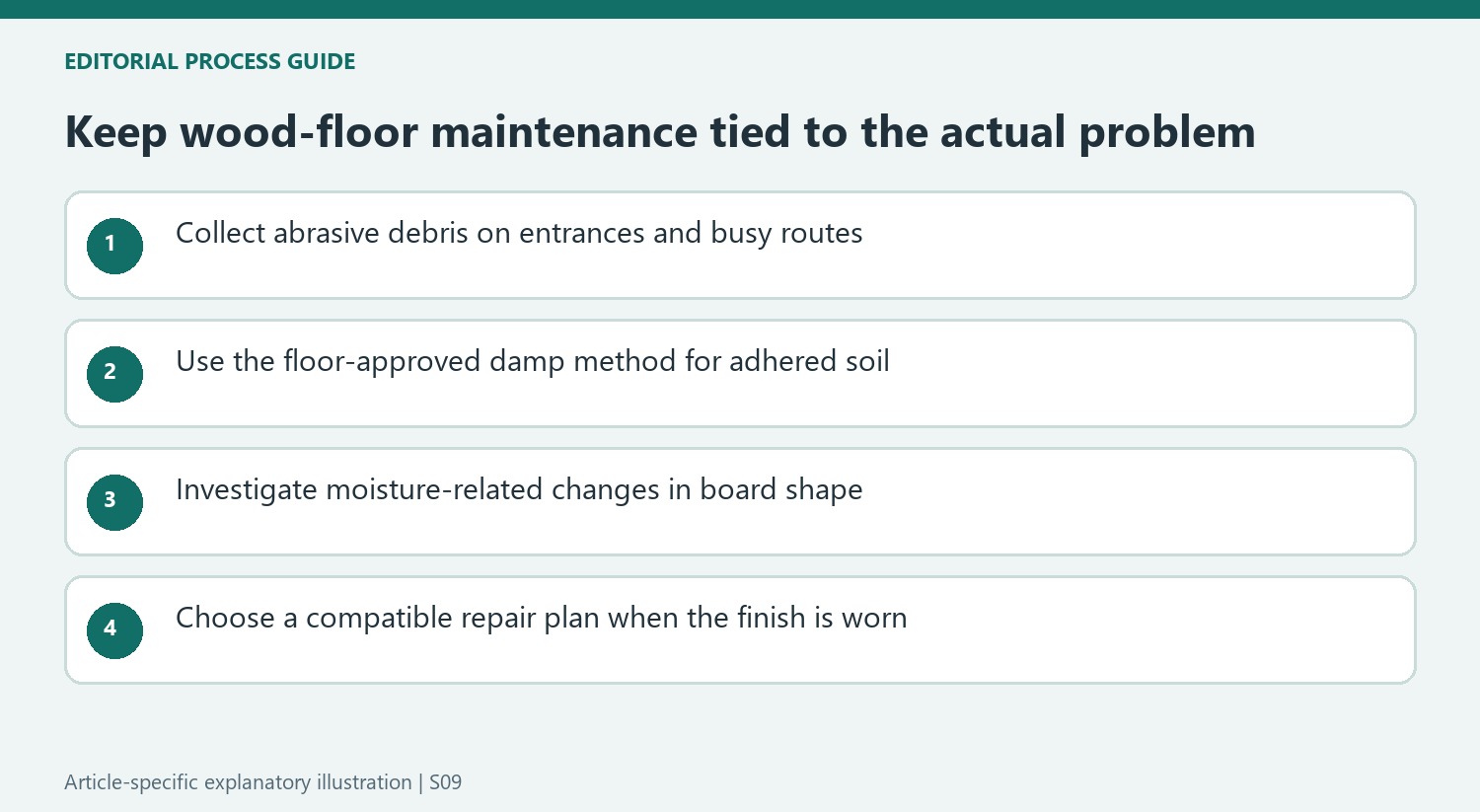
Match routine cleaning to the floor coating and remove loose particles first. Follow manufacturer-approved maintenance rather than stacking incompatible products. A damaged or worn finish may need a proper repair or recoating plan instead of another appearance-enhancing wash.
Remove grit from the busiest routes first
The National Wood Flooring Association expert explains that particles under shoes act abrasively against the surface. The article therefore prioritizes sweeping and dust mopping, especially in entrances and hallways when a whole-house pass is impractical. Vacuum crevices with a suitable hard-floor setting or attachment. A powered brush intended for carpet is not automatically the appropriate tool for finished wood.
Keep damp cleaning distinct from soaking
The guide permits a compatible cleaner with a damp microfiber mop but rejects standing water and steam. Work so the surface does not stay wet for long, and remove excess moisture promptly. It also notes disagreement over vinegar, which can dull some finishes. The manufacturer's approved method is a more reliable basis than assuming that a familiar household mixture suits every floor.
Recognize when cleaning is no longer the task
Cupping can indicate excess moisture, while very dry conditions may produce gaps or splitting. Those changes call for addressing the environment rather than adding cleaner. The source also distinguishes recoating from full sanding and refinishing. If wear exposes a finish problem, identify the existing coating and obtain a compatible repair plan instead of repeatedly applying a product that promises an instant shine.
Read the promise on the cleaner as a description of its job
Architectural Digest's NWFA expert warns that a product promising to revive or shine the floor may add an appearance-changing layer instead of simply removing soil. This makes the intended function worth checking before any application. A familiar word such as maintenance does not establish whether a bottle is a cleaner, a polish or a finish treatment. Compare the product with the flooring maker's approved care method rather than treating all three categories interchangeably.
The distinction helps explain why repeated attempts to restore gloss can become frustrating. Another temporary layer does not necessarily reproduce the wear properties of the original coating, and it may complicate later maintenance. If ordinary cleaning leaves the floor looking different from a showroom photograph, identify the intended finish first. A deliberately low-sheen surface does not need a gloss-adding product simply because a reflection is less pronounced than expected.
Concentrate ordinary effort where particles enter and travel
The source describes grit beneath shoes as an abrasive load on the floor. When time is limited, entrances and hallways therefore deserve a targeted dry pass rather than postponing all cleaning until the whole house can be done. Use a suitable dust mop and vacuum accessible crevices with an approved hard-floor setting. Check that the attachment itself is clean so the tool does not introduce particles from another surface.
After loose debris has been collected, use only the compatible damp-cleaning method required for adhered dirt. A microfiber mop helps control liquid, but it still needs correct dosing and a clean pad. Lift any excess moisture promptly and avoid a bucket-based soaking routine. The guide also rejects steam: vapor reaching narrow spaces is a different exposure from a restrained surface wipe and should not be treated as an inherently gentle alternative.
Escalate the diagnosis rather than the amount of cleaner
The guide discusses cupping, gaps and splitting as possible signs that the surrounding moisture conditions need attention. Such changes are not ordinary grime, so the response should include investigating the environment and any water source. Do not attempt to conceal an altered board shape with a new shine coating. A visible problem may be telling the owner about conditions around or beneath the floor that a cleaning product cannot correct.
Likewise, a worn finish raises a repair decision. The source distinguishes recoating from a more extensive sanding and refinishing project, but suitability depends on the existing surface and its maintenance history. Obtain a compatible plan before assuming another coat can adhere over every prior product. Knowing what has been applied is useful evidence for a flooring professional, and it makes a deliberate restoration more achievable than a succession of unrelated rejuvenating treatments.
References
- How to Clean Hardwood Floors Like a Pro in 6 Simple Steps. Architectural Digest; Michael Y Park; Katherine McLaughlin.
A glossy residue is not necessarily the finish maintenance the floor needs.


Leave a Comment
Comments (0)