
Balance Effective Wood-Floor Cleaning with Finish Protection
Wooden floors collect scuffs, stains, and daily grit despite being durable. Start maintenance by removing loose dust, hair, and particles with a soft-bristle broom or suitable vacuum head. The right tool should collect debris without scratching the protective surface.
Choose a mop and cleaner approved for the actual floor finish, keeping moisture controlled. More water is not automatically a better clean. Address spills promptly and separate ordinary washing from repairs or recoating needed for worn or damaged areas.
Set up a dry cleaning route
Ideal Home places loose debris removal before mopping. A soft brush vacuum attachment or soft broom collects particles that could otherwise be moved across the finish. Pay attention to the edges and beneath movable furniture. Doormats, furniture felt pads and trimmed pet nails then reduce the amount of new abrasion between cleaning sessions, rather than leaving every problem for a wet wash.
Work toward the exit with controlled moisture
The article advises beginning at the far side of the room and moving toward the doorway. Use a suitable mop that lets you regulate moisture, and clean its pad periodically so collected dirt is not spread back onto the boards. Allow the floor to dry or use a compatible dry mop. Avoid steam and abrasive tools; they introduce heat, water or friction that the finish may not tolerate.
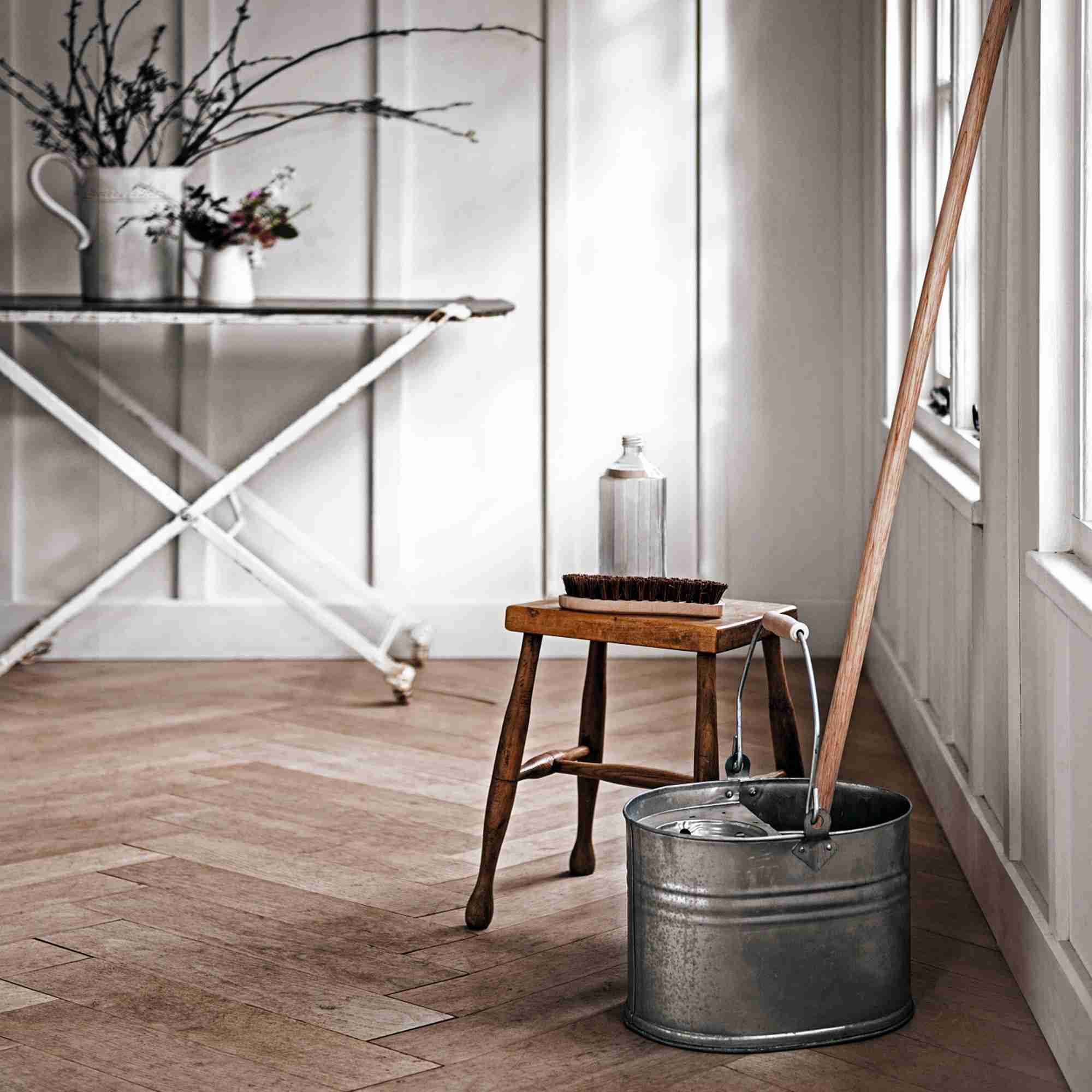
Recognize when a mark needs repair
Some dark staining and deep damage cannot be solved by another pass of the mop. The source recommends professional advice before sanding or replacing a plank. Re-oiling also depends on the existing finish and its condition: it is not a universal treatment for all wooden flooring. Check the actual product's care instructions before using oils, scratch products or stronger chemicals on a stubborn mark.
Build the cleaning route before the mop becomes wet
Ideal Home begins with dust, hair and grit because those loose particles can be moved across a protective finish by an otherwise suitable mop. Inspect the vacuum head or soft broom and collect debris around edges and accessible furniture. Move small items where practical instead of repeatedly leaving an uncleaned outline around them. This dry preparation also reveals the places that need local attention rather than another full-room wash.
Plan the damp-cleaning route from the far side toward the exit, as the source recommends. That reduces the need to cross a freshly treated section just to leave the room. Set out a clean replacement pad or the means to rinse the head before beginning. Tool maintenance is part of the route: a dirty pad carried through the final section can leave a film even if the original cleaner was chosen correctly.
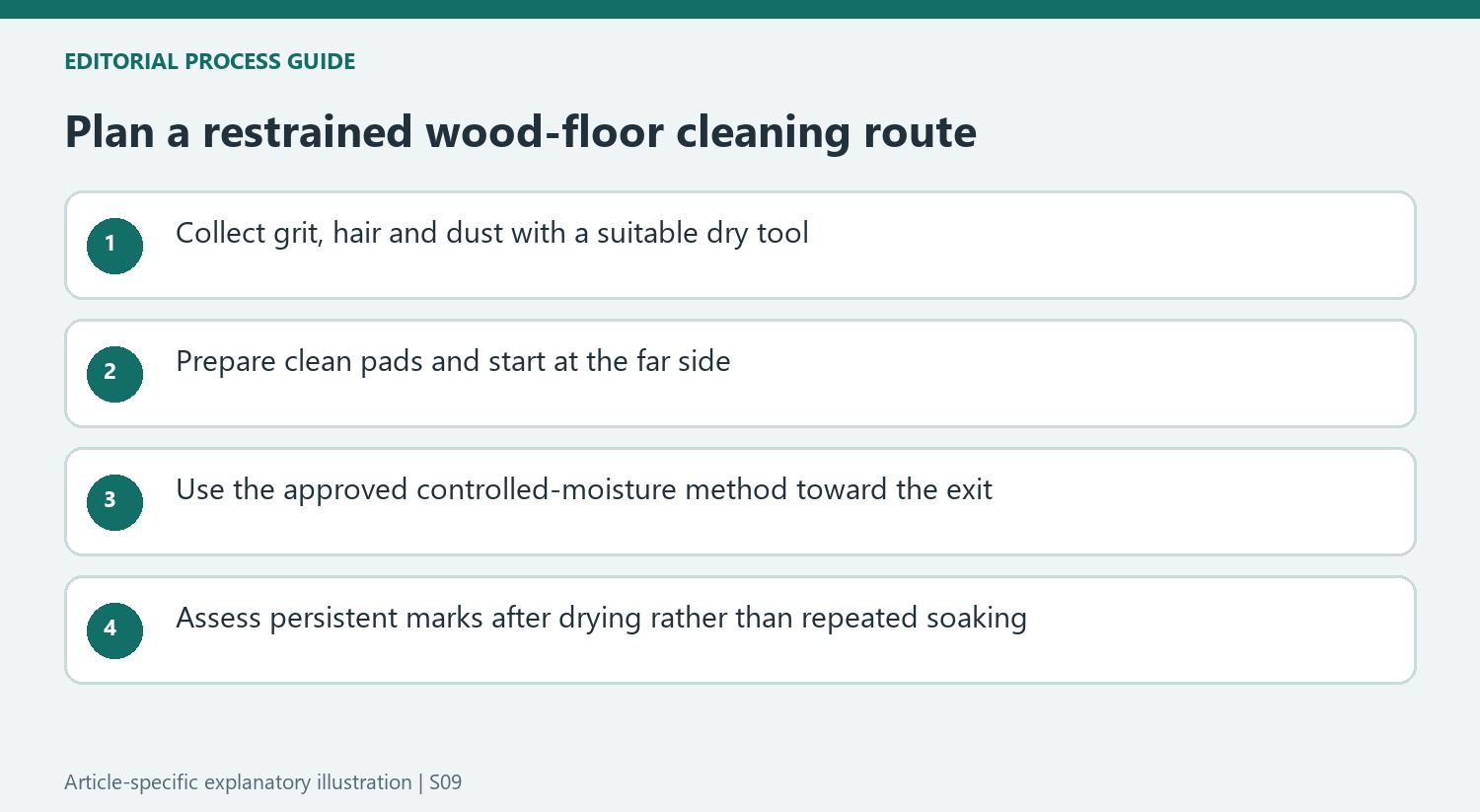
Choose controlled moisture rather than a stronger-looking wash
The guide compares wood-specific spray mops and wringing systems that let the user regulate liquid. Check the installed floor's approved method and the cleaner's dilution rather than assuming the mop mechanism alone makes the treatment suitable. Use a small first section to assess the amount left behind. A visibly wet floor is not a useful target, and additional water is not the same as additional soil removal.
The source warns against steam and abrasive tools, and it also notes that familiar acidic household ingredients can discolor or wear a protective finish. Do not copy a general homemade floor recipe onto an unidentified wood coating. When an approved damp pass leaves a persistent mark, assess that patch after drying. It may need a specific repair diagnosis rather than repeated wetting across the entire room.
Treat re-oiling and deep marks as separate maintenance decisions
The article discusses oil renewal, but that applies to a floor whose existing finish actually calls for that treatment. Identify the coating and obtain the appropriate maker's schedule and product requirements before adding oil. A glossy factory-coated board and an oil-finished surface should not receive the same routine merely because both are wood. Avoid using a casual water test to justify a coating change on an unknown floor.
For deep black staining or damage that may require sanding or a replacement plank, the source favors professional advice before proceeding. Preventive habits can still reduce new wear: suitable entrance mats, felt furniture pads and attention to pet nails address common sources of abrasion. Inspect those measures as the room is cleaned. They help preserve the finish between washes while any genuine repair is considered on its own merits.
References
- How to clean wooden floors – expert tips for daily maintenance and deep cleaning, to keep your floors sparkling. Ideal Home; Lauren Bradbury; Ellis Cochrane.
Removing dry dirt first reduces what a later damp pass must handle.


Leave a Comment
Comments (0)