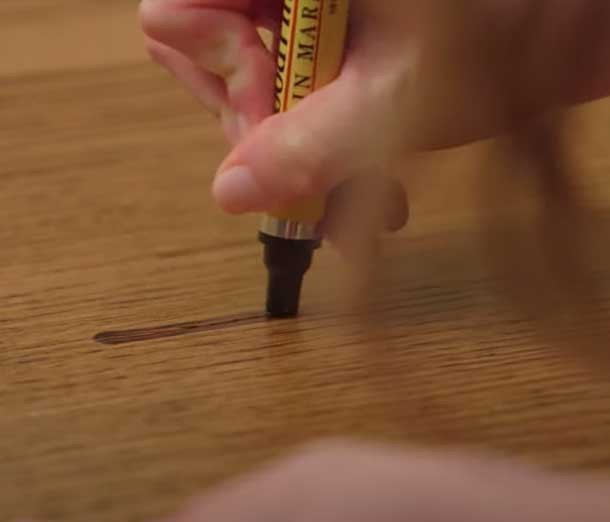
Use Wood-Furniture Touch-Up Products for the Right Defect
Minwax describes several products for maintaining wood furniture. Wood Finish Stain Markers apply matching color to table scratches, while Wood Putty and a Blend-fil Pencil are intended for nicks and similar small defects. Choose the treatment around the actual damage rather than treating every mark identically.
Test color and finish compatibility before working on a visible area, then follow the product directions for application and excess removal. Cabinet Cleaner and Hardwood Floor Cleaner serve a different purpose: removing ordinary dirt before any appropriate repair or maintenance treatment.
Separate missing color from missing material
The manufacturer describes a stain marker for scratches where matching color helps the appearance. Putty and a filling pencil are presented for nicks and small voids. These are different defects: coloring a depression does not fill it, while filling an intact surface may add material that is not needed. Inspect the mark closely before choosing the product category.
Test the color match before the visible repair
The overview mentions several marker colors but does not provide a complete matching procedure for every wood or finish. Use the current product directions and an inconspicuous test to evaluate the shade after excess is removed. The same color name can appear different against aged timber or an existing coating. A small localized repair should blend with the surrounding piece rather than introduce a conspicuous new patch.
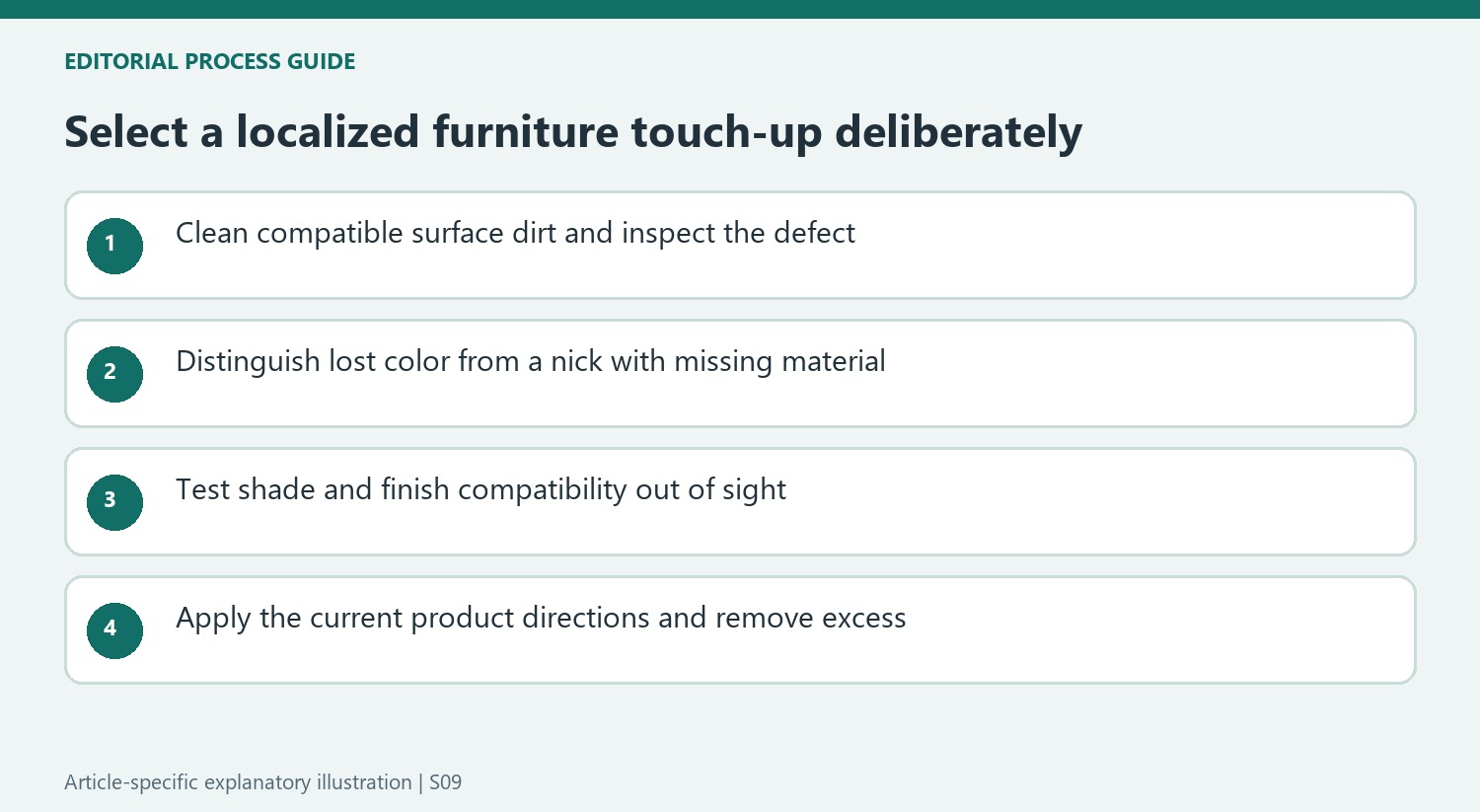
Clean before deciding whether repair is necessary
The page also introduces separate cabinet and hardwood-floor cleaners for ordinary dirt. Those are maintenance products, not replacements for a compatible filler or protective finish. Remove suitable surface soil first so the actual damage can be seen, then assess the repair. This is a manufacturer product overview rather than an independent comparison, so confirm the exact formulation, surface compatibility and drying instructions before proceeding.
Look closely enough to distinguish a scratch from a small void
The Minwax overview separates a stain marker from putty and a filling pencil because their jobs differ. A scratch that mainly exposes a lighter color may respond to a compatible color touch-up, while a nick may include missing material. Clean away appropriate surface dirt before deciding which situation is present. Coloring a depression can make it less obvious without restoring its shape, and adding filler to intact finish can create an unnecessary raised patch.
Inspect the surrounding coating as well as the center of the mark. A small blemish on a chair leg is a different project from a broad area of peeling or moisture-damaged finish. The video introduction describes convenient localized products, not a complete structural repair method. If the object is unstable or the surface is failing over a larger area, identify that problem before treating the visible nick as the entire maintenance task.
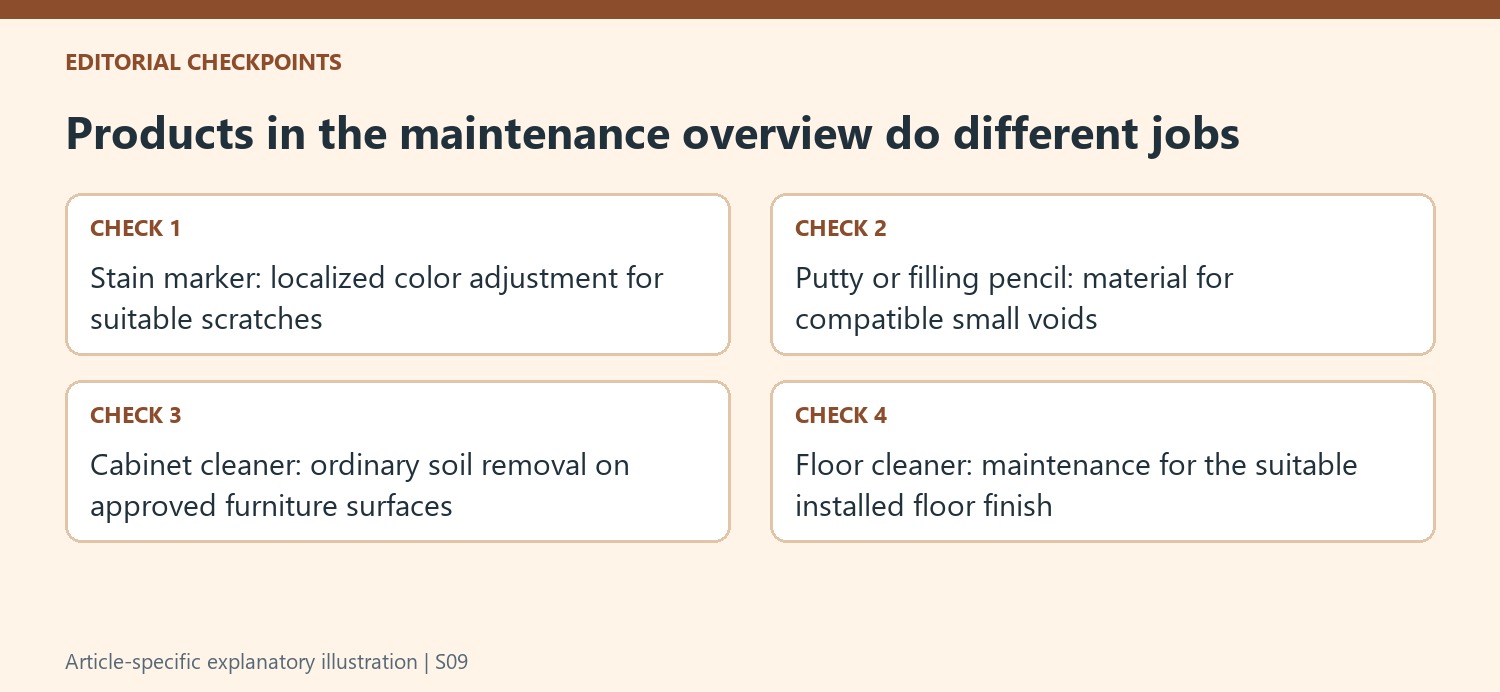
Choose the color against the existing furniture
A marker's color label describes its product range, not a guaranteed match to every aged board. Test an inconspicuous location or a representative spare piece where possible, following the application and excess-removal instructions. Judge the result after the relevant drying stage and under the room's ordinary light. The existing timber, old stain and clear coating all contribute to the appearance that the localized touch-up needs to blend with.
The overview's simple apply-and-wipe description is a useful introduction, but the current product label supplies the actual surface limitations and handling details. Read those before applying a marker over a coating that may react to it. Likewise, check whether a putty or pencil is intended for the piece's location and use. A cosmetic repair should improve a small defect without transferring color or leaving excess around an otherwise sound area.
Keep maintenance cleaners separate from repair products
Cabinet Cleaner and Hardwood Floor Cleaner appear in the same manufacturer presentation, but they serve the ordinary soil-removal stage rather than filling a nick or replacing protection. Select a cleaner for the actual surface and finish, using its directions for moisture and residue removal. Once the surface is clean and dry, the remaining defect is easier to judge and the repair can be kept more localized.
Because the source is a manufacturer's overview, it introduces product roles rather than independently comparing every repair option. Use that limited scope to organize the task: compatible cleaning first, identification of missing color or material next, then a tested localized treatment. Retain the product and shade information if the repair succeeds. That record is more helpful for a later touch-up than repeating an uncertain color choice on another visible part of the furniture.
References
- Wood Furniture Maintenance | Minwax®. minwax.com; WHERE.
Markers add color to scratches, while putty and filling pencils address nicks.


Leave a Comment
Comments (0)