
Clean a Wood Deck Gently Before Reaching for Pressure
Homes & Gardens advises clearing furniture, pots, leaves and loose debris before washing a wooden deck. The article warns that pressure washing can raise wood fibers, making the apparently quick method a source of damage. A mild, compatible soap solution and non-scratching brush offer a more controlled approach.
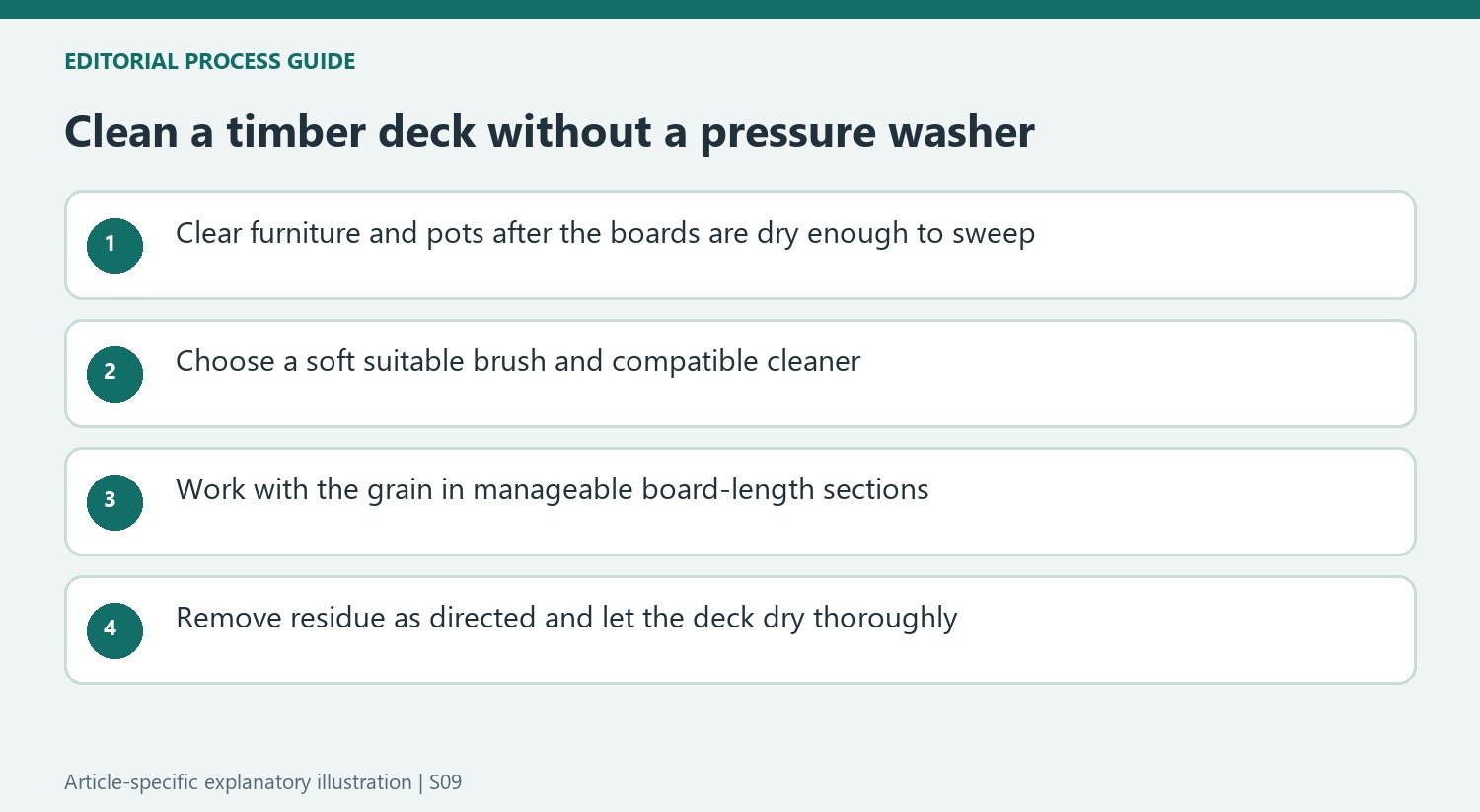
Work along the grain and protect nearby plants in accordance with the cleaning product instructions. Follow the deck and finish manufacturer's guidance rather than assuming every timber tolerates the same solution or amount of water. Rinse as directed and allow the surface to dry before returning objects, so cleaning does not leave moisture trapped beneath planters or furniture.
Choose a brush that suits the timber
Homes and Gardens recommends a long handled soft brush as a practical alternative to pressure washing. A harsh deck brush can scratch softer timber, so tool choice matters before the first scrub. Begin when the surface is dry enough to clear loose dirt effectively. Removing furniture and pots exposes hidden areas instead of cleaning only the visible walking route around them.
Clean manageable lengths of decking
Work along the grain in small sections, following the length of the boards. This gives better control over contact and rinsing than treating the entire deck at once. Use a cleaner compatible with the existing finish, checking a discreet patch and following its label. Protect nearby plants as directed. A normal hose can rinse when required; not every deck product has the same rinse instructions.
Address conditions that encourage recurring growth
The article connects persistent algae with problems such as poor drainage or nearby leaks. Cleaning the visible growth without considering those conditions may leave the deck needing another treatment quickly. Sweep away fallen leaves before they sit and stain. Let the boards dry thoroughly before furniture returns or a compatible protective treatment is applied, using that treatment's drying requirements rather than a fixed universal waiting period.
Prepare the deck so the gentle method can reach the dirt
Homes & Gardens recommends beginning after rain has cleared and the surface is dry enough to sweep effectively. Move furniture and plant pots to expose the places that are normally hidden, then collect loose debris before applying a cleaner. Look beneath containers for persistent damp patches rather than treating only the open walking route. Preparation provides access while also showing where moisture or trapped leaves may have contributed to staining.
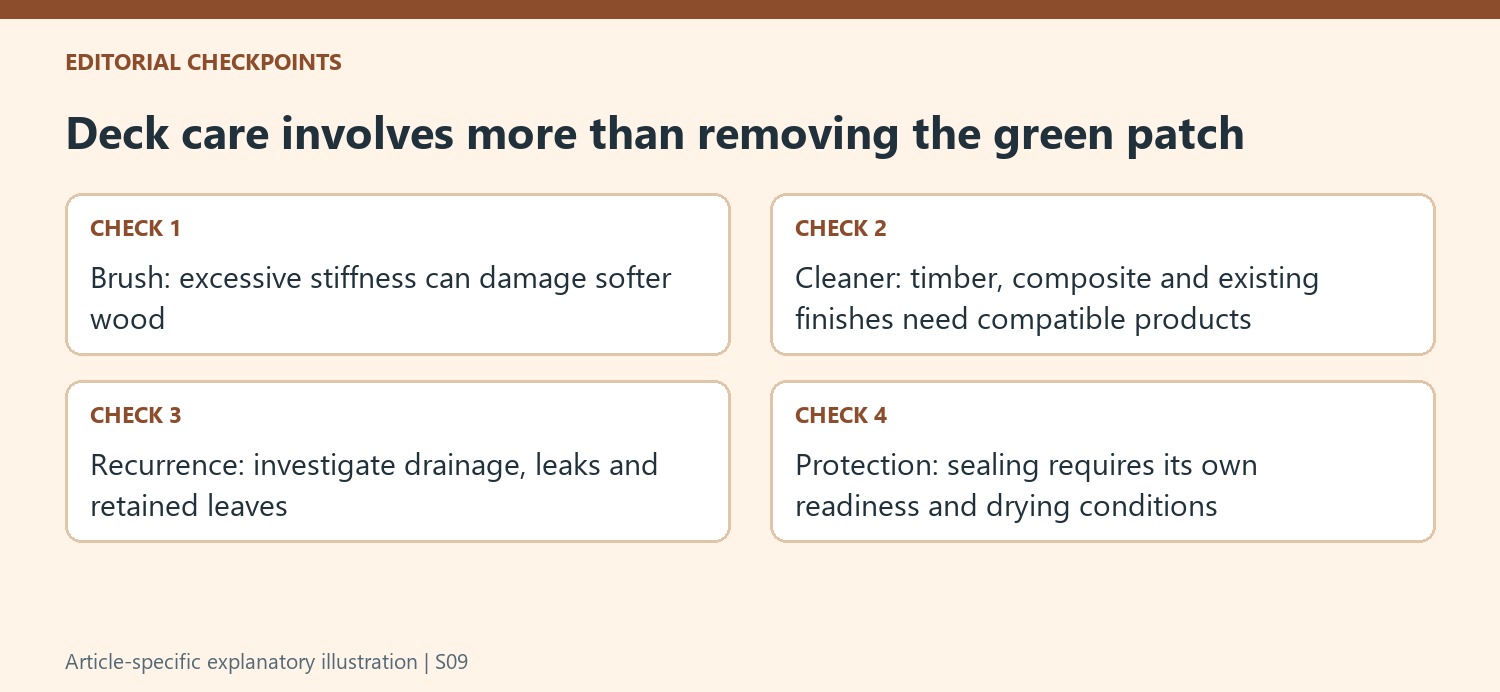
Choose a brush that suits the timber. The source cautions that very stiff deck brushes can scratch softer wood and discusses a softer long-handled alternative. A convenient handle length helps reach without making harsh bristles appropriate. Test the tool inconspicuously and work along the grain. A gentle hand-cleaning method loses its advantage if an abrasive head is used to force a weathered board back to an imagined new appearance.
Keep cleaner choice and section size under control
For ordinary dirt, the guide favors a compatible mild method; more neglected marks may need a purpose-made deck product. Check the existing finish, the product's intended material and its directions for nearby plants before application. Advice for composite decking should not automatically become a recipe for natural timber. Likewise, separate chemical options are not ingredients for a stronger improvised mixture.
Work on manageable sections along complete board lengths so contact time and residue removal stay controlled. Protect plants as the chosen label requires and keep runoff considerations within those instructions. A normal hose can provide a gentle rinse where the product calls for it, but some cleaners have different finish requirements. Read that distinction before washing away a treatment that was designed to remain or leaving behind a product that needs removal.
Address what will make the growth return
The source connects repeated algae with conditions such as inadequate drainage or a nearby leak. Inspect those factors if a patch returns soon after cleaning rather than assuming the cleaner was simply too weak. Remove fallen leaves before they remain against damp boards and cause further marks. These small interventions address the environment supporting the problem instead of demanding an ever more aggressive scrub of the same surface.
Allow thorough drying before furniture returns or any compatible sealing stage is considered. The article discusses different drying estimates, but the selected coating's instructions and the actual conditions determine readiness. Cleaning does not automatically mean the deck needs a new stain or paint film. Establish whether the goal is soil removal, a color change or protection renewal, then follow the preparation and moisture requirements of that specific later treatment.
References
- How to clean a deck without a pressure washer – avoid damaging your wood with this simple, expert-approved method. Homes and Gardens; Ottilie Blackhall; Lucy Searle.
A soft-bristled approach can remove surface grime without the fiber damage associated with aggressive washing.


Leave a Comment
Comments (0)