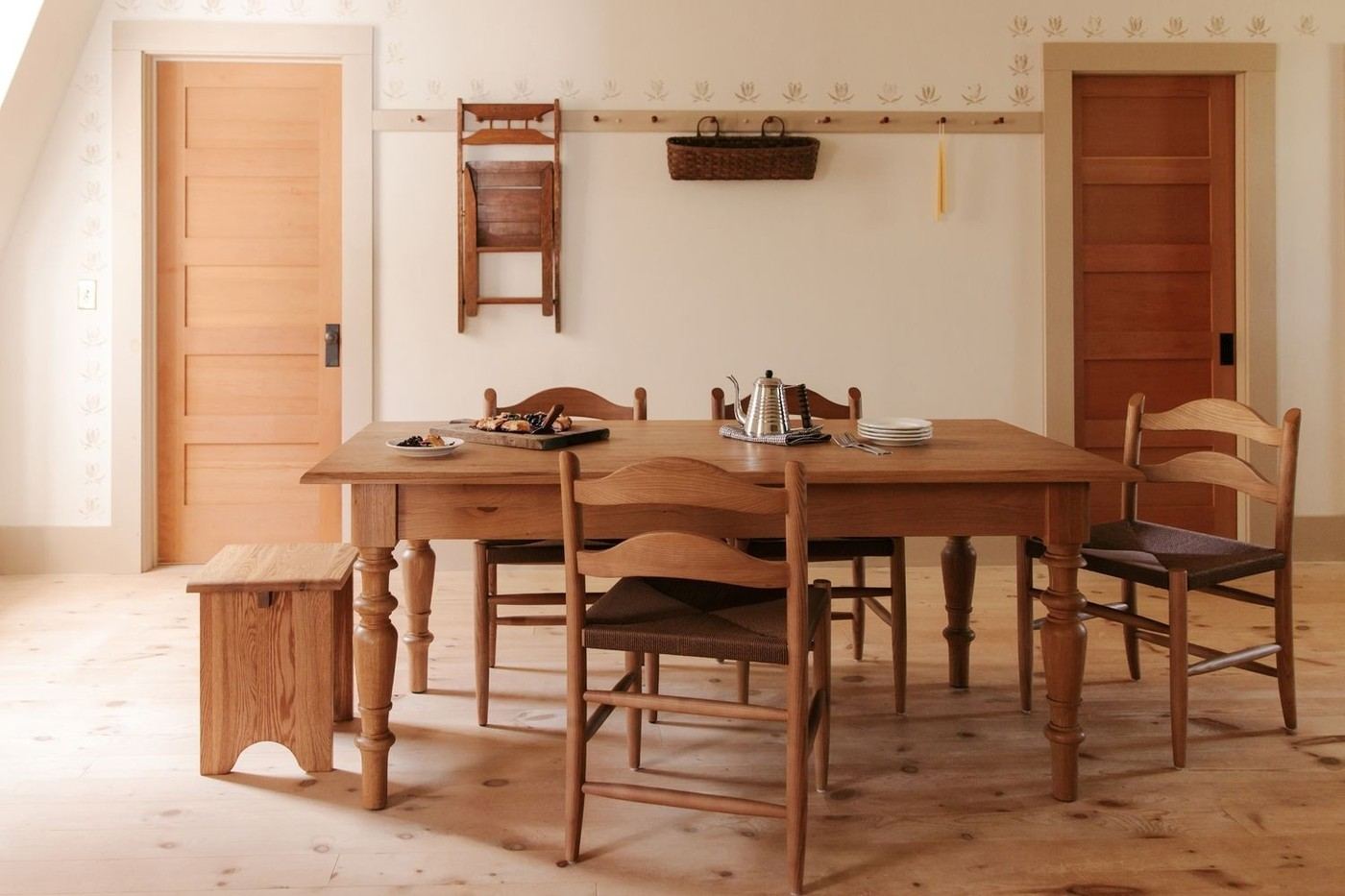
Prevent Everyday Marks While Caring for Wood Furniture
Furniture experts recommend coasters, prompt spill removal, gentle products and protection from harsh conditions.
Prevent the ordinary sources of damage
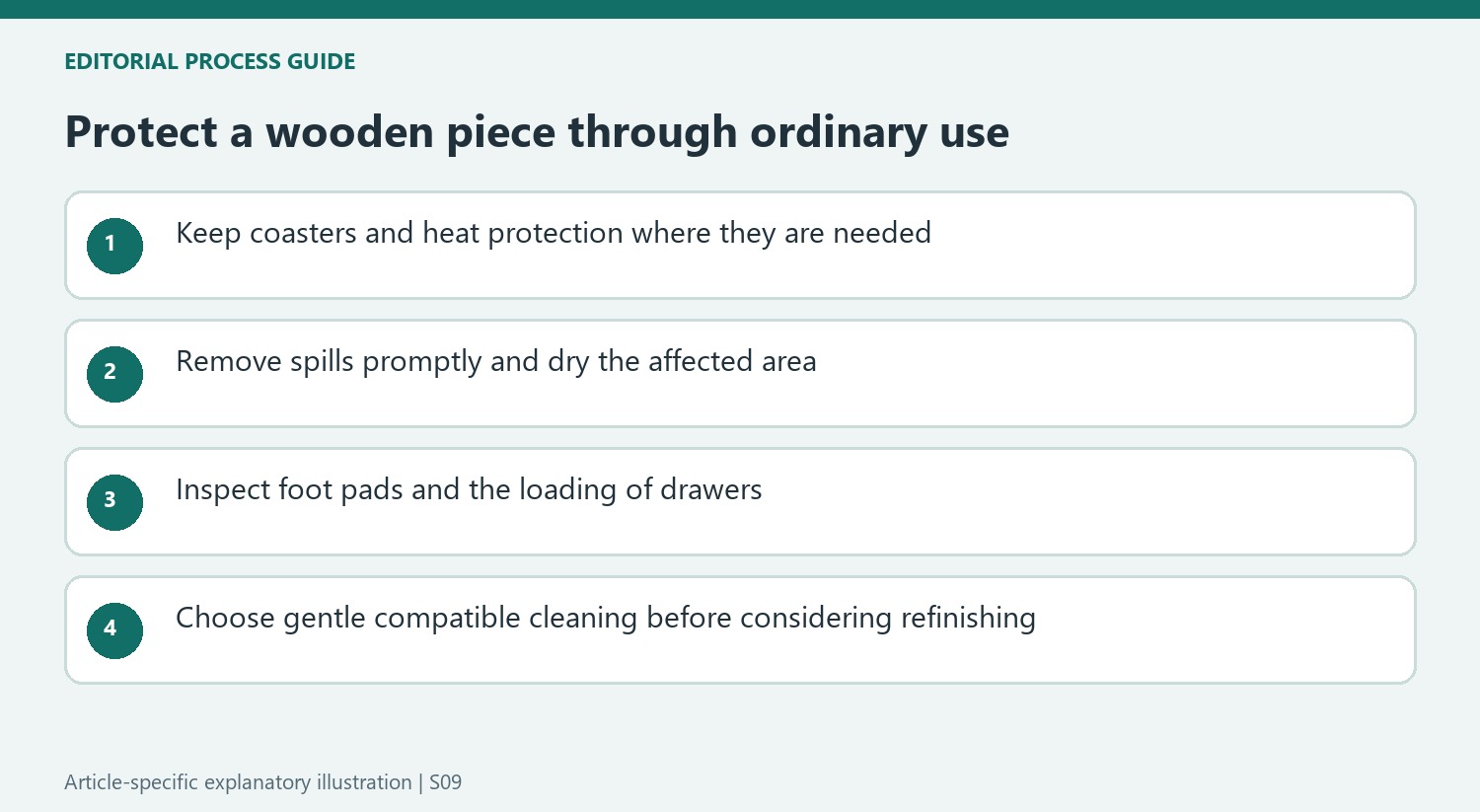
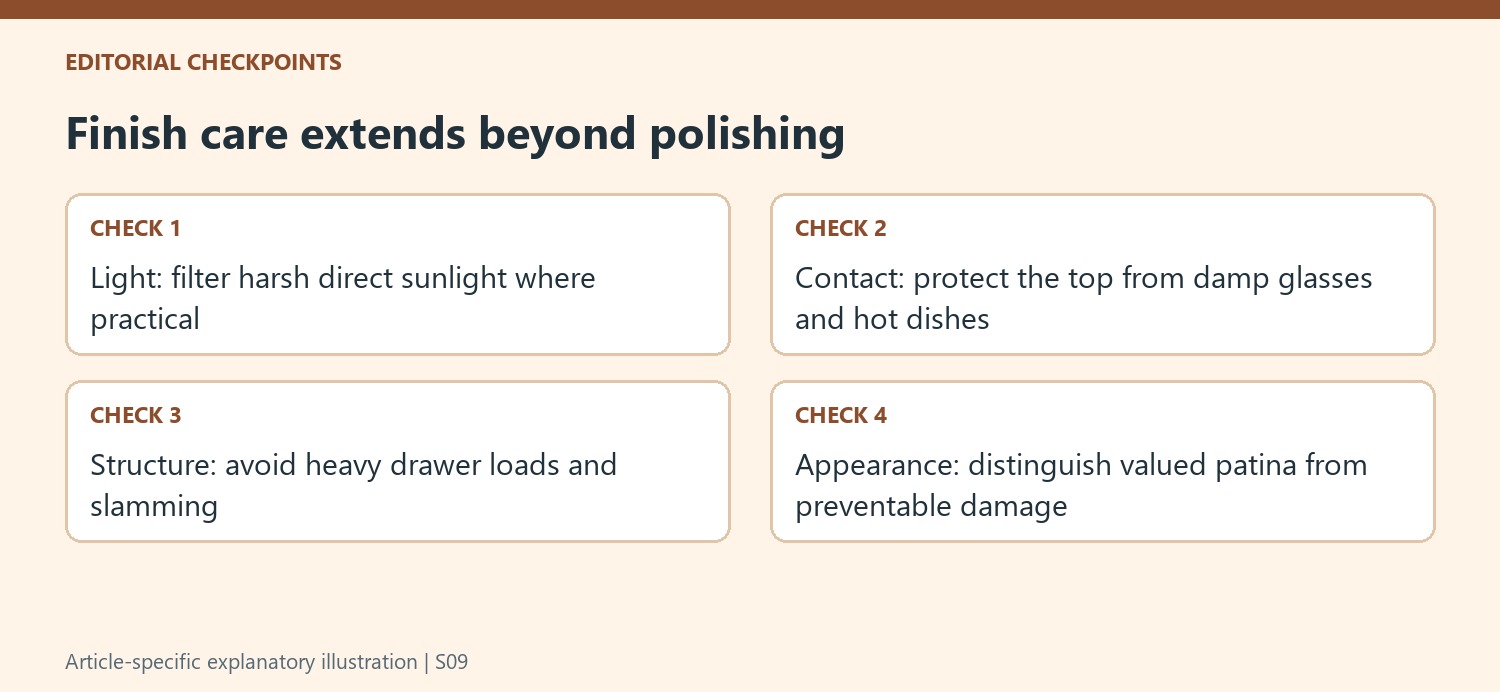
Real Simple's experts recommend coasters under damp glasses, trivets under hot dishes and pads on furniture feet. Wipe a spill promptly with a slightly damp cloth, then dry it. Filtering strong sunlight and avoiding extreme humidity can help protect the color and finish over time. These habits address the everyday causes of marks before a special stain-removal product is needed.
Maintain the furniture as well as its surface
The article recommends beginning with mild cleaning rather than powerful degreasers, bathroom products, ammonia or bleach. It also warns that overfilled drawers can strain their construction, so care extends beyond polishing the top. Close drawers and doors gently and judge the condition of the whole piece. The experts distinguish responsible maintenance from trying to keep solid wood permanently untouched: ordinary wear can develop character, while appropriate refinishing remains a separate future decision.
Distinguish wear from a maintenance failure
The furniture experts describe solid wood as a material that can develop patina and later be refinished. A small dent therefore does not mean every surface needs immediate sanding or a stronger cleaner. Their preventive advice targets more avoidable damage: sustained moisture, hot dishes, harsh sunlight and overloaded drawers. Check feet and protective pads as part of the same routine, since a chair can damage the floor while its own finish remains clean. Gentle wiping and responsible loading protect different parts of the piece. If refinishing is eventually needed, treat it as a separate project with the finish identified, rather than blending it into an ordinary weekly cleaning session.
Place prevention at the points where furniture is used
The habits described by Real Simple's furniture experts are easiest to follow when the protective item is already within reach. Put a coaster where a damp glass normally lands and a suitable trivet where hot dishes are served. Check the pads beneath chair and table feet instead of assuming an old set still provides useful separation. These small arrangements address a source of wear before a cleaning product has any role.
Spills call for prompt attention using a slightly damp cloth followed immediately by drying. That routine is different from leaving a wet towel across a tabletop while the rest of a room is tidied. Include furniture near windows in the inspection: the source recommends filtering harsh sunlight or changing placement. Protecting color and finish is an ongoing use decision, whereas cleaning can only deal with material actually left on the surface.
Inspect the structure during ordinary maintenance
Overfilled drawers can strain their own construction and the surrounding furniture, even when the exterior looks well polished. Empty enough contents to inspect how a heavily loaded drawer moves, and respect any maker's loading instructions. Do not assume that stronger drawer glides alone make the whole frame suitable for an unlimited load. Close doors and drawers gently as part of the same care routine rather than treating their working parts as separate from furniture maintenance.
This broader view also helps allocate effort. A table may need a fresh protective pad under a foot more urgently than another coat of polish on its top. A dresser may need less weight in its lower drawer rather than a stronger cleaner around the handles. Real Simple's examples connect finish care with placement and handling, making a short inspection of the whole piece more informative than repeatedly buffing the most visible panel.
Keep cleaning expectations separate from refinishing expectations
The source recommends beginning with a mild method on an otherwise sound but dirty finish. Check that the method suits the particular coating, test inconspicuously and use restrained moisture rather than vigorous pressure. Powerful degreasers, bathroom cleaners and bleach are not sensible shortcuts for this job. If a mark remains, identify whether it is surface grime or an alteration to the coating before changing either the product or the force applied.
The experts also distinguish ordinary wear from a reason to erase the furniture's history. Solid wood may develop a valued patina, and eventual refinishing is a separate project with its own preparation. A small dent does not establish that the complete piece needs sanding during a cleaning session. Agree on the desired condition first: a clean, well-maintained object can show age without being neglected, while avoidable moisture, heat and mechanical strain can still be addressed deliberately.
References
- 5 Easy Habits That Will Protect Your Wood Furniture for Decades. Real Simple; Madeline Bilis.
Furniture experts recommend coasters, prompt spill removal, gentle products and protection from harsh conditions.


Leave a Comment
Comments (0)