Keep Abrasive Sponges and Strong Cleaners Off Wood Furniture
The Spruce explains how ammonia, alcohol, excess water and melamine foam can damage a protective coating.
Do not borrow a cleaner from another surface
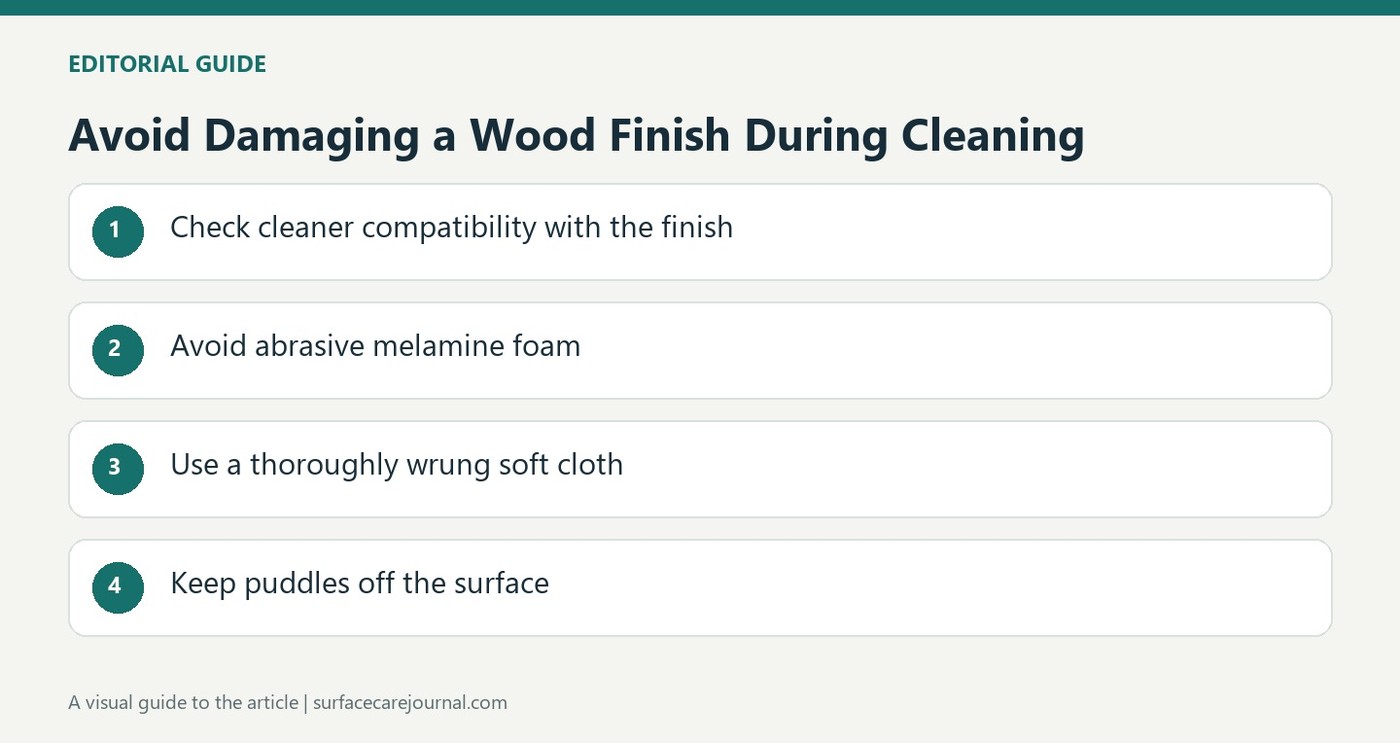
The Spruce identifies ammonia-based products, rubbing alcohol, oven cleaners and many glass cleaners as poor choices for wood furniture. Their ability to clean glass or remove baked-on grease does not make them compatible with a furniture finish. Melamine foam is another concern because its abrasive action can remove part of the surface. The article's emphasis is preserving the coating rather than finding the strongest available product.
Control the amount of water
A dripping cloth or puddle also presents a risk, even if the liquid is marketed for wood. The experts describe swelling, warping and other moisture damage, particularly on older pieces. For routine cleaning they recommend a soft, lint-free microfiber cloth that has been dampened and thoroughly wrung out. For compatible deeper cleaning, a few drops of mild dish soap in water can be used sparingly, with the surface wiped clean as work proceeds.
Read the ingredients and tool action together
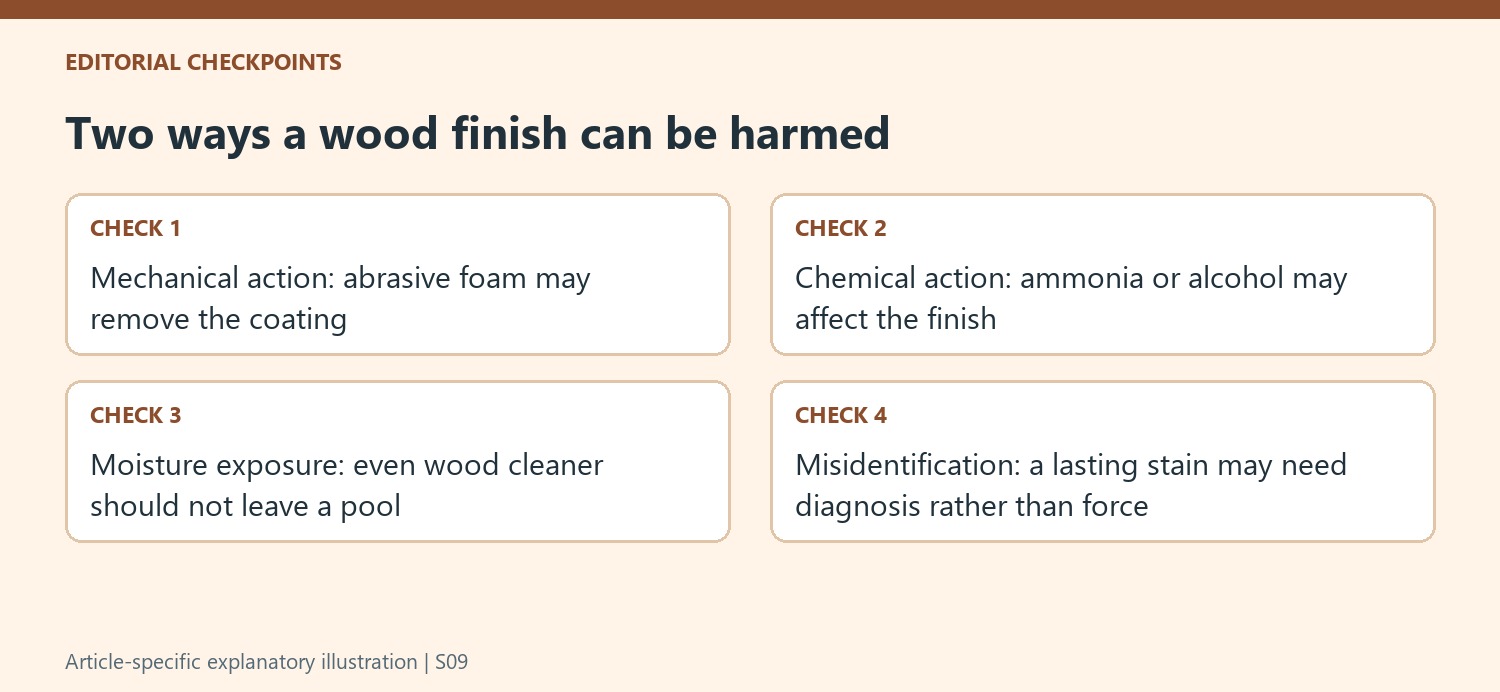
The experts identify both chemical and mechanical routes to damage. A glass cleaner may contain ammonia or alcohol, while a melamine sponge can remove a coating through abrasion even without a strong added detergent. Neither a familiar brand nor the absence of an obvious harsh smell establishes suitability. Look for a cleaner approved for the particular finished surface and use a soft tool. The recommendation for a well-wrung microfiber cloth also applies when a product is specifically sold for wood: leaving a pool of it still introduces too much liquid. If a mark persists after gentle compatible cleaning, investigate its cause before increasing pressure or changing to a solvent.
Consider how the tool works, even without added chemicals
The Spruce's warning about melamine foam is particularly useful when a cleaning tool is advertised mainly for its apparent simplicity. Its action is abrasive, so removing a stubborn mark can also remove some of the protective surface. A sponge that succeeds on a different household material is not evidence that a varnished table will tolerate the same pressure. Check the permitted tool as carefully as the liquid cleaner.
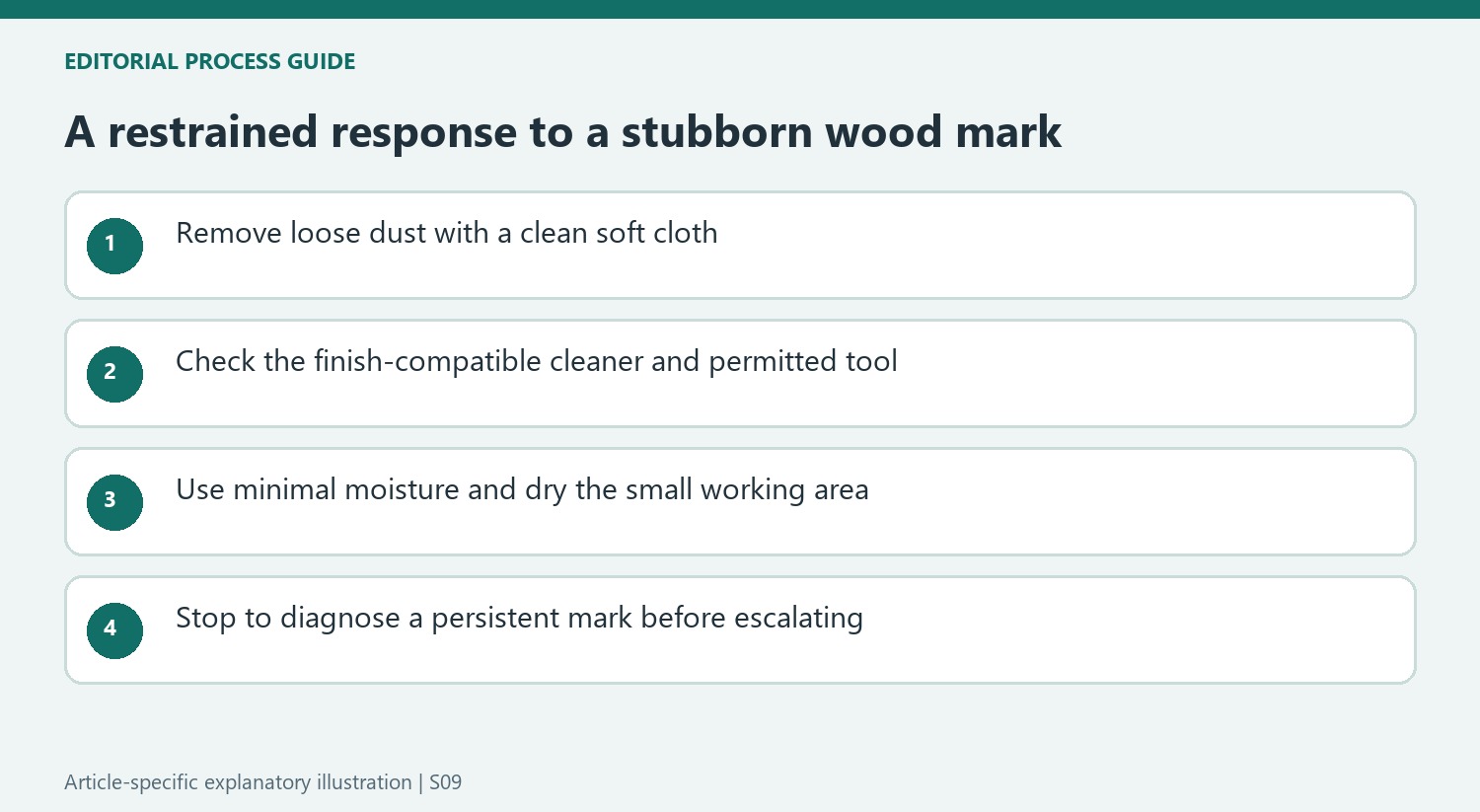
Use a clean, soft cloth for the routine described by the cleaning experts, and stop if repeated gentle passes do not change the mark. That pause helps distinguish loose dirt from a mark within or beneath the finish. Increasing pressure can produce a visibly different patch even when no solvent was used. On a valuable or unidentified piece, determining the coating is more useful than proving that an aggressive sponge can make the spot disappear.
Keep purpose-specific products away from accidental substitutions
The article groups several cleaners by the damage they can cause to a furniture coating. Glass products may contain ammonia or alcohol, while an oven cleaner's strength is intended for a very different surface and job. Avoid making a substitution simply because the stronger bottle is nearby. The relevant question is whether the formulation is approved for the existing furniture finish, not whether it removes dirt efficiently somewhere else in the home.
The same caution applies when working around a wood-framed mirror or a mixed-material piece. Put a suitable cleaner on the cloth rather than letting spray travel onto neighboring wood, and follow the care requirements for each material. A bottle sold for wood still needs restrained application: the experts' moisture warning concerns the amount left on the furniture as well as the product's ingredients. A familiar label does not make a puddle harmless.
Judge the result after gentle cleaning and drying
The recommended starting point is a lint-free microfiber cloth dampened lightly and wrung thoroughly. Where a compatible finish permits deeper cleaning, the article describes adding a few drops of mild dish soap to water. Work over a small area and wipe clean as progress is made, keeping a dry cloth ready. This is a controlled surface treatment rather than an invitation to wash the furniture as though it were a sink.
Afterward, allow the surface to dry and inspect whether the issue was removed or merely looks different when damp. Persistent clouding, discoloration or roughness may require diagnosis instead of another round with a new chemical. Record the cleaner and tool already used before seeking advice. Avoid cycling through alcohol, abrasive foam and stronger products on the same patch, because that can obscure the original problem while adding a fresh one to the finish.
References
- 6 Things You Should Never Use to Clean Wood Furniture, Cleaning Pros Say. The Spruce; Melissa Epifano.
The Spruce explains how ammonia, alcohol, excess water and melamine foam can damage a protective coating.


Leave a Comment
Comments (0)