Give Wooden Garden Furniture a Soft-Brush Clean
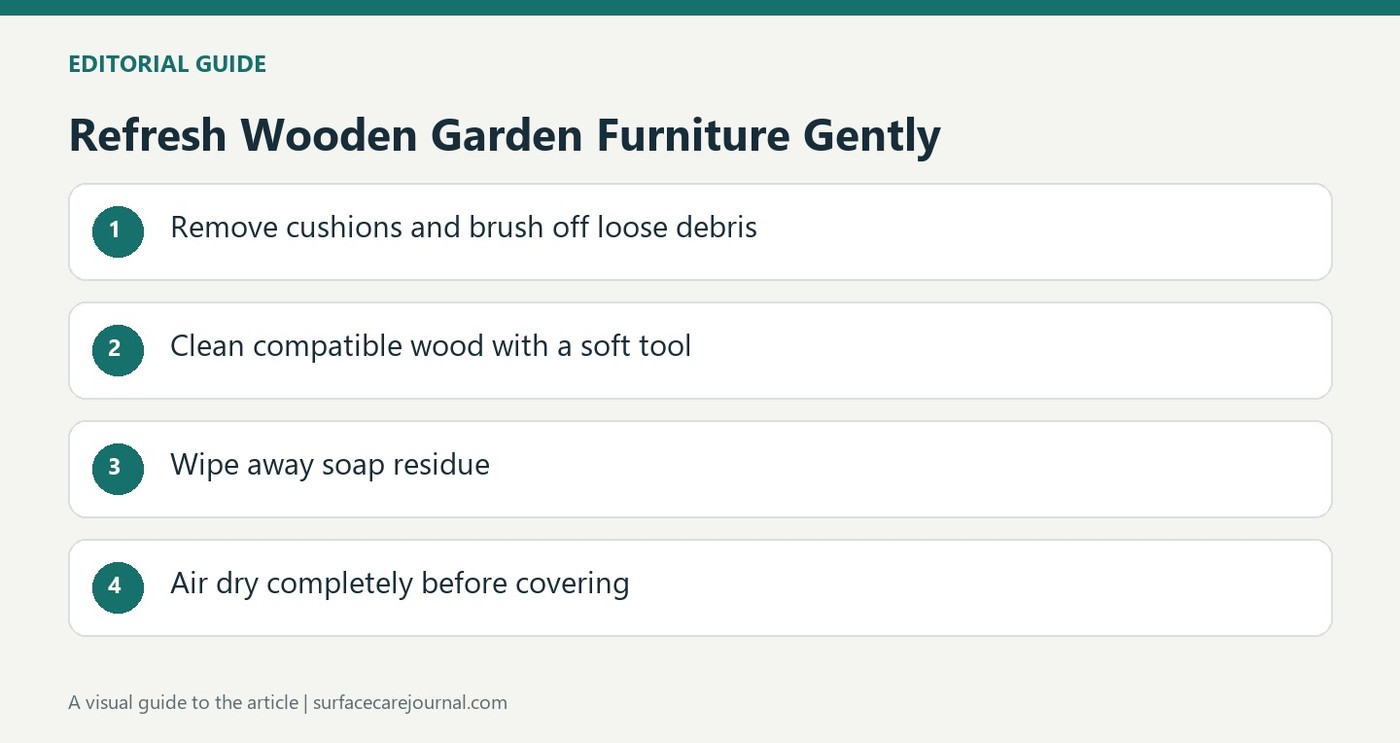
Ideal Home's garden-furniture guide separates wood, metal, plastic and rattan care rather than prescribing one treatment for the whole patio. For wood, remove cushions and clear loose leaves, food residue and other debris before wet cleaning. A soft-bristled brush or microfiber cloth helps loosen dirt without scratching the surface.
The guide describes mild soapy water for suitable wooden furniture, followed by careful residue removal and drying. Check the wood and finish manufacturer's directions before proceeding, especially for weathered or coated pieces. Keeping organic debris from accumulating supports regular maintenance, but aggressive pressure or abrasive bristles can create a new surface problem while removing the old dirt.
Remove the soap before it dries
Ideal Home places a damp-cloth wipe after the gentle soapy clean so detergent and loosened dirt do not dry into marks. Use a clean section of cloth as residue transfers, and attend to joints and slats without soaking them. The required amount of water and any approved treatment depend on the wood and its finish. A procedure for metal or plastic elsewhere in the same guide is not automatically suitable for a timber set.
Let the furniture dry before covering
The source stresses complete air drying before the cleaned pieces are covered or put into storage. Trapping moisture under a cover can encourage later mold problems. Remove or clean cushions separately according to their instructions, and wait until the wooden surfaces and joints have dried. A cover protects against later weather exposure; it is not a substitute for finishing the drying stage.

Reduce debris between deeper cleans
The guide suggests short maintenance sessions to remove leaves and fresh marks, alongside deeper cleaning around seasonal storage. That reduces the organic material sitting against the surface. Choose any protective coating from the furniture maker's recommendations instead of assuming that a paint or varnish suits every wood. Routine soft-brush care preserves the surface more predictably than an occasional aggressive attempt to restore it.
Prepare the furniture without importing another material's method
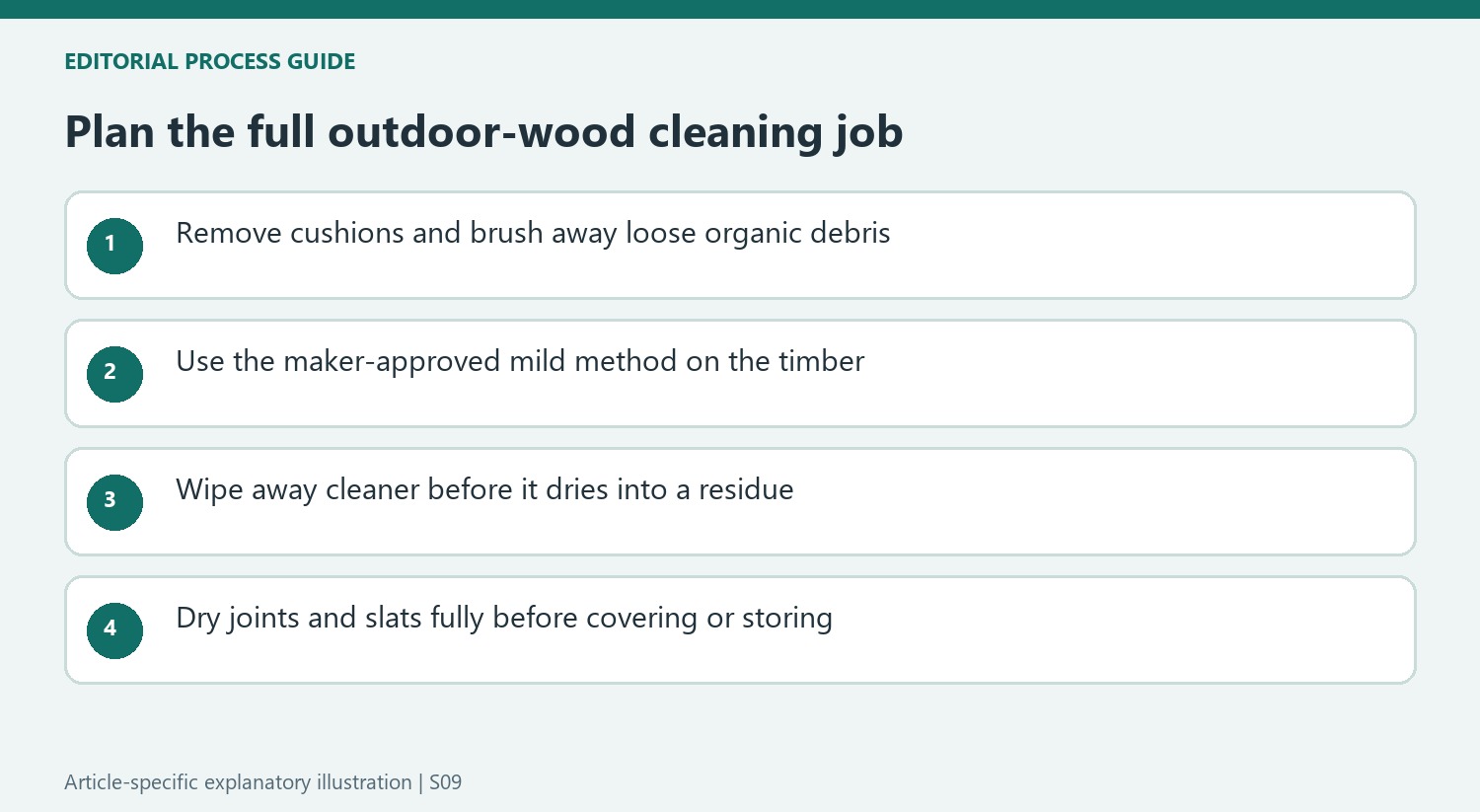
The Ideal Home guide covers several kinds of outdoor furniture, so the wood instructions need to be kept separate from its advice for metal or plastic. A cleaner discussed elsewhere in the article is not automatically a safe alternative for timber. Find the care instructions for the actual wood and finish, then remove cushions and portable accessories before assessing the frame. That provides access without exposing upholstery to the furniture-cleaning solution.
Begin with loose leaves, dust, food debris and material trapped between slats. A soft brush or suitable cloth can remove this without demanding a stronger liquid. Pay attention to the undersides and places that a cushion usually conceals, but do not use hard bristles to force a heavily weathered surface back to a new appearance. Weathering, surface dirt and a damaged coating can coexist and may call for different decisions.
Make rinsing and drying part of the planned job
Where the manufacturer permits mild soapy cleaning, work in sections that can be wiped before the solution dries into a residue. Use a clean damp cloth to lift the remaining cleaner rather than repeatedly redistributing dirty water. Joints, end grain and narrow gaps deserve particular care because a soaked recess can stay wet after the broad top looks ready. Avoid interpreting a light wipe as permission to saturate the complete frame.
The article emphasizes allowing the furniture to dry before cushions return or a cover is fitted. Plan enough time and an appropriate place for that stage rather than treating it as an incidental finish. Check the maker's guidance on direct sun and drying conditions for the specific surface. A cover placed over retained moisture can undermine the work even when the visible seat was cleaned carefully and the fabric cover itself appears dry.
Distinguish seasonal care from cosmetic restoration
A quick removal of fresh organic debris is easier to incorporate into ordinary garden use than an occasional rescue of heavily soiled furniture. The source recommends attention around the beginning and end of the outdoor season, with smaller cleanups between those points. Use these occasions to inspect contact points, slats and accessories as well as the most visible tabletop. Clean cushions according to their own instructions rather than extending the timber method to their fabric.
Some outdoor woods are deliberately allowed to develop a silver-gray appearance. That change alone does not prove that aggressive scrubbing or a new painted coating is necessary. If a treatment is wanted, confirm the manufacturer's recommendation and whether the old finish needs specific preparation. After cleaning and complete drying, choose suitable indoor storage or an appropriate cover. Cleaning, optional surface treatment and storage are related stages, but none should be improvised merely to make the wood look uniformly new.
References
- How to clean garden furniture so it looks brand-new – the best ways to tackle wooden, metal, plastic and rattan sets. Ideal Home; Lauren Bradbury; Jenny McFarlane; Sophie King.
Preparing the surface and avoiding scratches matter as much as the cleaning solution.


Leave a Comment
Comments (0)