Choose Wood-Furniture Cleaning Around the Existing Finish
BHG recommends collecting dust and removing moisture while avoiding assumptions about general-purpose sprays.
Collect the dust first
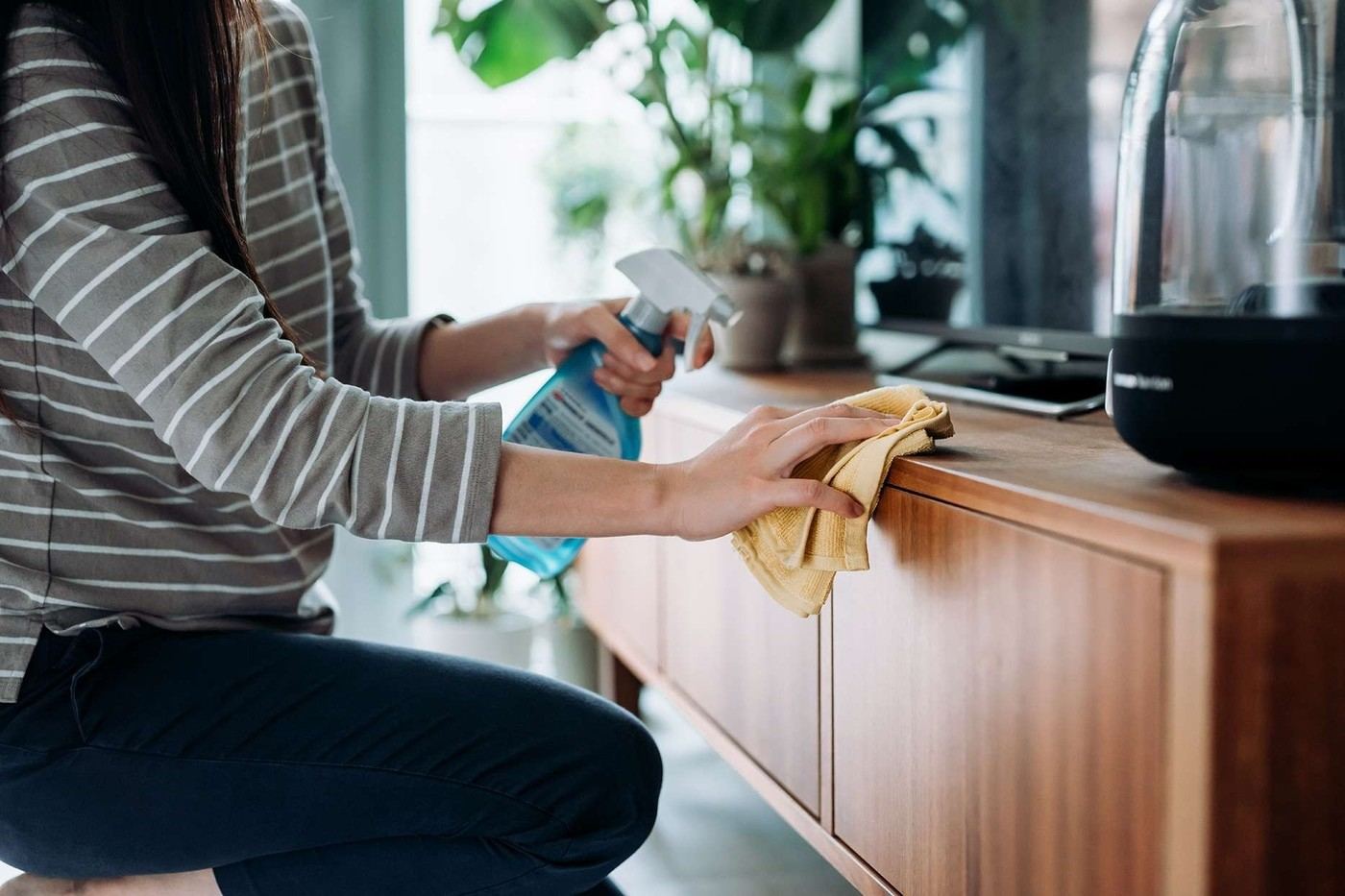
Better Homes and Gardens recommends a soft dusting tool that holds particles rather than merely moving them. A very lightly dampened microfiber cloth can capture dust, followed by a dry towel to remove excess moisture. Regular attention prevents the filmy accumulation that can scratch a surface or leave it looking neglected. Unfinished wood requires particular care because dirt and skin oils can be absorbed more readily.
Avoid adding incompatible products
The guide cautions against assuming that a general-purpose spray is suitable for every wood finish. Past polish and spray residues can also complicate later refinishing. For sticky spots, it describes mild detergent in water applied with a nearly dry cloth, followed by rinsing and immediate drying. Wax care is a separate process, with thin coats and thorough removal of excess. Select it only for an appropriate finish rather than layering products on an unidentified surface.
Keep waxing separate from cleaning
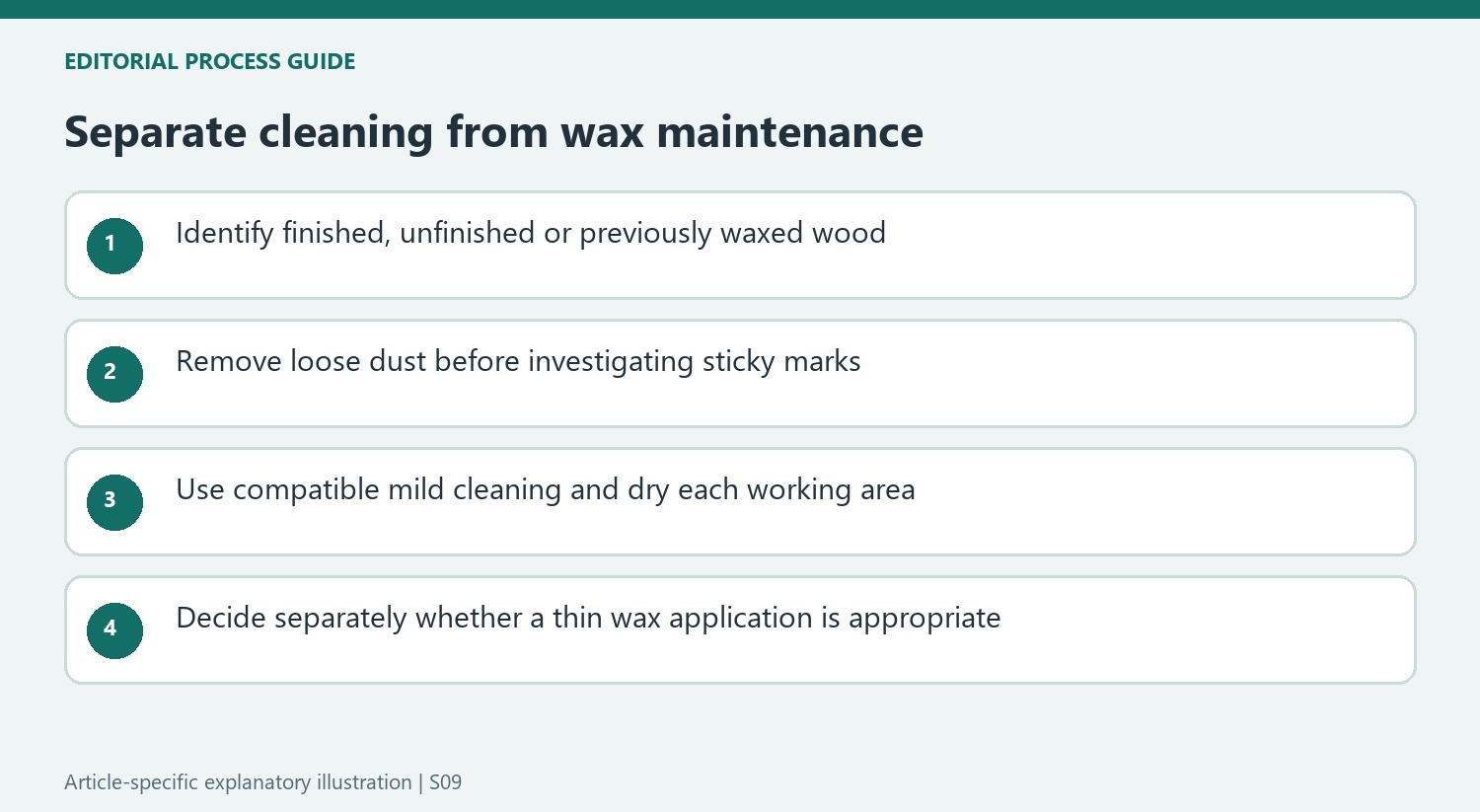
The guide's wax procedure uses small areas, light coats and repeated wiping to remove excess before buffing. It also warns that liquid or aerosol polishes can dissolve an existing wax layer and produce haze. Those details explain why adding another product is not a neutral choice. Identify whether the furniture is already waxed and follow compatible care instructions before changing the system. Scratches, sticky dirt and accumulated finish products are different problems, even if all make the surface look dull. Cleaning should remove the dirt without automatically introducing a new coating, and an unidentified heirloom is a reason to seek specialist guidance rather than reproduce a complete refinishing procedure.
Identify the surface before selecting a bottle
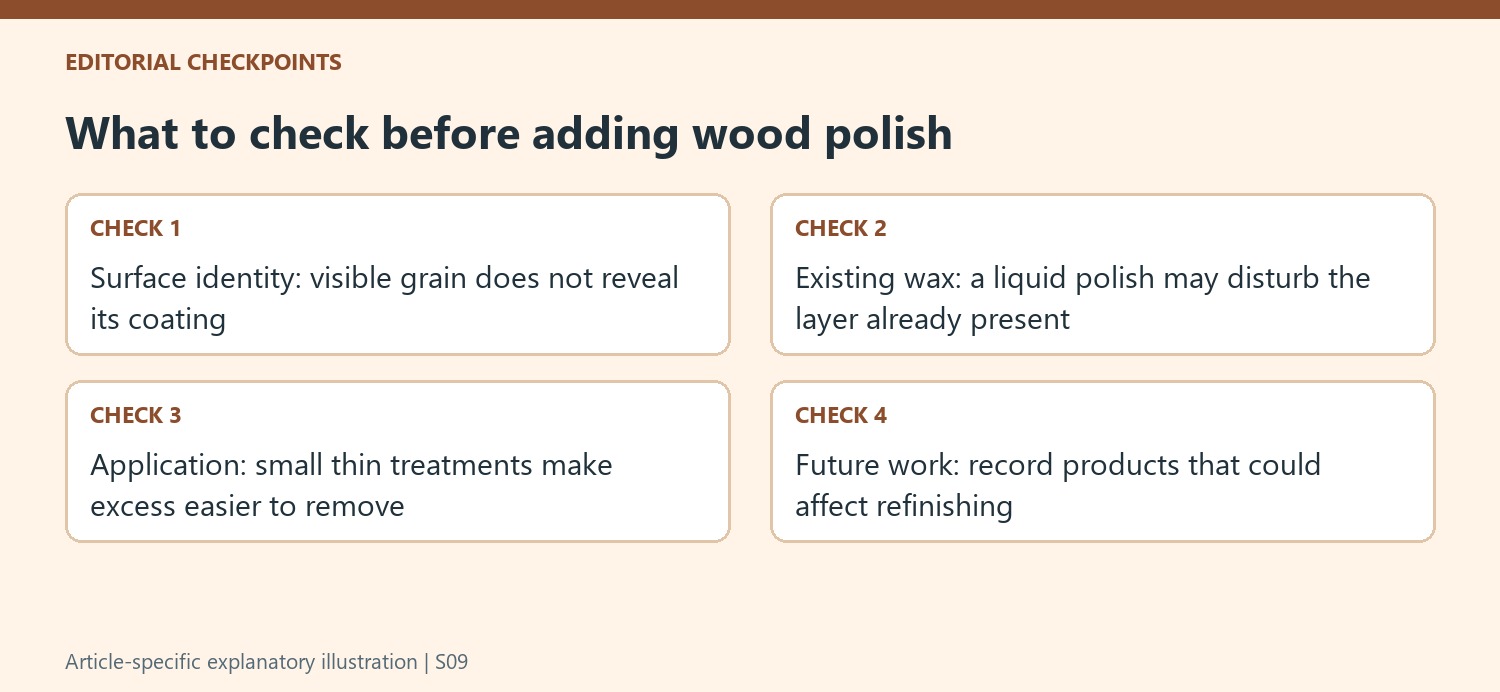
Better Homes & Gardens distinguishes the relatively protected surface of finished furniture from exposed wood that can absorb grime and skin oils. The same visible wood grain therefore does not establish that two pieces accept the same cleaner. Look for care instructions, prior maintenance records or reliable identification of the coating. A shop label saying only that an object is wooden leaves the most important cleaning question unanswered.
This distinction is especially useful around handles, chair backs and drawer fronts, where repeated contact can produce a film that resembles a failing finish. Start with loose dust and inspect what remains before choosing a treatment. An all-purpose spray or homemade mixture should not be assumed suitable because the surrounding kitchen counter tolerates it. Unknown or historically important furniture deserves a cautious assessment before wet cleaning changes the evidence on its surface.
Make cleaning and waxing two separate decisions
A sticky mark may need compatible mild cleaning without any subsequent polish. The BHG method emphasizes a cloth wrung nearly dry, followed by removal of the cleaner and prompt drying. Use a small working area so residue does not sit while the rest of the piece is tackled. A clean cloth face helps avoid carrying loosened grime into another carved detail or spreading a greasy film over a previously clean panel.
Waxing has a different purpose and should follow the requirements of the existing finish. The article describes applying very thin amounts over small areas and removing excess before buffing. A thick layer is not a shortcut to a better surface; it creates more material to spread and remove. If a piece already has a wax treatment, determine whether cleaning has actually left a need for renewal rather than automatically recoating every visit.
Avoid product combinations that complicate later care
BHG warns that some liquid or aerosol polishes can dissolve an existing wax layer and produce a hazy result. That is a reason to consider the coating already present, not simply the latest product's promise of shine. Do not stack several bottles onto a disappointing first result. Let the surface dry, record what was used and compare the appearance with the small test area before taking any additional action.
The same maintenance history can matter during later refinishing, when residues may interfere with obtaining a consistent new surface. Keep the cleaner and wax names with the furniture's care information if they are known. For an inherited piece with an unidentified coating, advice from a specialist can prevent a routine wipe from turning into an avoidable restoration task. The practical aim is a clean, stable surface, with any protective treatment chosen deliberately afterward.
References
- How to Clean Wood Furniture to Make It Look New Again. Better Homes & Gardens; Nicole Bradley.
BHG recommends collecting dust and removing moisture while avoiding assumptions about general-purpose sprays.


Leave a Comment
Comments (0)