Use a Barely Damp Cloth for Routine Wood-Furniture Care
The Spruce separates everyday dust removal from deeper treatment of accumulated polish and difficult marks.
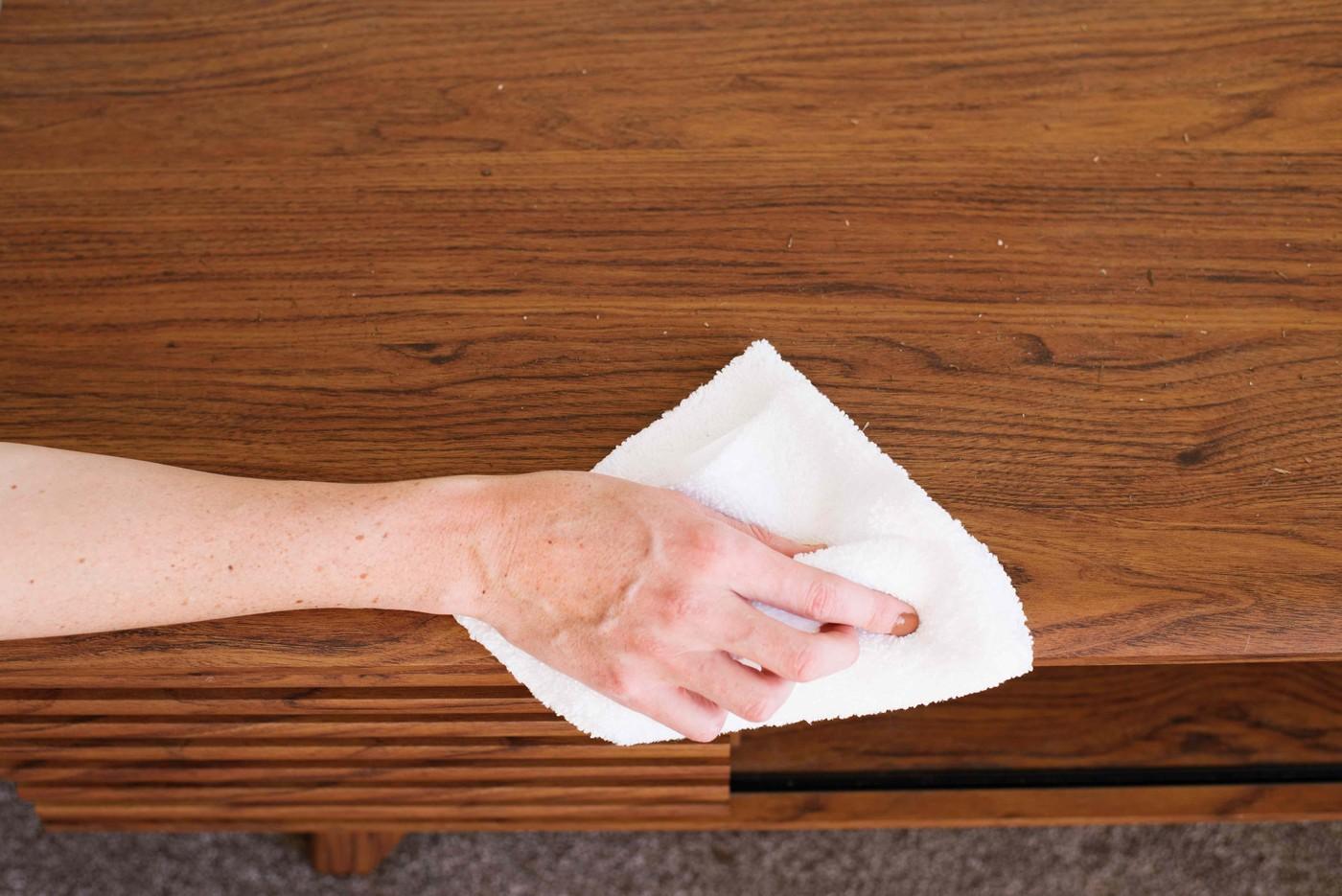
Keep the cloth barely damp
The Spruce explains that dust can be abrasive even when it looks harmless. Its routine starts with a soft cloth that captures particles rather than repeatedly sending them into the air. Lightly misting a microfiber cloth is different from soaking the furniture. Work over the surface and smaller supports, then dry the area. Food and drink spills should be removed promptly because standing moisture can discolor wood or damage the finish.
Treat deeper work as a separate decision
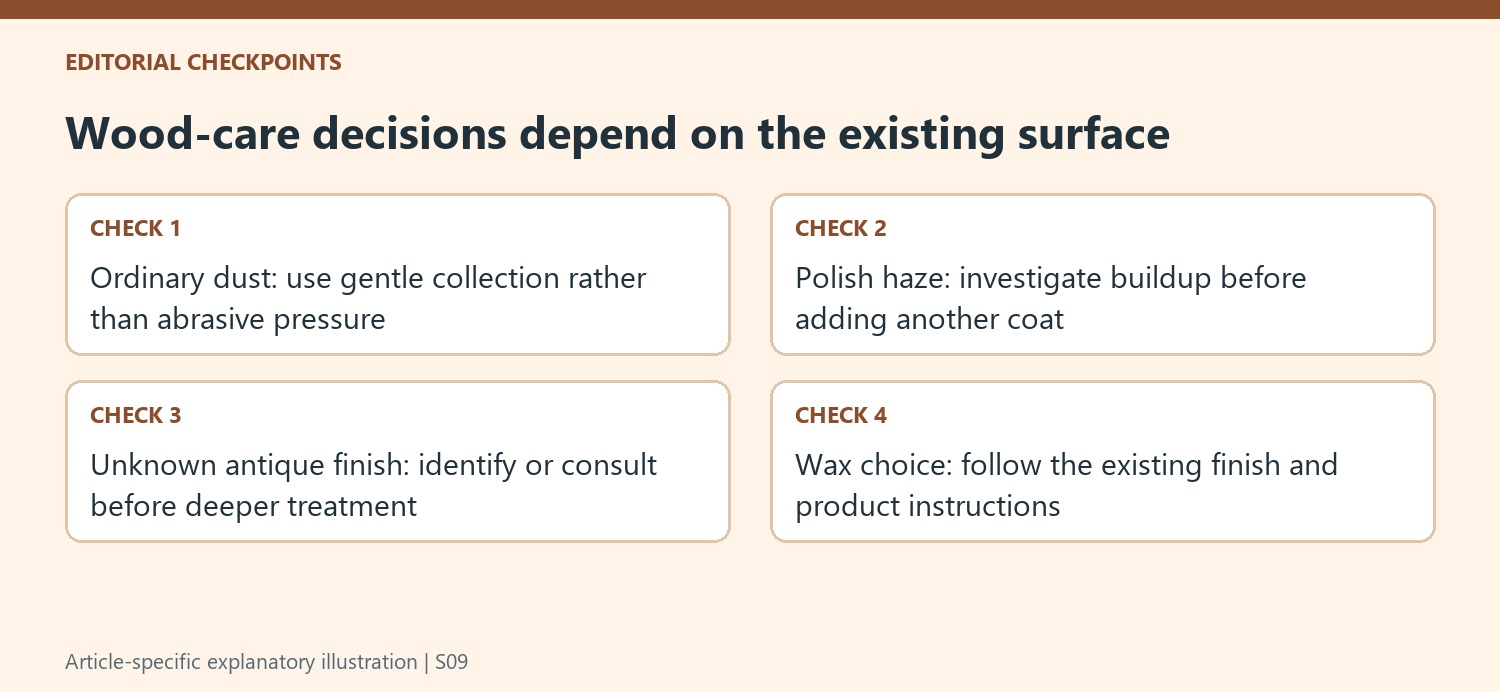
Cloudiness can also come from accumulated wax or polish, so adding more shine is not always the answer. The guide describes deeper methods but recommends particular caution with valuable antique furniture, whose finish can affect its value. Routine dusting does not require experimenting with stronger solvents. Identify the finish and the reason for the mark before moving beyond ordinary cleaning, and seek specialist advice for a collectible piece.
Distinguish accumulated polish from ordinary dust
The source notes that repeated wax or polish can eventually produce a dark or cloudy film. That condition calls for identifying the residue and finish, not simply applying another layer for more shine. Its stronger-cleaning discussion includes solvents and specific handling requirements, so it should not be treated as the next automatic step after dusting. First inspect a small hidden area and consult the furniture maker's care guidance. Legs, arms and smaller supports also need routine attention, since removing dust only from the top leaves particles elsewhere on the piece. If the finish is unknown or historically valuable, preserving it takes priority over making the surface look newly polished.
Separate dirt, accumulated coating and damaged finish
A weekly wipe and an attempt to remove years of polish are different jobs. The Spruce's guidance starts with collecting ordinary dust before considering a deeper treatment. Examine the surface in good light after that first pass: loose particles, a sticky film and a pale mark left by a glass do not establish the same cause. Applying another coat of polish to every dull area can obscure the distinction rather than resolve it.
The article describes stronger ways of addressing old buildup, but those options depend on what protects the wood. Do not treat tea or a solvent as an automatic second step for an unidentified heirloom. If the finish is unknown, especially on a valuable antique, the appropriate next action is to identify it or seek a furniture specialist's advice. A small cleaning project should not accidentally become a stripping experiment.
Set out a controlled routine before wet cleaning
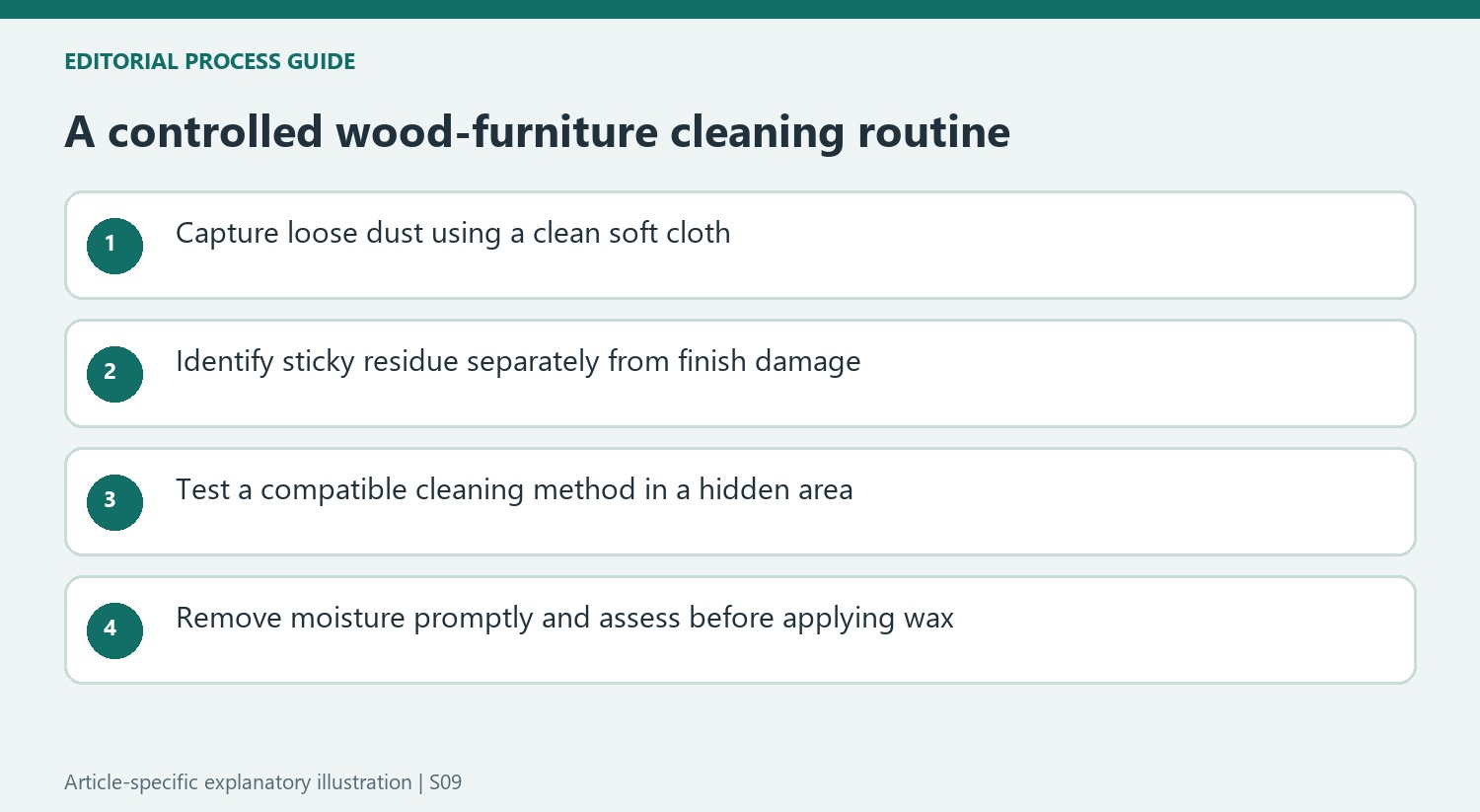
Remove objects from the top so the cloth can reach the full surface, including the edges normally hidden by a lamp or tray. Work with a soft cloth that captures dust and replace or refold it when it becomes dirty. A barely damp cloth can help contain particles, but the furniture should never receive a drifting spray or a puddle. Keep a dry cloth available for immediate follow-up.
The source includes a diluted dish-detergent method for neglected grime. Its usefulness still relies on a compatible finish, restrained moisture and a small inconspicuous trial. Wring out the cloth thoroughly, clean a manageable area and remove moisture as work proceeds. Include chair arms and supporting parts instead of repeatedly concentrating every cleaning product on the tabletop, while avoiding soaking joints and carved recesses that are difficult to dry.
Choose a maintenance coating only when one is needed
The Spruce distinguishes the appearance and persistence of different waxes and polishes. Paste wax can last longer than a light liquid application, while the immediate shine from polish may be short-lived. Those differences do not mean that every finished piece needs another coating each week. Establish what is already on the furniture and follow the finish or product maker's maintenance instructions before adding a new layer.
An aerosol's easy application also says little about its compatibility. The article flags silicone and solvent ingredients as possible complications for a varnished surface. If cleaning reveals persistent cloudiness, stop and investigate the residue instead of trying several products in succession. Keeping a note of the product used and the result of the hidden-area test makes later care more informed, particularly if a professional eventually needs to distinguish an old coating from new contamination.
References
- Help Wood Furniture Look Brand-New (and Last Longer) With These Tips. The Spruce; Mary Marlowe Leverette.
The Spruce separates everyday dust removal from deeper treatment of accumulated polish and difficult marks.


Leave a Comment
Comments (0)