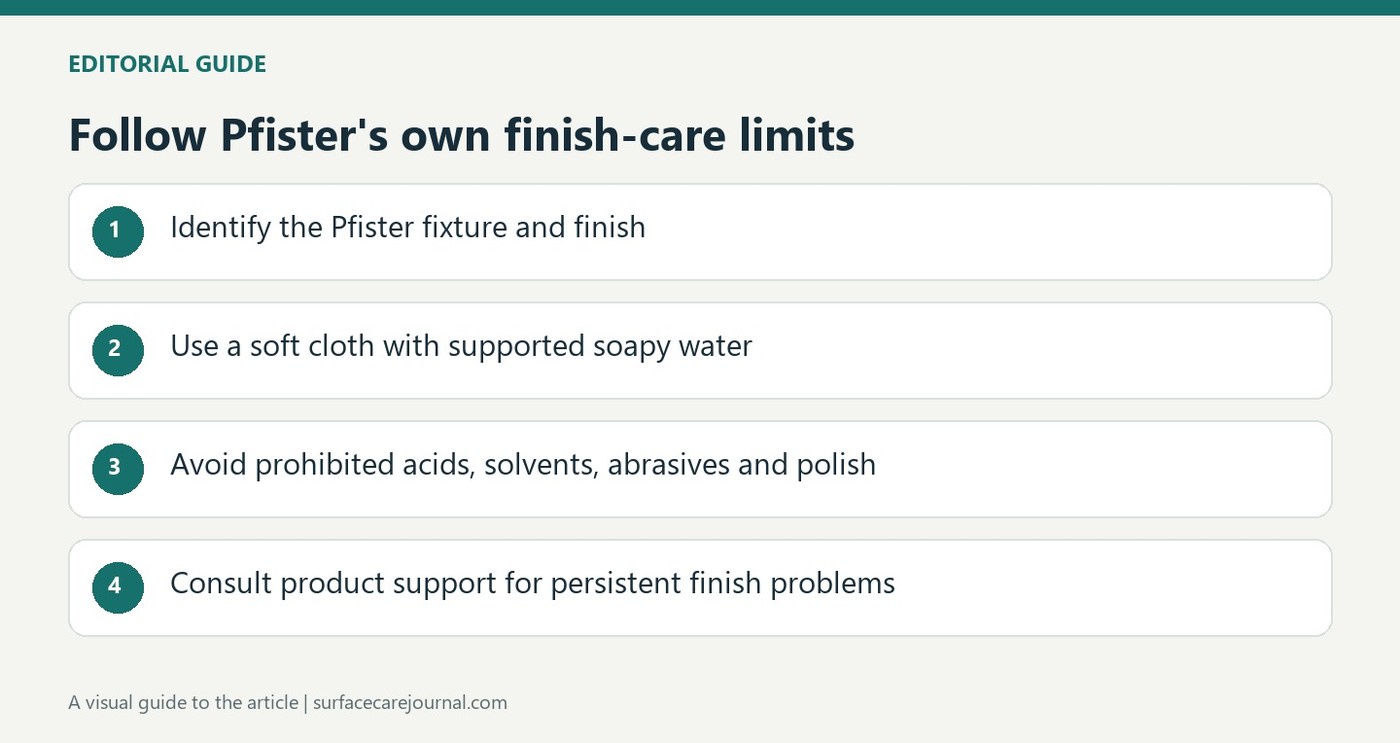
Follow Pfister's finish-care limits on chrome fixtures
A damp cloth is the routine starting point
Pfister's faucet-care page recommends a soft damp cloth and warm soapy water for regular cleaning. Apply that method to the appropriate Pfister product instead of adopting a generic chrome-polishing recipe. A plated fixture may look robust, but its decorative surface can be damaged by a product that removes deposits effectively from another material.
Keep prohibited products away from the finish
The manufacturer warns against polish, abrasive cleaners, organic solvents and acid-containing products. This matters because some general bathroom guides suggest acidic mineral-removal methods that Pfister's instructions do not authorize. Follow the product-specific directions rather than combining those conflicting recommendations. The page also connects proper care with its finish-warranty conditions, so the exact faucet and included instructions should be checked before attempting a stronger treatment. Clean the fixture regularly with the supported gentle method, and contact the maker if the finish remains problematic instead of escalating to an abrasive pad or an unapproved descaler.
Resolve a stubborn mark through product support
Pfister's page states that proper finish care is connected to its warranty conditions. That is a reason to keep the model information and instructions available before attempting a product outside the supported routine. A generic recommendation for vinegar or polish cannot override the manufacturer's acid and polish exclusions. If gentle cleaning leaves a problem, distinguish residue from a worn or damaged finish and ask Pfister for the appropriate next step. The page directs owners to its FAQ and support contact rather than instructing them to intensify abrasion. Keep any conversation specific to the fixture and its finish, since appearance alone does not identify the permitted chemistry.
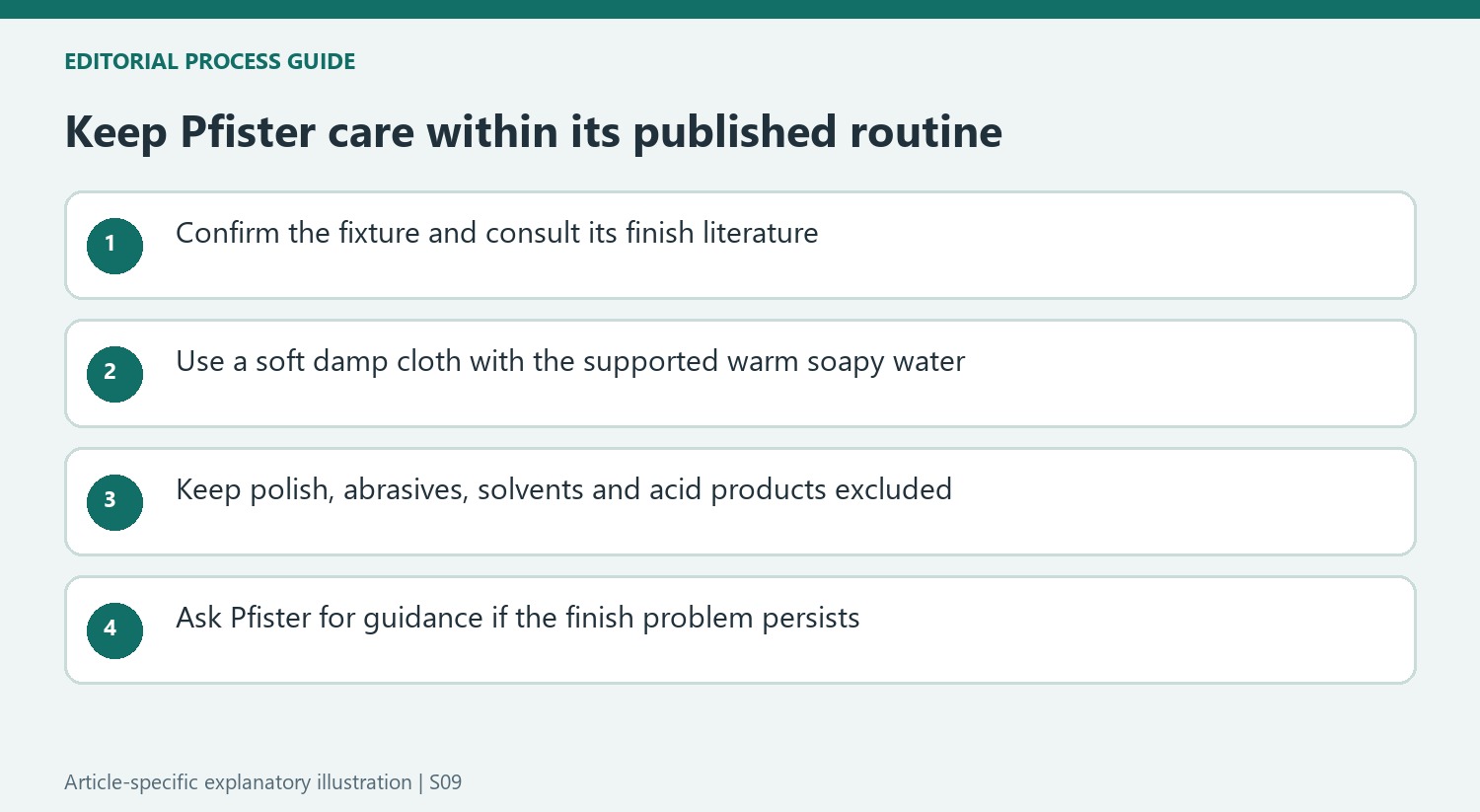
Apply the manufacturer rule to the actual Pfister product
Pfister's page is a manufacturer care instruction, rather than a general catalog of household chrome-cleaning methods. Its main routine is deliberately restrained: a soft damp cloth and warm soapy water. Confirm that the fixture is the relevant Pfister product and consult the literature supplied with its finish. A polished appearance does not identify the coating or prove that a method recommended for another brand belongs on this one.
The source lists several exclusions, including polish, abrasive cleaners, organic solvents and acid-containing products. Read those limits together with the supported mild routine. A generic descaling recipe using vinegar cannot override a maker's acid exclusion simply because the deposit resembles hard-water scale. Likewise, a product labeled for metal needs closer review when the fixture's finish instructions are narrower than the product's broad marketing description.
Use regular soft wiping without adding an unapproved coating
The page's emphasis on regular cleaning provides a practical response to ordinary marks before they encourage more aggressive intervention. Wet the soft cloth lightly under the permitted process and address accessible surfaces with gentle handling. Keep the contact fabric clean as residue transfers so the task does not become repeated wiping with the same dirt. Do not interpret a stubborn-looking line as a reason to reach for a rough pad that the instructions exclude.
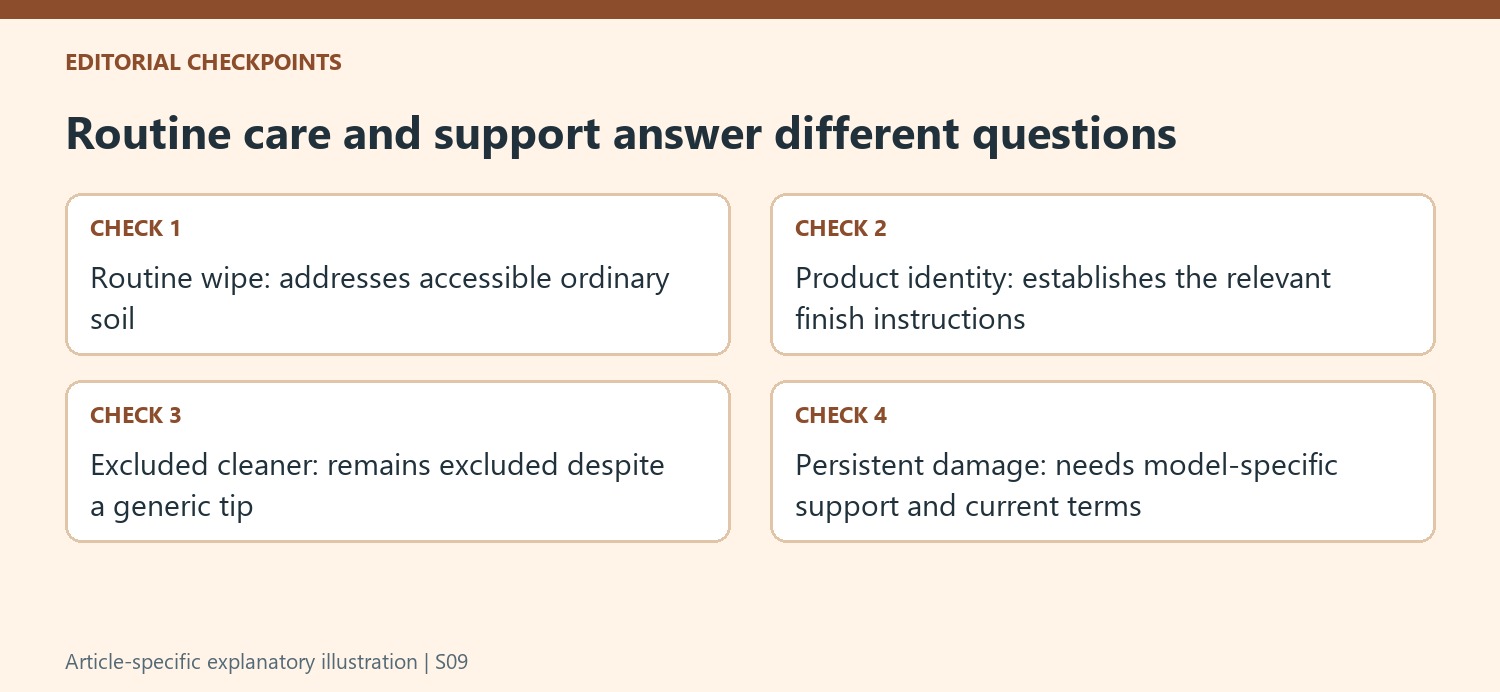
A separate shine product is not part of the routine merely because the owner wants a brighter result. Pfister expressly cautions against polish, making it especially important not to import optional waxing or oil suggestions from unrelated advice. Follow any model-specific completion and drying directions in the included instructions. The objective is to maintain the supplied finish through its supported care, rather than layer an unapproved appearance treatment over an unidentified remaining mark.
Document persistent problems before asking for support
The manufacturer links proper care with the conditions of its finish warranty and directs owners toward its FAQ or contact support. Keep the model, finish identification and the relevant care instructions available if gentle cleaning leaves a concern. A clear description of the remaining area is more useful than saying only that chrome looks dull. Note whether the issue is a deposited mark, a changing finish or a problem that appeared after a particular cleaning product.
Do not treat the page's warranty language as a promise that every problem or later owner will receive the same outcome. Check current terms and the product-specific circumstances with Pfister. Seeking guidance before another chemical experiment preserves a more informative account of what happened and avoids escalating a potentially damaged surface. This is the useful endpoint of the restrained care routine: normal soil receives the approved soft treatment, while unexplained finish problems receive a product-specific next step.
References
- Care and Cleaning. Pfister US.
Pfister's faucet-care page recommends a soft damp cloth and warm soapy water for regular cleaning.


Leave a Comment
Comments (0)