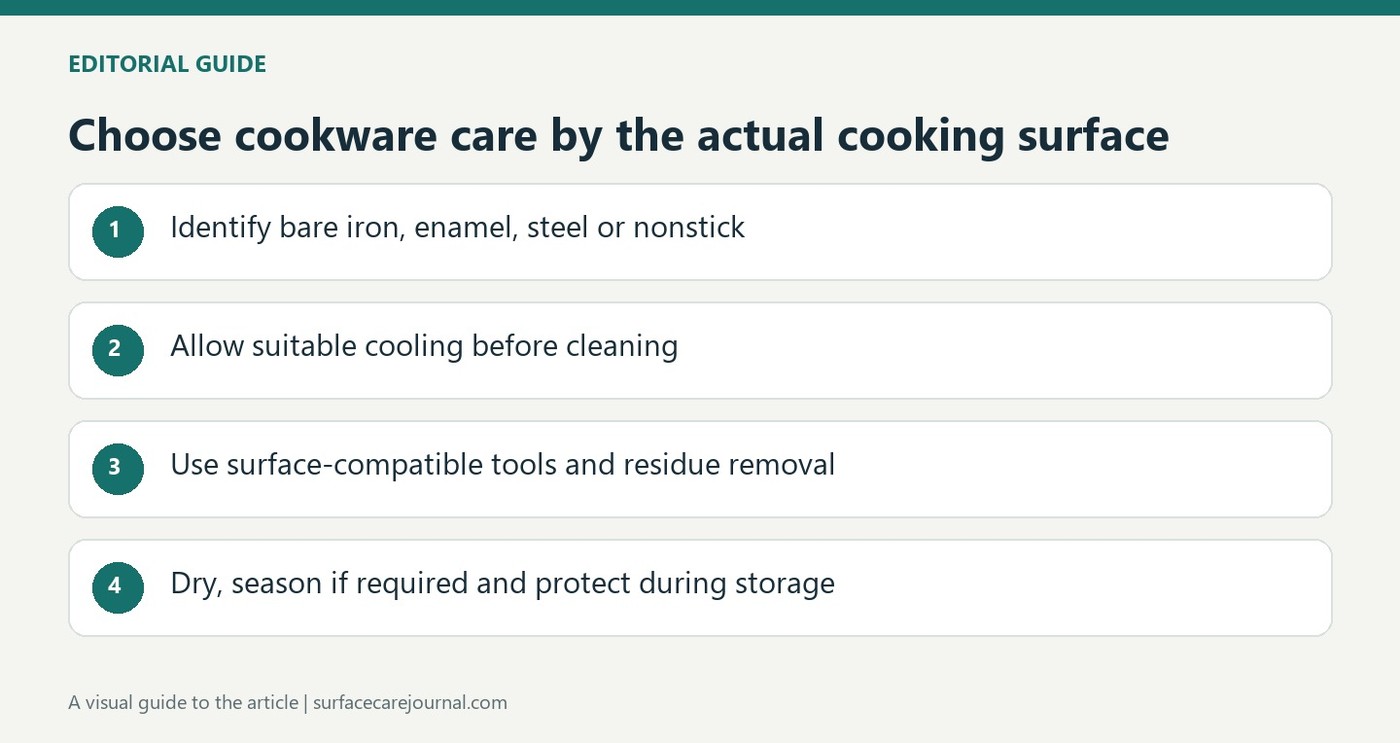
Use Different Care Routines for Different Cookware Metals
Homes & Gardens' cookware guide separates care by material, including stainless steel, cast iron and non-stick surfaces. Seasoned cast iron needs prompt drying and attention to its protective oil layer, while coated pans require tools that will not damage the finish. A heavy-looking pan is not necessarily suitable for soaking or machine washing.
Follow the cookware maker's instructions for the exact surface and construction. Allow the pan to cool appropriately, remove residue with a compatible tool and complete any required drying or seasoning. The article's broader point is to maintain the function of the surface rather than polish every pan alike. A cleaning method that works on uncoated steel may harm another pan beside it.
Distinguish bare iron from enamel
Homes and Gardens separates seasoned cast iron from enameled Dutch ovens. A seasoned surface depends on its maintained oil-derived layer, while enamel should not be treated as bare iron that needs seasoning. The guide also warns against plunging hot enamel into cold water. Let the cookware cool appropriately and follow its maker before choosing a soaking or residue-removal method.
Protect coatings during washing and storage
For nonstick and enameled pans, the source emphasizes compatible soft tools and avoiding metal scraping that can damage the surface. It also recommends protection when pans must be stacked, because storage can scratch or chip an item after careful washing. A pan's weight does not tell you whether its cooking surface is coated or whether another pot can safely sit inside it.
Connect sticking with cooking technique and cleanup
The stainless-steel discussion links temperature, an appropriate oil layer and allowing food to release with easier use. Residue left from a previous meal can complicate the next one. Clean the surface using a permitted process, rinse and dry, but keep polishing and household stain recipes conditional on cookware instructions. An attractive exterior alone does not confirm that the cooking surface is clean or undamaged.
Sort pans by their working surface rather than their weight
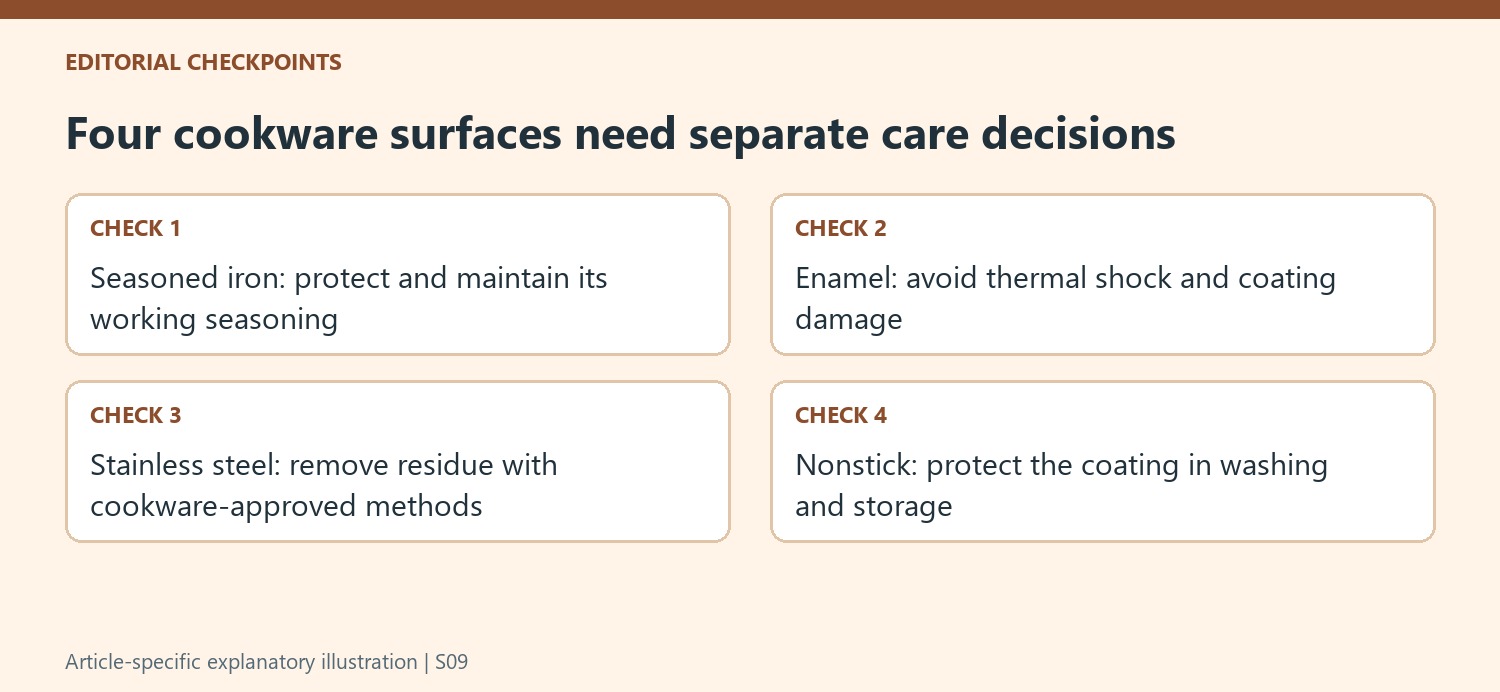
Homes & Gardens places seasoned cast iron, enameled iron, stainless steel and nonstick cookware in separate sections. A heavy pan is therefore not automatically suitable for the routine used on another heavy pan. Inspect the interior surface and identify its maker before deciding on soaking, dishwasher use or a residue-removal tool. The surface that contacts food can impose a different limitation from the robust appearance of the pot's handles or exterior.
Bare iron's maintained seasoning and enamel's applied coating also serve different care needs. The article notes that enamel does not need the same seasoning process as ordinary cast iron. Do not add an iron-restoration procedure to an enameled Dutch oven just because its body is made from iron underneath. Follow current cookware instructions for any cleaning or reseasoning process rather than treating a broad kitchen guide as a replacement for the product's own directions.
Allow cooling before the gentle residue-removal stage
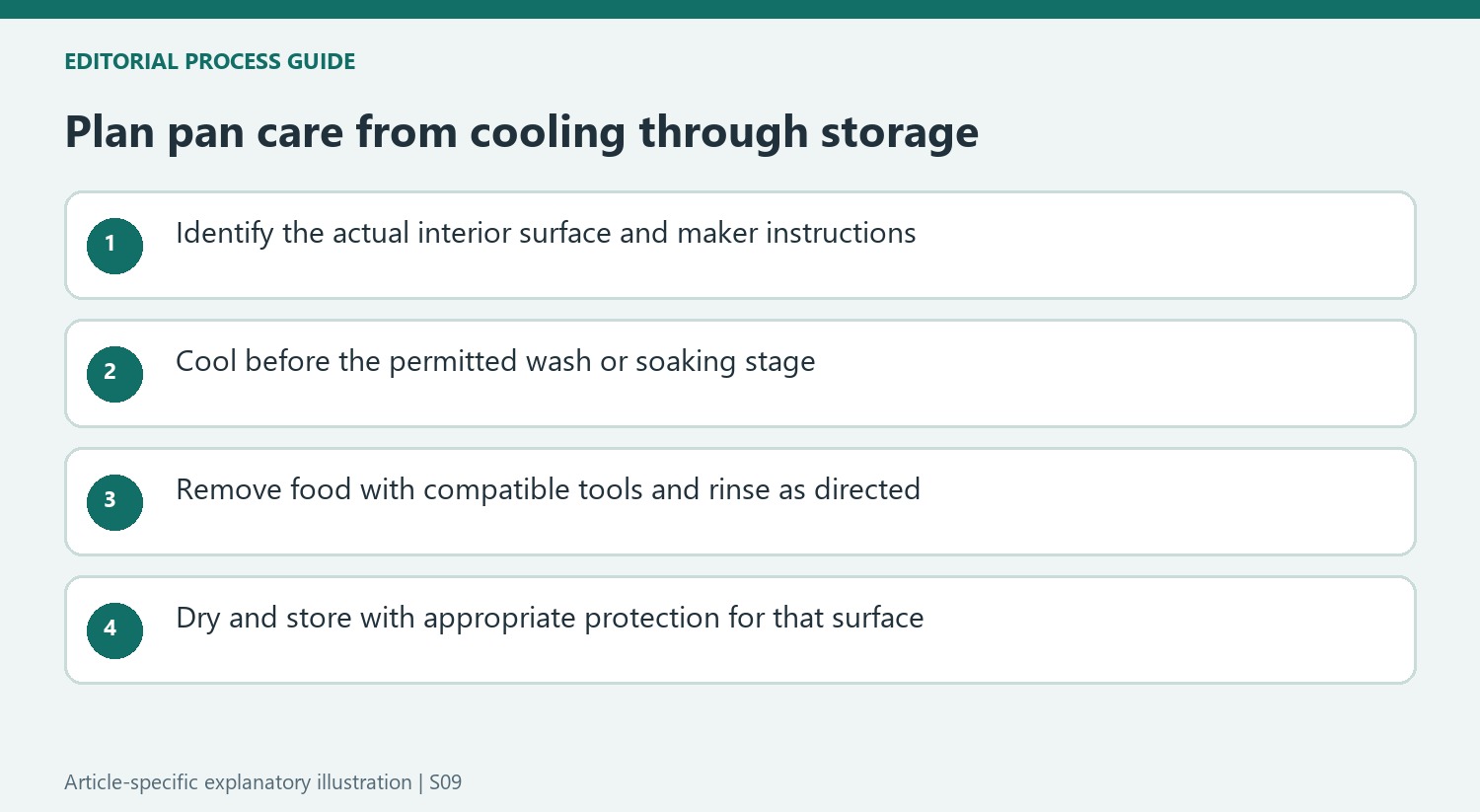
The source specifically cautions against moving hot enameled cookware into cold water because abrupt temperature change can damage it. Let the item cool as its maker requires before washing or soaking. This pause is part of material care, not wasted time to recover with harsher scrubbing later. Where soaking is permitted, it can make residue easier to remove with a compatible sponge or brush rather than a metal scraper.
Other surfaces have different soaking limits, and the guide warns against leaving ordinary cast iron in the sink. Keep that distinction when cleaning several pans after the same meal. Its stainless-steel stain ideas are alternatives requiring cookware compatibility, not a series of chemicals to mix together. A household ingredient being familiar does not establish suitability for every finish, nor does a visible fizz prove that a cooking surface has been disinfected.
Include the dry storage stage in cookware care
The article's storage advice recognizes that a coating can be damaged after a careful wash if a heavy pot is stacked directly on it. Use an appropriate protective arrangement under the cookware's instructions where nesting is necessary, and avoid unsupported weight on enamel or delicate coatings. Let each item become ready for storage through its required drying process. Residue-free appearance does not remove the need to maintain a seasoned iron surface appropriately.
For stainless cooking, the source connects sticking with temperature, oil coverage and allowing food to release, so cleanup is only part of the broader use routine. Clear the previous meal's residue before cooking again rather than treating a polished outer wall as proof that the interior is ready. Keeping cooking technique, compatible washing, complete drying and protected storage together preserves the useful differences between pan types without promising that one shining treatment solves them all.
References
- How to Clean and Care for Every Type of Cookware – From Stainless Steel to Non-stick, Cast Iron and More. Homes and Gardens; Chiana Dickson.
Stainless steel, seasoned cast iron and coated pans do not share one universal cleaning method.


Leave a Comment
Comments (0)