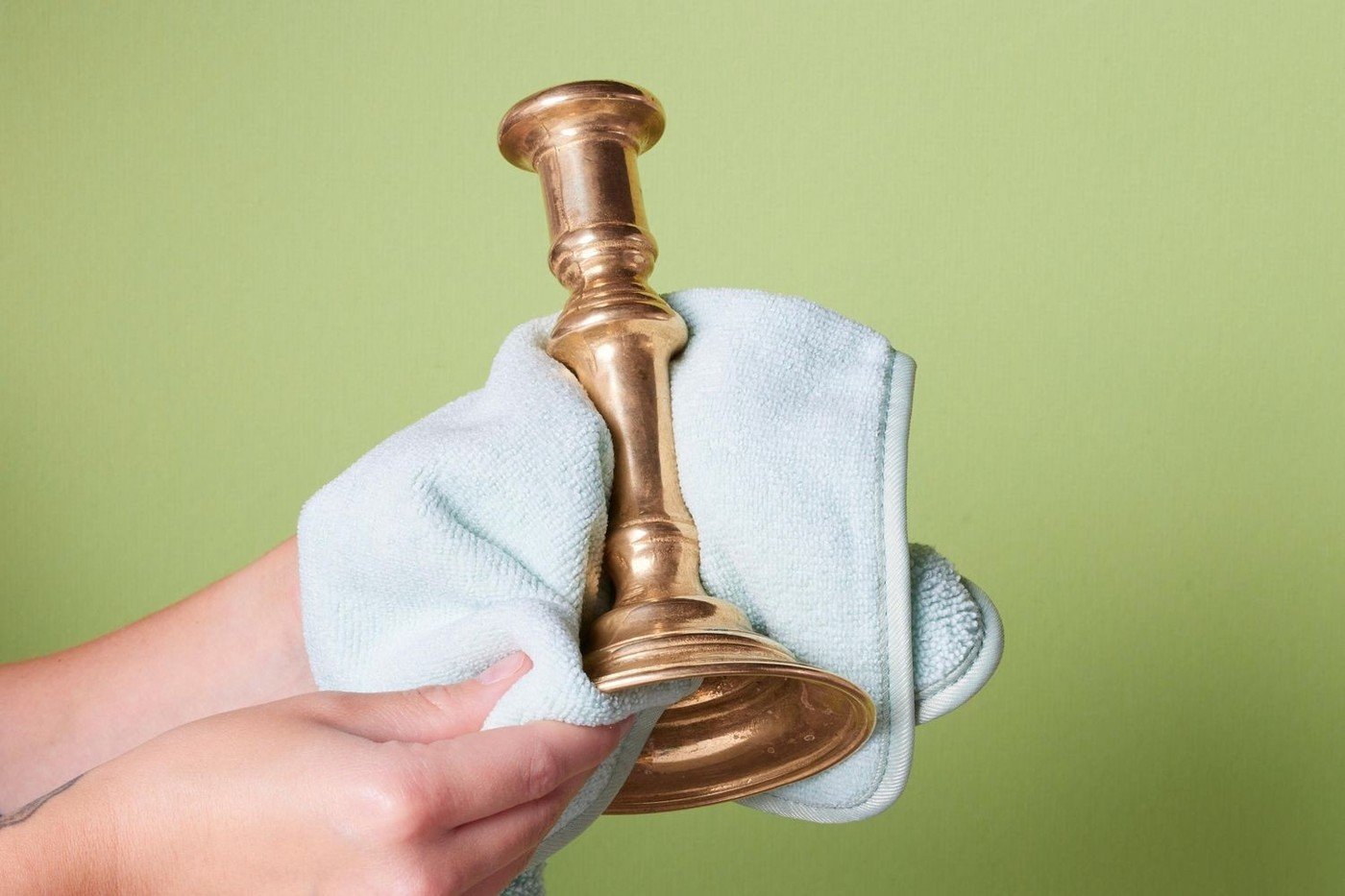
Check Whether Brass Decor Is Plated or Protected by Lacquer
Real Simple explains why the finish controls whether an ornament needs only gentle dusting or an appropriate tarnish treatment.
Do not treat every brass-colored object alike
Real Simple explains that a piece may be solid brass, a thin brass layer over another metal or brass protected with lacquer. Those differences change how much cleaning and polishing it can tolerate. A magnet that sticks can indicate a plated base, so use particular care with that surface. Intact lacquer should generally receive dusting or a gentle damp wipe rather than an aggressive tarnish-removal recipe.
Keep decorative care restrained
The guide notes that skin oils and air exposure contribute to tarnish on uncoated brass, while some owners prefer the darker aged appearance. Dust decorative pieces and limit unnecessary handling rather than repeatedly polishing away a patina that is wanted. For an appropriate uncoated piece, remove ordinary grime before a suitable tarnish treatment, then rinse thoroughly and dry with a lint-free cloth. Product compatibility matters more than whether an ingredient happens to be in the kitchen.
Use a magnet result as evidence rather than certainty
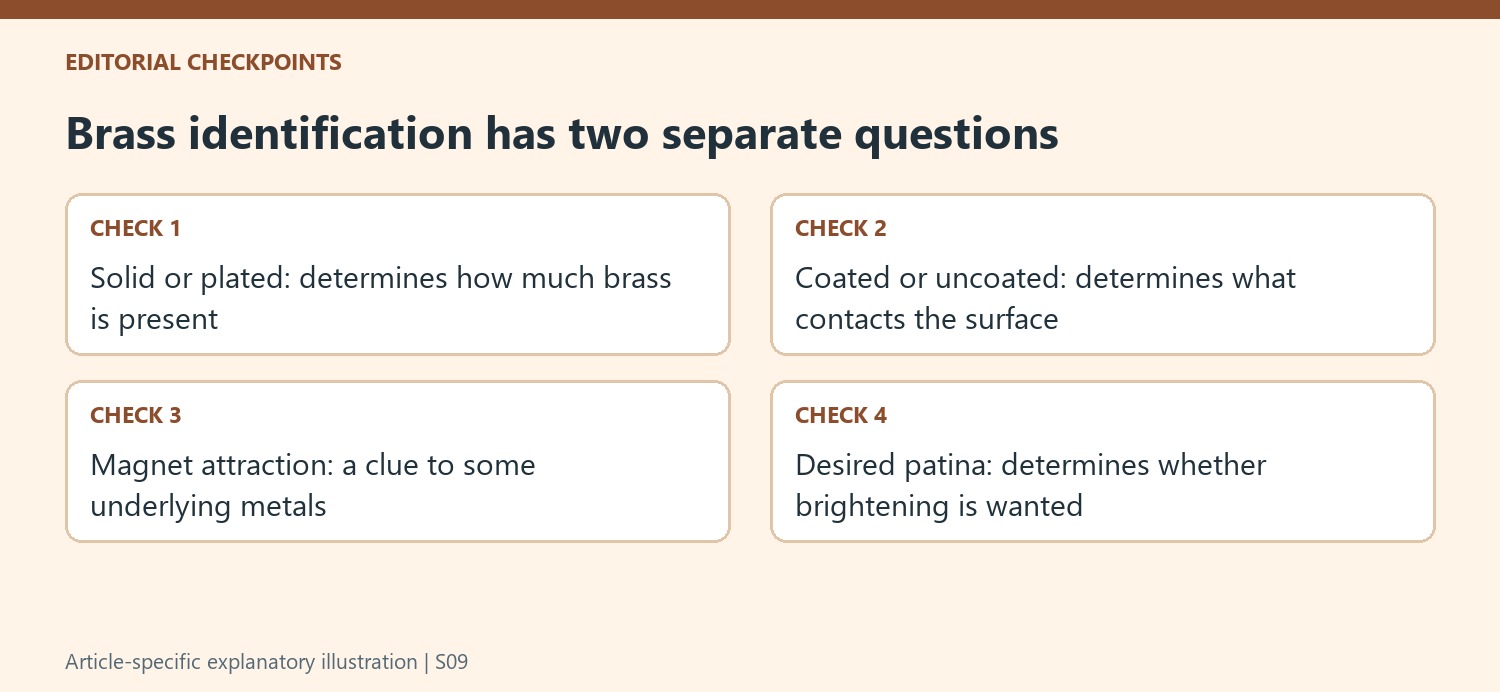
Real Simple proposes a magnet as a practical first check because solid brass is not magnetic. Attraction can reveal a magnetic metal underneath a brass-colored layer, but lack of attraction alone does not identify every possible plated object. Combine that clue with maker information, construction and any evidence of lacquer before choosing treatment. The guide also distinguishes objects that can be immersed from those that need a damp-cloth wash. Attached materials, electrical parts or delicate decoration can prevent submersion even on an uncoated piece. Keep those physical limits in view, remove ordinary dirt first and decide whether any tarnish actually needs removal before polishing.
Identify both the metal body and the surface protection
Real Simple asks two separate questions before cleaning: whether an item is solid brass or plated, and whether a protective coating is present. Answering only one is insufficient. A lacquered solid-brass object still needs coating-compatible care, while an uncoated plated object has a thin decorative layer that aggressive polishing can wear. Obtain the maker's information or specialist identification where the object is valuable or its construction remains uncertain.
The article suggests a magnet as a clue to an underlying magnetic metal. Treat that observation as a clue rather than a complete identification: failure to attract a magnet does not rule out every possible nonmagnetic substrate. Look for product information and construction details alongside the test. Appearance alone is equally limited because a bright gold-colored surface can conceal plating, a clear finish or an intentionally aged treatment that should not be polished away.
Decide whether bright brass is the intended result
The guide acknowledges that some owners prefer the darker aged look of unpolished brass. Clarify that preference before a tarnish-removal treatment changes it. Routine dust and ordinary grime can be addressed without aiming to return every decorative object to a mirror-like finish. For protected brass, the article limits care to dusting or gentle damp wiping so the coating is not chipped or stripped in pursuit of a different appearance.
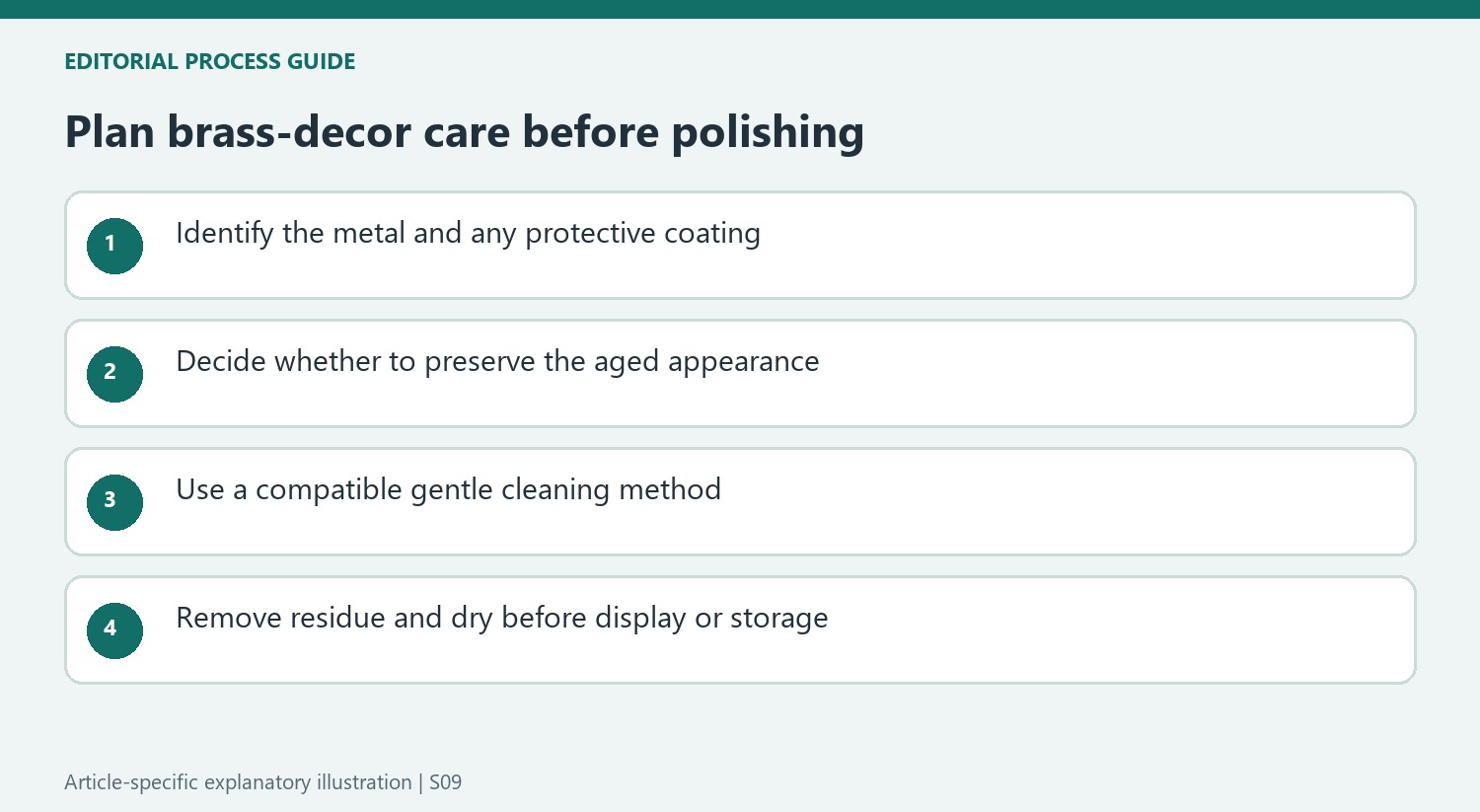
Its stronger household recipes concern compatible uncoated surfaces and are not a general instruction for lacquered pieces. Acid and abrasive action can affect more than the unwanted discoloration, particularly when the coating or plating is thin. A method that removes a dark patch quickly is not necessarily preserving the object's chosen character. Keep the actual finish requirement attached to any product selection, and seek advice before treating collectible or uncertain pieces.
Complete removal and drying before returning decor to display
The source separates initial washing from tarnish treatment and follows supported methods with thorough residue removal and soft-cloth drying. Maintain those stages instead of polishing over accumulated dust or leaving a household paste in decorative recesses. Where an item cannot be submerged, use its compatible controlled-damp approach rather than treating every ornament as washable in a sink. Bases, attachments and mixed materials can impose additional limits beyond the visible brass.
It also recommends minimizing unnecessary handling and dusting display objects regularly. Those habits address the exposure associated with skin oils and accumulated pollutants without repeated intensive polishing. Set frequency around use and the intended patina rather than imposing one shine schedule on handles, fixtures and seldom-touched ornaments. Optional protective coatings are a separate alteration decision; they should not be added casually to an antique or used to hide a mark that was never identified.
References
- How to Clean Brass Until it Shines. Real Simple; Mary Marlowe Leverette.
Real Simple explains why the finish controls whether an ornament needs only gentle dusting or an appropriate tarnish treatment.


Leave a Comment
Comments (0)