Choose Sink Care by Material Before Treating Stains
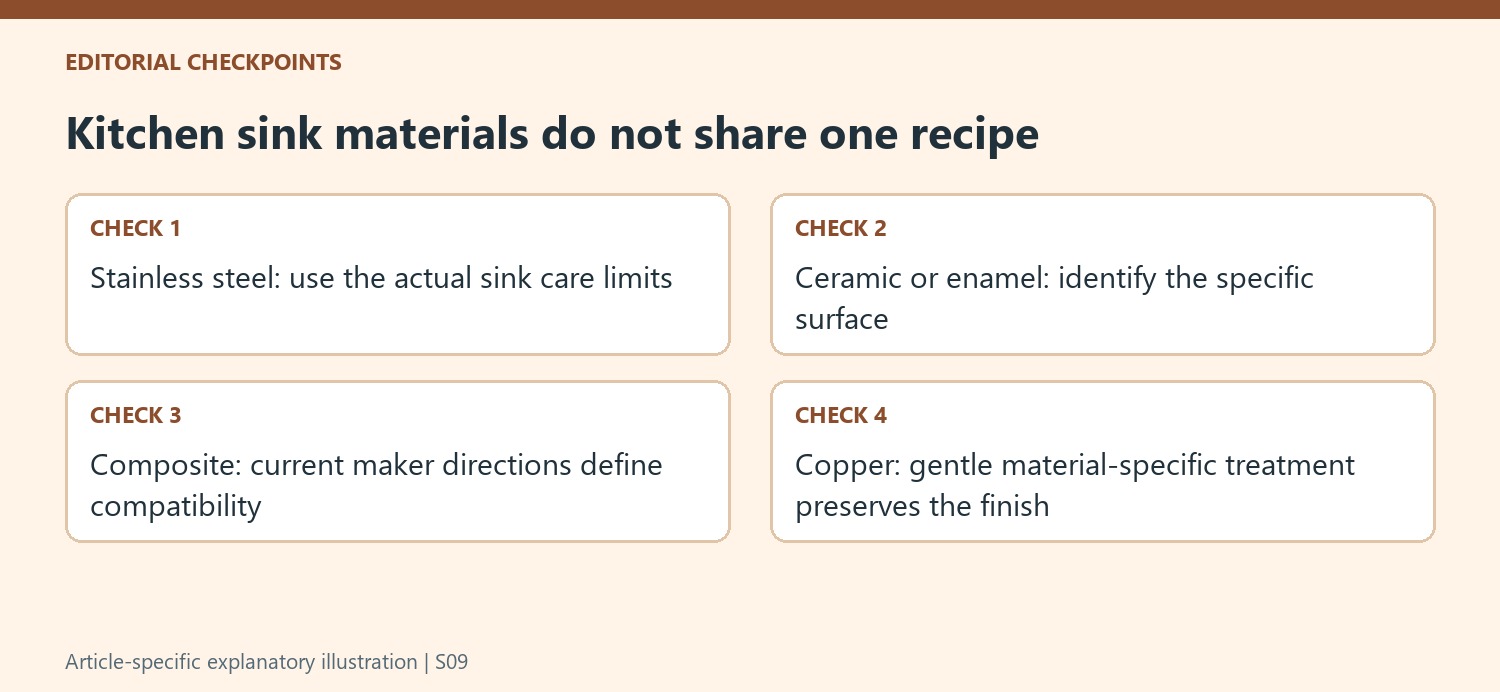
Homes & Gardens' kitchen-sink guide starts with identifying what the sink is made from. It discusses stainless steel separately from copper, ceramic and composite designs, recognizing that similar-looking marks may need different treatment. A regular cleaning routine should remove residue and leave the sink dry rather than simply rinse visible scraps away.
Use the sink manufacturer's approved cleaner and non-scratching tools, then remove product residue as directed. Do not transfer an acidic or abrasive method from bare steel to a patinated copper surface or an adjacent stone worktop. Cleaning the basin and caring for its finish are connected tasks, so material compatibility should be checked before a stain-treatment recipe is copied.
Separate a sink's metal from its finish
Homes and Gardens treats copper differently from stainless steel, recommending a gentle mild-soap approach for the more sensitive copper surface. That distinction matters where patina is intentional. Trying to make every basin uniformly bright can remove the appearance the owner wanted to retain. Check the exact sink construction and finish rather than selecting a cleaner solely because the sink looks metallic.
Keep neighboring materials out of the treatment
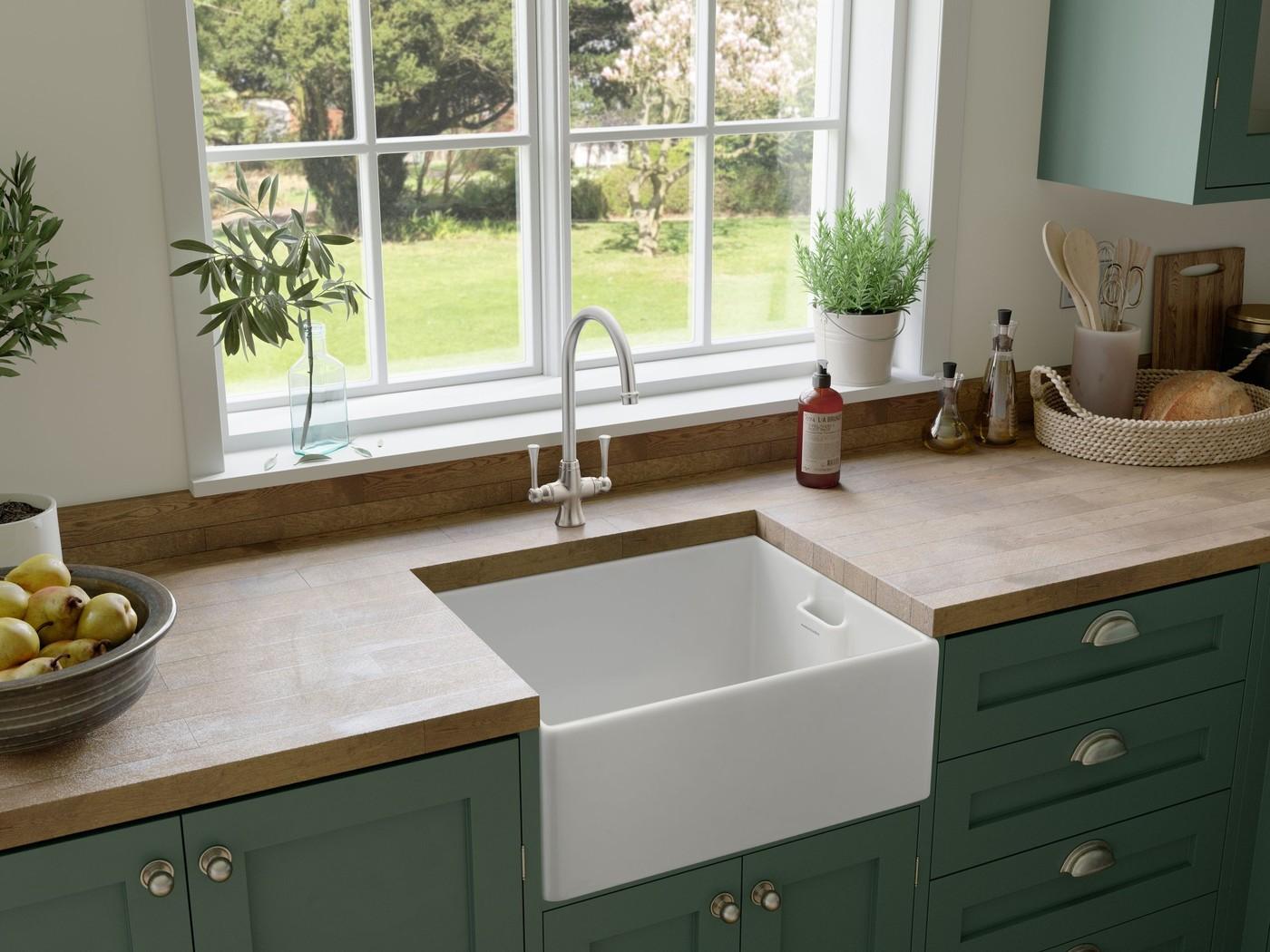
The feature discusses ceramic, enamel, fireclay and several solid-surface or composite sinks. Those headings describe distinct materials, rather than permission to transfer every household recipe between them. Protect the surrounding worktop, faucet and sealant when treating a mark in the basin. In particular, a method aimed at bare steel should not splash onto a stone counter or specialty metal coating without approval.
Make cleaning and drying a complete routine
The article's recurring practical steps are removing food residue, using a suitable cleaner and leaving the basin dry. Deal with new deposits before they become a stubborn layer, and rinse away the selected product as directed. Its drain-cleaning ideas are separate from finish care and should be checked against plumbing guidance. A fresh aroma or a fizzing mixture does not itself demonstrate a disinfected sink.
Identify the basin before using an all-purpose sink method
Homes & Gardens structures its sink guide by material, including stainless steel, ceramic, composite, fireclay and copper. That organization is more useful than treating the first recipe as applicable to every kitchen. Find the exact sink material and its current manufacturer care instructions before selecting a cleaner. A white basin need not have the same coating as another white basin, and the broad word composite does not identify a single chemical response.
The source itself observes that solid-surface and composite materials differ, making brand-specific directions particularly important. Its pantry suggestions remain conditional on those directions rather than establishing acid or abrasive compatibility for all quartz or granite products. Protect the neighboring countertop, drain hardware and faucet too. Their requirements can differ from the basin even when the entire sink area is wet and appears to be one convenient cleaning surface.
Use ordinary washing to separate soil from persistent stains
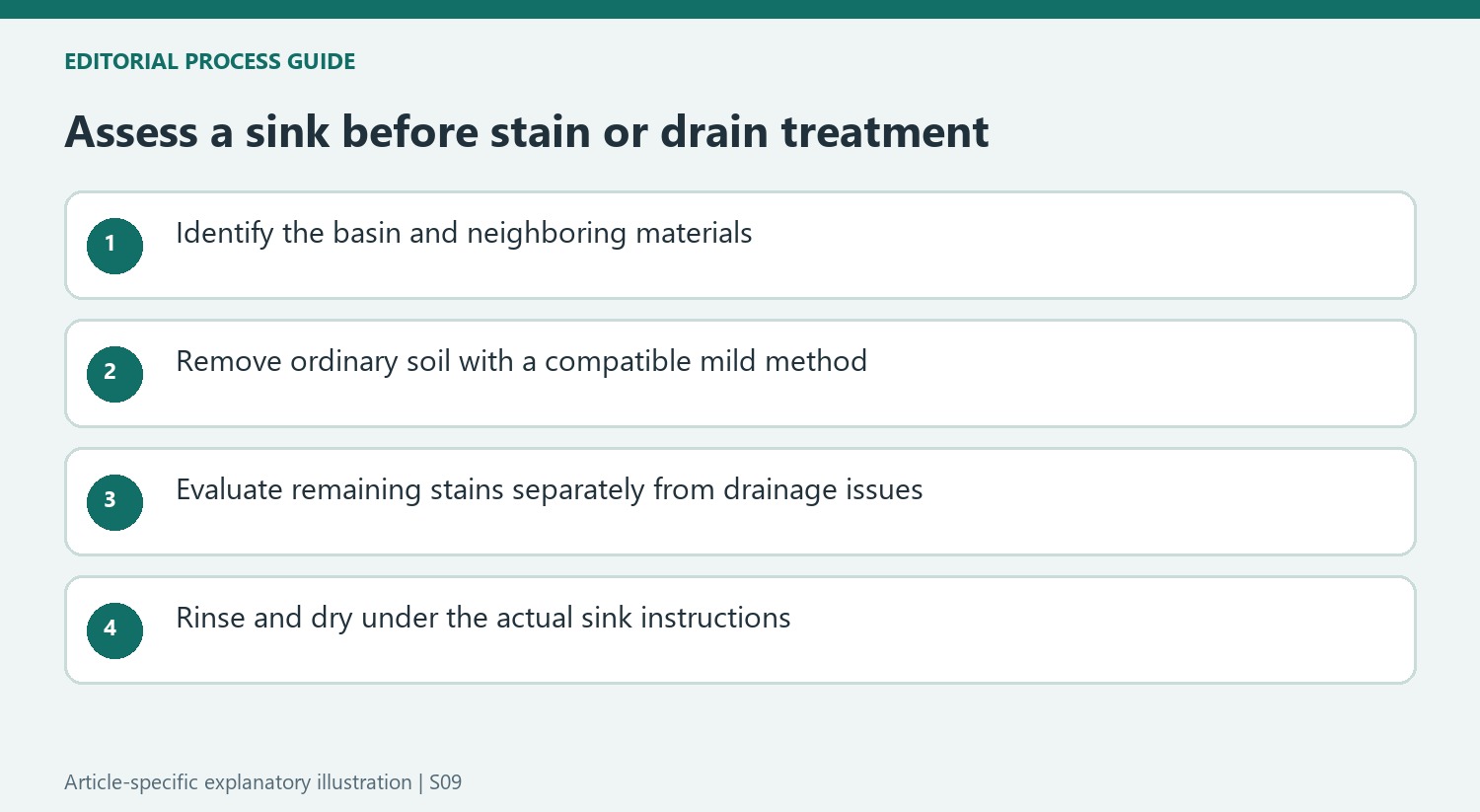
The article favors regular gentle care over occasional heavy cleaning in several material sections and identifies mild soap and water as a useful starting point for many delicate sinks. Remove accessible ordinary residue under the actual sink's instructions and inspect before selecting a stain-specific response. A remaining pale mark may require a different assessment from greasy food debris. Do not interpret persistence after a mild wash as automatic permission for a stronger acid or scouring pad.
Its stainless and ceramic passages offer more involved methods, but preserve their cautions about compatible tools, rinsing and contact. A reaction between ingredients is not proof of disinfection, despite broader language sometimes used in household advice. Where disinfection is required, use a product and procedure approved for that purpose and surface. Keep any stronger cleaner separate from other products and follow the label rather than combining the guide's alternatives into one treatment.
Treat basin appearance and drain behavior separately
A clean-looking sink bowl and an unobstructed drain are related parts of the kitchen but different maintenance questions. The article includes drain-freshening suggestions, which should not be read as a universal cure for a blockage or a reason to expose sensitive plumbing to unsuitable heat. Follow the sink and drain-system instructions before any such treatment. Persistent drainage trouble needs its own assessment rather than repeated decorative polishing of the basin.
Finish compatible washing with the required rinse and drying. The source links wiping after use with reduced buildup, making that habit useful before deposits become more prominent. Optional oil or wax suggestions are material-dependent and should not be generalized to food-contact areas or every sink finish. A restrained plan starts with material identification, removes ordinary soil, addresses the identified remaining issue and leaves the whole sink area free of incompatible cleaner residue.
References
- How to clean a kitchen sink – and make it sparkle. Homes and Gardens; Hayley Gilbert.
Stainless steel, copper, ceramic and composites have different surface limits.


Leave a Comment
Comments (0)