Treat Brass as a Specific Metal Rather Than a Generic Shiny Surface
The Spruce's metal-care guide emphasizes coatings, gentle tools, discreet testing and expert advice for valuable objects.
Start by identifying the surface
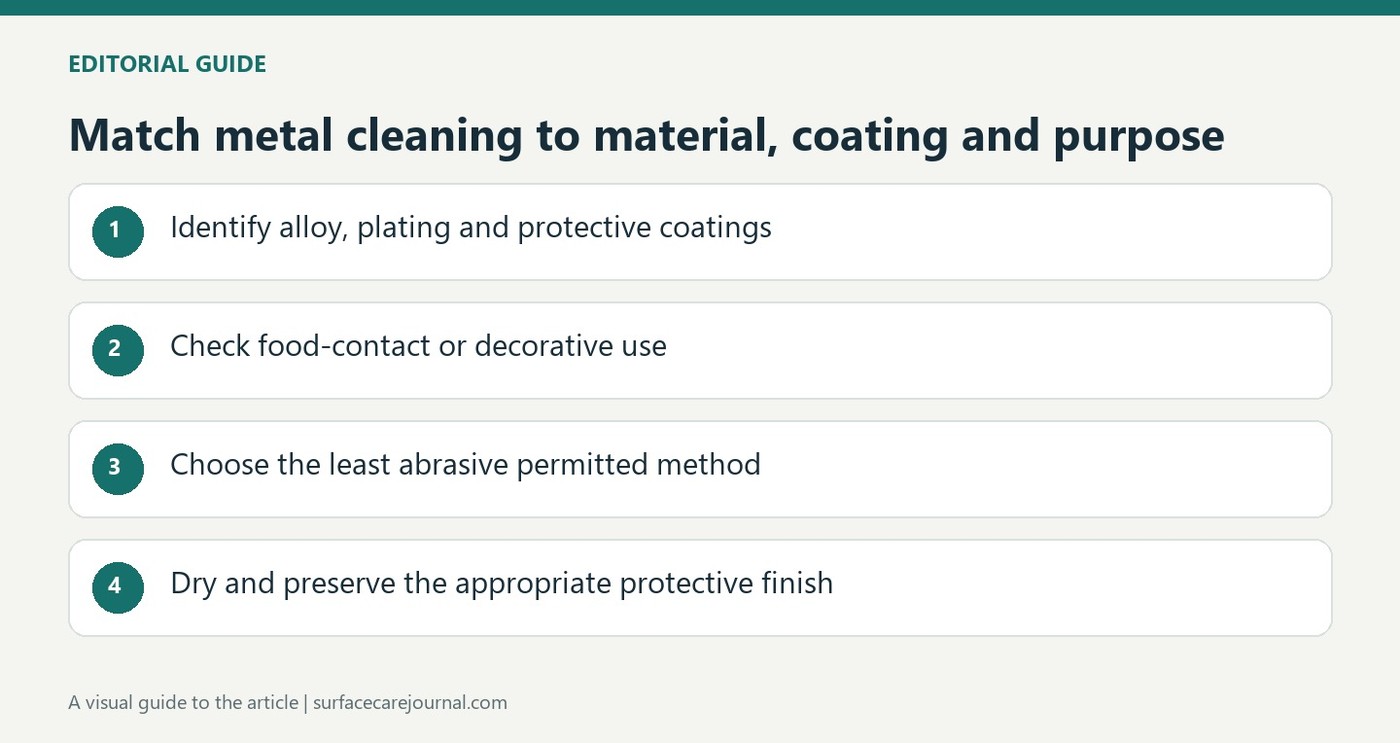
The Spruce explains that household metal includes bare alloys, plated finishes and coatings intended to reduce corrosion. Aluminum, brass, chrome, stainless steel and iron do not all need the same treatment. It recommends consulting care instructions and testing an inconspicuous area before using a product. Precious jewelry and valuable antiques warrant specialist advice because polishing or chemical treatment can alter their appearance and value.
Clean gently and remove the remaining moisture
A soft cloth with mild soap and warm water is the guide's general gentle starting point where appropriate, followed by rinsing and microfiber drying. Bare iron and coated furniture need attention to corrosion protection, while stainless steel benefits from careful drying to avoid streaks. Decorative pieces usually need regular dust removal rather than the same schedule as cookware. Address rust promptly, but distinguish surface cleaning from a repair that requires renewing paint or another protective coating.
Let the object's purpose guide how often it is cleaned
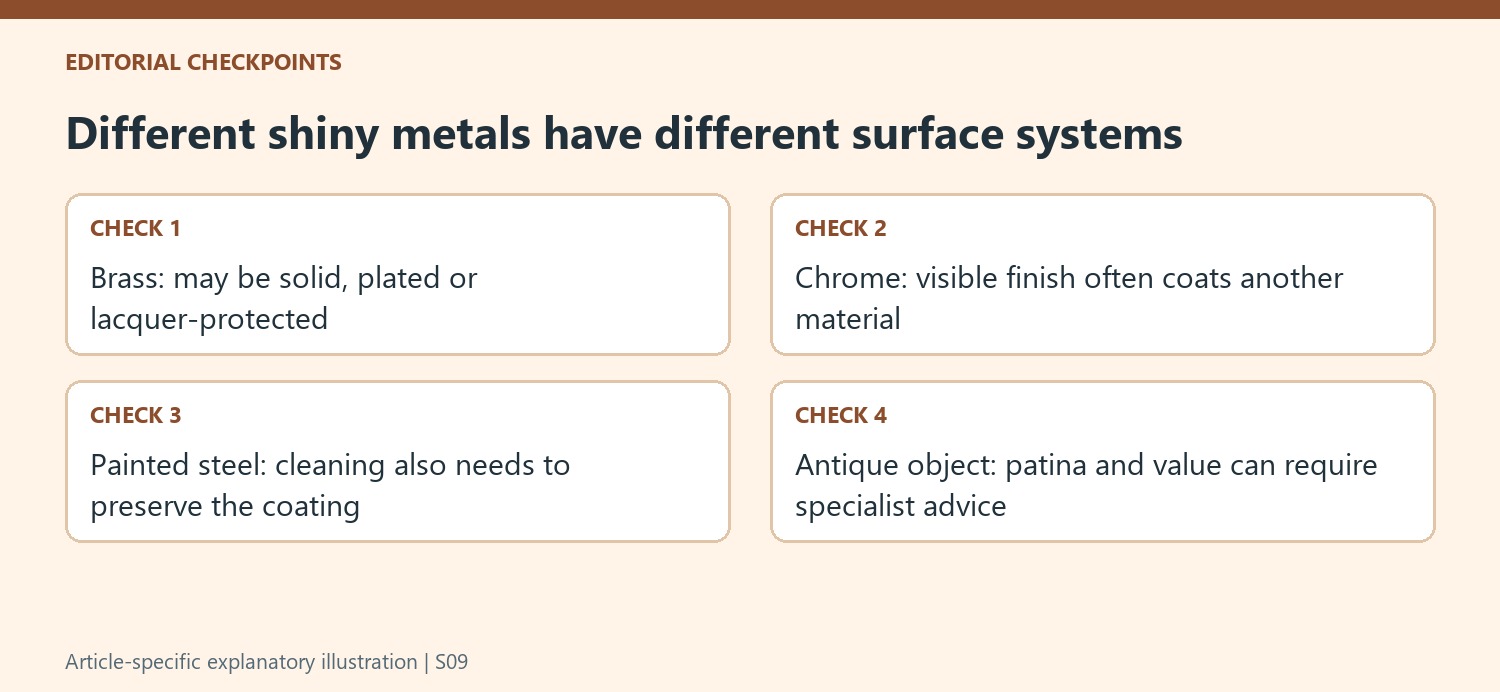
The Spruce separates food-use metal, household appliances and decorative pieces rather than assigning one maintenance interval to all metal. A serving utensil needs cleaning after use, while an ornament may mainly need regular dust removal. The same distinction limits polishing products: a decorative sheen is not a food-contact cleaning instruction. Its metal-by-metal examples also contrast copper patina, lacquered brass and coated steel, demonstrating why a shiny appearance does not identify the underlying surface. For an antique, valuable jewelry or an uncertain coating, expert advice should precede changes that may remove material or patina. Cleaning and restoring an object are separate decisions with different consequences.
Keep brass within the metal-specific part of the guide
The Spruce surveys several metals, which makes its structure important: one object's successful treatment is not a general permission for everything shiny nearby. Brass can carry lacquer, while chrome is often a coating and steel furniture may be protected by paint. Find the exact material and finish before borrowing an ingredient from another section. A bright surface says little about the layer that is actually contacting the cleaning cloth.
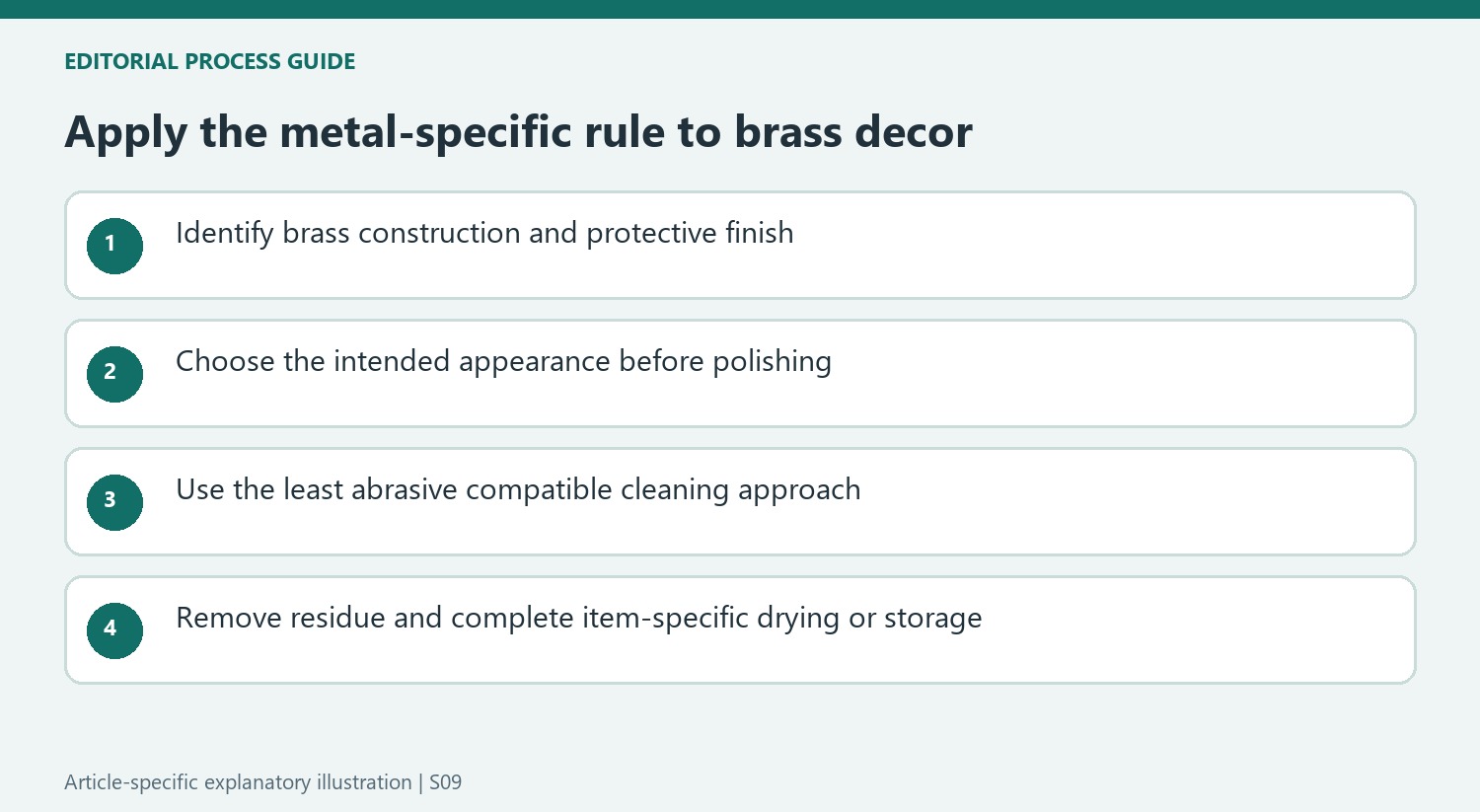
For brass decoration, the source notes that clear protective finishes can wear and change the choice between polishing and allowing a darker appearance. Decide the desired result and identify the surface first. Do not treat tarnish, rust and dust as interchangeable terms simply because they all affect appearance. Their causes and the object's coating can call for different responses, particularly when the item is valuable or its original finish needs preserving.
Begin with the least abrasive compatible contact
The guide's opening principles favor manufacturer instructions, an inconspicuous check and the least abrasive suitable cleaner. Apply those principles before its individual recipes rather than after a strong treatment has already changed the surface. Use clean soft material and controlled handling to remove ordinary grime where permitted. If gentle washing resolves the appearance problem, a separate polishing stage is not automatically required just because the object is made of metal.
For antiques and precious items, the article recommends consulting an expert. That is especially relevant where a polish would remove an intentional patina or where plating is thin. A hidden test can reveal an immediate change but cannot authenticate the metal or guarantee the effect of repeated abrasion. Keep the object-specific information and current product label alongside any general advice, and avoid broadening an approved treatment from one component to a mixed-material assembly.
Match completion and frequency to the item purpose
The source distinguishes food-use items cleaned after use from appliances and decorative objects receiving less frequent attention. Use that distinction instead of imposing one calendar on everything in the room. Brass hardware touched throughout the day and a display bookend have different exposure to hand oils and moisture. Compatible routine dusting can address loose soil between larger tasks without requiring every object to be repeatedly polished to a new-looking finish.
After a permitted wet treatment, clear cleaning residue and dry under the relevant instructions before storage or use. Keep decorative protective products away from food-contact applications unless specifically approved. The guide's cross-metal examples are useful for showing why materials differ, rather than providing an invitation to mix recipes. A practical plan identifies brass and its coating, removes the actual soil, preserves the chosen appearance and completes the object's own drying and storage requirements.
References
- From Aluminum to Steel, Learn How to Keep Metal Clean. The Spruce; Mary Marlowe Leverette.
The Spruce's metal-care guide emphasizes coatings, gentle tools, discreet testing and expert advice for valuable objects.


Leave a Comment
Comments (0)