Protect Kingston Brass chrome from residue and abrasion
Use the maker's mild-soap approach
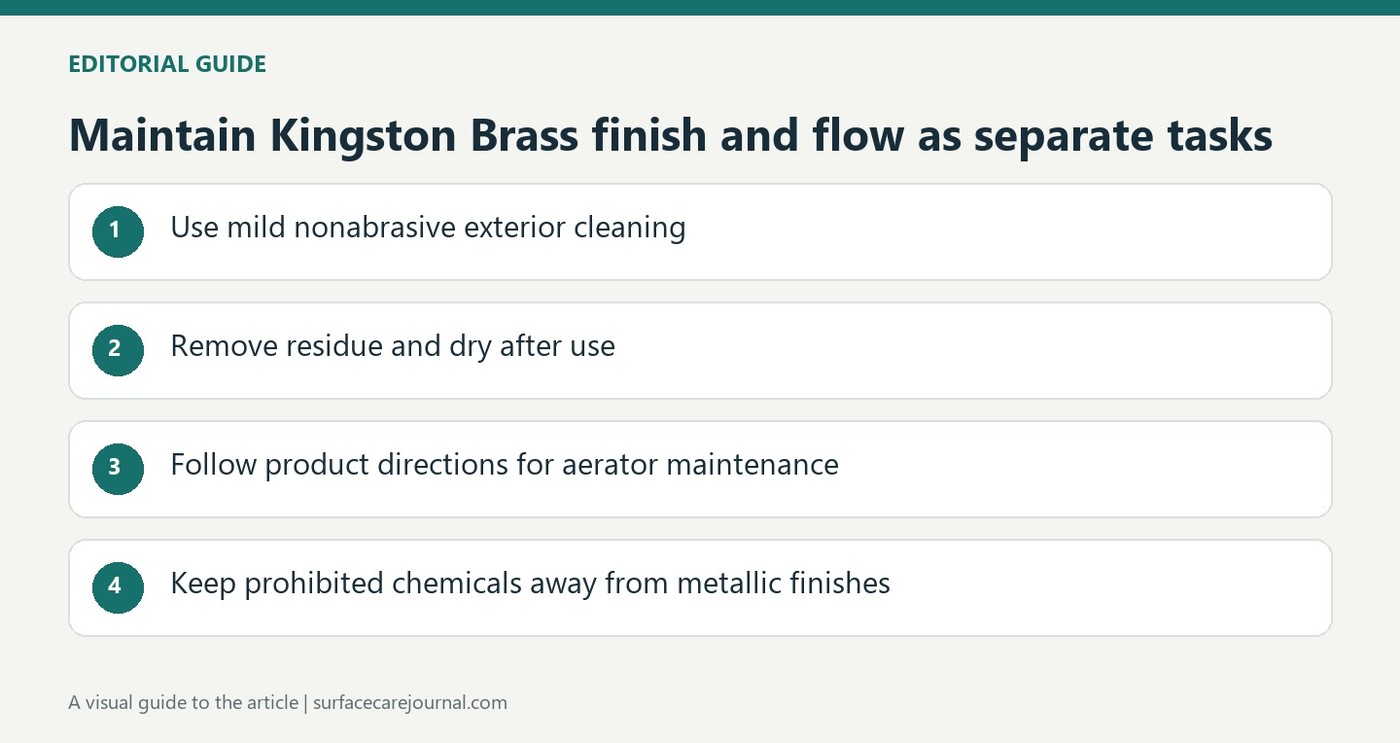
Kingston Brass recommends mild soap and nonabrasive cleaning for its fixtures, with a wipe dry after use. For a chrome product covered by these instructions, regular gentle cleaning is a better starting point than applying a metal polish simply because the surface looks shiny. Water left to accumulate can leave mineral deposits that dull the finish.
Keep the care restrictions with the product
The manufacturer warns against abrasive agents and sponges, as well as cleaners containing ammonia, bleach, acids, alcohol or solvents that are unsuitable for metallic finishes. Those restrictions should take priority over a generic stain-removal tip. The page also mentions periodic aerator cleaning because accumulated debris can reduce flow, a separate issue from a stained exterior. Refer to the literature supplied with the specific faucet before removing parts or adding any protective treatment. A clean-looking surface and good water flow are different maintenance goals, and neither requires ignoring the finish-care instructions.
Separate appearance care from water-flow maintenance
Kingston Brass links dullness to water deposits on the outer surface, while its aerator advice addresses debris that can reduce flow. Cleaning a nozzle screen is therefore a different task from removing exterior marks. Follow the specific faucet's instructions for disassembly and reassembly rather than forcing a part because the finish-care page mentions it. The page also distinguishes optional protective waxing from routine mild washing, and excludes the bathtub interior from that suggestion. Do not expand a protective treatment to every wet surface. Keep cleaning products within the manufacturer's restrictions and address new water marks with regular drying rather than an unsupported acidic or abrasive shortcut.
Keep the daily exterior routine separate from repair work
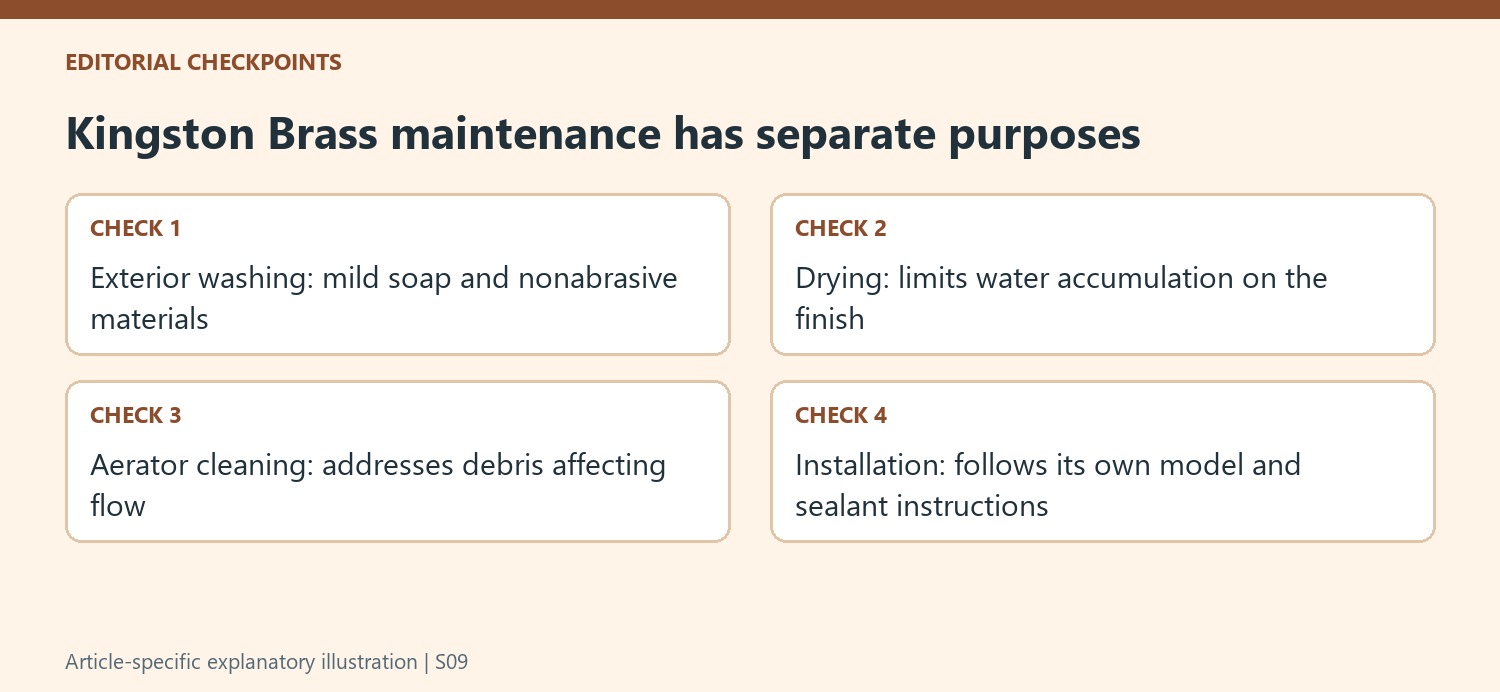
Kingston Brass gives routine mild-soap cleaning and drying as the basic approach to its fixture surfaces. That is an appearance-maintenance task, not an instruction to dismantle the faucet whenever a water mark appears. Use the specific product literature to establish the finish and any additional care details. A plated or coated surface should not be treated as bare metal solely because it has a bright metallic color.
The page's aerator advice addresses another issue: trapped debris can reduce water flow. Poor flow and a stained exterior therefore need different observations and potentially different actions. If an aerator requires attention, follow the model's removal and replacement procedure rather than forcing the part with an unsuitable tool. Cleaning the outside does not necessarily resolve internal debris, while opening a nozzle does not substitute for gentle care of its decorative surface.
Use the exclusions to reject generic shortcuts
The source lists abrasive cleaning agents and sponges among its exclusions and also warns against unsuitable products containing acids, alcohol, solvents, ammonia or bleach. Read these restrictions before choosing a common bathroom treatment. A general recommendation for vinegar on water scale conflicts with an acid exclusion for a relevant Kingston Brass finish. The appearance of the deposit does not remove the manufacturer's restriction on what may contact the fixture.
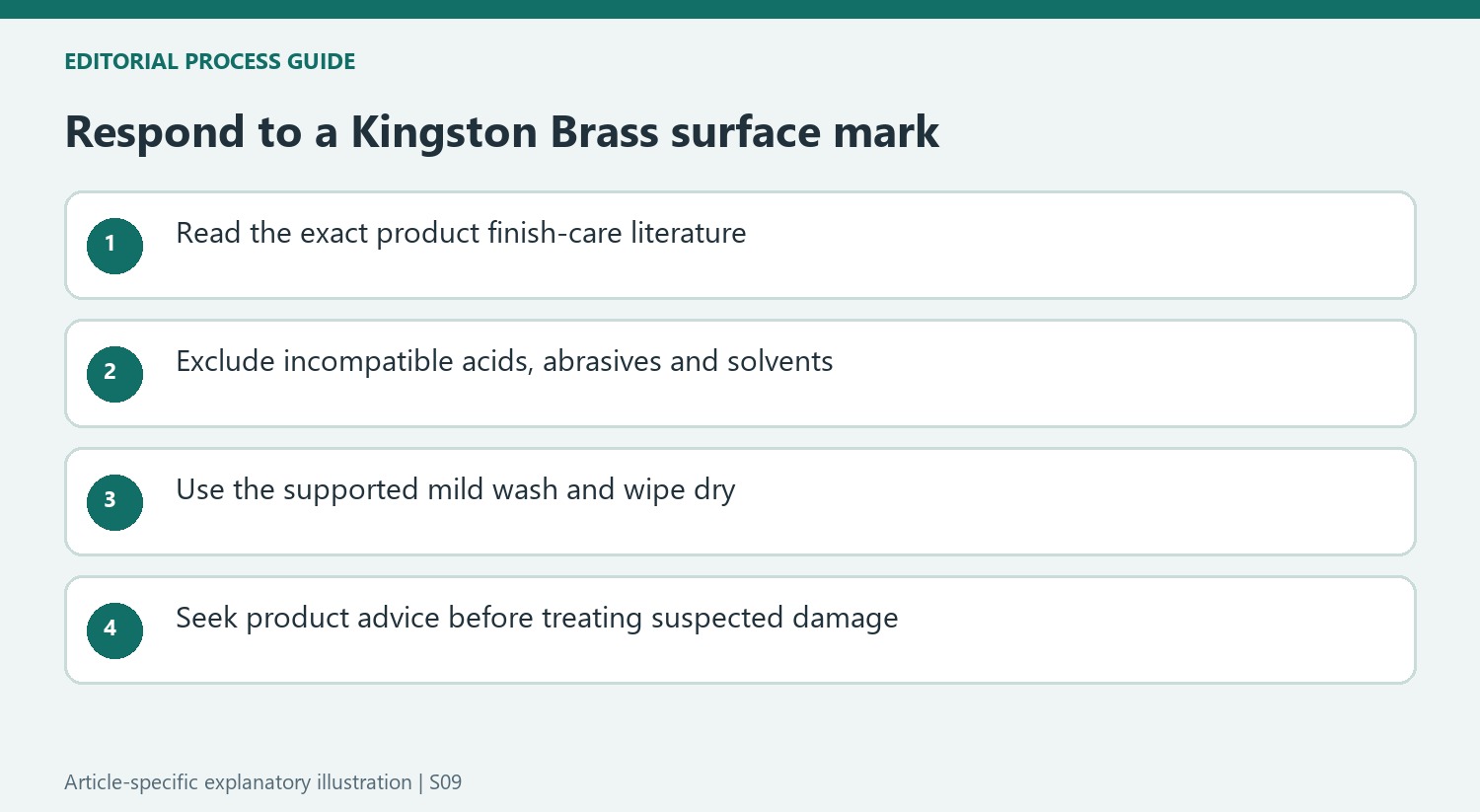
Keep cleaning material controlled around adjacent surfaces and leave no unnecessary pool of water on the fitting. The guide links accumulated mineral deposits with a duller finish and recommends wiping dry after use. That recurring mild maintenance step addresses the exposure the article identifies without repeatedly escalating to a descaler. If a dry cleaned area still looks altered, ask whether the mark is residue or finish damage before increasing friction or introducing another product.
Treat optional protection and installation as distinct subjects
Kingston Brass mentions a possible light carnauba-wax application but excludes bathtub interiors from that suggestion. It is not permission to coat every surface associated with the bathroom, and the specific product literature still matters. Complete routine washing and drying before considering a supported protective treatment. A layer of wax should not be used to conceal an unidentified deposit or compensate for a cleaner that remains on the finish.
The page also contains installation restrictions, including its guidance on sealants. Those details belong to installation decisions rather than an invitation to disturb a functioning faucet during ordinary cleaning. It connects damage from improper treatment or installation with warranty limits, so consult current terms for any particular concern. The useful maintenance plan remains divided by purpose: gentle exterior care preserves appearance, approved aerator service addresses flow, and installation or suspected damage receives model-specific instructions.
References
- Care & Maintenance. Kingston Brass, Inc..
Kingston Brass recommends mild soap and nonabrasive cleaning for its fixtures, with a wipe dry after use.


Leave a Comment
Comments (0)